wayground logo

Free Printable Worksheets

Font size

S
M
L
XL
Worksheets

Periodic Table Plus

Total questions: 89

Worksheet time: 7hrs 25mins

Name
Class
Date
1.
Electronegativity is...
a)
how good an atom is at attracting electrons
b)
the ability of an atom to lose electrons
c)
the energy required to remove an electron from a specific atom
d)
how easy it is to make friends. 
2.
Ionization energy is...
a)
the energy required to add an electron to a specific atom
b)
how much energy it takes to remove an electron from an atom
c)
the energy required to shield the outer electrons from the nucleus
d)
a measure of the ability of an atom to attract electrons
3.
The majority of elements on the periodic table are
a)
man made.
b)
nonmetals.
c)
metals.
d)
gases.
4.
Name groups 3B - 12B on the periodic table.
a)
noble gases
b)
halogens
c)
metalloids
d)
transition metals
5.
Name group 7A on the periodic table.
a)
transition metals
b)
metalloids
c)
halogens
d)
alkali metals
6.
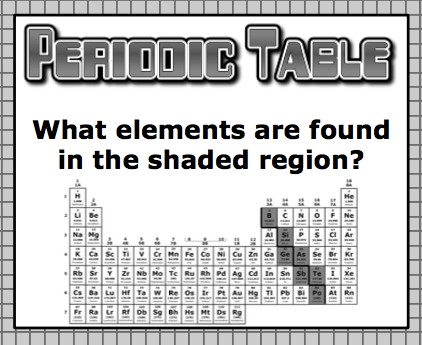
The atoms along the staircase are called 
a)
metals
b)
nonmetals
c)
metalloids
d)
noble gases
7.
Where are the nonmetals located on the periodic table?
a)
top left corner
b)
bottom left corner
c)
top right corner
d)
bottom left corner
8.

What are the vertical columns on the periodic called?

a)

groups

b)

periods

c)

nonmetals

d)

metals

e)

metalloids

9.

What do the vertical columns on the periodic table tell us?

a)

The number of orbitals

b)

The number of valence electrons (electrons on the outer most shell)

10.

Which elements have properties in common?

a)

elements in a group

b)

elements in a period

11.
The Modern Periodic Table of Elements is arranged by
a)
atomic mass
b)
atomic number
c)
valence electrons
d)
number of isotopes
12.

What does the atomic mass tell you?

a)

Basically, the number of electrons and protons added together

b)

The number of neutrons

c)

Basically, the number of protons and neutrons added together

d)

The number of protons.

13.

Name of group 17

a)

Noble gases

b)

Alkali metals

c)

Halogens

d)

Alkaline earth metals

14.
The yellow atoms are called 
a)
metals
b)
nonmetals
c)
metalloids
d)
noble gases
15.
Which group of the periodic table is composed of inert (not reactive) gases?
a)
alkali metals
b)
alkaline earth metals
c)
halogens
d)
noble gases
16.
Elements which are shiny, conduct electricity and heat are called ___________.
a)
metal
b)
nonmetal
c)
metalloid
d)
nonexistent
17.
a)
Periods
b)
Groups
18.
a)
Periods
b)
Groups
19.
a)
energy levels
b)
valence electrons
c)
protons
d)
neutrons
20.
a)
energy levels
b)
valence electrons
c)
protons
d)
neutrons
21.
a)
Same group
b)
Same period
22.
a)
Group 1
b)
Group 17
c)
Group 18
d)
Group 2
23.
a)
Group 1
b)
Group 17
c)
Group 18
d)
Group 2
24.
a)
Metals
b)
Nonmetals
c)
Metalloids
25.
a)
Metals
b)
Nonmetals
c)
Metalloids
26.
a)
Metals
b)
Nonmetals
c)
Metalloids
27.
a)
Metals
b)
Nonmetals
c)
Metalloids
28.
a)
Metals
b)
Nonmetals
c)
Metalloids
29.
a)
Metals
b)
Nonmetals
c)
Metalloids
30.
a)
Metals
b)
Nonmetals
c)
Metalloids
31.

Who invented the Periodic Table?

a)

Mendeleev

b)

Bohr

c)

Lewis

d)

Democritus

32.

What happens to the number of shells as you move down a group?

a)

They decrease by 1

b)

They increase by 1

c)

Nothing

33.

What do all elements in the same period have?

a)

same number of shells

b)

same number of electrons

c)

belong in the same family

34.
Valence electrons are the...
a)
Innermost electrons
b)
Middle electrons
c)
Outermost electrons
d)
Any electrons
35.
How many valence electrons are found in atoms of group 14?
a)
4
b)
3
c)
14
d)
16
36.

To which group does this atom belong?

a)

1

b)

3

c)

13

d)

11

37.

True or false: All elements in a family have the same number of valence electrons (except Helium and the transition metals).

a)

True

b)

False

38.
What is ionization energy?
a)
Energy needed to destroy an atom
b)
Energy required to remove an electron
c)
Energy needed to split an electron
d)
Energy required to add an electron
39.

As you look from left to right across a period, ionization energy and electronegativity both

a)

increase

b)

decrease

40.

As you look down a group, ionization energy and electronegativity

a)

increases

b)

decreases

41.
a)
metric ruler
b)
Celsius thermometer
c)
graduated cylinders
d)
pan balances
42.

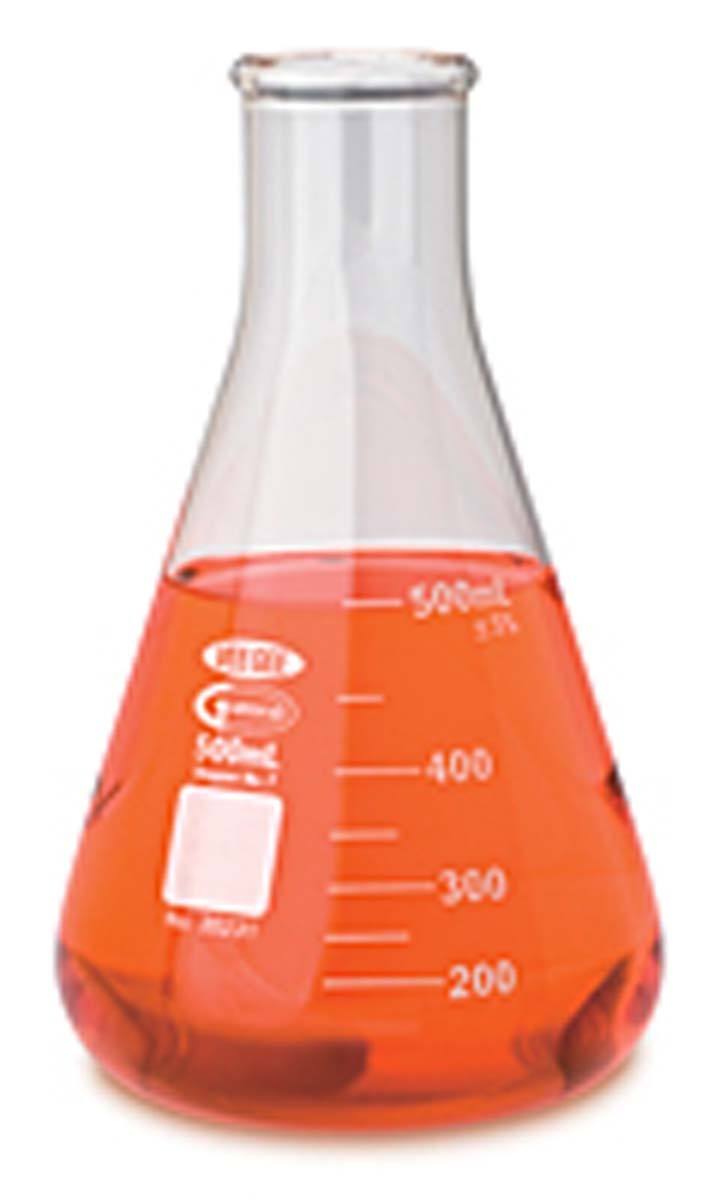
What is used to swirl, mix, or store chemicals?

a)

Beaker

b)

Flask

c)

Test Tube

d)

Graduated Cylinder

43.
This item is used to simply hold or approximately measure a liquid.
a)
beaker
b)
flask
c)
graduated cylinder
d)
test tube
44.

All matter is made of what

a)

energy

b)

atoms

c)

electrons

d)

compounds

45.

The positive particles of an atom are

a)

electrons

b)

positrons

c)

neutrons

d)

protons

46.

The central region of an atom where its neutrons and protons are is its

a)

nucleus

b)

electron cloud

c)

core

d)

center

47.

An atom with atomic number 6 would have how many protons

a)

6

b)

12

c)

3

d)

cannot be determined

48.

Particles in an atom that are neutral and have no charge are

a)

negatrons

b)

electrons

c)

neutrons

d)

protons

49.

A particle that moves around the nucleus is a(n)...

a)

Proton

b)

Neutron

c)

Electron

d)

Quark

50.

In the modern periodic table, elements are arranged by:

a)

atomic mass

b)

atomic number

c)

valence electrons

d)

number of isotopes

51.

Protons and electrons balance the charge of an atom.

a)

True

b)

False

52.

What particle uniquely identifies an element?

a)

Number of Valence Electrons

b)

Number of Protons

c)

Number of Electrons

d)

Atomic Mass

53.

Most of the mass in an atom is concentrated in the...

a)

electrons

b)

nucleus

c)

protons

d)

empty space

54.

Electrons are___________

a)

Extremely small even in comparison to protons.

b)

part of the nuclues.

c)

Super Positive, like cheerleaders!

d)

very large

55.
electrons have this type of charge?
a)
negative
b)
positive
c)
neutral
56.
An atom's mass number equals the number of...
a)
protons plus the number of electrons
b)
protons plus the number of neutrons
c)
protons
d)
neutrons
57.

3 subatomic particles that makeup an atom.

a)

Positive, negative, neutral

b)

Positron, Neutral, Electron

c)

Proton. Neutron, Electron

58.

The subatomic particle holds the atom together.

a)

Proton

b)

Neutron

c)

Electron

d)

Nucleus

59.

The subatomic particle that determines reactivity.

a)

Electron

b)

Proton

c)

Shell

d)

Neutron

60.

A neutron has a _____ charge.

a)

Positive

b)

Negative

c)

Neutral

d)

1/2 charge

61.

The atomic number tells you the number of

a)

Neutrons

b)

Protons

c)

Neutrons plus Protons

62.

Electrons are why the atomic mass has a decimal point.

a)

True

b)

False

63.

The atom model that we will use in this class is called ________ model.

a)

Rutherford

b)

Thompson

c)

Bohr

d)

Karen

64.

An isotope has different number of ______.

a)

Neutrons

b)

Protons

c)

Electrons

d)

Nucleus

65.

The Greek philosopher that came up with the idea of the atom.

a)

Reid

b)

Mr. Smith

c)

Joe Biden

d)

Democritus

66.

The building block of everything.

a)

Atoms

b)

Elements

c)

Positive

d)

Biology

67.

Bohr stated that _______ are found in shells orbiting the nucleus.

a)

Electrons

b)

Protons

c)

Neutrons

d)

Clouds

68.
Ions are: 
a)
atoms with a positive or negative charge
b)
atoms with no charge
c)
atoms with ONLY a positive charge
d)
atoms with ONLY a negative charge
69.
A negative ion is a 
a)
cation
b)
anion
70.
What charge does an atom have if it GAINS an electrons?
a)
Positive (+)
b)
Negative (-)
71.
What charge does an atom have if it LOSES an electron? 
a)
Positive (+)
b)
Negative (-)
72.
If you have 10 protons and 9 neutrons, what would the mass number be?
a)
19
b)
9
c)
10
d)
1
73.
What is the number of protons?
a)
34
b)
16
c)
18
d)
S
74.

What is the mass number of bromine?

a)

35

b)

45

c)

80

d)

79.904

75.

What is the atomic number of this element?

a)

12

b)

24

c)

23

76.
Two atoms of different elements will definitely have different numbers_____
a)
Nuclei
b)
Protons
c)
Neutrons
d)
Electrons
77.
An ion forms when an atom gains or loses
a)
Protons
b)
Neutrons
c)
Electrons
78.
a)
beaker
b)
cup-with-lines
c)
wash bottle
d)
graduated cylinder
79.
a)
Erlenmeyer flask
b)
beaker
c)
wash bottle
d)
watch glass
80.
a)
buret
b)
thermometer
c)
graduated cylinder
d)
Erlenmeyer flask
81.
a)
graduated cylinder
b)
beaker
c)
Erlenmyer flask
d)
bunsen burner
82.
a)
crucible and cover
b)
cup and lid
c)
clay triangle
d)
evaporating dish
83.

Is this a physical or chemical change?

a)

Physical

b)

Chemical

84.

This is an example of _____ change.

a)

Physical

b)

Chemical

85.
melting ice cream
a)
physical change
b)
chemical change
86.
a)
heterogeneous mixture
b)
homogeneous mixture
87.
Ice melting is an example of a
a)
physical change
b)
chemical change
c)
physical property
d)
chemical property
88.
Physical properties are
a)
properties that can be observed without changing the identity of the substance
b)
properties that describe how a substance changes into a completely different substance
c)
properties that we can only observe with our eyes
d)
properties that we need special tools to observe
89.

When was the war of 1812?

a)

2021

b)

1988

c)

1812