
 Worksheets
Vocab Review
Total questions: 213
Worksheet time: 6hrs 55mins
when water changes from a liquid to a gas - caused by heat
evaporation
condensation
freezing
melting
when water vapor (a gas) is cooled and forms liquid water
evaporation
condensation
freezing
melting

Which of these three states represents a liquid?
A
B
C
Matter is a substance that has ____________.
mass and volume
conductivity and buoyancy
density and buoyancy
solubility and conductivity

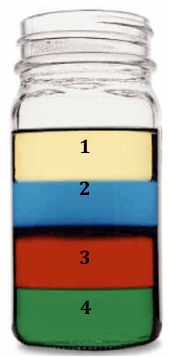
According to the Law of Conservation of Mass, what happens to the wood and oxygen when it is burned?
The wood disappears.
It stays the same chemically.
The atoms in the wood and oxygen rearrange and form smoke and ash.
Nothing.
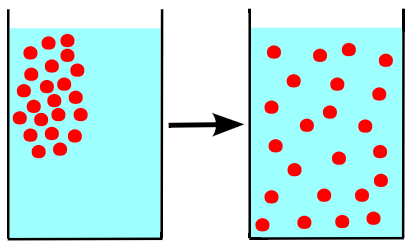
able to be attracted to a magnet
Condensation
Evaporation
Substance
Magnetic
The number of protons in the nucleus of an atom is called the --
atom
proton
atomic mass number
atomic number
A subatomic particle that has a negative charge is called --
a proton
a neutron
an electron
the nucleus
A neutron is ---
a subatomic particle with a negative charge.
a subatomic particle with a neutral charge.
the center of the atom where subatomic particles are found.
a subatomic particle with a positive charge.
An arrangement of elements in order of their atomic numbers such that elements with similar properties fall in the same column or group.
Atomic Number
Electron Cloud
Periodic Table
Nucleus
A subatomic particle with a positive charge is called --
a proton
a neutron
an electron
a nucleus
The smallest unit of an element that maintains the properties of that element is known as--
a proton
a neutron
an element
an atom
A region around the nucleus of an atom where electrons are found.
Electron Nucleus
Electron Cloud
Cloud of Electrons
Electron
As you move left to right on a row or period what happens?
Atomic number increases by 1
Electrons decrease
Number of shells decrease
Nothing

Elements in the same group or column have the same ...
# of valence electrons
# of shells
# of protons
Mass Number

The columns in the periodic table are called ___________.
Towers
Herds
Groups
Elements in the same group have __________
Similar Properties
Same number of shells
Similar Mass


Rubber is used in electrical wiring because it does not allow electricity to travel through it.
This is an example of the physical property
thermal conductivity
electrical conductivity
solubility

Heat can easily travel through metal, which is why it is often used to make pots & pans.
This describes the physical property of
thermal conductivity
electrical conductivity
malleability
luster

Physical property that describes the amount of matter or 'stuff' in something
mass
volume
density
phase or state of matter

Physical property of matter that describes the amount of space matter takes up
mass
volume
density
phase or state of matter

Iron metal is attracted to a magnet.
This is an example of the physical property
electrical conductivity
thermal conductivity
magnetism
solubility
Copper is a metal that is used in electrical wiring because electricity can easily travel through it.
This is an example of the physical property
thermal conductivity
electrical conductivity
solubility
magnetism
When 2 or more substances combine and a chemical change hasn't occurred.
Density
Volume
Mixture
Mass
A measure of how compact an object is.
Mass
Weight
Volume
Density
The ability to be dissolved easily.
Mixture
Solubility
Solution
Solvent
All are examples of Physical Properties EXCEPT
Color
Boiling Point
Reactivity
Density
All are examples of Chemical Property EXCEPT
Flammability
Combustibility
Reactivity
Weight
What is a solvent
A liquid that will dissolve a solid solute
Another word for solution
A thing that make drinks change colour
Usually the solid about to be dissolved
The substance being dissolved in a solution is the?
solution
solute
solvent
mixture
Beaker#1 has 100 mL of water and Beaker#2 has 500 mL of water. In order to identify common physical properties between both substances, both substances were heated to 100 oC. After a few minutes both substances begin to bubble at the same time.
This experiment provides evidence that the boiling point is a property independent of the amount of water.
This experiment provides evidence that the boiling point does change based on sample size.
This experiment provides evidence that the volume remains constant in the samples.
This experiment provides evidence of a change in the volume of the samples.

Which would be the most useful for identifying an unknown substance?
Weight because it does not depend on sample size
volume because it will depend of the size of the sample
mass because it will depend on the size of the sample
density because it does not depend on sample size
which substances could be grouped or sorted based on their physical property of MAGNETISM? Which group would magnetic?
Iron, Nickel, Cobalt
Iron, Nickel, Plastic
Iron, Nickel, Glass
Iron, Nickel Wood

What is weight?
The magnetic force acting on the body
The electric force acting on the body
The gravity acting on the body
The gravitational force acting on the body
What do you use to measure mass?
Newton Meter
Spring Balance
Weighing Scale
Beam Balance

In the question below, what is the independent variable? Question: Does adding dimples to car increase gas milage?
regular car
gas milage
dimpled car
the driver
In any experiment, the independent variable ______________.
remains the same to not mess up the experiment
is purposely changed to test the hypothesis
is known by the scientist before doing the experiment
Suppose you are doing an experiment. How can you know that the data is reliable?
perform the experiment one time
the data from the experiment is coming out similar
change the variable

What part of the experiment changes as a result of the independent variable?
The students
The study time
The grade on the quiz
What is empirical evidence?
hypothesis
data
What must always be present in order to form a true scientific explanation?
controlled variables
subjective evidence
empirical evidence
dependent variables
Which is an example of scientists using empirical evidence while researching dinosaurs?
scientist reading information about a book on the structures of dinosaurs
scientists creating descriptions based on their opinions and knowledge
scientists speaking to and learning from a fellow scientist about dinosaurs
scientists making observations from the fossils they have collected
Shelly wants to show an example of empirical evidence to her science teacher about how sunlight affects plant growth. Which of the following is empirical evidence that she could show her science teacher?
a page of a textbook that describes how sunlight is needed by plants
a picture of two different types of plants that are growing in the school yard outside of her science class
a data table of her experiment on plant height when she varied the amount of sunlight received by four plants
a video of a professor explaining how sunlight affects plant growth
A scientist is performing an experiment to determine the melting point of a new substance. Which action is an example of repetition?
Controlled variables (constants) ...
are not used in an experiment
are used to measure results
are used only on the control group
are not changed during the experiment
A valid experiment has ...
good procedures
repetition
making observations
all of these answers

Draw a conclusion from this graph:
the speed of A is increasing
the speed of B is greater than the speed of A
the speed of C is decreasing
All answers are correct
How do waves transfer energy?
through ocean waves
by the vibration of particles in a medium
through compression
by a combination of waves
What happens when light is refracted?
It changes direction
It becomes invisible
It releases heat
It moves faster
What happens to the speed of light as it exits the air and enters a glass of water?
It speeds up
It remains constant
It slows down
It first slows down and then speeds up
Which of the following has the greatest effect on refraction?
The length of the light wave as it approaches the medium
the speed of the light wave as it travels through the medium
the width of the light wave as it exits the medium
the reflection of the light wave off the medium's surface
Which of the following statements about how light waves travel is correct?
light waves travel the fastest through liquids and slowest through the air
light waves travel faster through solids than through air
light waves travel the fastest through solids and slowest through liquids
light waves travel faster through the air than through solids
What type of wave is sound?
Electromagnetic
Mechanical
Both Electromagnetic and Mechanical
Why do sound waves travel fastest through a solid?
Molecules in a solid are closer together and sound can move from one to another quicker.
Molecules in a solid are farther apart and sound can move from one to another quicker.
What is an example of a vacuum?
light
an empty room
air
outer space
Sound is made when a source of energy forces the matter to _________.
shake
vibrate
move
stay still
Sound waves cannot travel through _________.
paper
milk
hydrogen
empty space
Which temperature causes sound to travel more slowly?
hot
cold
High frequency sounds have ___________ pitch.
high
low
How can you see your face in the mirror?
Light is reflected from the mirrors surface.
Light is absorbed by the mirror.
Light is transmitted through the mirror.
In terms of waves, what does absorb mean?
Reflect means to take in the wave’s energy.
Reflect means the wave’s energy bounces off of it.
Absorb means to take in the wave’s energy.
Absorb means a wave’s energy bounces off of it.
When red or blue light shines on a certain ball, the ball looks black. But, when green light shines on it, it appears green.
What does this tell you about how the ball reflects light?
It only reflects green frequencies of light.
It reflects all frequencies of light except green light.
It reflects the green, red, and blue frequencies of light.
A group of students is measuring the amount of energy sand will absorb from light. They place 100 grams, of sand at room temperature under a lamp for 30 minutes. Which measurement would best show how much energy the sand absorbed?
the sand’s change in temperature
the light frequencies transmitted through the sand
the sand’s change in mass
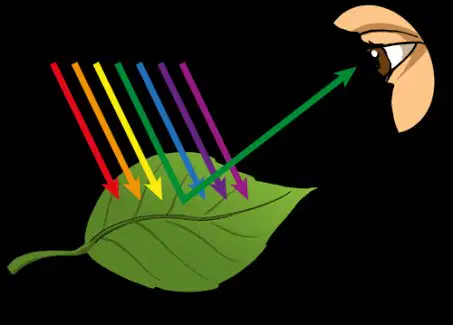
Most of the colors from the light are _____ by the leaf.
Absorbed
Reflected
This group is used to compare, the normal group without the variable.
Experimental
Control
Bias
Independent Variable

The graph shows the relationship between pressure and the depth in the earth's layers as rock is formed. Which statement summarizes the cause-and-effect relationship that the graph shows?
As the amount of pressure increases, the depth decreases
As the amount of pressure decreases, the deph increases
As the amount of pressure increases, the depth increases
As the amount of pressure decreases, the depth remains the same

What is the outcome (DEPENDENT) variable?
plant height
time in days
sunflower
daisy
_________________ is the use of scientific knowledge and processes to solve practical problems.
technology
models
life
world
Astronomers study objects as large as galaxies. Chemists study objects that can be as small as an atom. Even though scientists in each field study very different things, why are both astronomy and chemistry considered science?
both fields are based on the same experiments
both fields use the same basic scientific methods
both fields require the same basic knowledge
both fields use the same technology
This unit of measurement is used to measure distance within the solar system
miles
astronomical unit
kilometers
distance unit
An object that orbits the sun, is spherical, but has not cleared the area of its orbit
dwarf planet
planetesimal
asteroid
planet
Which of the following terms directly relate to the actual brightness of a star?
size and apparent brightness
absolute brightness and size
apparent magnitude and size
apparent magnitude and absolute brightness
Which star property determines a star's color?
Size
Distance
Brightness
Temperature
Antares is a star with a very high ABSOLUTE magnitude. What causes it to have such a low APPARENT magnitude from Earth?
It's very far from Earth
It's very close to Earth
The atmosphere blocks its light

Which statement describes the solar feature shooting off into space labeled B?
Sunspot
Solar Flare
Prominence

Which statement describes the solar feature shooting off into space labeled A?
Sunspot
Solar Flare
Prominence
Which solar feature has an arch?
Solar Flare
Prominence
Sunspot
Corona
What are the dark features that can be seen on the surface of the sun?
Sunspots
Solar Flares
Prominences
Corona
Which of the following is not a form of heat transfer?
Convection
Conduction
Insulation
Radiation
Which of the following are examples of heat transfer through conduction? You may choose more than one.
Using hand warmers to warm up your hands
Hot air balloon rising
Burning your hand on a curling iron
Spoon getting hot while sitting in hot tea
Which of the following are examples of heat transfer through convection?
You may choose more than one.
Hot air balloon rising
The second floor of a house is warmer than the first floor
Boiling water on the stove
Sitting around a campfire and feeling the heat from the flames
Which of the following are examples of heat transfer through radiation? You may choose more than one.
Feeling the heat from a candle
The water at the top of the pool feels warmer than the deep end
The sun warming the Earth
A space heater warming the room

Convection, conduction or radiation?
The heat a snake feels from the lamp above him
(a)
Convection, conduction or radiation?
The reason heating vents are usually placed in the floor of homes in the North.
(a)
Convection, conduction or radiation?
The reason you use an oven mitt to get a cookie sheet out of the oven.
(a)

Convection, conduction or radiation?
Heat from a blow dryer
(a)
the point at which the solvent cannot dissolve any more solute in a solution.
dilute
solvent
solute
saturation
Which of these is the best conductor of electricity?
Glass rod
Cotton string
Plastic tubing
Copper penny

The atomic number of an element is equal to its number of protons. Therefore, a logical conclusion is that the number of protons determines an element’s-
Mass and atomic weight.
The number of stable isotopes.
Identity
State of matter
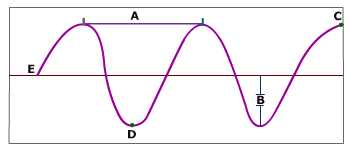
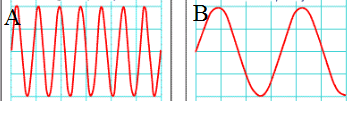

Which image represents a transverse wave?
A
B
What are properties of electromagnetic waves?
carry energy
can move through space
can move through matter
include x-rays
The number of waves that pass somewhere in a second is:
amplitude
frequency
wavelength
If the wavelength of a wave increased, what would happen to the frequency?
decrease
increase
stay the same
Condensation involves a change of state from ___ to ___
Liquid to Solid
Liquid to Gaseous
Solid to Liquid
Gaseous to Liquid
Condensation occurs when water vapour....
loses heat
gains heat
Replication is when one scientist
copies another scientist's experiment.
laughs at another scientist's experiment.
repeats their own experiment several times.
clones another scientist.
Repetition is when one scientist
copies another scientist's experiment.
bumps into another scientists.
repeats their own experiment several times.
clones a T. rex.
Repetition and Replication both involve doing
weird experiments
different experiments
the same experiment
Rick rolling
Which types of energy are potential energies? (Check all that apply)
Chemical
Gravitational
Thermal
Radiant
Elastic
Which types of energy are kinetic? (Check all that apply)
Nuclear
Thermal
Sound
Radiant
Chemical
Fireworks convert chemical energy into which types of energy?
Nuclear
Light
Heat
Electrical
Sound


The Law of Conservation of Energy states:
Energy can created or destroyed but not transformed
Energy cannot be created or destroyed, it can only transformed
Energy can't be created, destroyed or transformed
Energy cannot be created or destroyed.
The law of conservation of energy says the total energy before the change _______ the total energy after it
is less than
is more than
affects
equals
What energy transformation occurs from a light bulb?
Electrical energy = kinetic energy + potential energy
Electrical energy = electrical energy
Electrical energy = chemical energy
Electrical energy = light energy + heat energy
Physical properties....
change the matter when studied
can be observed and measured without changing the matter being studied
include the ability to burn and rust
are useless unless studied in a lab
______________________ can only be recognized when substances react or do not react chemically with one another.
Physical properties
Chemical properties
Flammable properties
Colorful properties
Flammability means the ability to _______ and is a _________ property.
melt; chemical
rust; physical
change; physical
burn; chemical
The condition where two substances in physical contact with each other exchange no heat energy. They are said to be the same temperature.
Thermal Energy
Cooler to Warmer
Energy Transfer
Thermal Equilibrium
The net transfer of heat is ___________ when both objects have ______________ temperature.
one, same
one, different
zero, same
zero, different

Which statement is correct when V and W are at thermal equilibrium?
The vertical (up and down) columns in the Periodic Table are called
groups
towers
periods
atomic numbers
Elements in a .................. have similar chemical properties.
period
group
row


What is this?
Atoms of an element
Mixture
Compound
Molecules

What is this?
Mixture
Compounds
Element
Mixture
What is this?
Mixture
Compounds
Molecule
Mixture

What are these?
Molecules of compounds
Elements
An atom
Mixture
What are these?
Compound
Elements
An atom
Mixture

This is a
Pure Substance
Molecule
Compound
Mixture
Chex mix contains pretzels, rye chips and chex cereal. It is an example of a(n)
solution/ homogeneous mixture
heterogeneous mixture
element
compound
Mixtures that have the same composition throughout are...
heterogeneous
homogeneous
elements
pure substances
What two types of matter are pure substances?
elements and solutions
compounds and mixtures
elements and compounds
mixtures and solutions
Granite is an igneous rock that contains the minerals quartz, feldspar, mica and others. The exact composition will vary from sample to sample. Granite is a(n) _______ .
element
compound
heterogeneous mixture
homogenous mixture/solution
Granite is an igneous rock that contains the minerals quartz, feldspar, mica and others. The exact composition will vary from sample to sample. Granite is a(n) _______ .
element
compound
heterogeneous mixture
homogenous mixture/solution
In the lab, Maya is using a substance that has a chemical formula and contains two different elements. Maya’s substance is a(n) _______ .
element
compound
heterogeneous mixture
homogenous mixture/solution
Blood is a fluid found in the bodies of humans and other animals. It can be physically separated into plasma, red blood cells and white blood cells. Blood is a ___________________
pure substance
mixture
What is at the middle of a Heliocentric system?
Mars
Moon
Sun
Earth
What is at the middle of a Geocentric system?
Sun
Neptune
Earth
The Universe
What does the Geocentric system look like?
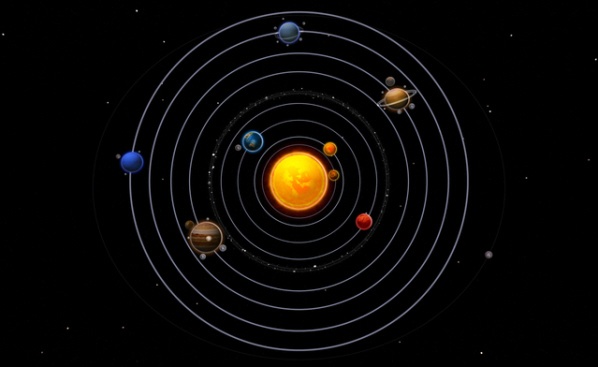
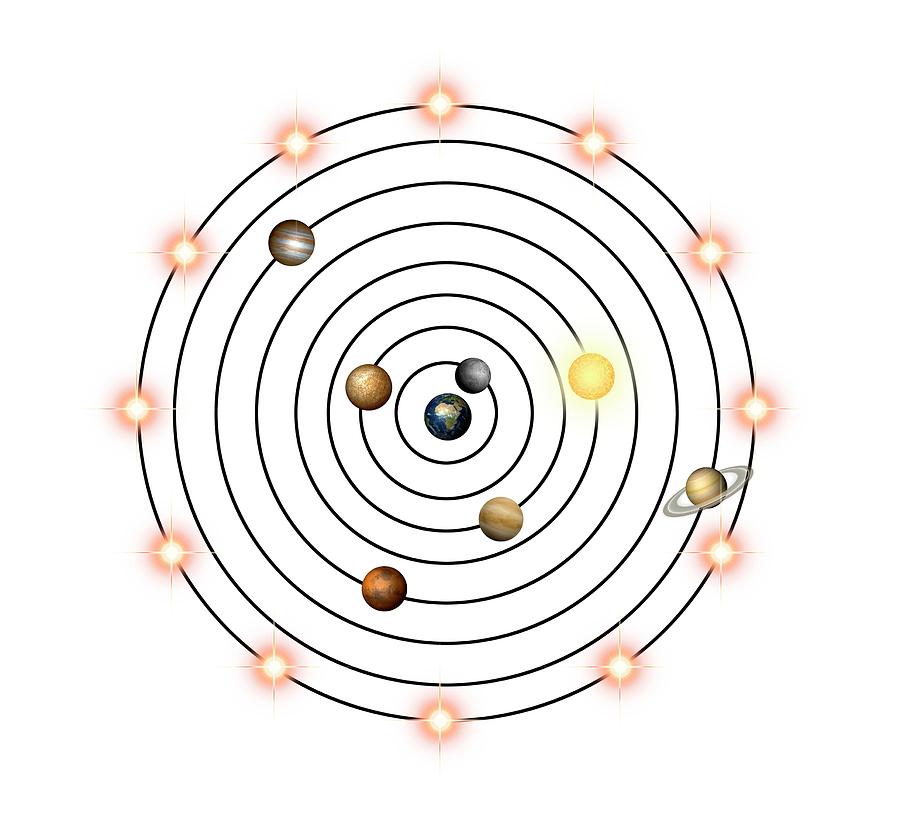
What does the Heliocentric system look like?


Kepler's first law states that the orbits of the planets are in the shape of a/an...
perfect circle
ellipse
spiral
The biosphere includes which of the following?
Trees/Flowers
Bacteria/Protists
Water/Clouds
Rocks/Minerals
Insects/Arachnids
A hurricane sweeps across the ocean and onto land, damaging the houses of the people who live along the coast. What spheres are affected by this natural disaster?
Biosphere
Hydrosphere
Geosphere
Atmosphere
A volcano erupts, sending ash and gases into the air and sending lava into a surrounding forest. What spheres are affected by this natural disaster?
Geosphere
Atmosphere
Biosphere
Hydrosphere
Which meaning goes with the Latin prefix Atmo-
Living things
Air
Land
Water
Which meaning goes with the Latin prefix Bio-
Living Things
Air
Land
Water
Which meaning goes with the Latin prefix Hydro-
Living Things
Air
Land
Water
Which meaning goes with the Latin prefix Geo-
Living Things
Air
Land
Water

Which sphere is "A"
Atmosphere
Geosphere
Biosphere
Hydrosphere

Which sphere is "B"
Atmosphere
Geosphere
Biosphere
Hydrosphere

Which sphere is "C"
Atmosphere
Geosphere
Biosphere
Hydrosphere

Which sphere is "D"
Atmosphere
Geosphere
Biosphere
Hydrosphere
Select all that are products of Photosynthesis.
Water
Carbon Dioxide
Oxygen
Sunlight (Light Energy)
Glucose (Sugar/food)
Exit: Carbon dioxide
Exit: Glucose
Exit: Oxygen
Exit: Water vapor

Which organelle is responsible making food (Glucose) using sunlight?
Cell Membrane
Nucleus
Chloroplast
Mitochondria
Only heterotrophs use respiration.
true
false
Only autotrophs use respiration.
true
false
Only autotrophs use photosynthesis but both autotrophs and heterotrophs use respiration.
true
false
The process in which a cell harvests energy from glucose and makes it into usable energy for the body is called-----
cellular fermentation
anaerobic respiration
aerobic fermentaion
cellular respiration
Which organelle in a cell produces a large amount of ATP through cellular respiration?
chloroplast
mitochondrion
nucleus
ribosome
During cellular respiration, energy is released from food. What else does the cell need for this process to take place?
carbon dioxide
oxygen
sunlight
nitrogen

