Wayground logo

Free Printable Worksheets

Font size

S
M
L
XL
Worksheets

Tissues Unit Exam

Total questions: 72

Worksheet time: 44mins

Name
Class
Date
1.
Which of the following is not one of the four tissue types? 
a)
Blood
b)
Connective
c)
Epithelial
d)
Nervous 
2.
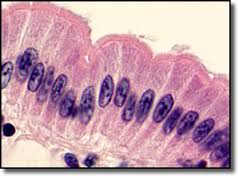
Which tissue is this?
a)
Simple Squamous
b)
Stratified Squamous
c)
Simple cuboidal
d)
Pseudostratified columnar
3.
Identify:
a)
Columnar
b)
Cuboidal
c)
Pseudostratified
d)
Transitional
4.
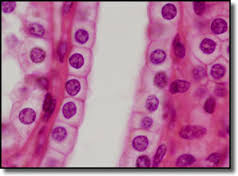
Identify:
a)
Pseudostratified
b)
Smooth Muscle
c)
Transitional
d)
Stratified Squamous
5.
Identify:
a)
Smooth Muscle
b)
Columnar
c)
Transitional
d)
Pseudostratified
6.
Identify:
a)
Columnar
b)
Cuboidal
c)
Transitional
d)
Simple Squamous
7.
Identify:
a)
Smooth Muscle
b)
Columnar
c)
Transitional
d)
Pseudostratified
8.
Identify:
a)
Smooth Muscle
b)
Columnar
c)
Transitional
d)
Pseudostratified
9.
This type of epithelium has only one layer of cells
a)
Stratified epithelium
b)
Simple epithelium
10.
Identify:
a)
Pseudostratified
b)
Simple cuboidal
c)
Transitional
d)
Simple Squamous
11.
Epithelium with more than one layer of cells
a)
Stratified epithelium
b)
Simple epithelium
12.
Type of tissue?
a)
Fibro
b)
Dense
c)
Adipose
d)
Blood
13.
What type of Connective Tissue are TENDONS and LIGAMENTS
a)
Dense Connective Tissue
b)
Osseous Tissue
c)
Loose connective Tissue
d)
Cartilage
14.

What tissue is this?

a)

Bone

b)

Cartilage

c)

Blood

d)

Adipose

15.
Which type of epithelial tissue stretches and is found in the bladder and other urinary organs?
a)
Transitional
b)
Simple Cuboidal
c)
Stratified Squamous
d)
Stratified Columnar
16.
Name this tissue
a)
Bone
b)
Cartilage
c)
Blood
d)
Adipose
17.
Connective tissue is
a)
The tissue that protects, supports, binds together, stores fat, produces blood cells
b)
Tissue that is the lining, covering, and glandular tissue of the body
c)
Tissue that contracts and shortens to produce movement
18.

What tissue is this?

a)

Blood

b)

Bone

c)

Adipose

d)

Hyaline

19.
Which type of muscle tissue would line the intestines?
a)
Smooth
b)
Cardiac
c)
Skeletal
d)
Transitional
20.

Name this tissue

a)

Loose connective tissue

b)

Cartliage

c)

Blood

d)

Dense connective tissue

21.
Which of the following is NOT a type of connective tissue?
a)
Bone
b)
Cartilage
c)
Skin
d)
Blood
22.

What tissue is this

a)

Transitional epithelium

b)

Cartilage

c)

Dense Fibrous

d)

Loose connective (Areolar)

23.

Found in the vertebra (spinal column) this type of connective tissue contains many elastic (yellow) fibers

a)

Hyaline

b)

Elastic

c)

Dense

d)

Reticular

24.
Name this tissue
a)
Bone
b)
Cartilage
c)
Blood
d)
Adipose
25.
Which of the following is a type of cartilage?
a)
Hyaline cartilage 
b)
Fibrocartilage
c)
Elastic cartilage 
d)
All of the above
26.

Which type of tissue is shown?

a)

elastic cartilage

b)

fibrocartilage

c)

hyaline cartilage

d)

dense irregular

27.
Attach muscles to bones
a)
Tendons
b)
Ligaments
28.

Which type of tissue is shown?

a)

dense irregular

b)

fibrocartilage

c)

elastic cartilage

d)

bone

29.
This type of dense connective tissue connects bone to bone at joints 
a)
Tendons
b)
Ligaments
30.

Which type of tissue is shown?

a)

loose connective (areolar)

b)

elastic cartilage

c)

reticular

d)

blood

31.

Which type of fiber is long and thin and allows for stretch and recoil?

a)

collagen

b)

elastin

c)

reticular

32.

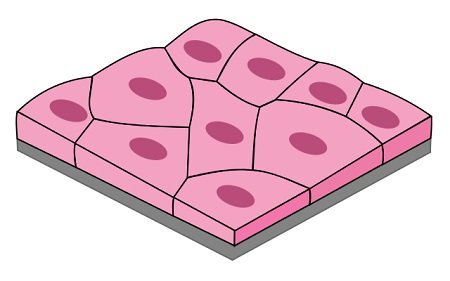
Name the type of epithelium

a)

simple cuboidal

b)

simple squamous

c)

simple columnar

d)

stratified squamous

33.

Which type of fiber is the thickest and has the highest strength?

a)

collagen

b)

elastin

c)

reticular

34.

Name the type of epithelium

a)

simple squamous

b)

stratified squamous

c)

simple cuboidal

d)

simple columnar

35.

Which type of fiber has short, fine highly branched fibers?

a)

collagen

b)

elastin

c)

reticular

36.

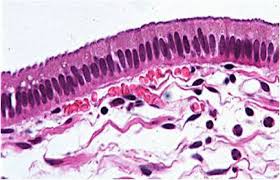
Which types of cells found in this epithelium produce mucus?

a)

goblet cells

b)

goblin cells

c)

neutrophils

d)

eosinophils

37.

Which type of tissue provides insulation?

a)

areolar

b)

elastic connective

c)

adipose

d)

hyaline cartilage

38.
Name the tissue
a)
Areolar
b)
Smooth Muscle
c)
Transitional
d)
Simple Squamous
39.
Flattened cells
a)
Squamous
b)
Cuboidal
c)
Columnar
40.
Name the tissue
a)
Pseudostratified
b)
Smooth Muscle
c)
Transitional
d)
Stratified Squamous
41.
Used in places where diffusion needs to occur, such as blood vessels and air sacs in the lungs
a)
Cuboidal
b)
Columnar
c)
Simple Squamous
d)
Stratified Squamous
42.
Name this tissue
a)
Skeletal
b)
Cardiac
c)
Smooth
43.

What physiological functions are enhanced by epithlial cells bearing microvilli and cilia?

a)

increased surface area for absorption & capturing debris

b)

decreased surface area for absorption & capturing debris

c)

increased surface area for absorption of oxygen

d)

decreased surface area for absorption of oxygen

44.
Identify:
a)
Columnar
b)
Cuboidal
c)
Pseudostratified
d)
Transitional
45.

Cube shaped

a)

Squamous

b)

Cuboidal

c)

Columnar

d)

Transitional

46.
Identify:
a)
Smooth Muscle
b)
Columnar
c)
Transitional
d)
Pseudostratified
47.

More tall than wide

a)

Squamous

b)

Cuboidal

c)

Columnar

d)

Transitional

48.
Identify:
a)
Pseudostratified
b)
Simple cuboidal
c)
Transitional
d)
Simple Squamous
49.

Single layer of cells of the same shape

a)

Simple

b)

Stratified

50.
Identify:
a)
Smooth Muscle
b)
Columnar
c)
Transitional
d)
Pseudostratified
51.

What are the 3 basic shapes of Epithelial Cells? (Select all that apply)

a)

Cuboidal

b)

Columnar

c)

Orbital

d)

Squamous

52.

Name the tissue

a)

Skeletal

b)

Cardiac

c)

Smooth

53.

Many layers of cells

a)

Simple

b)

Stratified

54.
Name this tissue
a)
Skeltal
b)
Cardiac
c)
Smooth
55.
Where is epithelial tissue found?
a)
glands
b)
covering body surfaces
c)
lines organs
d)
all of the above
56.
Which of the following is not one of the four tissue types? 
a)
Blood
b)
Connective
c)
Epithelial
d)
Nervous 
57.

What type of muscle tissue is this?

a)

Skeletal

b)

Smooth

c)

Cardiac

58.

Type of tissue that covers the body and many of its parts; Forms continuous sheets that contain no blood vessels.

a)

Muscle Tissue

b)

Nervous Tissue

c)

Epithelial Tissue

d)

Connective Tissue

59.

Which type of muscle is striated?

a)

skeletal

b)

smooth

c)

cardiac

60.
What is this?
a)
Blood
b)
Bone
c)
Neuron
d)
Adipose
61.
Which of the following is a type of muscle tissue
a)
Skeletal 
b)
Cardiac
c)
Smooth
d)
All of the above
62.
This type of muscle tissue is found only in the heart
a)
Skeletal
b)
Cardiac
c)
Smooth
63.
This type of muscle tissue is found in the walls of hollow organs such as the stomach 
a)
Skeletal
b)
Cardiac
c)
Smooth
64.

What type muscle tissue is this?

a)

Cardiac

b)

Smooth

c)

Skeletal

65.

Cardiac muscle is

a)

voluntary

b)

involuntary

66.
This type of muscle tissue is attached to bones wand helps control voluntary movement
a)
Skeletal
b)
Cardiac
c)
Smooth
67.
Which types of muscle tissue are voluntary
a)
Cardiac Muscle
b)
Smooth Muscle
c)
Skeletal Muscle
d)
Skeletal Muscle and Smooth Muscle
68.

The cells of the Nervous Tissue are called

a)

Glial Cells

b)

Neurons

c)

Muscle Cells

d)

Dendrites

69.

What type of muscle tissue is this?

a)

Cardiac

b)

Smooth

c)

Skeletal

70.

Smooth muscle is

a)

voluntary

b)

involuntary

71.

Which muscle tissue would you find attached to the bones?

a)

skeletal

b)

cardiac

c)

smooth

72.

Smooth muscle has

a)

branches

b)

intercalated discs

c)

striations

d)

No branches, striations, or intercalated discs