wayground logo

Free Printable Worksheets

NEW

Font size

S
M
L
XL
Worksheets

HBS 1.2.1-1.2.4

Total questions: 68

Worksheet time: 39mins

Name
Class
Date
1.
The arm and leg bones can be used to determine forensic height
a)
true
b)
false
2.
The pelvis of a female is _____ as compared to a male.
a)
wide and circular
b)
wide and heart-shaped
c)
narrow and circular
d)
narrow and heart-shaped
3.
Why does an infants skeleton contain a higher number of bones?
a)
They are born with many bones that have not fused completely
b)
They are mutant ninja bebes
c)
They are born with bones that eventually turn into cartilage
d)
all of the above
4.
The subpubic angle is 104 degrees. The body is most likely a
a)
male
b)
female
5.
The stage of fusion of various bones within a skeleton can be used to estimate the ___________ of the decedent. 
a)
age
b)
race
c)
gender
d)
height
6.
A skull is found with rounded eye orbits, a thin brow ridge, and no occipital protuberance.  What is the sex of this skull?
a)
Male
b)
Female
7.
a)
Humerus
b)
Ulna
c)
Radius
d)
Clavicle
8.
This is the smaller bone behind the Tibia
a)
Tibia
b)
Femur
c)
Fibula
d)
Pelvis
9.
One of the  ways to determine the race using bones is by examining the :
a)
the pelvis
b)
the leg bones
c)
skull
d)
the occipital bump
10.

Pelvis narrow, protuberance on occipital bone, sloping forehead.

a)

human male

b)

human female

c)

animal

11.

Forensic Anthropologists study _________

a)

bones

b)

blood

c)

missing persons

d)

ancient societies

12.
Which is the most reliable bone to determine the sex of a skeleton? 
a)
Femur
b)
Skull
c)
Pelvic bone
d)
Collarbone
13.

Observe both pelvises. The sacrum/coccyx in pelvis #1 is curved inward compared to pelvis #2. Which pelvis belongs to a male?

a)

1

b)

2

14.
What are the four categories of tissue?
a)
Nervous, connective, muscular and cardiac
b)
vascular, nervous, bone, cardiac
c)
Nervous, connective, muscular, epithelial
d)
Epithelial, connective, muscular, bone
15.
The presence of extracellular matrix is a characteristic which separates this type of tissue from other types:
a)
Nervous
b)
Musclar
c)
Connective
d)
Epithelial
16.
Which tissue covers the body’s surface and lines body cavities and many organs?
a)
Epithelial
b)
Connective
c)
Nervous
d)
Muscular
17.
The basic types of connective tissue are
a)
tendons, cartilage, bone, and blood.
b)
loose connective tissue, dense connective tissue, bone, and blood.
c)
fibrous connective tissue, cartilage, bone, and blood.
d)
collagen, cartilage, epithelium, and blood.
18.
Blood is considered connective tissue because
a)
it connects everything in the body.
b)
it has collagenous fibers.
c)
it contains many types of cells.
d)
it has an extracellular matrix.
19.
Smooth muscle
a)
is composed of soma, a muscle fiber.
b)
attaches to major bones.
c)
forms the heart muscle.
d)
lines the digestive tract and controls blood vessel diameter.
20.
Skeletal muscle is known by what other names?
a)
Vascular and involuntary
b)
Striated and involuntary
c)
Autonomic and smooth
d)
Striated and voluntary
21.

Which is not a type of muscle tissue?

a)

Skeletal

b)

Epithelial

c)

Smooth

d)

Cardiac

22.

Which type of muscle tissue is involuntary?

a)

Smooth only

b)

Cardiac only

c)

Smooth and skeletal

d)

Cardiac and smooth

23.

Which type of muscle tissue is voluntary

a)

Smooth only

b)

skeletal only

c)

smooth and skeletal

d)

cardiac and smooth

24.

Which type of muscle is striated?

a)

Cardiac only

b)

Cardiac and smooth

c)

Smooth and skeletal

d)

skeletal and cardiac

25.

The end of the muscle that is connected to the bone that does not move is called the _______

a)

tendon

b)

striated

c)

origin

d)

insertion

26.

Found in the heart

a)

smooth

b)

cardiac

c)

skeletal

d)

all

27.

Found attached to bones throughout the body

a)

smooth

b)

cardiac

c)

skeletal

d)

all

28.

Use to move materials through contractions

a)

smooth

b)

cardiac

c)

skeletal

d)

all

29.
Skeletal muscles always work _____.
a)
in groups
b)
in pairs
c)
singly
d)
none of the above
30.
Smooth muscle and cardiac muscle are considered _____ muscles because we can’t control them consciously.
a)
Immovable
b)
Involuntary
c)
Skeletal
d)
none of the above
31.
A ______________________ attach bones to each other at joints.
a)
Ligament
b)
Bone
c)
Joint
d)
Cell
32.
A ______ is a strong connective tissue that attaches muscle to bone.
a)
Tendon
b)
Ligament
c)
Cartilage
33.

What cell type is present in adipose tissue?

a)

Fibroblasts

b)

Adipocytes.

c)

Mesenchymal cells.

d)

Macrophages.

34.

Identify the adipose CT:

a)
b)
c)
d)
35.

Which is hyaline cartilage?

a)
b)
c)
d)
36.

What is the cell type of bone CT?

a)

Fibroblast

b)

Chondrocytes

c)

Osteocytes

d)

Lacunae.

37.

Which is bone CT?

a)
b)
c)
d)
38.

What type of epithelium?

a)

Stratified columnar.

b)

Simple cuboidal.

c)

Simple columnar.

d)

Stratified cuboidal.

39.

What type of epithelium?

a)

Simple columnar epithelium.

b)

Simple squamous epithelium.

c)

Stratified squamous epithelium

d)

Stratified columnar epithelium.

40.

What type of epithelium?

a)

Non-Ciliated pseudostratified columnar epithelium.

b)

Ciliated pseudostratified columnar epithelium.

c)

Simple squamous epithelium

d)

Stratified squamous epithelium.

41.

What type of epithelium?

a)

Non-Ciliated pseudostratified columnar epithelium.

b)

Ciliated pseudostratified columnar epithelium.

c)

Stratified columnar epithelium.

d)

Simple columnar epithelium.

42.

The name of the blue bone under the eye

a)

parietal bone

b)

zygomatic bone

c)

sphenoid bone

d)

mandible

43.

The name of the pink bone on the side of the head

a)

zygomatic bone

b)

occipital bone

c)

maxilla

d)

temporal bone

44.

The orange bone on the front of the skull

a)

parietal bone

b)

frontal bone

c)

nasal bone

d)

lacrimal bone

45.

The pink bone on the top of the skull

a)

parietal bone

b)

occipital bone

c)

frontal bone

d)

lacrimal bone

46.

The orange bone on the back of the skull

a)

lacrimal bone

b)

sphenoid bone

c)

occipital bone

d)

temporal bone

47.

The gray bone that makes up the bottom part of the jaw

a)

mandible

b)

maxilla

c)

lacrimal bone

d)

temporal bone

48.

The purple bone on the front of the face

a)

frontal bone

b)

nasal bone

c)

maxilla

d)

zygomatic bone

49.
The masseter is a chewing muscle. What is the other chewing muscle?
a)
frontalis
b)
buccinator
c)
sternocleidomastoid
d)
temporalis
50.

What is the muscle that allows you to close and protrude lips

a)

temporalis

b)

orbicularis oris

c)

orbicularis oculi

d)

buccinator

51.

This muscle around your eye helps you close your eye

a)

orbicularis oculi

b)

orbicularis oris

c)

frontals

d)

corrugator

52.
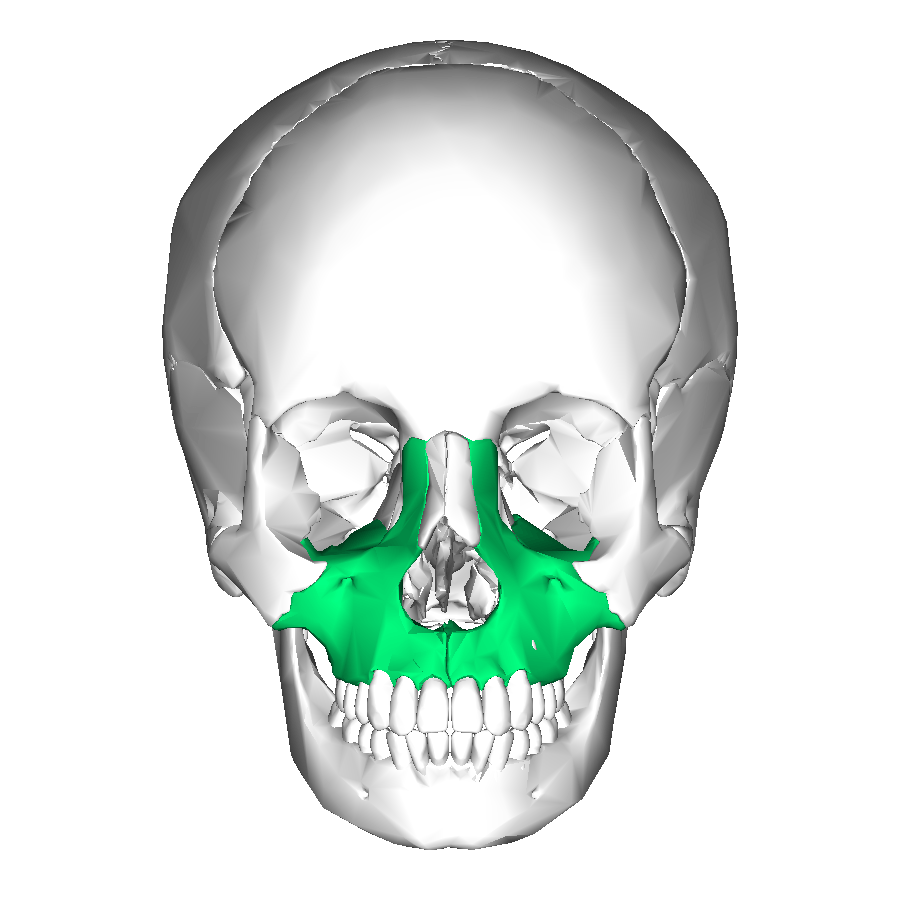
What is this?
a)
Mandible
b)
Maxillae
c)
Zygomatic
d)
Lacrimal
53.
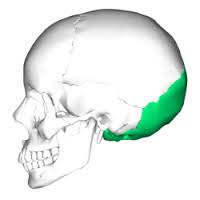
What is this?
a)
Parietal
b)
Occipital
c)
Frontal
d)
Temporal
54.
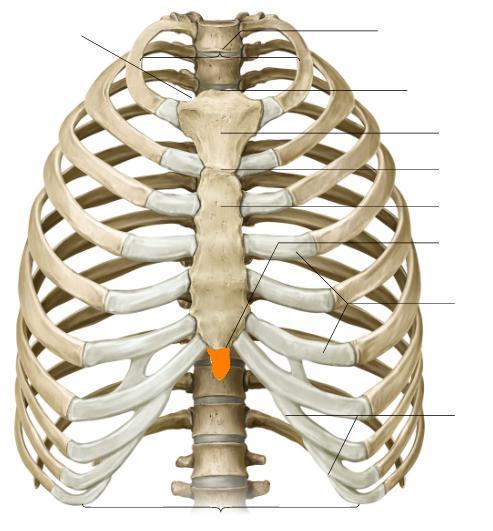
What is this?
a)
Manubrium
b)
Xiphoid Process
c)
Body
d)
Costal Cartilage
55.
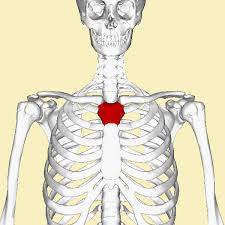
What is this?
a)
Manubrium
b)
Body
c)
Xiphoid Process
d)
Clavicle
56.
There are 12 of these and they articulate with ribs
a)
Thoracic vertebrae
b)
Cervical Vertebrae
c)
Lumbar Vertebrae
d)
Sacral vertebrae
57.
Manubrium, Body, and Xiphoid Process are all parts of the 
a)
Sternum
b)
Vertebral column
c)
Temporal bone
d)
Pelvis
58.

How many bones are in adult body?

a)

600

b)

206

c)

330

d)

300

59.

Identify the bone indicated.

a)

sacrum

b)

coccyx

c)

pelvis

d)

ilium

e)

ischium

60.

Identify the bone shown in the image.

a)

femur

b)

tibia

c)

fibula

d)

humerus

61.

Identify the bone indicated.

a)

femur

b)

pelvis

c)

patella

d)

tibia

e)

fibula

62.

Name the bone featured in the image.

a)

hyoid

b)

mandible

c)

atlas

d)

axis

63.

Identify the bones highlighted in the image.

a)

cervical vertebrae

b)

thoracic vertebrae

c)

lumbar vertebrae

d)

sacrum

e)

coccyx

64.

The ribs shown in red

a)

true ribs

b)

false ribs

c)

floating ribs

d)

cervical ribs

65.

Identify this bone

a)

scapula

b)

clavicle

c)

humerus

d)

radius

e)

ulna

66.

Identify the bones indicated by the circle

a)

ulna

b)

radius

c)

carpals

d)

metacarpals

e)

phalanges

67.

What bone is highlighted?

a)

Skull (Mandible)

b)

Clavicle

c)

Mandible

d)

Scapula

68.

Identify the circled bone

a)

distal phalanx II

b)

distal phalanx III

c)

proximal phalanx III

d)

proximal phalanx I