
 Worksheets
Unit 3 Chemical Reactions
Total questions: 52
Worksheet time: 1hrs 5mins
Which observation would most likely indicate that an endothermic reaction has occurred?
A color change
The production of gas bubbles
An increase in temperature of the surroundings
A decrease in temperature of the surroundings
Which inventory shows the correct names of elements and number of atoms for H2SO4?
Hydrogen = 1 atom; Sulfur = 4 atoms; Oxygen = 4 atoms
Hydrogen = 2 atom; Sulfur = 4 atoms; Oxygen = 4 atoms
Hydrogen = 2 atom; Sulfur = 1 atoms; Oxygen = 4 atoms
Hydrogen = 1 atom; Sulfur = 1 atoms; Oxygen = 4 atoms
Which inventory shows the correct names of elements and number of atoms for NH3?
Nitrogen = 1 atom; Hydrogen = 3 atoms
Nitrogen = 3 atoms; Hydrogen = 3 atoms
Nitrogen = 1 atom; Helium = 3 atoms
Nitrogen = 3 atoms; Helium = 3 atoms

When two clear liquids were combined, a precipitate formed. This most likely means that:
A chemical reaction took place.
The two substances have low boiling points.
One substance dissolved in the other.
The two substances are non-reactive.
Before a chemical reaction, the total mass of two reactants is measured to be 65 grams. After the reaction, what should be the total mass of the products?
0 grams
25 grams
45 grams
65 grams
The idea that matter is neither created nor destroyed in chemical reactions is known as the:
Law of conservation of chemicals.
Law of conservation of energy.
Law of conservation of mass.
Second law of thermodynamics.

During a lab experiment, a scientist numbers three beakers. Next, she pours 150 mL of liquid into each beaker. Each liquid is different. Then, the scientist adds 5 g of white solid baking soda (NaHCO3) to each beaker and stirs. She observes the results. In which of the beakers does the scientist observe clear evidence of a chemical reaction?
Beaker 1 only
Beaker 2 only
Beaker 3 only
Beakers 1, 2, and 3
Which compound has the most atoms?
CO2
C6H12O6
H2O
NaCl

A student sees the following safety symbols associated with a lab assignment. The assignment instructions indicate that a chemical reaction will occur when the student combines two clear non-toxic liquids that are at room temperature. Based on the safety symbols shown above, what evidence of a chemical reaction will the student likely observe?
Release of a toxic gas
Production of a loud sound
Emission of very bright light
Generation of thermal energy
Copper chloride (CuCl2) and aluminum react to produce aluminum chloride (AlCl3) and copper. Which of the following is the correctly balanced chemical equation for this reaction?
CuCl2 + Al → AlCl3 + Cu
3CuCl2 + Al→ AlCl3 + 2Cu
3CuCl2 + 2Al → 2AlCl3 + 3Cu
CuCl2 + 3Al → AlCl3 + 2Cu
Which best describes the difference between physical and chemical changes?
Physical changes only change the size or shape, but chemical changes change the molecular structure and create a new substance.
Chemical changes only change the size or shape, but physical changes change the molecular structure and create a new substance.
Physical changes are always visible changes and chemical changes are never visible.
Chemical changes are always visible changes and physical changes are never visible.
Give the reactants in the following equation:
CH4 + 2O2 → CO2 + H2O
CH4 and CO2
2O2 and CO2
CH4 and 2O2
2O2 and H2O
Give the products in the following equation:
CH4 + 2O2 → CO2 + H2O
CH4 and CO2
2O2 and CO2
2O2 and H2O
CO2 and H2O
Is this equation balanced?
N2 + 3H2 → 2NH3
Yes - it is balanced
No - it is not balanced
Is this equation balanced?
Mg + O2 → MgO
Yes - it is balanced
No - it is not balanced
What are at least 3 the signs a chemical reaction has occurred?
Color change, fizzing, smoke / odor
Bubbles formed, the temperature changed, the only exothermic reaction happened
The temperature changed, only endothermic reaction happened, fizzing.
What is NOT an example of a chemical reaction?
Color change.
Smell / odor.
Freezing.
Change in temperature.
What is the name for the right side of an equation?
(a)
What is the name for the left side of an equation?
(a)

Are fireworks an Exothermic or Endothermic reaction? Why?
Exothermic because it's loud, has colors, and gives off smoke.
Endothermic because it takes in heat from its surroundings, and temperature decreases.

How many Carbons are present on the reactant side?
1
2
3
4

What is "Conservation of Mass"?
Combination of one or more substances to create one or more different substances
Physical change of state in which identity of the substances remains the same
Law stating that the mass of products equals the mass of reactants
Open system in which some matter escapes

In the chemical equation pictured, if 24 grams of C5H11NH2 is added to O2 to produce a total of 30 grams of product, how many grams of O2 would need to be used?
54 grams
6 grams
15 grams
12 grams
Energy is ______ when bonds break.
gained
lost
released
absorbed
Energy is _____ when new bonds form.
absorbed
released
lost
gained
An _______ reaction is when more thermal energy is released than is absorbed.
endothermic
endergonic
exothermic
exergonic
2FeCl2+ Cl2--> 2FeCl3
How many grams of FeCl3 are produced?

Sodium and chlorine combine to form sodium chloride, or table salt. Sodium and chlorine are:
Producers
Products
Reactionaries
Reactants
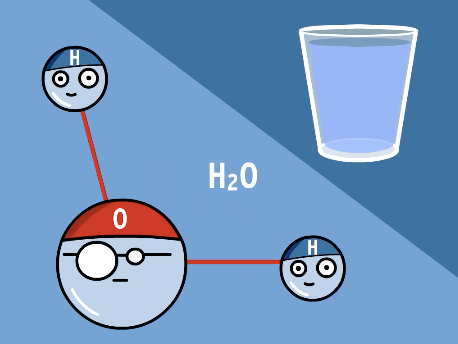
4 grams of hydrogen and 32 grams of oxygen will combine to form:
36 grams of water
28 grams of hydroxide
32 grams of oxygen
36 grams of deuterium
What is the part of the chemical equation in green called?
Fe + S → FeS
products
reactants
yield
input


Identify the following process: We light a matchstick.
Physical change
Chemical change

Identify the following process: The food and the air react.
Physical change
Chemical change

A process in which one or more substances change into others different substances.
a chemical reaction
a mathematical equation
a chemical equation
Which of these is NOT a sign that a chemical change has occurred?
A loss of transparency
An unexpected color change
A temperature change
The formation of a precipitate

