
 Worksheets
Unit 4- Reactions and Equations
Total questions: 104
Worksheet time: 3hrs 47mins
2FeCl2+ Cl2--> 2FeCl3
How many grams of FeCl3 are produced?
What is the part of the chemical equation in green called?
Fe + S → FeS
products
reactants
yield
input

Sodium and chlorine combine to form sodium chloride, or table salt. Sodium and chlorine are:
Producers
Products
Reactionaries
Reactants
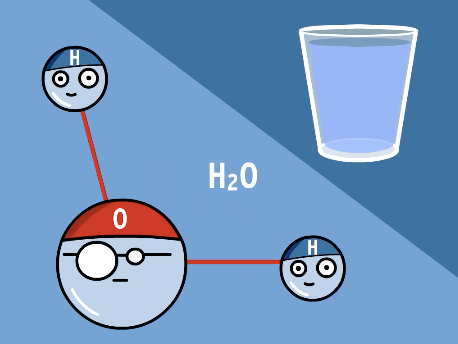
4 grams of hydrogen and 32 grams of oxygen will combine to form:
36 grams of water
28 grams of hydroxide
32 grams of oxygen
36 grams of deuterium
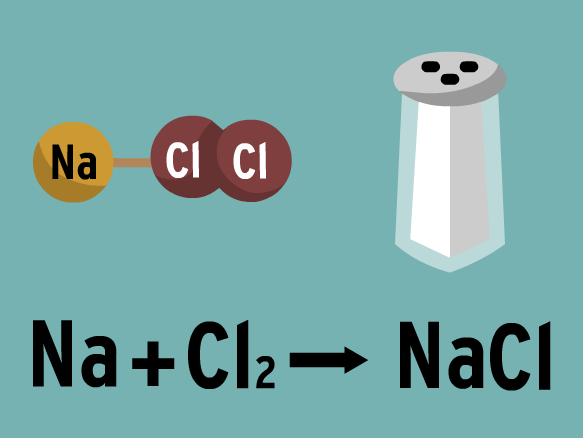
In a chemical reaction, 4 grams of sodium must combine with how many grams of chlorine to produce 10 grams of table salt?
4 grams
6 grams
8 grams
10 grams
What do we call the chemicals that result from a chemical reaction?
reactants
products
subscripts
coefficients
According to the Law of Conservation of Mass, what happens to the wood and oxygen when it is burned?
The wood disappears.
It stays the same chemically.
The atoms in the wood and oxygen rearrange and form smoke and ash.
Nothing.
What is the left part of a chemical equation called?
2H2 + O2 ---> 2H2O
Reactants
Yields
Products
Chemical equation
What is the right part of a chemical equation called?
2H2 + O2 ---> 2H2O
Reactants
Yields
Products
Chemical Equation
What is the total number of atoms present in 5Na3PO4?
5
55
40
8
How many Mn atoms are found in the following compound?
2MnO4
1
2
4
8
What is the little number after an element in a chemical equation called?
Example: H2
Coefficient
Atom
Subscript
Equation
Is the following equation balanced?
Al + O2 ---> 2Al2O3
YES
NO
What is the number before a chemical formula called?
Example: 2H2 + O2 ---> 2H2O
Coefficient
Atom
Subscript
Equation
How many elements are in C6H12O6?
1
2
3
4
Which of the following equations are correctly balanced?
12CO2 + H2O ---> C6H12O6 + O2
CO2 + H2O ---> 3C6H12O6 + O2
CO2 + 9H2O ---> C6H12O6 + O2
6CO2 + 6H2O ---> C6H12O6 + 6O2
Balance this equation:
H2 + Cl2 ---> HCl
It is balanced.
H2 + Cl2 ---> 2HCl
3H2 + Cl2 ---> 6HCl
H2 + 3Cl2 ---> 6HCl
Balance this equation:
HgO ---> 2Hg + O2
It is balanced.
2HgO ---> 2Hg + O2
2HgO ---> Hg + O2
HgO ---> Hg + 2O2
Complete the sentence.
During a chemical reaction, atoms ________.
can appear
can disappear
get rearranged
stop moving and vibrating
What is the Law of Conservation of Mass?
It states that matter cannot be created or destroyed.
It states that energy cannot be created or destroyed.
It states that matter can be created or destroyed.
It states that sound can be created or destroyed.
Mg + __HCl ---> MgCl2 + H2
Balance the following equation:
___ H2+ ___ O2→___ H2O
1, 1, 3
2, 2, 2
1, 2, 1
2,1, 2
_Zn+_HCl-->_ZnCl2 +_H2
_Mg + _Cl2 --> _MgCl2
What coefficients are needed to balance the reaction?
__P4 + __O2 --> __P2O3
_Mg + _Cl2 --> _MgCl2
_CH4 + _O2 --> _CO2 + _H2O
What are the products when nitric acid reacts with lithium?
lithium nitrate + hydrogen gas
lithium nitric + hydrogen gas
lithium nitrate + water
lithium nitric + water
What are the products when sulfuric acid reacts with calcium carbonate?
calcium sulfur + water + carbon dioxide
calcium sulfur+ carbon dioxide
calcium sulfate + water + carbon dioxide
calcium sulfate + carbon dioxide
What are the products formed when hydrochloric acid reacts with sodium hydroxide?
sodium chloride and hydrogen
sodium chloride and water
sodium chloric and water
chloride sodium and water
What can X be?
sulfuric acid + X --> magnesium sulfate and water
magnesium
magnesium oxide
magnesium chloride
magnesium ammonium
What is the gas produce when nitric acid is added to calcium?
oxygen
hydrogen
carbon dioxide
ammonia
Which of the following with react with hydrochloric acid to produce calcium chloride, water and carbon dioxide?
calcium
calcium nitrate
calcium oxide
calcium carbonate
Iron + ________________ --> iron sulfate + copper
What is missing?
Copper (II) oxide
Copper (II) sulfate
Iron (II) sulfate
Iron (II) oxide
Magnesium + hydrochloric acid --> _____________ + hydrogen
What is missing?
Magnesium oxide
Magnesium hydride
Magnesium chloride
Magnesium hydroxide
Magnesium + ________ --> magnesium oxide
What is missing?
Hydrogen
Sulphur
Oxygen
Oxide
Potassium iodide + lead (II) nitrate --> _____________ + lead (II) iodide
What is missing?
lead (II) nitrate
potassium nitrate
nitrogen
potassium iodide
Copper (II) oxide + _______________ -> copper (II) sulfate + water
What is missing?
sulfuric acid
hydrochloric acid
hydrogen
oxygen
________________ --> copper (II) oxide + carbon dioxide
What is missing?
copper (II) sulfate
copper (II) nitrate
copper (II) carbonate
copper (II) hydroxide

Methane + oxygen
water + carbon
carbon monooxide + water
oxygen gas + water
carbon dioxide + water
All of the following are indicators of a chemical reaction except one. Which one is NOT an indicator that a chemical reaction has taken place?
the production of heat or light
a color change
the production of gas bubbles
the dissolving of one substance in another
A student places a piece of a potato into a container of hydrogen peroxide and observes bubbles forming around the potato. The presence of bubbles might indicate the formation of a new substance because bubbles -
could show that a gas is forming
always rise to the top of a liquid.
are almost always perfectly spherical.
usually burst after a few minutes.
Hydrogen peroxide breaks down to form water and oxygen gas. A thermometer indicates an increase in temperature. Which observation is evidence that a chemical reaction has occurred?
The mass of the solution remains the same.
Phase changes are observed.
The color of the solution remains clear.
The temperature of the solution increases.

How many of the listed observations indicate a new substance was formed?

A clear liquid from a flask is poured into another clear liquid in a beaker. Which of the following results of this procedure would indicate a new substance was formed?
The level of the substance in the beaker is higher after the other liquid is added.
A yellow solid forms and then settles to the bottom of the beaker.
Which of the following describes a precipitate?
a new liquid forms when a solid reactant is heated and melts
a new solid product formed from two aqueous reactants
a new gas forms when a solid is dissolved in a liquid
bubbles form when two aqueous reactants are mixed
a new solid forms when an aqueous reactant freezes
Examine the chemical equation. Check the box(es) below of the particular indicator(s) present in the equation.
HCl (aq) + NaOH (aq) --> NaCl (aq) + H2O (l)
formation of water
formation of a gas
formation of a precipitate
color change
energy change
Examine the chemical equation. Check the box(es) below of the particular indicator(s) present in the equation.
AgNO3 (aq) + NaCl (aq) --> AgCl (s) + NaNO3 (aq)
formation of water
formation of a gas
formation of a precipitate
color change
energy change
Examine the chemical equation. Check the box(es) below of the particular indicator(s) present in the equation.
Na2CO3 (s) + HCl (aq) --> H2O (g) + NaCl (aq) + CO2 (g)
formation of water
formation of a gas
formation of a precipitate
color change

Examine the chemical equation. Check the box(es) below of the particular indicator(s) present in the equation.
gas evolution
color change
precipitate formation
energy change
water formation

Examine the chemical equation. Check the box(es) below of the particular indicator(s) present in the equation.
gas evolution
color change
precipitate formation
energy change
water formation

Examine the chemical equation. Check the box(es) below of the particular indicator(s) present in the equation.
gas evolution
color change
precipitate formation
energy change
water formation
An aqueous, cloudy, white baking soda solution was combined with solid, powdery, white calcium chloride. Once combined, the temperature of the test tube increased and bubbling occurred creating an aqueous, cloudy, white solution with a flaky, white solid. What indicators of a chemical change are present?
energy change
Color change
gas bubbling
precipitate formation
Silicon dioxide, also known as silica, is an oxide of silicon with the chemical formula SiO2. Silica is one of the most complex and most abundant families of materials, existing as a compound of several minerals and as synthetic product. What is the formula mass of the covalent compound silicon dioxide (SiO2)?
7193.6 amu
30.0 amu
44.1 amu
60.1 amu
Fluorine is added to city water supplies in the proportion of about one part per million to help prevent tooth decay. Several fluoride compounds are added to toothpaste, also to help prevent tooth decay. What is the molar mass of fluorine gas?
18.998 amu
38 amu
9 amu
18 amu
Sodium hydroxide is used in many industries: in the manufacture of pulp and paper, textiles, drinking water, soaps and detergents, and as a drain cleaner. What is the molar mass of NaOH?
40 amu
38.989 amu
23.998 amu
57.004 amu
Potassium sulfide is the inorganic compound with the formula K2S. Potassium sulfides are formed when black powder is burned and are important intermediates in many pyrotechnic effects, such as senko hanabi and some glitter formulations. What is the molar mass of K2S?
110.3 amu
110 amu
78.2 amu
110.2 amu
What is the molar mass of Cs2SO4 ?
361.9
361.8
313.9
180
H = 50%
H = 14.3%
H = 7.8%
H = 28.1%
Which element has an abundance of 39.03% in the compound sodium phosphate, Na3PO4
Na
P
O
None of the above
Which element in the compound potassium cyanide, KCN, has a percent composition of 60.97%?
K
C
N
None of the above
2.40 g of an explosive, J, contains 0.473 g of nitrogen. J also contains 33.8% carbon and 1.41% hydrogen by mass. The remainder of J is oxygen.
What is the empirical formula of J?
C4HNO2
CH2N2O
C2HNO2
CHNO
2.40 g of an explosive, J, contains 0.473 g of nitrogen. J also contains 33.8% carbon and 1.41% hydrogen by mass. The remainder of J is oxygen.
What is the empirical formula of J?
C4HNO2
CH2N2O
C2HNO2
CHNO

