
 Worksheets
Unit 2 Review- What is Life?
Total questions: 76
Worksheet time: 3hrs 40mins

Reproduction that only involves one parent and all offspring are identical; for example, binary fission of bacteria or amoebas.
Asexual
Sexual
Division
Addition

Reproduction that involves cells from two parents uniting to produce the first cell of a new organism.
Asexual
Sexual
Budding
Division
Living things are based on a universal genetic code. What molecule is responsible for that code?
RNA
Lipid
Protein
DNA
Maintaining a stable internal environment is called
homeostasis
equilibrium
balance
evenness
Identify the characteristic: Green plants produce their own food through the process of photosynthesis.
All living things use energy
All living things contain cells
All living things maintain homeostasis
All living things grow
Identify the characteristic: A camel has eyelashes that work to keep the dust and sand out of its eyes.
All living things adapt/respond to their environment
All living things grow
All living things have cells
All living things use energy
Ocular lens = 10x
Objective lens = 55x

The largest field of view shown is under the total magnification _____X.
40
100
400
This microscope transmits a beam of electrons through a very thinly sliced specimen
Compound light microscope
Scanning Electron Microscope
Transmission Electron Microscope
Eyepiece
What does it mean to make the object become clearer, sharper, or more in focus?
magnification
resolution
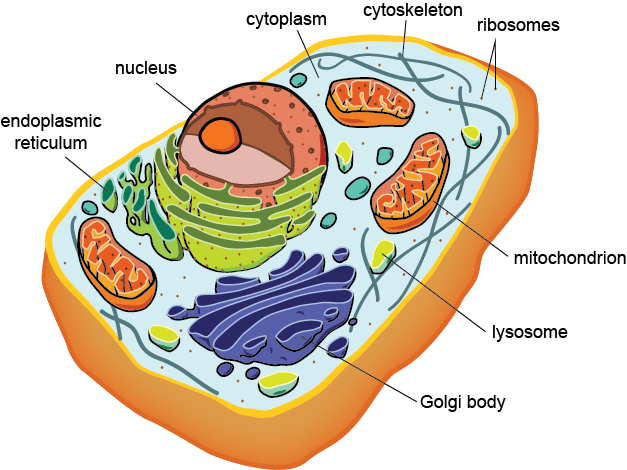

The endosymbiotic theory most directly explains which of the following
Mitochondria and chloroplast have small, prokaryotic ribosomes
DNA in chloroplasts code for some proteins
Some bacteria develop resistance to antibiotics
Bacteria contain a single circular chromosome

Which of the following is least efficient?
A
B
C
D

Which of the following has the largest surface area to volume ratio?
A
B
C
D


takes over the cell's functions.


The Lytic cycle consists of......
Using a host cell to manufacture more candy; rainbows burst out of the cell
Using a host cell to manufacture more viruses; viruses burst out of the cell
Not using a host cell to manufacture more viruses; infecting it from within remaining dormant until it is triggered.
Incorporating the viral genome (DNA) into the host genome (DNA) infecting it from within remaining dormant until it is triggered.

The Lysogenic cycle consists of......
Using a host cell to manufacture more candy; rainbows burst out of the cell
Using a host cell to manufacture more viruses; viruses burst out of the cell
Not using a host cell to manufacture more viruses; infecting it from within remaining dormant until it is triggered.
Incorporating the viral genome (DNA) into the host genome (DNA) infecting it from within remaining dormant until it is triggered.

Prokaryotic cells do NOT have membrane bound organelles or ______________________________.
cytoplasm
a nucleus
ribosomes
DNA


Structure C is the
chromatin
plasmid
pili
cell wall
Structure E is the
chromatin
plasmid
cell membrane
cell wall
How long ago did the first life (bacteria) appear on Earth?
200 years ago
2,000 years ago
2 million years ago
2 billion years ago
A cell has a cell wall and chloroplasts. What kind of cell is this?
Prokaryotic
Eukaryotic
Plant
Animal
A cell has a cell wall but no nucleus or chloroplasts. What kind of cell is it?
Prokaryotic
Eukaryotic
Plant
Animal
A cell biologist finds a cell without chloroplasts, but it still contains a nucleus, cell membrane, and a cytoplasm. What kind of cell is this?
Prokaryotic
Eukaryotic
Plant
Animal
Which cell is a prokaryote


Which cell is a eukaryote?

What structures do all cells have in common?
cytoplasm
Ribosomes
DNA
cell membrane
nucleus
What do plant cells have that animal cells do not?
Chloroplasts
Cell wall
Large vacuoles
Nucleus
ribosomes
What are the levels of Biological organization in order from broadest to most specific
Biosphere - community - ecosystem - population - organism
Organism - population - community - ecosystem - organism
Organism - community - population - ecosystem - Biosphere
Biosphere - ecosystem - community - population - organism
The heart is an organ because it is a group of _____________ working together.
organelles
cells
tissues
systems
Choose the correct order of organization from simplest to most complex.
tissues --> cells --> organs --> organism --> organ system
organism --> organ system --> organs --> tissues --> cells
organs --> organ system --> tissues --> organism --> cells
cells --> tissues -->organs --> organ systems --> organism
Choose the correct order of organization from most complex to simplest.
tissues --> cells --> organs --> organism --> organ system
organism --> organ system --> organs --> tissues --> cells
organs --> organ system --> tissues --> organism --> cells
cells --> tissues -->organs --> organ systems --> organism
Which of the following examples is correctly matched with its level of organization?
A monarch butterfly is an organ system.
The brain is a type of tissue.
A mitochondrion is an organelle.
A liver is a type of cell.

