
 Worksheets
Ch. 4 Review
Total questions: 40
Worksheet time: 3hrs 16mins
What is the color of the light that sodium compounds give off?
Green
Red
Violet
Yellow-orange
Which is the electron configuration of an aluminum atom (13Al) in the ground state?
1s2 2s2 2p6 3s2 4s1
1s2 2s2 2p6 3s2 3p3
1s2 2s2 2p6 3s2 3p2
1s2 2s2 2p6 3s2 3p1

An atom becomes _________ when it gains electrons.
Positive
Negative
Neutral
Invinsible

An atom becomes _______ when it loses electrons.
Positive
Negative
Neutral
Invinsible
Which subatomic particle is directly connected to the process of the flame test?
proton
neutron
electron
quart
When an atom _______________ _____________, its electrons can use this energy to move to a higher energy level.
releases energy
absorbs energy
emits radiation
gets rid
Flame tests are most useful for
blood testing
watching fireworks
identification of elements
none of the above
Which of the following would pairs would give the same flame test results?
NaCl & MgCl2
LiCl & LiBr
CaCO3 and MgCO3
H2O and HCl
What are valence electrons?
The total number of electrons in an atom
The number of electrons in the outermost shell
The number of electrons in the second shell
The number of protons in the outermost shell
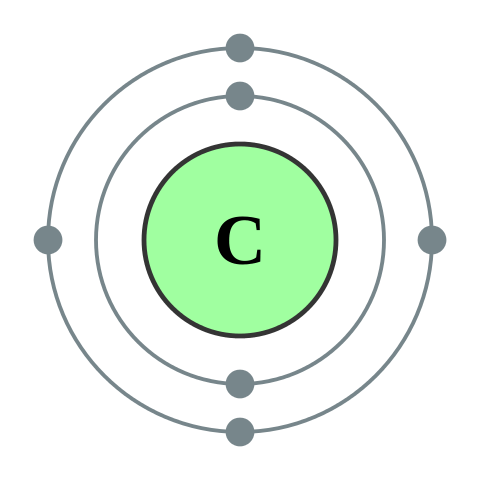
How many valence electrons does carbon have?
4
5
6
7

How many electron shells does Silicon have?
14
2
3
4
The second shell from the center of an atom can hold how many electrons?
2
6
8
18
How many electrons can the s sublevel hold?
14
10
2
6
How many electrons can the p sublevel hold?
8
10
2
6
The reason that Noble Gases do not react is because
Their outer electron shell is filled
Their inner electron shell is filled
They are able to bond to fill their outer shell
None of the above, Noble Gases are highly reactive
When atoms gain electrons __________.
the atoms become electrically neutral
the atoms become positively charged
their atomic mass significantly increases
the atoms become negatively charged
An ionic bond will happen between
metal and nonmetal
nonmetal and nonmetal
metal and metal
Metals make _____ ions.
positive
negative
neutral
Nonmetals will make _____ions.
positive
negative
neutral
Which of the following is the correct ionic formula for calcium sulfide?
Ca2S2
CaS
S2Ca2
SCa
Name the compound from it's formula: BaI2
Iodine barium
Iodine bariumide
Barium iodine
Barium iodide
Lead Chloride is an ionic compound, made up from Pb2+ ions and Cl- ions. Which is the correct formula for this compound?
PbCl3
PbCl
PbCl4
PbCl2
Magnesium Hydroxide is an ionic compound made up from Mg2+ and OH- ions. Which is its correct formula?
MgOH
MgOH2
Mg(OH)2
MgO
Na+ and Cl- create...
Na2Cl
NaCl2
Na2Cl2
NaCl
Potassium and Sulfur create...
KS
KS2
K2S
K2S2
Al3+ O2-
What is the formula for copper(I) and sulfate?
CuSO3
CuSO4
Cu2SO3
Cu2SO4

