

Wayground logo

Free Printable Worksheets

Font size

S
M
L
XL
Worksheets

Ecology Unit Quiz

Total questions: 53

Worksheet time: 1hrs 8mins

Name
Class
Date
1.
Which of the following interactions is an example of symbiosis?
a)
an insect acts as a pollinator for a plant species
b)
a population of hummingbirds migrates during the summer
c)
a tropical bird performs a courtship dance for a mate
d)
a mother bear feeds and protects her cubs
2.
In a simple food chain, small fish eat algae; bigger fish eat the smaller fish; bears eat the bigger fish. 
Using the above scenario, which of these would have the largest amount of energy?
a)
algae
b)
bears
c)
big fish
d)
small fish
3.
Lichens and mosses that first live in uninhabited areas are examples of
a)
secondary species
b)
non-native species
c)
pioneer species
d)
climax species
4.

One living thing. Ex. One frog, one tree, one rabbit

a)

Population

b)

Organism

c)

Community

d)

Ecosystem

5.

All of the living and non-living parts of the environment in the same area.

a)

Population

b)

Community

c)

Organism

d)

Ecosystem

6.

Click on all the biotic factors

a)

rabbit

b)

tree

c)

soil

d)

water

7.

Temperature, light, air, water, and soil are all _____ parts of the environment

a)

alive

b)

biotic

c)

abiotic

d)

living

8.

In the woods, there are ducks and mice. They both compete for grasshoppers as the only source of food in that area at that time. The ducks outcompete the mice, and the mice die out in that area. This is an example of:

a)

Neutralism

b)

Commensalism

c)

The competitive exclusion principle

d)

Mutualism

9.

Barnacles are animals that cannot move. In order to get food, they attach to whales and catch any floating plankton in the water. The whale is neither helped nor harmed in the interaction. What type of symbiosis is this?

a)

Mutualism

b)

Commensalism

c)

Parasitism

d)

Neutralism

10.

In the wild, some alligators gets their teeth cleaned by birds. The birds gets their food from the alligators' teeth.

What type of symbiosis is this?

a)

Mutualism

b)

Commensalism

c)

Parasitism

d)

Neutralism

11.

In an ecosystem, there are populations of moose, rabbits, grass, and pine trees. Suddenly, a fire blazes through the area, which kills all of the populations. As the months go on, new species of grass begin to take root. This attracts animals, and eventually the ecosystem is restored.


What type of ecological succession happened?

a)

Primary succession

b)

Secondary succession

c)

Tertiary succession

d)

None of the above

12.

In this photo, what is an abiotic factor?

a)

Deer

b)

Grass

c)

rain

13.

What is this picture describing?

a)

It is describing natural selection.

b)

It is describing direct competition between flamingos and ducks.

c)

It is describing abiotic factors of the tundra.

d)

It is describing the niche of each bird.

14.
According to the food web, which of the following organisms can be classified into more than one trophic level? 
a)
grasshopper
b)
owl
c)
rabbit
d)
frog
15.

Tell if the item is an abiotic factor or biotic.....

TREE

a)

Abiotic

b)

Biotic

16.

Tell if the item is an abiotic factor or biotic.....

Water

a)

Abiotic

b)

Biotic

17.
Abiotic factors in the environment are all __________. 
a)
living
b)
nonliving
18.
Energy in an ecosystem is used for growth or lost as __________
a)
light
b)
heat
c)
death
d)
biomass
19.

Algae, grasses and trees are all __________.

a)

decomposers

b)

consumers

c)

producers

d)

pyramids

20.
A trophic level represents a _________. 
a)
consumer
b)
feeding level
c)
speeding level
d)
cooking level
21.

Which of the following members of the food chain is a tertiary consumer?

a)

tree

b)

insect

c)

bird

d)

fox

22.
What is the source of energy that flows through most of the food chains on Earth?
a)
plants
b)
the sun
c)
temperature
d)
wind
23.

What is the definition of an ecosystem?

a)

A group of animals of the same species living in the same place.

b)

All the plants and animals living in the same place.

c)

All organisms living in the same place and the abiotic factors that affect them.
24.
The efficiency of energy transfer from a lower trophic level to the next highest level is roughly
a)
1%
b)
10%
c)
100%
d)
1000%
25.
The arrows in a food chain or web represents what?
a)
They point to the organism that is being eaten.
b)
It shows how sunlight flows within an ecosystem.
c)
They show what direction the energy is flowing between organisms. 
d)
They represent how water is transferred within a habitat.
26.
Biomass refers to
a)
Chemical Energy
b)
Light Energy
c)
Rank in the feeding heirarchy
d)
Amount of living tissue at the tropic level
27.
Bird & Tree: A bird builds a nest in a hole in the trunk of the tree. It is protected from the rain and predators. The tree is not harmed or helped by the bird.
a)
Mutualism
b)
Commensalism
c)
Parasitism
28.
A human & a Tape Worm: The tape worm gets a place to live in the intestines of the human and food from the human. The human loses weight and nutrients from the tape worm.
a)
Mutualism
b)
Commensalism
c)
Parasitism
29.
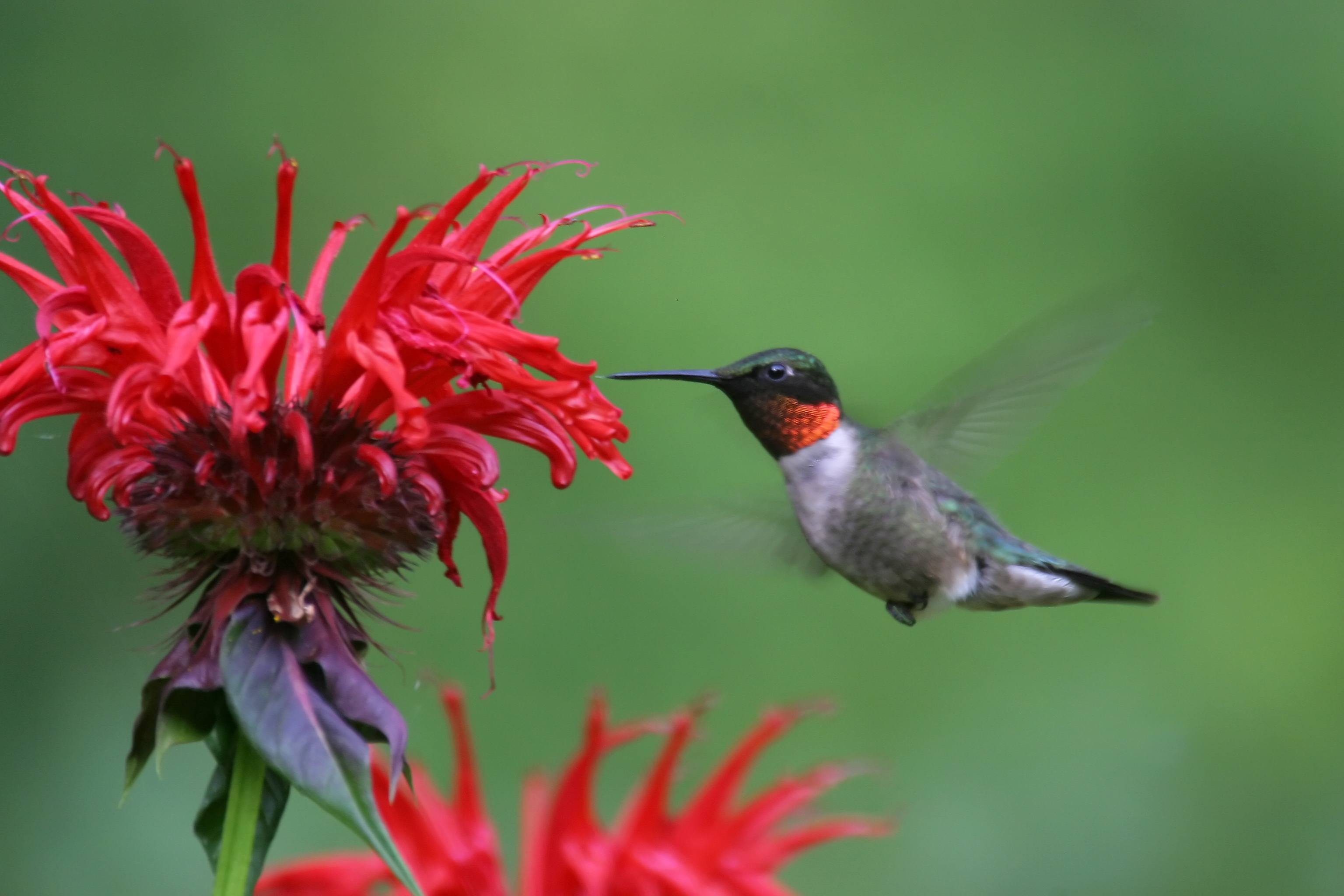
What type of symbiosis?  Hummingbirds feed on nectar from flowers.  The flowers are pollinated by hummingbirds as they move from flower to flower.
a)
commensalism
b)
mutualism
c)
parasitism
d)
predation
30.
What is the name of an animal that is hunted and eaten by other animals?
a)
producer
b)
prey
c)
predator
d)
decomposer
31.

Groups of different populations that live in a given area and interact are called a(n)...

a)

Community

b)

Colony

c)

Population

d)

Ecosystem

32.
What is the term for each step in the transfer of energy and matter within a biological community?
a)
energy path
b)
food web
c)
trophic level
d)
food pyramid
33.
diagram that shows the energy available to each trophic level in an ecosystem; 10% is passed on to upper levels, the rest is lost as heat
a)
succession 
b)
cellular respiration
c)
energy pyramid
d)
biochemical cycle
34.
Study of interactions between organisms and their environment 
a)
niche
b)
community 
c)
ecology
d)
ecosystem
35.

Food webs are models that show

a)

one sequence of producers and consumers.

b)

complex networks of feeding relationships.

c)

stored energy in food chains

d)

only primary consumers in an ecosystem

36.
What is the order of succession shown in this figure?
a)
A, B, C, D
b)
B, A, D, C
c)
C, D, A, B
d)
D, A, B, C
37.
What is the goal of the pioneer species in Primary Succession?
a)
To kill the dead materials after a disaster
b)
To rebuild soil
c)
To feed Johnny
d)
To put fresh oxygen into the air
38.
After a volcanic eruption, lava covers the land. What is the order that plants grow to repopulate the area?
a)
Lichens → Shrubs → Grasses → Trees
b)
Lichens → tree → shrubs→Grasses
c)
Grasses → Lichens → Shrubs → Trees
d)
Lichens → Grasses → Shrubs → Trees
39.
Reaches a climax community quicker because soil is already present
a)
primary succession 
b)
secondary succession
c)
both types of succession
40.
What is this called?
a)
Food Web
b)
Food Chain
c)
Abiotic Factors
41.
What does a Primary Consumer eat?
a)
Tertiary Consumers
b)
Secondary Consumers
c)
Producers
42.
If the grasshopper were to be removed completely from the food web, what organism would be most effected?
a)
The squirrel
b)
The shrew
c)
The deer
d)
The rabbit
43.
Which level has the most energy available?
a)
producer
b)
primary consumer
c)
secondary consumer
d)
tertiary consumer
44.
The rabbit in this food web would be considered a:
a)
Decomposer
b)
Producer
c)
Secondary Consumer
d)
Primary Consumer
45.
What does fungi do to dead plants and animals?
a)
Leave them there
b)
Decompose them
c)
Wait for other animals to eat them
d)
Move away
46.
In the energy pyramid here, how much of the energy in the producers gets passed to the herbivores?
a)
10%
b)
20%
c)
80%
d)
90%
47.
Why are decomposers located to the side of the pyramid?
a)
They recycle dead material from all levels
b)
The eat living things from all levels
c)
They are not a living organisms
d)
They are too large to fit on the pyramid
48.
What trophic level has the most energy?
a)
Autotrophs
b)
Heterotrophs
c)
Omnivores
d)
Consumers
49.

An organism that obtains energy from eating animal tissue.

a)

Omnivores

b)

Carnivores

c)

Herbivores

d)

Animals

50.

An organism that obtains energy by consuming plants and animals.

a)

Omnivores

b)

Carnivores

c)

Herbivores

d)

Humans

51.

An organism that uses an outside source of energy like the sun to create energy-rich food molecules.

a)

Consumer

b)

Producer

c)

Decomposer

d)

Parasite

52.

The process of plants using energy from the sun to create the first trophic level is called?

a)

Photosynthesis

b)

Chemosynthesis

c)

Cellular Respiratation

d)

Primary Producers

53.

What is a keystone species?

a)

A species that helps to hold an ecosystem together

b)

A species that lives in or around rocks

c)

Keys and stones have nothing to do with ecology

d)

A keystone isn't a living thing, it's just a stone
