wayground logo

Free Printable Worksheets

Font size

S
M
L
XL
Worksheets

Exam #1 1308

Total questions: 72

Worksheet time: 2hrs 4mins

Name
Class
Date
1.

These foods contain A LOT of which Bio-molecule that our body LOVES to use for Energy?

a)

Protein

b)

Nucleic Acids

c)

Baconidis

d)

Carbohydrates

2.

Subatomic particle with a positive charge...

a)

electron

b)

proton

c)

neutron

d)

nucleus

3.

The smallest unit of matter that has the chemical properties of a particular element...

a)

ion

b)

compound

c)

cell

d)

atom

4.

All ecosystems combined...

a)

biosphere

b)

community

c)

habitat

d)

population

5.

The smallest unit of life that is able to carry out all the functions of living things...

a)

subatomic particle

b)

organelle

c)

atom

d)

cell

6.

Structures in a cell that have specialized jobs.

Similar concept to organs for the human body.

a)

Tissue

b)

Molecule

c)

Atom

d)

Organelles

7.
If you want a reaction to speed up you need an _________.
a)
nucleic acid
b)
enzyme
c)
nerve cell
d)
carbohydrate
8.
Which biomolecule is your main source of quick energy?
a)
Nucleic Acid
b)
Protein
c)
Lipid
d)
Carbohydrate
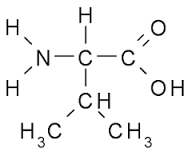
9.
Which biomolecule is this a picture of?
a)
Protein
b)
Nucleic Acid
c)
Lipid
d)
Carbohydrate
10.
Carbon, Hydrogen, Oxygen and Nitrogen are elements in what biomolecule?
a)
Carbohydrate
b)
Lipid
c)
Protein
d)
Nucleic acid
11.
What would the INDEPENDENT variable be in an experiment testing which  paper airplane design goes furthest?
a)
the paper used
b)
the paper airplane design
c)
the distance of each plane's flight
d)
how hard the plane is thrown
12.

In the table, Bubbles is the ______________.

a)

independent variable

b)

dependent variable

13.
When experimenting with plants to see if they grow better with or without fertilizer, a scientist uses six bean plants and one type of fertilizer. What type of variable is the fertilizer?
a)
Dependent
b)
Independent
c)
Control
d)
Compound
14.

Which of these explain how a natural phenomenon works or happens?

a)

theory

b)

law

15.
A possible explanation to a problem that has not yet been tested. 
a)
data
b)
theory
c)
hypothesis
d)
fact
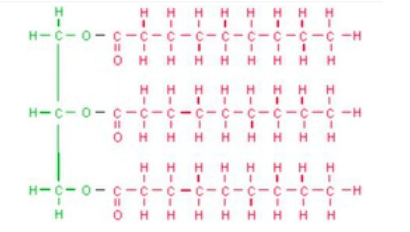
16.
Which biomolecule is this a picture of?
a)
Protein
b)
Nucleic Acid
c)
Lipid
d)
Carbohydrate
17.
The monomer of a lipid is called...
a)
a nucleotide
b)
a monosaccharide
c)
an amino acid
d)
a fatty acid
18.
The monomer of a protein is called...
a)
an amino acid
b)
a monosaccharide
c)
a fatty acid
d)
a nucleotide
19.
The monomer of a carbohydrate is called...
a)
a monosaccharide
b)
a fatty acid
c)
an amino acid
d)
a nucleotide
20.
Fatty acids and glycerol form the polymer....
a)
carbohydrates
b)
lipids
c)
proteins
d)
nucleic acids
21.
amino acids are connected with ______ bonds to form _______.
a)
peptide; proteins
b)
peptide; lipids
c)
hydrogen; proteins
d)
hydrogen; lipids
22.

Atom → molecule → organelle → cell→ tissue → organ

→ system → organism

→ population → community

→ ecosystem → biosphere.

a)

Taxonomic System

b)

Classification system

c)

Levels of Organization

d)

Periodic Table

23.

What distinguishes a plant cell from an animal cell? (How do you tell them apart) Hint: There's 3 ways (Check all 3)

a)

Central Vacuole

b)

Mitochondria

c)

Cell Wall

d)

Ribosomes

e)

Chloroplasts

24.

This part of a cell is where energy is produced:

a)

nucelus

b)

mitochondria

c)

cell membrane

d)

cell wall

25.

What is the structure that contains DNA and directs the cell?

a)

endoplasmic reticulum

b)

central vacuole

c)

cell wall

d)

nucleus

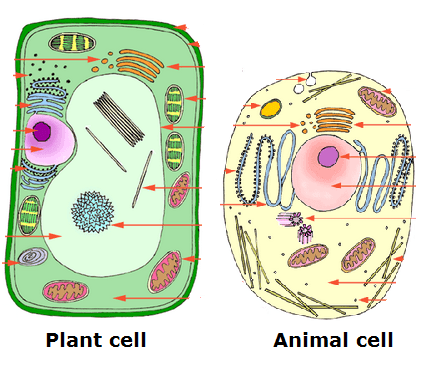
26.

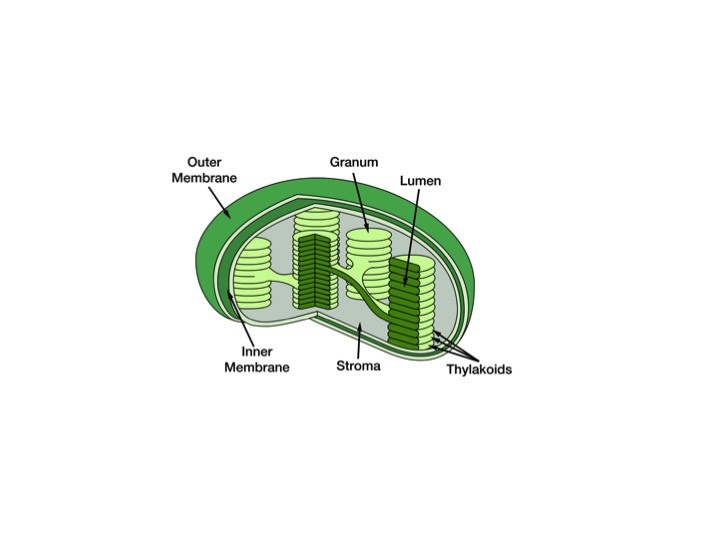
What is the name of this organelle?

a)

Mentos

b)

Mitochondrion

c)

Chlorophyll

d)

Chloroplast

27.
All cells have a cell membrane
a)
True
b)
false
28.
How does a cell maintain homeostasis?
a)
Regulates what enters and leaves the cell
b)
Flexibility
c)
Protective barrier
d)
Structure and support
29.
Osmosis is the movement of _____ across a membrane.
a)
food
b)
energy
c)
oxygen
d)
water
30.
What kind of reaction links monomers together to form polymers?
a)
dehydration synthesis
b)
hydrolysis
31.
What kind of reactions break down polymers into individual monomers?
a)
hydrolysis
b)
dehydration synthesis
32.

What are valence electrons?

a)

The total number of electrons in an atom

b)

The number of electrons in the outermost shell

c)

The number of electrons in the second shell

d)

The number of protons in the outermost shell

33.
Found in the nucleus of the atom
a)
electrons only
b)
protons only
c)
neutrons and protons
d)
neutrons and electrons
34.

Isotopes of an element have a different number of...

a)

Protons

b)

Neutrons

c)

Electrons

d)

Mass

35.
How do covalent bonds form?
a)
Donating & receiving valence e- between atoms.
b)
Opposite slight charges attract each other between compounds.
c)
Scientists are still not sure how they form.
d)
Sharing valence e- between atoms.
36.
What do we call a covalent bond where electrons are shared UNEVENLY or UNEQUALLY?
a)
Ionic
b)
Polar Covalent
c)
Nonpolar Covalent
d)
Van der Waals Force
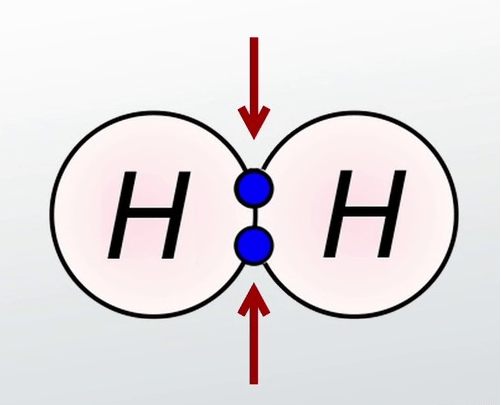
37.
What type of bond is shown in this image?
a)
Ionic
b)
Polar Covalent
c)
Nonpolar Covalent
d)
Van der Waals Force
38.

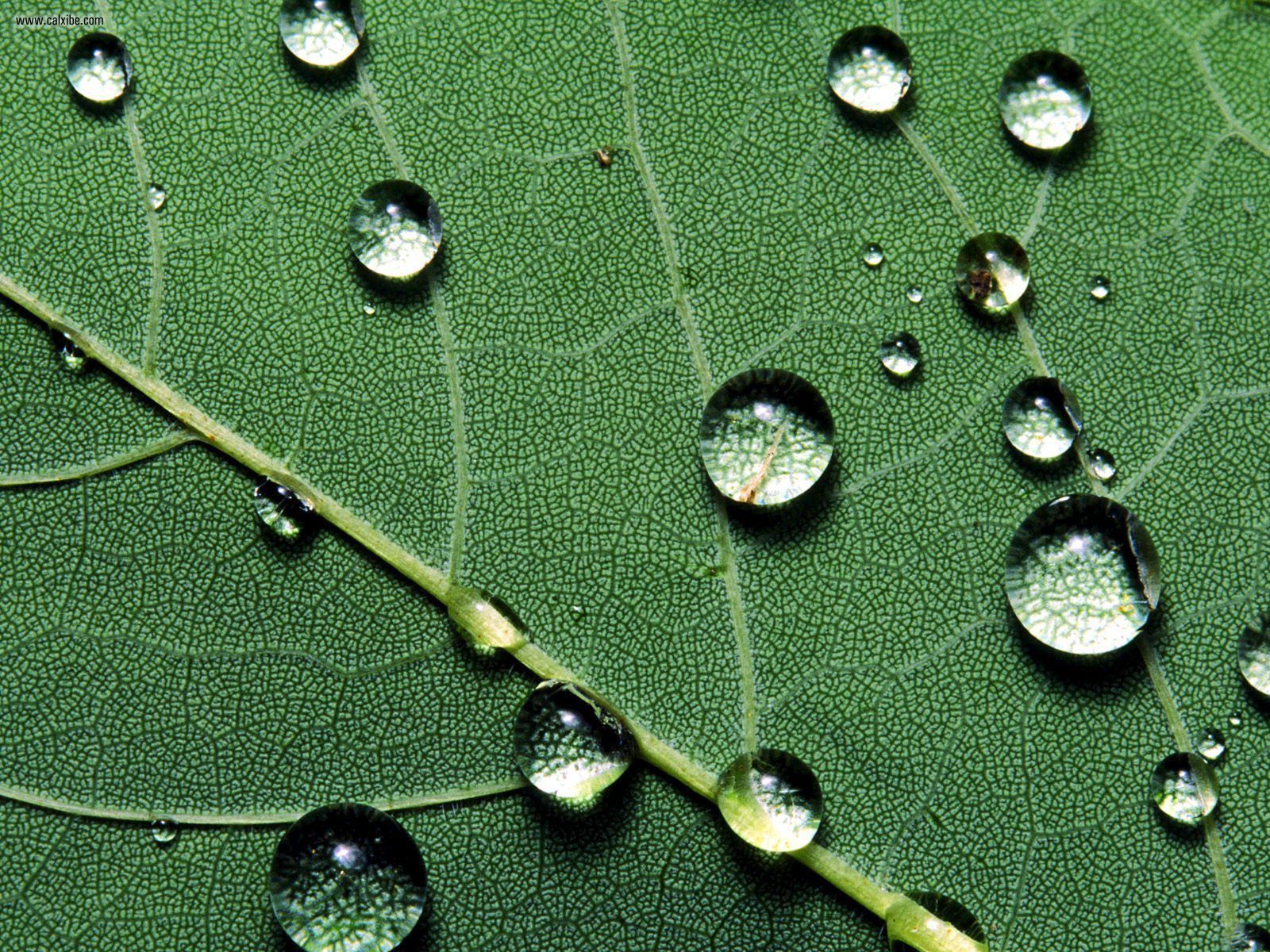
Water sticks to other substances, like this leaf. This is called...

a)

Adhesion

b)

Cohesion

39.

Weak bonds between different water molecules are called

a)

Covalent bonds

b)

Ionic bonds

c)

Polar bonds

d)

Hydrogen bonds

40.

When water molecules stick to other water molecules, beads form. This is because of...

a)

cohesion

b)

adhesion

c)

solution

d)

nonpolarity

41.

Molecule in which opposite ends have opposite electric charges because of the uneven sharing of electrons.

a)

cohesion

b)

polar molecule

c)

hydrogen bond

d)

solution

42.
All living things are divided into three groups called 'domains'. They include, Domain Bacteria, Domain Archaea, and ____________.
a)
Domain Ikea
b)
Domain Eukarya
c)
Domain Romain (Lettuce-based organisms)
d)
Domain of Spain Rains only on the Plane!
43.
Do prokaryotes have a nucleus? 
a)
yes
b)
no
44.
Which kingdom is prokaryotic?
a)
Animalia
b)
Archaebacteria
c)
Planta
d)
Fungi
45.

Which of these can change when new evidence is presented?

a)

theory

b)

law

46.

Which of these describes a natural phenomenon or relationship that always occurs under specific conditions

a)

theory

b)

law

47.
Where the better adapted organisms survive to pass traits along to offspring.
a)
Evolution
b)
Natural Selection
c)
Extinction
d)
Artifical Selection
48.
How are ionic bonds formed?
a)
Transfer of electrons
b)
Sharing of electrons
49.

What is the reason why Noble gases are so stable?

a)

They have an even number of electrons

b)

They have no electrons

c)

They have a full outer shell of electrons

d)

They bond with other atoms

50.

Name this structure

a)

double helix

b)

nucelotide

c)

twisted ladder

d)

hydrogen bond

51.
The structure of proteins can be changed by environmental factors such as temperature or pH.
a)
True
b)
False
52.
When a protein unfolds, it is
a)
Denatured
b)
Building
c)
Adding amino acids
d)
Making food
53.
The two types of folding in the secondary structure are.....
a)
alpha-helix & beta-pleated sheets
b)
polypeptide & nucleotide
c)
globular & fibrous
54.
How many structures or stages are there in proteins?
a)
1
b)
2
c)
3
d)
4
55.
The following figure is illustrating
a)
Dehydration Synthesis
b)
Hydrolysis
56.
The following figure is illustrating
a)
Dehydration Synthesis
b)
Hydrolysis
57.
amino acids are connected with ______ bonds to form _______.
a)
peptide; proteins
b)
peptide; lipids
c)
hydrogen; proteins
d)
hydrogen; lipids
58.
Chloroplasts are...
a)
Structures of animal cells to produce ATP
b)
Organelles where lipids are elaborated
c)
Specialized structures of plants where food is made
d)
Waste organelle of plants
59.

Typically in an atom, which two subatomic particles are equal in number?

a)

protons and neutrons

b)

all subatomic particles are equal in number

c)

neutrons and electrons

d)

protons and electrons

60.

An element is defined by its number of ...

a)

protons

b)

electrons

c)

neutrons

d)

protons + electrons

61.

What distinguishes a plant cell from an animal cell? (How do you tell them apart) Hint: There's 3 ways (Check all 3)

a)

Central Vacuole

b)

Mitochondria

c)

Cell Wall

d)

Ribosomes

e)

Chloroplasts

62.

Which organelle is responsible for the removal of waste and foreign particles?

a)

Plasma Membrane

b)

Lysosomes

c)

Peroxisomes

d)

Mitochondrion

63.

What is a unique characteristic of the plasma (cell) membrane?

a)

Semipermeable

b)

Rigid

c)

Jelly-like

d)

Orange

64.
A phospholipid has 2 parts. What are they called? 
a)
Hydrophilic Head, Hydrophobic Tail 
b)
Hydrophobic Head, Hydrophilic Tail 
65.
Describes the arrangement of the cell membrane as bendable and made of many parts. 
a)
The Fluid Mosaic Model 
b)
The Major Mobility Model 
c)
The Crazy Cell Model
d)
The Maze Model
66.
___________ form the two layers of the cell membrane. 
a)
Carbohydrates 
b)
Proteins 
c)
Phospholipids 
d)
Cholesterol
67.

What is the Ribosome's job?

a)

To protect the cell

b)

To make energy

c)

To make proteins

d)

To hold genetic information

68.
makes proteins
a)
nucleus
b)
ribosomes
c)
lysosomes
d)
vacuole
69.
What is the difference between rough and smooth Endoplasmic Reticulum?
a)
There is no difference.
b)
Plants have rough ER, animals have smooth ER.
c)
What type of injuries the Doctors treat.
d)
Rough has ribosomes, smooth does not.
70.
Some prokaryotes and eukaryotes have a cellular structure called a flagella.  What is the purpose of the flagella?
a)
to transport molecules across the cell membrane
b)
to propel the cell through liquid
c)
to collect food for the cell
d)
to tell the cell the direction of a food source
71.

is this a plant or an animal cell?

a)

Plant Cell

b)

Animal Cell

72.

Where are the chromosomes located in a cell?

a)

in the cytoplasm

b)

in the cell wall

c)

in the chloroplasts

d)

in the nucleus