
 Worksheets
Cell Practice Test
Total questions: 53
Worksheet time: 13hrs 15mins

Which type of cell?
Prokaryote
Eukaryote
Has membrane bound organelles
Prokaryote
Eukaryote
Both
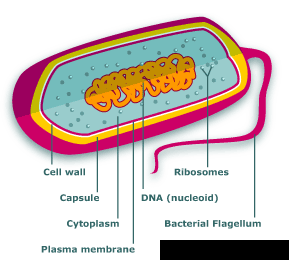
Where is the DNA found in a prokaryotic cell?
In the nucleus
In the mitochondria
Floating around in the cytoplasm
In the ribosome

In what organelle is the genetic material found inside?
Nucleus
endoplasmic reticulum
Mitochondria
Lysosome

What is the function of this organelle?
Sac that stores water, nutrients, and waste products
Regulates what enters and leaves the cell
Structures that transport and ship proteins like UPS
Cite of cellular respiration also known as the powerhouse of the cell

I store water in both plant and animal cells. What am I?
Mitochondria
Lysosome
Vacuole
Cytoplasm
What can only be found in plant cells?
Chloroplast
Vacuole
Nucleus
Cell membrane
The two kinds of cells are Prokaryotes and Eukaryotes. How are they different?
Prokaryotes are plant cells
Eukaryotes have a nucleus
Prokaryotes have a nucleus
There is no difference
What cell part is NOT found in all cells
Cytoplasm
Genetic material
Cell membrane
Cell wall

What is the function of this part of the cell?
Structure
Flexability
Regulates what comes in and out of the cell
Stores genetic information
Where are proteins made?
Golgi Body
Ribosomes
Chromosomes
Mitochondria
What is the gel-like substance inside of cells called?
Cytoplasm
Cytoskeleton
Cell membrane
Vacuole

This cell would be classified as a(n) ________________ cell.
Prokaryotic
Eukaryotic
Both
Which organelle produces energy?
Chloroplast
Mitochondria
Nucleus
Ribosomes
Which organelle packages and transports proteins?
Golgi Body
Endoplasmic Reticulum
Vesicles
Cytoskeleton
Which organelle helps with structure of a plant cell?
Cell Wall
Cell Membrane
Nucleus
Lysosomes


The Endosymbiotic Theory explains
the origin of prokaryotes
how bacteria lives
the origin of eukaryotes
how species develop

Bacteria are an example of a ____ cell.
prokaryotic
eukaryotic
plant
animal
_____ and _____ are organelles that arose from endosymbiosis
nucleus and cell membrane
mitochondria and chloroplasts
cell wall and chloroplasts
mitochondria and nucleus
Which of the following is evidence to support the endosymbiotic theory?
Mitochondria and chloroplasts have their own DNA, which is similar to prokaryotic DNA.
Fossil evidence shows that the first forms of life were prokaryotic cells.
All eukaryotic cells have a double-layered membrane composed of phosplipids and proteins.
Prokaryotes have the same number and types of enzymes as eukaryotes.
when some molecules can cross the membrane while others cannot.

Groups of different tissues working together to perform a particular function are called . . .
compound tissues
macromolecules
organ systems
organs

Unspecialized animal cells that can develop into different types of cells are called . . .
basic cells
organelles
pre-cells
stem cells

This image is an example of a(n) . . .
organ
organ system
specialized cell
tissue

Groups of similar cells that work together to carry out a specific task are called . . .
cell systems
nucleic acids
organs
tissues

packages and distributes proteins
proteins may be modified here
golgi body
chloroplast
ribosomes
lysosome


Which organelle does this picture show?
HINT: chlorophyll
Golgi apparatus
mitochondria
chloroplast
vacuole

Which organelle does this picture show?
HINT: ATP (cell energy)
chloroplast
mitochondria
rough endoplasmic reticulum
nucleus

What are the small dots/bumps shown on the structure in the picture?
HINT: protein
smooth endoplasmic reticulum
rough endoplasmic reticulum
Golgi bodies
ribosomes

What is the large structure that the bumps/dots are attached to?
smooth endoplasmic reticulum
rough endoplasmic reticulum
Golgi bodies
ribosomes

The structure picture above is often found near the edges of cells, since it is where things are packaged up to be sent out.
rough endoplasmic reticulum
smooth sndoplasmic reticulum
Golgi apparatus
nucleus

#11 in the picture
HINT: jelly
nucleus
nucleolus
centrioles
cytoplasm

