
Font size
 Worksheets
Redox + Electrochemistry Mr.Alaa 0589151029
Total questions: 68
Worksheet time: 57mins
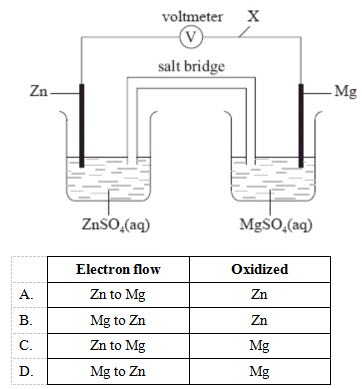


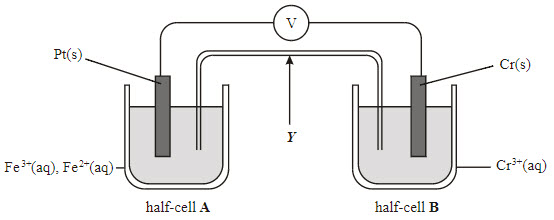
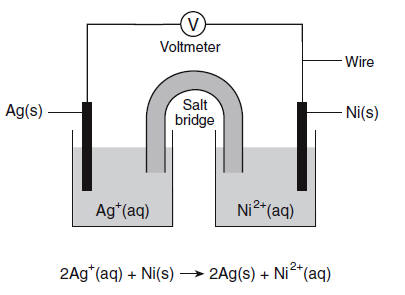

In a voltaic cell, electrodes used are copper (electrolyte: copper (II) sulphate solution) and zinc (electrolyte: zinc nitrate solution). What is the half-equation that occur at the copper electrode?
Cu --> Cu2+ + 2e
2H+ + 2e --> H2
Cu2+ + 2e --> Cu
A voltaic cell is producing the redox reaction below.
Mg(s) + Fe2+(aq) → Mg2+(aq) + Fe(s)
Which statement is correct when the cell produces electricity?
Magnesium atoms lose electrons.
Mass of the iron electrode decreases.
Electrons flow from the iron half-cell to the magnesium half-cell.
Negative ion flow from magnesium half-cell to iron half-cell.
The anode is where oxidation occurs in...
A Galvanic Cell/ voltaic
A Electrolytic Cell
Both Galvanic and Electrolytic cells
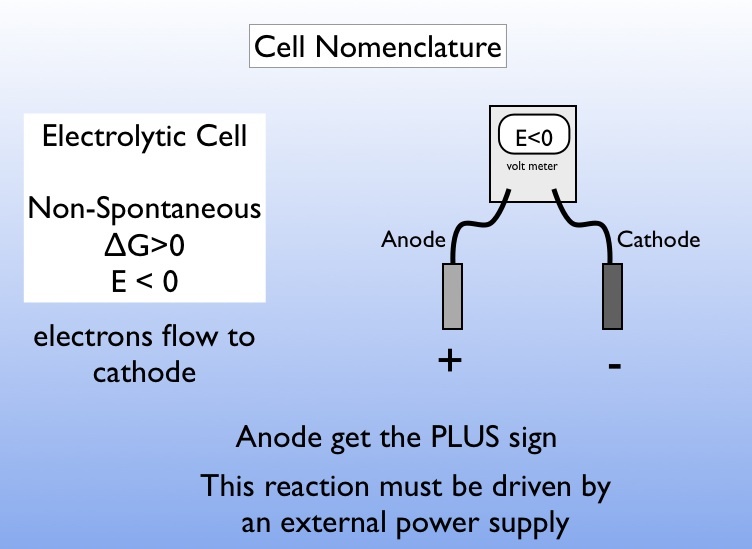

The reaction is non-spontaneous in ...
A Galvanic/ Voltaic Cell
A Electrolytic Cell
Both Galvanic and Electrolytic cells


Which of the following is a reversible battery type?
Alkaline battery
Lithium battery
Silver battery
Zinc carbon battery
In dry cell ----------- is cathode
Zn plate
Powdered MnO2 and Carbon
Graphite rod
ZnCl2and NH4Cl
During recharge secondary cells act like ------------ cells
Galvanic
electrolytic
Concentration
Voltaic
In Lead Acid cells ------ is anode and ------is cathode
Pb is anode and PbSO4 is cathode
Pb is anode and PbCl is cathode
Pb is anode and PbO2is cathode
PbO2is anode and PbCl is cathode

The given reaction is for lead storage batteries done under acid (H2SO4 is an acid). What species is being reduced in this reaction?
Pb
PbO2
H2SO4
None of the above
The electrodes in electrolysis of aluminium are made of
Steel
Anodes
Graphite
Plastic
What is the half-equation for the discharge of hydroxide ions?
2O2- --> O2 + 4e-
OH- --> OH + e
4OH- --> 2H2O + O2 + 4e-
2H2O + O2 + 4e- --> 4OH-
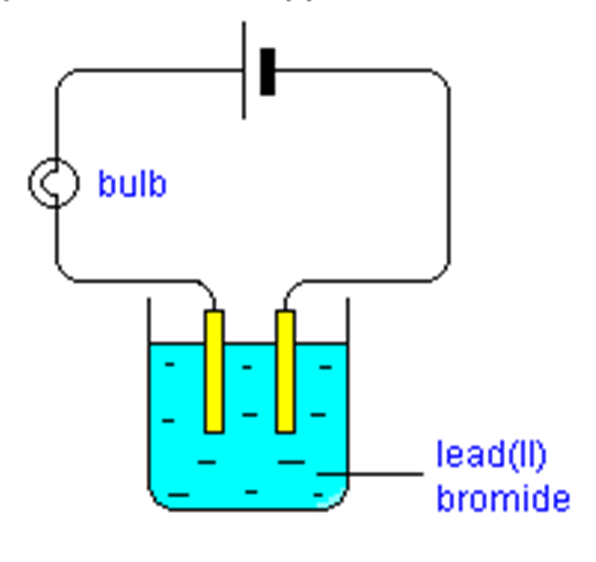
The diagram shows the electrolysis of lead(II) bromide using inert electrodes. Why does the bulb only light up when the lead(II) bromide is melted?
Bromine atoms in lead(II) bromide are converted to ions when it is melted
Electrons flow through the lead(II) bromide when it is melted
The ions in lead(II) bromide are mobile charge carriers in the molten state.
There are no ions in solid lead(II) bromide
What ions are present in molten aluminium oxide?
Al3+, O2-, H+, OH-
Al3+, O2-
Al3+, OH-
___________ electrode is an inert electrode.
Copper
Iron
Carbon
Zinc
The diagram shows the electrolysis of lead(II) bromide using inert electrodes. Why does the bulb only light up when the lead(II) bromide is melted?
Bromine atoms in lead(II) bromide are converted to ions when it is melted
Electrons flow through the lead(II) bromide when it is melted
The ions in lead(II) bromide are mobile charge carriers in the molten state.
There are no ions in solid lead(II) bromide
Choose the half-equation that shows the discharge of aluminium ion.
Al3+ - 3e- --> Al
Al2+ + 3e- --> Al
Al3+ + 3e- --> Al
Al3+ --> Al + 3e-
What is the half-equation for the discharge of hydroxide ions?
2O2- --> O2 + 4e-
OH- --> OH + e
4OH- --> 2H2O + O2 + 4e-
2H2O + O2 + 4e- --> 4OH-

Electricity is passed separately through concentrated hydrochloric acid, concentrated aqueous
sodium chloride and dilute sulfuric acid.
In which rows are the electrolysis products correctly named?
1, 2 and 3
1 and 2 only
1 and 3 only
2 and 3 only

The diagram shows the electrolysis of concentrated hydrochloric acid and concentrated aqueous
sodium chloride using carbon electrodes.
At which electrode(s) is hydrogen produced?
electrode 1 only
electrodes 1 and 3
electrode 2 only
electrodes 2 and 4
___________ electrode is an inert electrode.
Copper
Iron
Carbon
Zinc
What is Brine?
Water with a high concentration of Sodium Chloride
Water with a high concentration of Lead Bromide
Vinegary water
Pure water
Na is a metal, and Chlorine is non-metal halogen. Which of these will be broken down into positive ions, and which will be negative ions?
Na+ and Cl-
Na- and Cl+
Na+ and Cl+
Na- and Cl-
Water is composed of H2O (2 Hydrogen and 1 Oxygen). Which of these will be broken down into positive ions, and which will be negative ions?
H+ and OH-
H- and OH+
HH+ and O-
OO+ and H-
Which ions are attracted to the negative electrode (cathode)?
Na+ and H+
Cl- and OH-
Na+ and Cl-
H+ and OH-
Hydrogen gas will form at which electrode?
Negative electrode (cathode)
Positive electrode (anode)
Both
Neither
Chlorine gas will form at which electrode?
Negative electrode (cathode)
Positive electrode (anode)
Both
Neither
Which of the following statements is NOT true about the rusting of an iron nail
Corrosion is the oxidation deterioration of a metal by an electrochemical process
Iron rusts faster if it is in contact with a more electropositive metals
Rusting of iron occurs when oxygen and water are present
When iron rusts, iron is first oxidised to Fe2+ ions
What is frequently done to protect aluminium articles from subsequent corrosion?
Aluminium is coated with an inert metal
Cryolite is added to the aluminium ore before it is used
Aluminium is first oxidised by air to form an inert oxide layer
The aluminium is made the anode during electrolysis
Which statement explains why graphite powder is spread onto plastic material first in plastic electroplating process?
Graphite is an electric conductor
Plastic becomes more resistant to heat
Plastic electroplating process is accelerated
Graphite can form chemical bond with plastic
Electroplating is a process whereby a metal surface is coated with a non-metal.
True
False
The electrode that contains the plating metal
Anode
Cathode
The electrode that contains the item to be electroplated
Anode
Cathode
The electrode that contains the plating metal
Anode
Cathode

If the fork is to be electroplated with silver metal, what electrolyte should be used?
Molten calcium chloride
Aqueous silver nitrate
Sodium chloride solution
Copper(II) sulphate solution

