wayground logo

Free Printable Worksheets

NEW

Font size

S
M
L
XL
Worksheets

Quiz #6 Review

Total questions: 77

Worksheet time: 1hrs 6mins

Name
Class
Date
1.

When the number of water molecules outside of the cell is greater than inside the cell, which will most likely occur?

a)

Molecules of water will NOT MOVE either way.

b)

Molecules of water will move OUT of the cell.

c)

Molecules of water will move INTO the cell.

d)

Molecules of water will EVAPORATE.

2.

A cell that is unable to import substances required to process chemical energy is most likely a result of a malfunctioning of the ____________________.

a)

cell membrane

b)

golgi body

c)

endoplasmic reticulum

d)

nuclear envelope

3.

Which part of the cell controls the movement of substances?

a)

mitochondria

b)

cell membrane

c)

chloroplast

d)

nucleus

4.
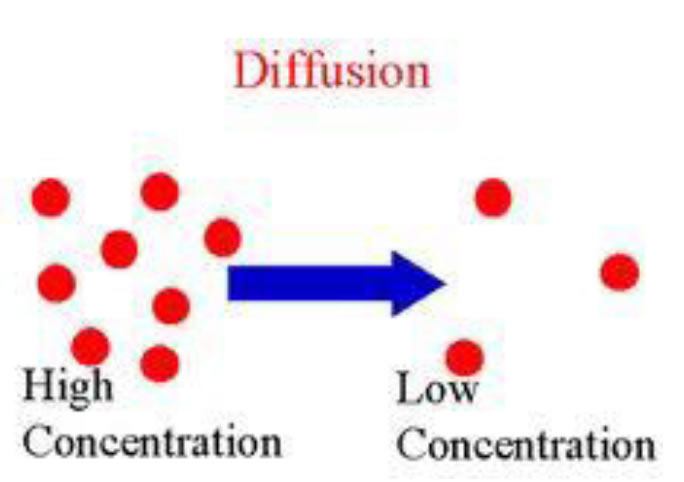
What is diffusion?
a)
when molecules move from a low concentration to a high concentration 
b)
when molecules move from a high concentration to a low concentration.
c)
no movement 
d)
molecules move everywhere
5.
Osmosis is the movement of _____ across a membrane.
a)
food
b)
energy
c)
oxygen
d)
water
6.
Which way will the water molecules move during osmosis?
a)
Out of the cell, so the cell shrinks.
b)
Out of the cell, so the cell swells.
c)
Into the cell, so the cell shrinks.
d)
Into the cell, so the cell swells.
7.
When both inside and outside of a cell have the same amount of water it is said that the cell has reached a state of
a)
Osmosis
b)
Diffusion
c)
Equilibrium
8.
Diffusion can be used in...
a)
Plants and Animals
b)
Only Plants
c)
Only Animals
d)
Only Humans
9.
What does “high concentration area” mean?
a)
Spread out
b)
Tightly packed together
c)
Uncrowded
d)
Spacious
10.

Passive Transport means

a)

Energy is used

b)

No energy is used

c)

Energy is created

11.
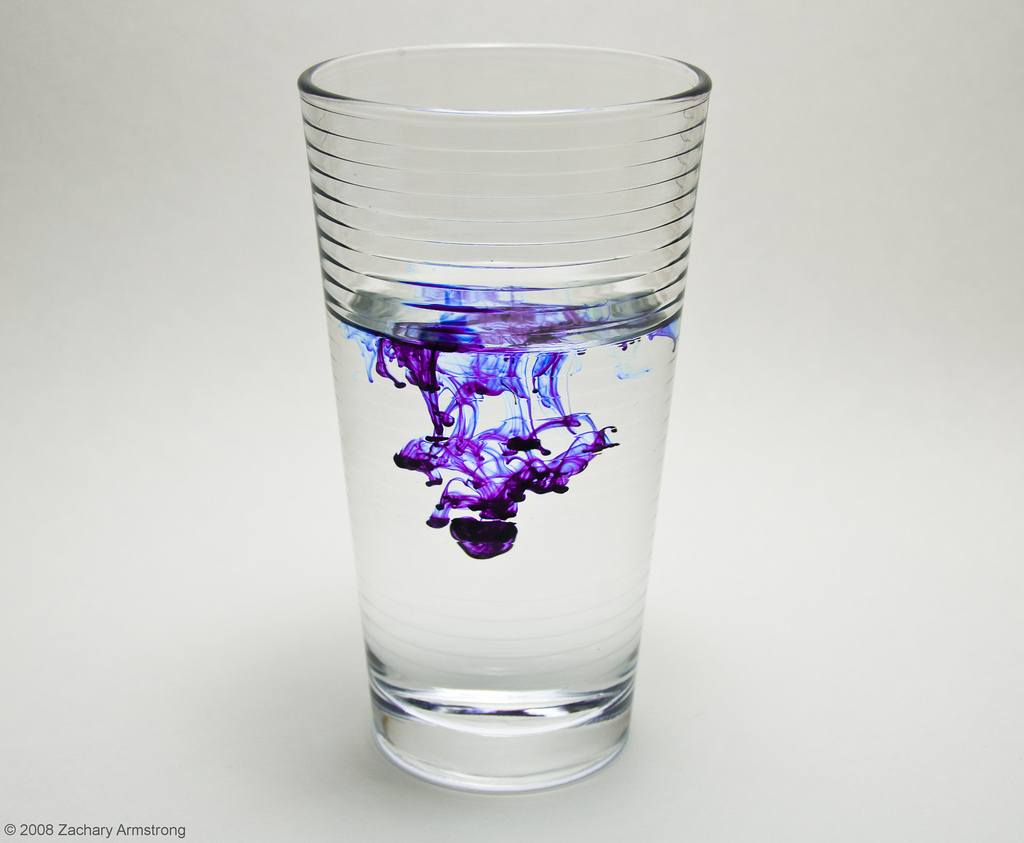
Where is there a low concentration of dye?
a)
at the bottom of cup
b)
in the color
c)
at the top of cup 
d)
no concentration gradient
12.
The picture below is an example of _________________.
a)
osmosis
b)
isotonic
c)
diffusion
d)
active transport
13.
Permeable means
a)
things can pass through
b)
the concentration levels are different
c)
it is permanent
d)
things are stuck
14.
What is diffusion?
a)
when molecules move 
b)
when molecules move from a high concentration to a low.
c)
no movement 
d)
molecules move everywhere
15.

Passive Transport

a)

Does require cell energy

b)

Does NOT require cell energy

16.
Osmosis is a form of ______________. 
a)
Passive Transport
b)
Active Transport
17.
Movement of molecules from an area of high concentration to an area of low concentration is
a)
diffusion 
b)
passive transport
c)
osmosis
d)
all of the above
18.
What is equilibrium?
a)
When concentrations cannot be balanced between two substances 
b)
When concentrations are balanced between two substances 
c)
Making the energy in the top half of your body equal the the energy in the bottom half
d)
Concentrations do not exist 
19.
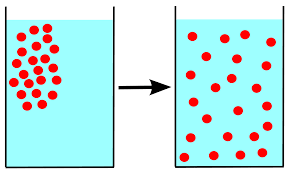
Which diagram best shows the end result of diffusion?
a)
F
b)
G
c)
H
d)
J
20.
Active transport moves substances against a concentration gradient 
a)
true
b)
false 
21.
Diffusion is the movement of molecules from an area of higher concentration to an area of lower concentration.
a)
True
b)
False
22.
Movement of particles from high to low concentration. 
a)
Passive Transport
b)
Active Transport
23.
The concentration of water is higher in the soil than in plant root cells. Water moves into root cells of a plant by...
a)
Facilitated Diffusion
b)
Simple Diffusion
c)
Active Transport
d)
Osmosis
24.
Where is there a high concentration of water?
a)
in the flower
b)
cannot be determined by picture.
c)
in the vase
d)
in the leaves
25.
Where is there a low concentration of perfume?
a)
in the bottle
b)
on the hand
c)
in the room
d)
in the top
26.
A person should never drink salty water because their cells would
a)
shrink
b)
expand
27.
The picture is an example of...
a)
active tranport
b)
passive transport
c)
diffusion
d)
osmosis
28.
What type of transport is this?
a)
Facilitated Diffusion
b)
Exocytosis
c)
Active Transport
d)
Diffusion
29.
In passive transport, molecules move from an area of __________ concentration to an area of __________ concentraiton
a)
high, low
b)
low, high
c)
water, salt
d)
active, passive
30.

What will be happen?

a)

water molecule move from solution 1 to solution 2 by osmosis

b)

water molecule move from solution 2 to solution 1 by osmosis

c)

water molecule move from solution 1 to solution 2 by active transport

d)

Sugar molecule move from solution 1 to solution 2 by osmosis

31.

When do molecules stop moving or vibrating?

a)

When equilibrium is reached

b)

Never

c)

When the temperature is below 0 degrees Celsius

d)

When the substance they are part of becomes a solid

32.

From fastest to slowest rate of diffusion, which of the following is in the correct sequence?

a)

Solids, liquids, gases

b)

Liquids, gases, solids

c)

Gases, liquids, solids

d)

Gases, solids, liquids

33.

Diffusion is the movement of particles from an area of _____ concentration to an area of ______ concentration

a)

High, Low

b)

Low, High

c)

Low, Low

d)

High, High

34.

What is DIFFUSION?

a)
b)
c)
d)
35.
The picture  is an example of _________________.
a)
isotonic
b)
diffusion
c)
osmosis
d)
active transport
36.

An increase in temperature does what to diffusion?

a)

Speeds it up

b)

Slows it down

c)

Stops it

d)

No effect

37.

What causes diffusion?

a)

The constant, random motion of molecules

b)

Magnetic attraction between atoms

c)

The nuclear forces that hold atoms together

d)

The tendency of atoms to form chemical bonds with one another

38.

Why is diffusion so important in biology?

a)

It's the basic power source for most types of cells

b)

It allows substances to move across cell membranes

c)

It prevents toxins from entering our bodies

d)

Without diffusion, cell division could not take place

39.

What happens to the coffee particles when coffee is added to hot water?

a)

They sink to the bottom of the cup

b)

They spread out

c)

They clump together

d)

They freeze

40.

What is a solvent

a)

The one doing the dissolving

b)

The substance dissoved in another substance

41.

What is a solute?

a)

A substance dissolved in another substance

b)

the substance doing the dissolving

42.

solute + solvent =

a)

solution

b)

equation

43.
What is a solute?
a)
The substance that does the dissolving in a solution.
b)
The substance that is dissolved into the solution.
c)
The mixing of different substances.
d)
The process in which neutral molecules lose or gain electrons
44.
What is a solvent?
a)
The substance that does the dissolving in a solution.
b)
The substance that is being dissolved in a solution.
c)
The mixing of different substances.
d)
The process in which neutral molecules lose or gain electrons
45.

Fish breathe oxygen, which is dissolved in water. Is the oxygen the fish breathe considered to be the solute or solvent?

a)

Solute

b)

Solvent

46.
a)

solvent

b)

solution

c)

solute

47.
a)

solvent

b)

solute

48.
a)

solvent

b)

solute

49.

Solutes dissolve quicker in _________ water.

a)

cold

b)

warm

50.

Solutes dissolve quicker if you stir them.

a)

true

b)

false

51.
a)

solute

b)

solvent

52.
Which is an example of a solvent?
a)
Salt
b)
Iced Tea mix
c)
Water
d)
Sugar
53.

The most common solvent is ____________.

a)

vinegar

b)

soda

c)

water

d)

sugar

54.

Unable to dissolve is called______________.

a)

solution

b)

soluble

c)

insoluble

d)

insolvent

55.

The substance in a solution that does the dissolving is called the _____________.

a)

solute

b)

solvent

c)

soluble

56.

The substance in a solution that is dissolved is called the _______.

a)

solute

b)

solvent

c)

solubility

57.

Bella mixed some water and juice crystals to make a fruit drink. What is the SOLUTE in this solution?

a)

juice crystals

b)

water

c)

fruit

58.

Destiny swished salt water in her mouth after she lost her tooth in a soccer game. The SOLUTE is _____.

a)

salt

b)

water

c)

her tooth

59.

Brandon put rubbing alcohol on the grass stain that was on his sock. What is the SOLVENT?

a)

grass

b)

rubbing alcohol

c)

his sock

60.

Ryan added a little sugar to his tea because it tasted bitter. What is the SOLUTE?

a)

sugar

b)

tea

c)

taste buds

61.
 An animal cell placed in a hypertonic (salty) solution will
a)
Stay the same
b)
Shrink- get smaller
c)
Swell- get bigger
62.
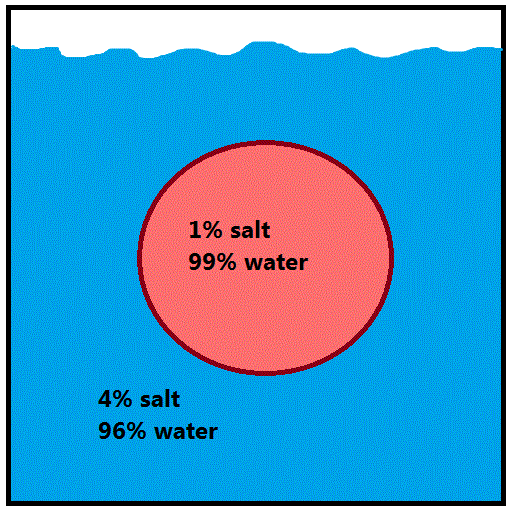
Where will the water go?
a)
Into the cell
b)
Out of the cell
c)
Equally in & out - it's isotonic
d)
There is no water
63.

In the cell pictured, where would water move? 

a)

Into the cell, causing it to swell

b)

Out of the cell, causing it to shrink

c)

In and out of the cell equally, causing the shape to stay the same

64.

In the cell pictured, which way would water move?

a)

Into the cell, causing the cell to swell

b)

Out of the cell, causing the cell to shrink

c)

In and out of the cell equally, keeping the shape the same

65.

In the cell pictured, which way would water move?

a)

Into the cell, causing the cell to swell

b)

Out of the cell, causing the cell to shrink

c)

In and out of the cell equally, keeping the shape the same

66.

In the cell pictured, which way would water move?

a)

Into the cell, causing the cell to swell

b)

Out of the cell, causing the cell to shrink

c)

In and out of the cell equally, keeping the shape the same

67.

In the cell pictured, which way would water move?

a)

Into the cell, causing the cell to swell

b)

Out of the cell, causing the cell to shrink

c)

In and out of the cell equally, keeping the shape the same

68.

In the cell pictured, which way would water move?

a)

Into the cell, causing the cell to swell

b)

Out of the cell, causing the cell to shrink

c)

In and out of the cell equally, keeping the shape the same

69.

In the cell pictured, which way would water move?

a)

Into the cell, causing the cell to swell

b)

Out of the cell, causing the cell to shrink

c)

In and out of the cell equally, keeping the shape the same

70.

What will happen to the cell in the given solution?

a)

Swell up

b)

Shrink

c)

Stay the same

71.

If the dots represent sugar what direction will the water flow?

a)

Into the cell

b)

Out of the cell

c)

Both equally (equilibrium)

72.
How many diamond molecules need to move to reach equilibrium?
a)
A net of 2 molecules move inside the cell.
b)
A net of 2 molecules move outside the cell.
c)
There is no net movement because the molecules are at equilibrium.
d)
The molecules do not move.
73.
Just like Coke is a type of soda, __________ is a type of ___________.
a)
diffusion, osmosis
b)
concentration, equilibrium
c)
equilibrium, concentration
d)
osmosis, diffusion
74.
A person would never have pure water put into their veins in a hospital because their cells would...
a)
Shrink/Dehydrate
b)
Expand
75.

What happened to the CELL WALL and the CELL MEMBRANE in these plant cells?

a)

Both the CELL WALL and CELL MEMBRANE shrunk

b)

Only the CELL WALL shrunk, the CELL MEMBRANE stayed the same

c)

The CELL WALL stayed the same, only the CELL MEMBRANE shrunk

d)

Both the CELL WALL and CELL MEMBRANE stayed the same

76.
In which case would a cell most likely shrink?
a)
when placed in a solution containing a high salt concentration
b)
when placed in a isotonic solution
c)
when placed in a solution containing a low pH
d)
when placed in a solution containing distilled water
77.
A student noticed that placing wilted lettuce in a bowl of cool water caused the lettuce to become more crisp and firm. What is the best explanation for his observation?
a)
Water moved into the lettuce cells by active transport.
b)
Water moved into the lettuce cells by osmosis.
c)
Salt moved into the lettuce cells by diffusion.
d)
Water moved out of the lettuce cells by osmosis.