
 Worksheets
2nd 9 weeks exam review (21-22)
Total questions: 120
Worksheet time: 1hrs 17mins

When doesn't a rock have kinetic energy?
(Scientific Principal #1)
When someone throws it off a hill.
When it is rolling down a hill.
When it is sitting on a hill.
When it slides down a hill.

The amount of kinetic energy a moving object has depends on which 2 things?
(Scientific Principal #2)
its speed
its mass
its color
its temperature

What kind of energy does an elevated object have? (Scientific Principal #3)
kinetic energy
gravitational energy
cosmic energy
mass energy

When does a cliff diver have the MOST gravitational energy? (Scientific Principal #4)
When he is standing on top of the cliff.
Just before he hits the water.
Once he has made a splash and is under the water.
A cliff diver only has kinetic energy and NEVER has gravitational energy.

A roller coaster's gravitational energy increases as... (Scientific Principal #5)
its speed decreases.
its height decreases.
its kinetic energy increases.
it gravitational energy decreases.

A falling ball looses its shape and bounces off the ground because it has... (Scientific Principal #6)
kinetic energy
heat energy
elastic energy
potential energy

As a rigid (stiff) ruler is bent... (Scientific Principal #7)
its elastic energy increases.
its elastic energy decrease.
its elastic energy stays the same.
Rigid rulers can not have elastic energy.

As an object falls, what happens to its gravitational energy?
Increases
Decreases
Stays the Same
More information is needed to know
Which of the following does not represent energy being converted?
stretching a rubber band then letting it go
dropping a ball
playing with a yo-yo
a book sitting on a desk

What energy type is represented in the picture?
Kinetic
Gravitational
Elastic
Electrical

Which type of energy conversion is involved when the slingshot is released?
Kinetic
Gravitational
Elastic
Electrical

At which point on the roller coaster will the car have the greatest amount of kinetic energy? Explain why.
W because it is at the highest point and the GE is ready to be converted into KE.
X because the gravitational energy will have all been converted into KE at the lowest point.
Z because that is the end of the Roller Coaster.
Y because the coaster is moving off the ground again.

At which point on the roller coaster will the car have the greatest amount of gravitational energy? Explain why.
W because it is the highest point of the roller coaster.
X because it is the lowest point of the roller coaster.
Y because the roller coaster is moving up.
Z because the roller coaster is over.

What energy type(s) is present at point Z?
GE & KE
ONLY KE
ONLY GE
NONE
Which of the following types of energy is potential energy? More than one answer is possible.
Gravitational
Kinetic
Thermal
Elastic


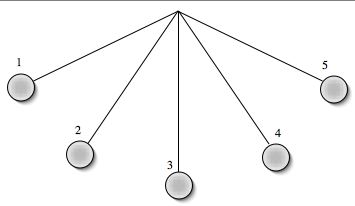
As a raindrop falls, what happens to its gravitational energy?
increases
decreases
remains the same
more information is needed

What energy type is represented in the picture?
Which type of energy conversion is involved when the arrow is released?


Which law is this?
Which of the following are kinetic energy? (Choose all that apply)
elastic
thermal
sound
gravitational
Gravitational potential energy depends on the ________ and ________ of the object.
Position (height) and mass
Friction and movement
Mass and Movement
Height and Friction
Which is the best example of an object having kinetic energy?
a car parked on a steep hill
a tennis ball rolling across the court
a picture hanging on the wall
a piece of coal before it's burned
Which of the following is an example of kinetic energy decreasing as the gravitational potential energy increases?
a person parachuting out of a plane
a car racing around an oval track
a person skiing down a hill
a person walking up a hill
What would have the greatest kinetic energy?
A car driving down a hill.
A person running down a hill.
A ball rolling down a hill.
leaves rolling down a hill
Which is an example of potential energy?
a roller coaster speeding down a hill
the pulled back string on an archers's bow
releasing the strings on a guitar
an electric current lighting a light bulb
When a bouncing ball hits the ground and squishes, what is the main type of energy that it has?
Kinetic
Gravitational
Elastic
Chemical
Which type of energy conversion is involved when the ball leaves the ground?
Kinetic to gravitational
Gravitational to kinetic
Elastic to kinetic
Kinetic to elastic

What type of diagram does the image represent?
Energy Conversion Diagram
Energy Transfer Diagram
Pendulum Diagram
Moon Phases
What does an energy conversion diagram show us?
How energy transfers from one object to a different one.
How energy transforms within an object.
How an object moves.
How much mass an object has.

What type of diagram do these image represent?
Energy Conversion Diagram
Energy Transfer Diagram
Energy Conservation Diagram
Potential Energy Diagram
What does an energy transfer diagram show us?
How energy transfers from one object to a different one.
How energy transforms within an object.
How an object moves.
How much mass an object has.
When a pendulum swings, it loses energy to the...
string
air
nothing
water
Gravitational potential energy (GPE)
Is stored energy in a stationary object that is high up
Is stored energy in a spring
Is stored energy in the food we eat
Is energy in moving objects
A swimmer who came first in a race has _____________ kinetic energy than the swimmer who came last in the race
The same
Less
More
No
A child is swinging on a swing at the local park. The type of energy which allows them to move backwards and forwards is _______________
Potential
Gravitational potential
Kinetic
Elastic potential

Imagine both balls fall off the table at the same speed. Which colour ball has more kinetic energy?
Red
Green
They have the same amount
Neither balls have kinetic energy
Heat moves easily through materials called ____
Wood
Plastic
Rubber
Metal
Why does a metal lawn chair get hot in the sun when the grass sitting in the same sunlight remains cool to the touch?
Heat travels easily through plants but not metals.
Heat travels easily through both plants and metals.
Heat travels easily through metal objects but not through plants.
Emily made a cup of tea and stirred it with a spoon. The spoon became warm, How was the heat from the tea transferred to the spoon?
Convection
Conduction
Radiation
Evaporation
A hot rock is dropped into a pail of cool water. Heat energy transferred from the rock to the water by
Conduction
Convection
Radiation
Evaporation

Which numbered part of the picture represents the way that energy from the sun reaches Earth?
1
2
3
4

What type of thermal energy transfer is the illustration an example of?
Conduction
Convection
Radiation
Evaporation
A crayon placed on a dark driveway in bright sunlight melted into a colorful puddle. What caused the crayon to melt?
Solar radiation heated the driveway and then heat transferred to the crayon by conduction.
Solar radiation heated the driveway and then heat transferred to the crayon by radiation.
Solar convection heated the driveway and then heat transferred to the crayon by radiation.
Solar convection heated the driveway and then heat transferred to the crayon by conduction.
What thermal energy transfer causes your skin to feel warm when it is in the sun on a summer day?
Conduction
Convection
Radiation
Evaporation
What heat transfer happens when you burn your hand by touching a fire?
Conduction
Convection
Radiation
Evaporation
Which of the following are kinds of heat transfer.
Conduction
Convection
Radiation
All of the above
What is the definition of CONDUCTION?
When heat is transferred from objects like rays of light or electromagnetically.
a hot liquid or air that expands, becomes less dense, and rises or becomes more dense, and sinks.
When heat transfers from objects that are touching.
When heat transfers through the heater or AC in your house.
What is the process by which heat transfers from one particle of matter to another when the particles collide?
conduction
convection
expansion
radiation
The higher the average kinetic energy the __________________
the higher the volume
the higher the mass
the higher the temperature
the higher the density
The Law of Conservation of Energy states:
Energy can created or destroyed but not transformed
Energy cannot be created or destroyed, it can only transformed
Energy can't be created, destroyed or transformed
Energy can be destroyed
The blades of a toy helicopter spin when its circuit is connected to a battery. Which sequence below correctly identifies the energy changes taking place in the helicopter?
chemical to electrical to potential
chemical to electrical to mechanical
Which of the following gadgets best shows the transformation of energy from electrical to mechanical with the correct reasoning?
A light bulb because electricity is being used to create light and heat.
A fan because electricity is being used to spin the blades of the fan.
Two students place three ice cubes in a glass of water that was at room temperature. Which of the following scenarios would best describe the results of the investigation?
Energy from the water will transfer to the ice cubes, causing the ice to melt.
Cold from the ice cubes will transfer to the water, causing the water to cool.

1. A student investigated the energy transformations that occur when a call is placed from cell phone A and received by cell phone B. The student drew a diagram to show the process. Based on the diagram, what evidence is there for the transformation of chemical energy into electrical energy, and which other energy transformations must occur for the call to be received by cell phone B?
Evidence:
Cell phones are powered by a battery that produces the electricity used to send or receive a call.
Transformation 1: Sound energy is transformed into
electrical energy by cell phone A.
Transformation 2: Electrical energy is transformed into mechanical energy in the cell towers and base station
Evidence:
Cell phones are powered by a battery that produces the electricity used to send or receive a call.
Transformation 1: Sound energy is transformed into
electromagnetic waves by cell phone A.
Transformation 2: Electromagnetic waves are transformed back into sound energy by cell phone B.
Evidence:
Base stations are powered by a battery that produces the electricity used to receive and forward a call.
Transformation 1: Sound energy is transformed into electrical energy by cell phone A.
Transformation 2: Electrical energy is transformed into mechanical energy in the cell towers and base station
Evidence:
Base stations are powered by a battery that produces the electricity used to receive and forward a call.
Transformation 1: Sound energy is transformed into electromagnetic waves by cell phone A.
Transformation 2: Electromagnetic waves are transformed back into sound energy by cell phone B
Choose the image below that shows potential energy decreasing then increasing if following the arrows from left to right?


Choose the statement below that best describes the transfer of energy from the Sun to the Earth.
The sun is the ultimate source of energy because it uses nuclear fusion to create heat. The thermal energy it creates radiates through the vacuum of space and heats the Earth.
The Sun is an extremely large source of thermal energy. Because of its size, the Sun can conduct its heat through space, heating the Earth.

1. A student is investigating the motion of a pendulum. The student holds the Bob in Point A and then releases it. Which statement is correct about the energy of the Bob?
The KE of the Bob is greatest at Point A.
KE changes to PE as the Bob moves from D to E.
The PE of the Bob is greatest at Point C.
PE changes to KE as the Bob moves from C to D.
A large cup of ice is poured into a glass pitcher of freshly brewed hot tea. The ice melts quickly and the tea in the glass pitcher gets much colder. If we wait twenty-four hours, what temperature would we expect the tea and ice mixture to reach?
The tea transferred energy to the ice making it melt. The mixture will be the temperature of the hot tea.
The tea transferred energy to the ice until they had equal amounts of energy. They will reach a temperature somewhere between each of their original temperatures.
Look at the images below and choose the one that represents a change in which water freezes.


Where would an object have the most potential energy?
The bottom of a hill
The top of the hill
On the way down the hill
It never has potential energy
How does a windmill change forms of energy?
Mechanical to electrical
Electrical to mechanical
Mechanical to light
It is unable to change forms
If you have a battery in a device, what is the first energy transformation that must happen?
Chemical to light
Chemical to electrical
Electrical to chemical
Electrical to light
Which statement correctly compares the difference between conduction and convection in a classroom?
Conduction can only occur in solids, while convection
can occur in both liquids and gases.
Convection can only occur in solids, while conduction
can occur in both liquids and gases.
Conduction can only occur in liquids and gases, while
convection can occur in solids, liquids, and gases.
Convection can only occur in liquids and gases, while
conduction can occur in solids, liquids, and gases.

Definition of Vibration:
when objects jump around
When objects move back and forth
When objects stop moving
when objects run away
The more an object vibrates when greater force is applied, the softer the sounds is made.
True
False
Pitch is
the music box
the number of vibrations of the sound
the low point on a wave
the highness or lowness of a sound
lower amplitude = softer sound
False
True

Air near the sound source moves all the way from the sound source to our ears.
True
False

Sound can travel through (choose all that apply)
empty space with no matter
gases
liquids
solids

Amplitude is the
distance from the starting position to a peak or valley
the number of peaks or valleys in one second
the number of waves in one second
How high you are in the mountains

Frequency is
something very odd
the distance from starting position to a peak or valley
the number of waves in one second
the number of peaks or valleys in one second
Waves of bigger amplitude transfer more energy than waves with less amplitude.
True
False

Hearing loss is caused when one of the structures in your ear is healed.
True
False

Which structure sends the signal to the brain when you hear a sound?
eardrum
auditory canal
auditory nerve
cochlea
Which of these three animals—an elephant, a human, or a dog—can hear the lowest pitch sounds?
dog
elephant
human
Loud music can damage your hearing.
True
False

The sound source from the truck speakers vibrates the particles/molecules in the air causing the window to shake.
True
False
What is being passed/moving from the sound source (truck speakers) to the window?
air
energy
particles
dust
Sound travels FASTEST through which of these mediums?
empty space
water
air
metal
Sound is a form of
music
pitch
volume
energy
Sound is caused by?
vibrations
force
instruments
jumping beans
Which of the following best represents the Law of Conservation of Energy?
Energy CAN be created but NOT destroyed
Energy CAN be destroyed but NOT created
Energy can NOT be created Nor destroyed
Energy CAN be created and CAN destroyed
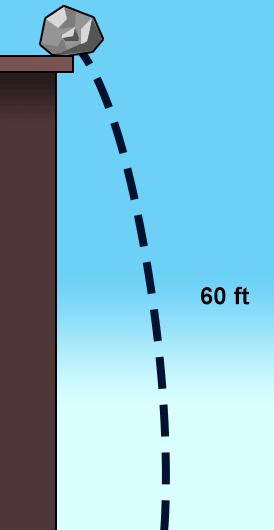
The rock in the picture is pushed over the edge and it begins to fall. Which type of energy conversion is taking place?
mechanical to heat
sound to mechanical
potential to kinetic
kinetic to potential
Which of the following best represents the Law of Conservation of Energy?
Energy CAN be created but NOT destroyed
Energy CAN be destroyed but NOT created
Energy can NOT be created Nor destroyed
Energy CAN be created and CAN destroyed
The rock in the picture is pushed over the edge and it begins to fall. Which type of energy conversion is taking place?
mechanical to heat
sound to mechanical
potential to kinetic
kinetic to potential

A ball is projected into the air. Where is potential energy the greatest?


How does the mass of a bowling ball that has been rolled down the lane affect the kinetic energy?
The kinetic energy does not depend on the mass of the bowling ball.
The kinetic energy is increasing proportional to the mass of the bowling ball.
The kinetic energy is decreasing proportional to the mass of the bowling ball.
The kinetic energy is increasing proportional to the square of the mass of the bowling ball.

Which point on the roller coaster's path represents the maximum potential energy?


As a roller coaster goes downhill
kinetic energy is converted into potential energy.
potential energy is converted into kinetic energy.
electrical energy is converted into potential energy.
potential energy is converted into electrical energy.

When gasoline is burned in a car engine, ________ energy is converted into _________ energy.
heat, chemical
chemical, potential
mechanical, chemical
chemical, mechanical

Muscles convert chemical energy into
light energy.
nuclear energy.
mechanical energy.
electromagnetic energy.

What form of energy does a compressed spring have?
heat energy
kinetic energy
chemical energy
potential energy

Maria’s father started a fire in the fireplace. He crumpled some paper, lit a match, and soon the logs in the fireplace were burning. In this case, the stored chemical energy in the logs was changed into
electrical energy.
mechanical motion.
heat and light energy.
electrical and heat energy.

Energy is transferred in solids by conduction, which means that
heat travels in both directions.
heat travels from the cooler object to the hotter object.
heat travels from the hotter object to the cooler object.
heat does not travel between objects of different temperatures.

A change from one form of energy to another is known as:
energy conversion
chemical energy
solar energy

Energy cannot be created or destroyed. It can only be changed from one form to another. This is known as the law of conservation of ___________:
mass
energy
temperature

What energy conversion is taking place in this picture?
solar energy to thermal energy
thermal energy to chemical energy
chemical energy to thermal and light energy

__________ is the energy given off by the sun - hydrogen nuclei join to make a helium nucleus. This reaction gives off a huge amount of energy. The sun's light and heat come from these reactions. Without nuclear energy form the sun, life would not exist on Earth. When an atom's nucleus breaks apart, or when the nuclei of two small atoms join together, energy is released.
mechanical energy
nuclear energy
electromagnetic energy
chemical energy
thermal energy and heat

Energy transformations occur when...
energy is created through conduction
energy changes from one form to another
two forces slide together that are touching
a chemical reaction takes place

________________ is the sum of an object's kinetic energy and potential energy. The energy that a car has while moving is __________________ energy, as in the energy a book has on top of a desk.
mechanical energy
sound energy
electromagnetic energy
chemical energy
thermal energy and heat

_______________ results from the vibration of particles. People are able to detect these tiny vibrations with structures in their ears that vibrate due to the sound. When you hear a car, you are detecing virbration sin the air that transfer __________ . it cannot travel through empty space. If there were no air or other substance between you and the car, then you would not hear _________ form the car.
mechanical energy
sound energy
electromagnetic energy
chemical energy
thermal energy and heat

__________ is the energy an object has due to the motion of its molecules. The faster the molecules in an object move the more of this type of energy the object ha. Heat is the energy transferred from am object at a higher temperature to an object at a lower temperature.
mechanical energy
nuclear energy
electromagnetic energy
chemical energy
thermal energy and heat

__________ is transmitted through space in waves. These particular waves can be produced by vibration s of electrically charged particles. Unlike sound waves, these waves can travel through empty space. Some examples of this type of energy are: visible light, x-rays, and microwaves.
mechanical energy
nuclear energy
electromagnetic energy
chemical energy
thermal energy and heat

__________ is the energy stored in bonds that hold compounds together. If a molecule's bonds are broken or rearranged, energy is released or absorbed, This type of energy can be store din food and in matches.
mechanical energy
nuclear energy
electromagnetic energy
chemical energy
thermal energy and heat

Energy is the ratio of useful output energy to input energy.
true
false
What materials would be good insulators for a handle on a pan or pot that would be used on the stove?
wood or plastic
metal or rubber
wood or rubber
copper or steel

