
 Worksheets
Unit 6 Review: Earth's Layers
Total questions: 120
Worksheet time: 3600secs
Name
Class
Date
1.
1. Continental crust is compositionally closest to...
a)
Basalt
b)
Granite
2.
2. What do scientists think generates Earth's magnetic field?
a)
the shifting of tectonic plates
b)
the spinning of the inner and outer core
c)
the flow of hot rock through the mantle
d)
none of the above
3.
3. Which mechanical layer is the least dense?
a)
lithosphere
b)
asthenosphere
c)
mesosphere
d)
outer core
e)
inner core
4.
4. Which mechanical layer contains the crust and upper mantle?
a)
lithosphere
b)
asthenosphere
c)
mesosphere
d)
outer core
e)
inner core
5.
5. Which mechanical layer is liquid?
a)
lithosphere
b)
asthenosphere
c)
mesosphere
d)
outer core
e)
inner core
6.
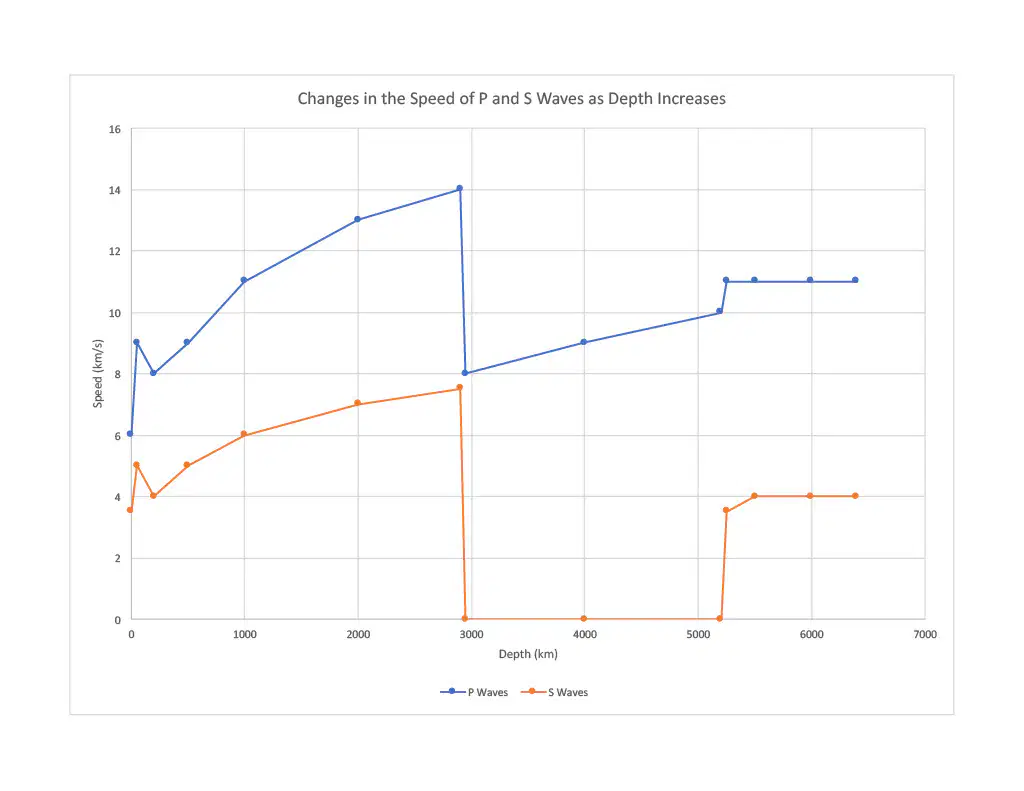
6. Mechanical layers classify Earth's interior structure based on...
a)
what material each layer is made of.
b)
how the materials behave.
7.
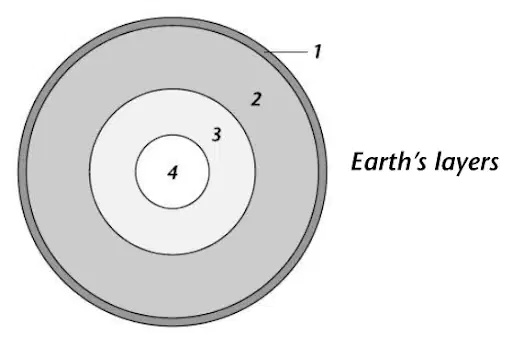
7. Which compositional layer is #2?
a)
Crust
b)
Mantle
c)
Core
8.
8. Earth's inner core is...
a)
a dense ball of solid metal
b)
a layer of molten metal
c)
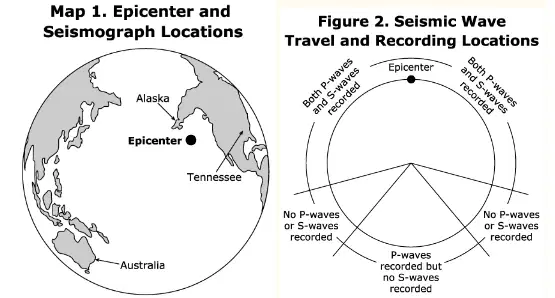
a flexible layer of hot rock
d)
a layer of rock that forms Earth's outer skin
9.
9. Earth's asthenosphere is...
a)
a dense ball of solid metal
b)
a layer of molten metal
c)
a flexible layer of hot rock
d)
a layer of rock that forms Earth's outer skin
10.
10. What happens to temperature as you move into the Earth?
a)
It increases.
b)
It decreases.
c)
It stays the same.
11.
1. Compositional layers classify Earth's interior structure based on...
a)
what material each layer is made of.
b)
how the materials behave.
12.
2. Earth's outer core is...
a)
a dense ball of solid metal
b)
a layer of molten metal
c)
a flexible layer of hot rock
d)
a layer of rock that forms Earth's outer skin
13.
3. Earth's core is primarily composed of what two metals?
a)
Iron and Nickel
b)
Magnesium and Iron
c)
Granite and Basalt
14.
4. Which mechanical layer comprises Earth's tectonic plates?
a)
lithosphere
b)
asthenosphere
c)
mesosphere
d)
outer core
e)
inner core
15.
5. Which mechanical layer is the most dense?
a)
lithosphere
b)
asthenosphere
c)
mesosphere
d)
outer core
e)
inner core
16.
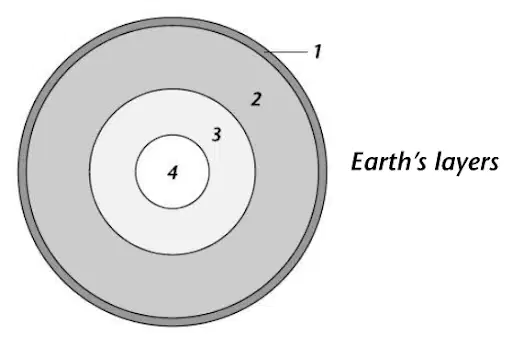
6. Which compositional layer is #1?
a)
Crust
b)
Mantle
c)
Core
17.
7. Which one correctly lists the mechanical layers of earth in order from outermost to innermost?
a)
lithosphere, asthenosphere, mesosphere, outer core, inner core
b)
inner core, outer core, mesosphere, asthenosphere, lithosphere
c)
lithosphere, asthenosphere, mesosphere, inner core, outer core
d)
inner core, outer core, lithosphere, asthenosphere, mesosphere
18.
8. What happens to pressure as you move into the Earth?
a)
it increases
b)
it decreases
c)
it stays the same
19.
9. What is the thinnest compositional layer?
a)
mantle
b)
inner core
c)
outer core
d)
crust
20.
10. Which type of crust is thinnest?
a)
oceanic
b)
continental
21.
1. Which mechanical layer is flexible but solid?
a)
lithosphere
b)
asthenosphere
c)
mesosphere
d)
outer core
e)
inner core
22.
2. Earth's crust is...
a)
a dense ball of solid metal
b)
a layer of molten metal
c)
a flexible layer of hot rock
d)
a layer of rock that forms Earth's outer skin
23.

3. Which compositional layer is #1?
a)
Crust
b)
Mantle
c)
Core
24.
4. Oceanic crust is compositionally closest to...
a)
Basalt
b)
Granite
25.
5. Which one correctly lists the mechanical layers of earth in order from innermost to outermost?
a)
lithosphere, asthenosphere, mesosphere, outer core, inner core
b)
inner core, outer core, mesosphere, asthenosphere, lithosphere
c)
lithosphere, asthenosphere, mesosphere, inner core, outer core
d)
inner core, outer core, lithosphere, asthenosphere, mesosphere
26.
6. What is the correct order (starting from the surface) of Earth's compositional layers?
a)
crust, outer core, inner core, mantle
b)
mantle, outer core, inner core, crust
c)
crust, mantle, outer core, inner core
d)
inner core, outer core, mantle , crust
27.
7. Which of Earth's layers is the thickest?
a)
crust
b)
outer core
c)
mantle
d)
inner core
28.
8. Which type of crust is more dense?
a)
oceanic
b)
continental
29.
9. In which compositional layer do convection currents occur?
a)
crust
b)
mantle
c)
core
30.
10. Which layer does the lithosphere "float" on top of?
a)
asthenosphere
b)
mesosphere
c)
atmosphere
31.
1. The outermost compositional layer of earth is called the mantle.
a)
True
b)
False
32.
2. As you go further into the earth…
a)
Temperature goes up, Pressure goes down
b)
Temperature goes down, Pressure goes up
c)
Temperature and Pressure both go up
d)
Temperature and Pressure both go down
33.
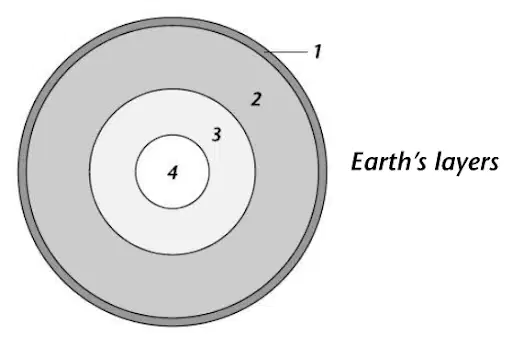
3. Which compositional layer is #1?
a)
Crust
b)
Mantle
c)
Core
34.
4. Which one correctly lists the mechanical layers of earth in order from outermost to innermost?
a)
lithosphere, asthenosphere, mesosphere, outer core, inner core
b)
lithosphere, asthenosphere, mesosphere, inner core, outer core
c)
inner core, outer core, lithosphere, asthenosphere, mesosphere
35.
5. Which core is liquid?
a)
The outer core
b)
The inner core
36.
6. Which layer is a bendy solid?
a)
lithosphere
b)
asthenosphere
c)
mesosphere
37.
7. Which one is the most dense?
a)
Crust
b)
Inner core
38.
8. Earth's crust is...
a)
a dense ball of solid metal
b)
a layer of molten metal
c)
a flexible layer of hot rock
d)
a layer of rock that forms Earth's outer skin
39.
9. Which core is solid metal?
a)
The outer core
b)
The inner core
40.
10. Mechanical layers classify Earth's interior structure based on...
a)
what material each layer is made of.
b)
how the materials behave.
41.
Pressure increases as you move deeper below Earth's surface.
a)
True
b)
False
42.
Scientists use rock samples as ____________ evidence of Earth's Layers.
a)
direct
b)
indirect
43.
An instrument that records vibrations of the Earth and produces a visual representation of those vibrations.
a)
seismograph
b)
seismogram
c)
p-wave detector
d)
seismographer
44.
A column of rock that geologists examine to learn about Earth's interior.
a)
core sample
b)
rock column
c)
rock tower
d)
seismogram
45.
Holes drilled several kilometers into Earth's crust provide direct evidence about Earth's interior in the form of
a)
seismic waves
b)
rock samples
c)
liquid iron
d)
volcanic eruption
46.
In which layer would you expect pressure to be the greatest?
a)
Crust
b)
Inner core
c)
Mantle
d)
Outer core
47.
P-waves can travel through both solids and liquids, but S-waves can only travel through solids. Which layer of the Earth will S-waves be unable to travel through?
a)
crust
b)
mantle
c)
inner core
d)
outer core
48.
How do the speeds of S-waves and P-waves change as they move through the Earth?
a)
S-waves speed up, P- waves slow down
b)
P-waves speed up, S-waves slow down
c)
Both speed up
d)
Both slow down
49.
Geologists examine the ___________ and paths of seismic waves to learn about the interior of the Earth.
a)
direction
b)
force
c)
speed
d)
number
50.
What happens when a seismic wave enters a new layer of Earth? Select all that apply.
a)
They change speed.
b)
They gain energy.
c)
They change direction.
d)
They converge.
51.
Pressure decreases as you move deeper below Earth's surface.
a)
True
b)
False
52.
Scientists use seismic waves as ____________ evidence of Earth's Layers.
a)
direct
b)
indirect
53.
The visual representation of vibrations of the Earth.
a)
seismograph
b)
seismogram
c)
p wave detector
d)
seismographer
54.
A column of rock that geologists examine to learn about Earth's interior.
a)
core sample
b)
rock column
c)
rock tower
d)
seismogram
55.
Using data from seismic waves, geologists have learned that Earth's interior is made up of several
a)
continents
b)
layers
c)
ridges
d)
trenches
56.
In which layer would you expect pressure to be the least?
a)
outer core
b)
mantle
c)
crust
d)
inner core
57.
P-waves can travel through both solids and liquids, but S-waves can only travel through solids. Select all of the layers that S-waves can travel through.
a)
crust
b)
mantle
c)
outer core
d)
inner core
58.
S-waves and P-waves both speed up as they move through the Earth.
a)
True
b)
False
59.
Geologists examine the speed and _________ of seismic waves to learn about the interior of the Earth.
a)
paths
b)
force
c)
acceleration
d)
number
60.
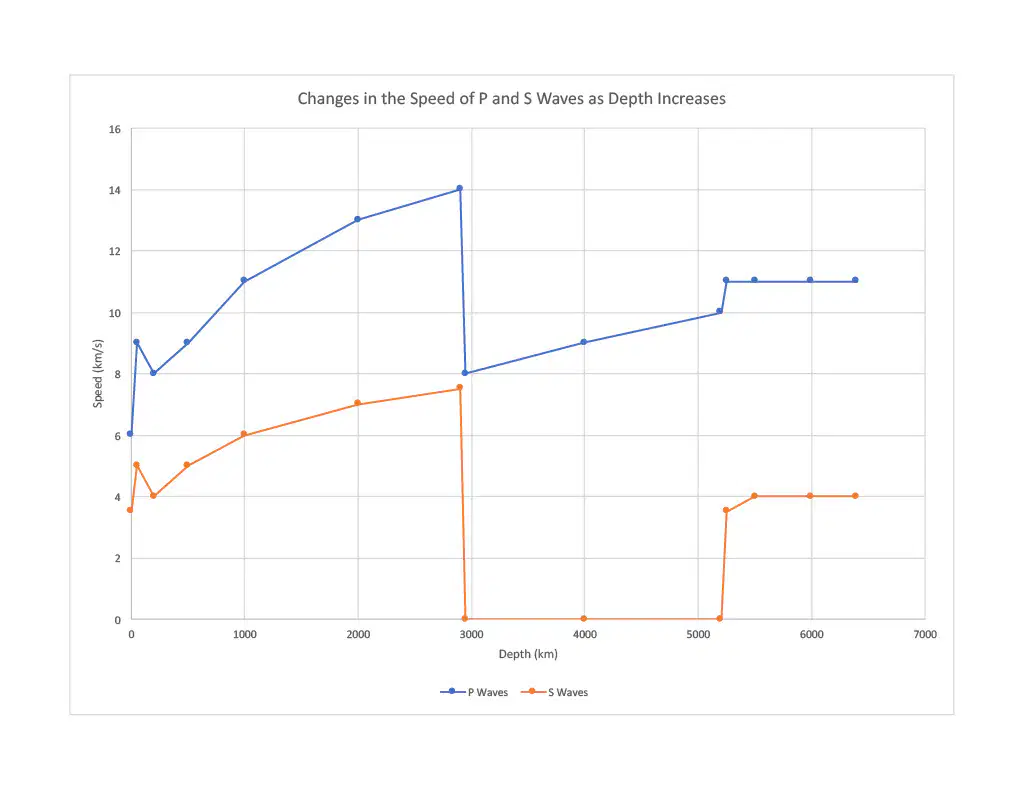
Why do the speeds of both the S-waves and P-waves drop suddenly at 3000 km?
a)
They hit the solid inner core.
b)
They ran out of energy.
c)
They hit the liquid outer core.
61.
Temperature increases as you move deeper below Earth's surface.
a)
True
b)
False
62.
Scientists use rock samples as ____________ evidence of Earth's Layers.
a)
direct
b)
indirect
63.
An instrument that records vibrations of the Earth and produces a visual representation of those vibrations.
a)
seismograph
b)
seismogram
64.
A column of rock that geologists examine to learn about Earth's interior.
a)
core sample
b)
seismogram
65.
Geologists learn about Earth's interior by studying seismic waves which move through the Earth.
a)
True
b)
False
66.
In which layer would you expect temperature to be the highest?
a)
crust
b)
mantle
c)
outer core
d)
inner core
67.
P-waves can travel through both solids and liquids, but S-waves can only travel through solids. Which layer of the Earth will S-waves be unable to travel through?
a)
crust
b)
mantle
c)
inner core
d)
outer core
68.
P-waves and S-waves both slow down as they move through the Earth.
a)
True
b)
False
69.
Geologists examine the __________ and _________ of seismic waves to learn about the interior of the Earth.
a)
force, paths
b)
force, speed
c)
speed, paths
d)
number, paths
70.
Why do the speeds of both the S-waves and P-waves drop suddenly at 3000 km?
a)
They hit the solid inner core.
b)
They hit the liquid outer core.
71.
Temperature decreases as you move deeper below Earth's surface.
a)
True
b)
False
72.
Scientists use seismic waves as ____________ evidence of Earth's Layers.
a)
direct
b)
indirect
73.
A __________________ is an instrument that records vibrations of the Earth and produces a visual representation of those vibrations called a ____________.
a)
seismogram, seismograph
b)
seismograph, seismogram
c)
seismographer, seismograph
d)
p wave detector, seismogram
74.
A column of rock that geologists examine to learn about Earth's interior.
a)
core sample
b)
rock column
c)
rock tower
d)
seismogram
75.
To study Earth's interior, geologists often rely on indirect methods, such as evidence from fossils.
a)
True
b)
False
76.
In which layer would you expect Temperature to be the lowest?
a)
mantle
b)
outer core
c)
inner core
d)
crust
77.
P-waves can travel through both solids and liquids, but S-waves can only travel through solids. Select all of the layers that S-waves cannot travel through.
a)
crust
b)
mantle
c)
outer core
d)
inner core
78.
How do the speeds of S-waves and P-waves change as they move through the Earth?
a)
S-waves speed up, P- waves slow down
b)
P-waves speed up, S-waves slow down
c)
Both speed up
d)
Both slow down
79.
Geologists examine the __________ and _________ of seismic waves to learn about the interior of the Earth.
a)
force, paths
b)
force, speed
c)
speed, paths
d)
number, paths
80.
Four students make models that show part of Earth’s interior in gray to represent the size and location of Earth’s liquid outer core. Which model best supports their data?
a)
Option 1
b)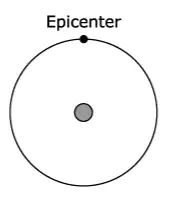
Option 2
c)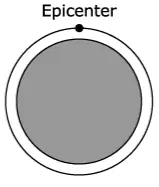
Option 3
d)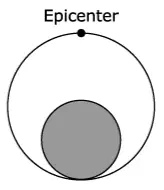
Option 4
81.
How does heat move?
a)
from a warmer to a cooler object
b)
from a cooler to a warmer object
c)
toward a hot object
d)
away from a cold object
82.
How is energy transferred from the sun?
a)
by conduction
b)
by convection
c)
by radiation
d)
by gravitation
83.
Heat from the crust and core causes convection currents inside the Earth.
a)
True
b)
False
84.
Changes in a fluid’s density and the force of ___________ combine with changes in a fluids temperature to set convection currents in motion.
a)
gravity
b)
magnetism
c)
friction
d)
pressure
85.
Conduction is the transfer of heat by the movement of a fluid.
a)
True
b)
False
86.
A scientist observes that the particles in Object 1 are moving faster than the particles in Object 2. Based on this, the scientist can conclude that...
a)
Object 1 is warmer than Object 2
b)
Object 2 is warmer than Object 1
c)
Object 1 is larger than Object 2
d)
Object 2 is larger than Object 1
87.
A cool fluid is __________ dense than a warm fluid.
a)
more
b)
less
88.
Walking on hot sand is an example of radiation.
a)
True
b)
False, convection
c)
False, conduction
89.
The three main types of heat transfer are ______________, convection, and radiation.
a)
conduction
b)
gravitation
c)
induction
d)
deduction
90.
Viscosity is a measure of mass per unit volume in a substance.
a)
True
b)
False
91.
How does heat move?
a)
from a warmer object to a cooler object
b)
from a cooler object to a warmer object
92.
Heat from the sun is transferred via conduction.
a)
True
b)
False
93.
Heat from the ____________ and ______________ causes convection currents inside the Earth. Select the two that apply.
a)
crust
b)
mantle
c)
core
94.
Which of these combines with changes in a fluid’s temperature and the force of gravity to set convection currents in motion?
a)
viscosity
b)
density
c)
malleability
d)
radioactivity
95.
Radiation is the transfer of heat by the movement of a fluid.
a)
True
b)
False
96.
Particles in a warmer object move ____________ compared to particles in a cool object.
a)
slower
b)
the same
c)
faster
97.
Which is more dense, a cool fluid or a warm fluid?
a)
Cool fluid
b)
Warm fluid
c)
Neither, they have the same density
98.
Which is an example of conduction?
a)
boiling water
b)
getting a sunburn
c)
holding your hands out to feel heat from a fire
d)
walking on hot sand
99.
What are the three types of heat transfer? Check all that apply.
a)
gravitation
b)
radiation
c)
conduction
d)
convection
100.
A measure of the mass of particles that take up a given space.
a)
viscosity
b)
mass
c)
density
d)
volume
101.
Heat moves from a warmer object to a cooler object.
a)
True
b)
False
102.
Heat from the sun is transferred via radiation.
a)
True
b)
False
103.
Heat from the mantle and core causes ____________.
a)
radiation loops
b)
conduction areas
c)
convection currents
d)
weather fronts
104.
What two factors besides the heating and cooling of a fluid are responsible for setting convection currents in motion?
a)
density and gravity
b)
viscosity and melting point
c)
density and specific heat
d)
pressure and temperature
105.
is the transfer of heat by the movement of a fluid.
a)
Conduction
b)
Radiation
c)
Convection
d)
Gravitation
106.
If you compare the particles in a cold object to particles in a warm object, the particles in the warm object are...
a)
moving faster than the cold object
b)
moving slower than the cold object
c)
moving the same as the cold object
107.
Cool fluid sinks, while warm fluid rises. Because of this we can conclude that...
a)
cool fluid is less dense than warm fluid
b)
warm fluid is less dense than cool fluid
108.
When you touch hot sand, heat is transferred by to your skin.
a)
conduction
b)
convection
c)
radiation
109.
Conduction, Convection, and Radiation are the 3 types of heat transfer.
a)
True
b)
False
110.
How tightly packed particles are in a given space.
a)
mass
b)
volume
c)
density
d)
gravity
111.
Heat moves from a cooler object to a warmer object.
a)
True
b)
False
112.
Heat from the sun is transferred via convection.
a)
True
b)
False, conduction
c)
False, radiation
113.
Heat from which of these causes convection currents inside Earth?
a)
crust
b)
crust and mantle
c)
crust and core
d)
mantle and core
114.
Which of these combines with changes in a fluid’s density and the force of gravity to set convection currents in motion?
a)
evaporation of a fluid
b)
condensation of a fluid
c)
freezing and melting of a solid
d)
heating and cooling of a fluid
115.
When heat is transferred by movement of a fluid, this is known as...
a)
Conduction
b)
Convection
c)
Radiation
d)
Gravitation
116.
When you heat up an object the particles...
a)
move slower
b)
move faster
c)
move the same
117.
A scientist observes that when he adds cold blue water to warm red water, the cold blue water sinks and the red warm water rises. What can he conclude from this?
a)
cold water is less dense than warm water
b)
blue dye is less dense than red dye
c)
cold water is more dense than warm water
d)
cold water is heavier than warm water
118.
When you touch hot sand, heat is transferred by to your skin.
a)
conduction
b)
convection
c)
radiation
d)
gravitation
119.
Conduction, ___________________, and radiation are the three types of heat transfer.
a)
gravitation
b)
evaporation
c)
vaporization
d)
convection
120.
The amount of mass in a given volume of a substance is known as .
a)
gravity
b)
viscosity
c)
density
d)
measurement
100 %

