
 Worksheets
NGSS Chem IS3T2: Structure, Elect. Config, Metals & Nonmetal
Total questions: 61
Worksheet time: 52mins

1s22s22p63s2
Each row on the periodic table represents:
an energy level
a sublevel
an electron
an orbital
Energy levels are denoted by:
letters
numbers
a combination of letters and numbers
subscripts


Two objects that are similarly charged will...
attract.
repel.
not experience an electric force.
implode.
A negatively charged object and a positively charged object will...
attract.
repel.
not experience an electric force.
implode.
An object becomes positively charged by...
gaining negative charges.
losing negative charges.
gaining positive charges.
losing positive charged.
An object becomes negatively charged by...
gaining negative charges.
losing negative charges.
gaining positive charges.
losing positive charged.
Which of the following is not a way that ions can form?
gaining electrons
gaining protons
losing electrons
All of the above are ways that ions can form.
Oxygen has six valence electrons. When forming an ion, oxygen will
lose six electrons and have a charge of +6.
lose six electrons and have a charge of -6.
gain two electrons and have a charge is +2.
gain two electrons and have a charge of -2.
Look at the periodic table. What should be the charge on the ion formed by calcium?
+1
+2
-1
-2
Most elements are most stable when their outermost energy levels contain ________ electrons.
2
6
8
18
Look at the Periodic table. Which of the following elements would you expect to form an ion that has the same charge as the oxide ion?
calcium
boron
sulfur
chlorine
Which of the following groups on the Periodic Table will only form ions with positive charges?
Group 2
Group 15
Group 17
Group 18

What is a charged atom known as?
Electron
Proton
Ion
Neutron
Subatomic particles with a negative charge
Electrons
Neutrons
Protons
Quarks
These are found in the nucleus and have a neutral charge.
proton
electron
neutron

The number 16 for the atomic element sulfur is the
ionic number
isotope
atomic mass
atomic number

How many protons does sulfur have?
32
16
48
12

How many electrons does sulfur have
16
32
48
12
In an atom, the number of protons is equal to the number of ____________.
energy levels
neutrons
neurons
electrons


How many electrons does an Iodine atom have?
53
126
73
179


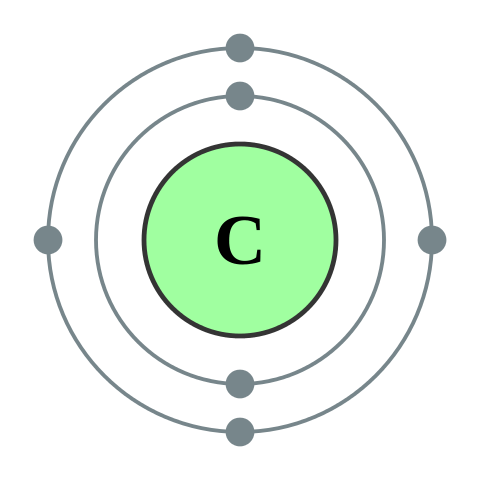
How many valence electrons does carbon have?
4
5
6
7
USE THE PERIODIC TABLE
How many valence electrons does sodium have?
1
2
3
4
Which metal is more reactive than calcium?
magnesium
potassium
silver
aluminum
Rank the following by decreasing reactivity:
I, Kr, Sb, Te
I, Te, Sb, Kr
Kr, I, Te, Sb
Kr, Sb, Te, I
Sb, Te, I, Kr
The trend for reactivity for metals is that the reactivity _______ as you go across the period and it _________ as you move down a group.
increases, increases
decreases, decreases
does not change, decreases
decreases, increases
The trend for reactivity for nonmetals is that as you move across from left the right reactivity __________(except for noble gases) and as you move down a group the reactivity _________
increases, increases
decreases, decreases
decreases, increases
increases, decreases
Which of the following nonmetals are the most reactive?
Ge
Kr
Se
Br
Which of the following nonmetals are the most reactive?
Po
S
Se
O
What is the most reactive nonmetal?
I
F
N
At
What is the most reactive metal?
Li
Be
Fr
H
Metals that are the most reactive have the following characteristics
small atomic radius, high ionization energy, high electronegativity
large atomic radius, high ionization energy, low electronegativity
large atomic radius, low ionization energy, low electronegativity
small atomic radius, low ionization energy, low electronegativity
The most reactive nonmetals have _____ valence electrons
1
2
7
8
Metals are electron _______ because they tend to _______ electrons in order to become stable like the noble gases.
takers, lose
takers, gain
givers, gain
givers, lose

