wayground logo

Free Printable Worksheets

Font size

S
M
L
XL
Worksheets

SSFLHS science quiz high school

Total questions: 150

Worksheet time: 1hrs 26mins

Name
Class
Date
1.

How many atoms of sodium (Na) are in one molecule of baking soda?

a)

1

b)

2

c)

3

d)

4

2.

Ozone and Oxygen molecules are the same substance because they both are made only of oxygen atoms.

a)

true

b)

false

3.

What is the chemical symbol for carbon?

a)

C

b)

Ca

c)

Cn

d)

Crn

4.

Molecules bonded together make up atoms.

a)

true

b)

false

5.

How many atoms make up one molecule of laughing gas?

a)

1

b)

2

c)

3

d)

4

6.

When we combined vinegar and baking soda and created carbon dioxide what was the product?

a)

vinegar

b)

carbon dioxide and baking soda

c)

carbon dioxide

d)

vinegar and baking soda

7.

In a chemical reaction or change a new substance is not created.

a)

true

b)

false

8.

If there is a rise in temperature during a chemical reaction it is called a _________________ reaction.

a)

endothermic

b)

exothermic

9.

Atoms are mostly made up of...

a)

empty space

b)

electrons

c)

solids and liquids

10.

What did the second man drink?

a)

Arsenic

b)

Hydrogen Peroxide

c)

Helium Oxolate

11.
The chemical compound of water is
a)
HO
b)
H2O
c)
H3O
d)
HO2
12.
Water is a universal solvent
a)
True
b)
False
13.
Pure water has a
a)
Neutral pH 
b)
Negative pH
c)
Positive pH
d)
Both Negative and Positive pH
14.
A Compound that is being dissolved is called a
a)
Solution
b)
Solute
c)
Solvent
d)
Suspension
15.
A solvent is...
a)
substance into which the solute dissolves
b)
a compound being dissolved
c)
a substance that does not dissolve
d)
None of the above
16.
What is water made of?
a)
Water
b)
Liquid
c)
Hydrogen and oxygen
d)
Blue 
17.
What is an example of something that dissolves in water
a)
Yourself
b)
Sugar
c)
A rock
d)
A boat
18.
A water strider can skate along the top of a pond because:
a)
covalent bonds result in water cohesion
b)
hydrogen bonds result in water cohesion (surface tension)
c)
water striders have adapted to take advantage of water cohesion
d)
low surface tension of water
19.
Why can water have no net charge but have slight charges in different parts of the molecule?
a)
The oxygen end is slightly negative and the hydrogen end is slightly positive
b)
The hydrogen end is slightly negative and the oxygen end is slightly positive
c)
The hydrogen and oxygen ends change in polarity
d)
Because it is hydrophobic
20.
Attractions between water molecules are called
a)
Covalent bonds
b)
Ionic bonds
c)
Polar bonds
d)
Hydrogen bonds
21.
Which end of the water molecule has a slightly positive charge?
a)
the oxygen end
b)
the hydrogen end
c)
both ends are slightly positive
d)
neither end is positive
22.
Water is a universal solvent because it...
a)
It can be found anywhere
b)
It freezes when it gets cold
c)
floats when frozen
d)
Dissolves most substances
23.
Which of the following is LEAST likely to dissolve in water?
a)
nonpolar fats and oils
b)
polar sugar molecules
c)
salt made of a positive sodium ion and a negative chloride ion
d)
all of the substances will dissolve easily in water
24.
Which types of compounds dissolve easily in water?
a)
Polar and Nonpolar
b)
Polar and Ionic
c)
Nonpolar and Ionic
d)
Covalent and Nonpolar
25.
Fish need oxygen from which molecule? 
a)
O2
b)
The O in H2O 
c)
The oxygen from a tank 
d)
None of the above 
26.
Which of these would LEAST affect turbidity? 
a)
Algae 
b)
Fish feces 
c)
Salt 
d)
Gasoline 
27.
Acids have more what? 
a)
OH ions 
b)
OH- ions
c)
H+ ions 
d)
All of the above 
28.
Phosphates are important to life but can also cause what deadly phenomenon to occur? 
a)
More oxygen availability 
b)
More sunlight availability 
c)
Fish thriving 
d)
Eutrophication 
29.
Which type of water makes soaps not work? 
a)
Hard 
b)
Soft 
30.
What do chemists add to soap to allow it to work in hard water? 
a)
nitrogen 
b)
phosphates 
c)
Artificial scents 
d)
artificial colors 
31.
What kind of change is a phase change?
a)
Physical - it's still the same substance
b)
chemical - it's made of chemicals 
32.
A chemical change happens when...
a)
a substance is changed at the atomic level 
b)
bonds are broken and formed 
c)
a new substance is made
d)
all of the above! 
33.
A chemical change happens when...
a)
a substance is changed at the atomic level 
b)
bonds are broken and formed 
c)
a new substance is made
d)
all of the above! 
34.
A catalyst  
a)
is added to a reaction to make it slow down 
b)
breaks apart and is changed 
c)
provides an energetic short cut to the products 
35.
Chemical Formulas ...
a)
are written in alphabetical order 
b)
represent the destruction or creation of atoms 
c)
represent how atoms are arranged in a chemical reaction 
36.
The compounds or elements present at the end of a reaction 
a)
reactants
b)
catalyst
c)
products
d)
energy 
37.
The compounds and elements that are present at the beginning of a reaction:
a)
reactants
b)
catalyst
c)
products
d)
energy 
38.
Which of the following reactions is a combustion reaction ? 
a)
MgCO3 + O2 → MgO + CO2  
b)
C3H8 + 5O2 → 3CO2 + 4H2O 
c)
6CO2 + 6H2O → C6H12O6 + 6O2 
d)
6CO2 + 6H2O → C6H12O6 + 6O2 
39.
Explain this graph
a)
A catalyst is used to speed up the reaction rate
b)
The catalyst provides a short cut to the products
c)
The red line shows how the catalyst saves energy 
d)
All of these choices
40.
Which of the following is a decomposition reaction?
a)
MgCo3 --> MgO + CO2 
b)
SO3 + H2O --> H2SO4
c)
2 Mg + O2 --> 2MgO 
41.
Which of the following is the smallest unit of life that can carry out all life functions?
a)
the mitochondria
b)
the vacuoles
c)
the nucleus
d)
the cell
42.

Which of the following converts food into energy for the cell?

a)

vacuole

b)

mitochondria

c)

cytoplasm

d)

cell membrane

43.

Which organelle takes in "sun showers" and helps plants with the process or photosynthesis?

a)

Vacuole

b)

Mitochondria

c)

Cytoplasm

d)

Chloroplast

44.

Which type of cell?

a)

Prokaryote

b)

Eukaryote

45.

What cell part is NOT found in all cells

a)

Cytoplasm

b)

Genetic material

c)

Cell membrane

d)

Cell wall

46.

What is the function of this part of the cell?

a)

Structure

b)

Flexability

c)

Regulates what comes in and out of the cell

d)

Stores genetic information

47.
What is the total magnification of a microscope with two lenses when one lens has a magnification of 10x, and the other lens has a magnification of 30x?
a)
15x
b)
30x
c)
40x
d)
300x
48.
_ is/are used to build and repair muscle.
a)
carbohydrates
b)
fiber
c)
protein
d)
fat
49.
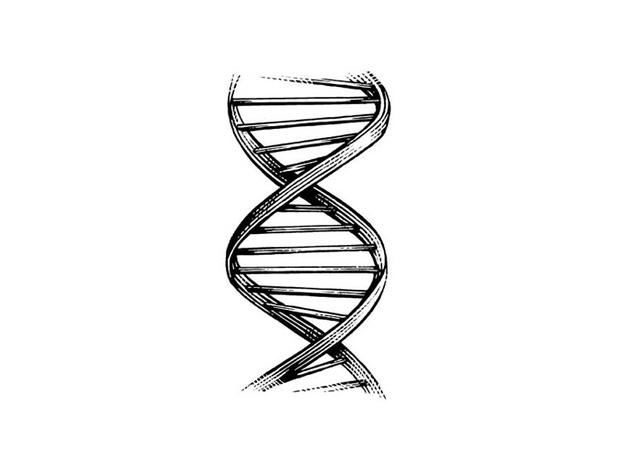
DNA has a _____________ structure. 
a)
double helix
b)
single strand
c)
ring 
d)
chain
50.

What hormone is released when blood glucose levels rise above normal?

a)

insulin

b)

glucagon

c)

glycogen

d)

leptin

51.

What organ releases hormones that regulate blood glucose levels?

a)

salivary glands

b)

stomach

c)

small intestine

d)

pancreas

52.

What causes type 1 diabetes?

a)

lack of exercise

b)

obesity

c)

eating too much carbohydrates

d)

autoimmune disease

53.

HIV becomes AIDS when ______ cells have been destroyed.

a)

BD4

b)

T Helper

c)

C Helper

d)

D Helper

54.

HIV stands for...

a)

Human Immunodeficiency Virus

b)

Human Immune Virus

c)

Have Infected Viral Disease

55.
Where in the body would HCl be found?
a)
Mouth
b)
Esophagus
c)
Liver
d)
Stomach
56.
What breaks down food in stomach?
a)

enzymes

b)
salivary glands
c)
movement 
d)
time
57.
What is the function of an enzyme?
a)
enzymes break themselves into small pieces
b)
enzymes slow down chemical reactions
c)
enzymes speed up chemical reactions
d)
enzymes combine products to form reactants 
58.
What is another name for enzymes?
a)
chemical catalyst
b)
microorganism
c)
biological catalyst
d)
catalyst
59.

What makes up around 55% of the blood?

a)

Plasma

b)

Red Blood Cells

c)

White Blood Cells

d)

Platelets

60.

What causes the blood to be the distinct red colour?

a)

Haemoglobin

b)

Glucose

c)

Hormones

d)

Oxygen

61.

Which of the following is NOT a type of blood vessel?

a)

Artery

b)

Capillary

c)

Vein

d)

Ventricle

62.

What is an allele?

a)

A bunch of letters

b)

The physical appearance of the genes

c)

The genes an organism has

d)

Different forms of the same gene

63.

What is a phenotype?

a)

A bunch of letters

b)

The physical appearance of the genes

c)

The genes an organism has

d)

Different forms of the same gene

64.

After THREE rounds of mitosis, how many new cells will have been created from one parent cell?

a)

4

b)

8

c)

20

d)

16

65.
The diagram shows the female reproductive system. The part labelled B is called  
a)
sperm 
b)
the egg  
c)
the womb  
d)
the ovary 
66.
In the diagram representing the menstrual cycle shown, when does ovulation take place?
a)
between day 6 and 11
b)
between day 17 and 20
c)
between day 1 and 5
d)
between day 12 and 16
67.
Another name for the neck of the uterus
a)
The womb
b)
The vagina
c)
The womb
d)
The cervix
68.
What are small stretches of DNA that code for traits
a)
Nucleus
b)
Chromosomes
c)
Gene
d)
Centromeres
69.
Where is all the genetic information in a cell?
a)
Nucleus
b)
Nucleotides
c)
Chromosomes
d)
Cytoplasm
70.
What does DNA stand for?
a)
Deoxyribonucleic Acid
b)
Deoxyribose Enzymes
c)
Deoxyribose Messenger 
d)
Retro deoxyribose Acis
71.
The passing of characters from parents to offspring is called?
a)
Monohybrid cross
b)
Heredity
c)
True breeding
d)
Genetics
72.
Which one of the following shows discontinuous variation?
a)
Eye colour
b)
Height
c)
Strength
d)
Weight
73.
Which of these is an example of inherited variation only?
a)
Eye colour 
b)
Height 
c)
Weight 
d)
Skin colour 
74.
Members of a species in a defined area
a)
Ecosystem
b)
community
c)
biodiversity
d)
population
75.
Non-living factor that affects an ecosystem
a)
biotic factor
b)
abiotic factor
c)
food chain 
d)
biome
76.
What is the original source of almost all energy in most ecosystems?
a)
carbohydrates
b)
sunlight
c)
water
d)
carbon
77.
A collection of organisms that belong to different populations but all live in the same area and interact with one another.
a)
Population
b)
Ecosystem
c)
Community
d)
Ecosphere
78.
Individuals that can breed with one another make up a
a)
species
b)
population
c)
community
d)
ecosystem
79.

What is the correct order for this food chain?

a)

Owl, Mouse, Grasshopper, Grass

b)

Grass, Mouse, Owl, Grasshopper

c)

Grass, Owl, Grasshopper, Mouse

d)

Grass, Grasshopper, Mouse, Owl

80.

What do omnivores eat?

a)

Animals

b)

Plants and Animals

c)

Plants

d)

Dead Animals

81.

What is the additive identity?

a)

Reciprocal

b)

0

c)

-1

d)

1

82.

What do we call a System of Equations that doesn't have a solution?

a)

Consistent

b)

Coincident

c)

Inconsistent

d)

Independent

83.

When working with a function such as f(x) = x, what are all the possible values of f(x) called?

a)

Real Numbers

b)

Extended Numbers

c)

Range

d)

Domain

84.

If two equations with two variables are to be solved together, what are they called?

a)

Linear Equations

b)

Differential Equations

c)

Simultaneous Equations

d)

Parametric Equations

85.

What values of x makes "5x^2 + 2x - 7 = 0" a true statement?

a)

-11.4

b)

1 & -7/5

c)

-1 & -1.4

d)

1 & 7/5

86.

How many ways can a group of 12 choose a committee of 9?

a)

200

b)

21

c)

108

d)

220

87.

What direction does the parabola x = -3y^2 - 1 open?

a)

Down

b)

Up

c)

Right

d)

Left

88.

If you flip a fair coin 2 times and get head 2 times what is the chance that next flip will be head?

a)

4 In 17

b)

1 In 2

c)

1 In 100

d)

1 In 25

89.

Which is greatest using this set of numbers: 2,45,2,12,1?

a)

Mode

b)

Mean

c)

Median

d)

Range

90.

What is the reciprocal to the sine function?

a)

Cotangent

b)

Cosecant

c)

Secant

d)

Arcsine

91.

If it is 30 degrees Celsius outside, what is the temperature in degrees Fahrenheit?

a)

60

b)

86

c)

0

d)

-18.6

92.

Which is the name for a two-dimensional closed shape with nine straight sides?

a)

Octagon

b)

Hexagon

c)

Nonagon

d)

Septagon

93.

What is the limit of the function y = 1 / (x - 4) as x approaches 4?

a)

0

b)

+ infinity

c)

- infinity

d)

No limit

94.

What is the second derivative of y = 3x5 - 4x4 + 2x2 + 6?

a)

Y = 20x^3 + 48x^2 + 4

b)

Y = 60x^3 + 48x^2 - 4

c)

Y = 15x^4 - 16x^3 + 4x

d)

Y = 60x^3 - 48x^2 + 4

95.

A farmer has seventeen cows. All but nine die. How many cows remain?

a)

8

b)

10

c)

9

d)

7

96.

What do all multiples of 9 have in common?

a)

They're all odd.

b)

They're all even.

c)

If you add up their composite digits until you only have one digit left, you'll always end up with 9.

d)

They're all even.

97.

How far can a dog run into a forest?

a)

Halfway into the forest.

b)

All the way to the other side.

c)

A quarter of the way through.

d)

It won't go in very far.

98.

What is the difference between 0 and null?

a)

There isn't one.

b)

Null is less than 0.

c)

Null is a lack of information, not the definition of a value.

d)

Null is a transient state, sometimes represented by 0.

99.

The Earth's radius is 20,903,520 feet, and you want to know the distance between your eyes and the horizon. What is the only piece of information you need, if you're using geometry to do the calculation?

a)

The circumference of the Earth.

b)

Your height.

c)

The diameter of the Earth.

d)

The elevation of your eyes.

100.

What is a googol?

a)

A number that is a 1 with 100 zeros after it.

b)

A second rate search engine.

c)

It's a made up thing from Back To The Future.

d)

It's the largest named number.

101.

A car travels from point A to point B at a speed of 60 mph. It returns using the same road, from point B to point A, at a speed of 40 mph. What is the round trip's average speed?

a)

51.5 mph

b)

48 mph

c)

65 mph

d)

That depends on how long the distance is between points A and B.

102.

In geometry, what is the minimum size of a point?

a)

one millionth of a degree

b)

one millionth of a centimeter

c)

one millionth of a line.

d)

This is undefined.

103.

The period of 2sin(x)cos(x) is 

a)

 2

b)

c)

4π 

d)

π

104.

If f(x) is an odd function, then | f(x) | is 

a)

an odd function 

b)

an even function 

c)

neither odd nor even 

d)

even and odd

105.

The graphs of the two linear equations a x + b y = c and b x - a y = c, where none of the coefficients a, b, c is equal to zero, 

a)

are parallel 

b)

intersect at the point (0,0) 

c)

intersect at two points 

d)

perpendicular

106.

f is a quadratic function whose graph is a parabola opening upward and has a vertex on the x-axis. The graph of the new function g defined by g(x) = 2 - f(x - 5) has a range defined by the interval 

a)

[ -5 , + infinity) 

b)

[ 2 , + infinity) 

c)

( - infinity , 2] 

d)

( - infinity , 0]

107.

If 1=3

2=3

3=5

4=4

5=4

Then, 6=?

a)

4

b)

3

c)

2

d)

1

108.

I am an odd number. Take away one letter and I become even. What number am I?

(a)  

109.


(a)  

110.

A man is climbing up a mountain which is inclined. He has to travel 100 km to reach the top of the mountain. Every day He climbs up 2 km forward in the day time. Exhausted, he then takes rest there at night time. At night, while he is asleep, he slips down 1 km backwards because the mountain is inclined. Then how many days does it take him to reach the mountain top? 

(a)  

111.

What is the temperature of absolute zero?

a)

-273.12

b)

-273.13

c)

-273.14

d)

-273.15

112.
What is science?
a)
A word
b)
A series of amazing and cool explosions and other stuffs
c)
The intellectual and practical activity encompassing the systematic study of the structure and behaviour of the physical and natural world through observation and experiment.
d)
A series of operations to prove a hypothesis
113.
What is the main source of energy?
a)
Solar Energy
b)
The Sun
c)
Toxic waste
d)
Heat Energy
114.
What is friction?
a)
The force of something moving.
b)
The resistance that one surface or object encounters when moving over another.
c)
Heat from something moving.
d)
Something moving.
115.
How strong is a black holes gravity?
a)
Something  we made up.
b)
They're just holes that do nothin'.
c)
They can suck in any thing that has less mass then them(including light.)
d)
Everything soon we will all be dead.
116.

The 3 states of matter are solid,liquid and gas. WHich of the following is highly compressible?

a)

Gas

b)

Liquid

c)

Solid

d)

Matter

117.

Who is the scientist proving law of motion?

a)

Albert Einstein

b)

Isaac Newton

c)

Marie Curie

d)

Thomas Elva Edison

e)

Aristotle

118.

A lightyear is:

a)

How much light the Sun gives off in one year.

b)

A year in which very little happens.

c)

The time it take light to travel the distance from the Sun to the Earth.

d)

The distance light travels in one year.

119.

Which electromagnetic wave has the highest ENERGY?

a)

Sound

b)

Microwaves

c)

X Rays

d)

Gamma radiation

120.

Different colors of light correspond to different light:

a)

Wavelengths

b)

Intensities

c)

Amplitudes

d)

Velocities

121.

A shirt appears yellow under normal white light conditions. What color does it appear if illuminated with cyan light?

a)

Red

b)

Green

c)

Blue

d)

Yellow

e)

Black

122.

Define temperature

a)

Average kinetic energy

b)

Average potential energy

c)

Average thermal energy

d)

Average internal energy

123.
What happens to air particles when they are heated?
a)
Particles move faster and expand
b)
Particles move faster and become closer together.
c)
Particles move slower and the air expands
d)
Particles move faster become further apart
124.
When objects contract upon cooling...
a)
volume increases and density increases.
b)
volume increases and density decreases.
c)
volume decreases and density decreases.
d)
volume decreases and density increases.
125.

Which of the following must be true if an object is accelerating?

a)

It is going really fast.

b)

It is moving away from the frame of reference point.

c)

Balanced forces are acting upon it.

d)

Unbalanced forces are acting upon it.

126.

Under the standard model, what are protons and neutrons composed of?

a)

electrons

b)

quarks

c)

atoms

d)

neutrons

127.

Is light a particle or a wave? How do we know?

a)

Both. Photoelectric effect and double slit experiment

b)

Wave. Double slit experiment

c)

Particle. Polarized lenses

d)

Particle. Photoelectric effect.

128.

How does a star form?

a)

Contraction of a large amount of gas into heavier element by way of nuclear fusion

b)

Contraction of a large amount of gas into heavier element by way of nuclear fission

c)

Expansion of large amount of gas by nuclear fission

d)

Expansion of large amount of gas by nuclear fusion

129.

1. What do each of the letters correctly represent?

a)

Free, Mass, Access

b)

Fries, Magnesium, Arsenic

c)

Force, Mass, Acceleration

d)

Funny, Monkeys, Arrive

130.

20. Who created the three laws of motion?

a)

Albert Einstein

b)

Isaac Newton

c)

Stephen Hawking

d)

Kendall Jenner

131.

Electricity is ____________________.

a)

the movement of the sun

b)

the movement of electrons

c)

the movement of the moon

d)

the movement of air

132.
What kind of heat transfer happens when the sun is heating your body?
a)
Conduction
b)
Radiation
c)
Convection
d)
Density
133.
Warm air is __________ dense than cold air and rises creating convection currents.
a)
more
b)
less
134.
What is the unit for mass?
a)
Kilogram (Kg)
b)
Newton (N)
c)
Joule (J)
d)
Watt (W)
135.

A tendency to do nothing or remain unchanged

a)

Unbalanced Force

b)

Net Force

c)

Newtons

d)

Inertia

136.

what does an atom consist of

a)

proton

b)

neutron

c)

electron

137.

Can energy be created or destroyed

a)

yes

b)

no

138.

which poles attract

a)

opposite poles

b)

same poles

139.
Gravity on the moon is _______________ gravity on the Earth.
a)
less than
b)
greater than
c)
equal to
d)
about the same as
140.
Who created the Universal Law of Gravitation?
a)
Copernicus
b)
Newton
c)
Kepler
d)
Galileo
141.

Which force was mostly responsible for the contraction of the gas cloud?

a)

friction

b)

magnetism

c)

gravity

d)

inertia

142.

Which measurement is closest to 1 x 10⁻² m?

a)

diameter of an atom

b)

width of a student's finger

c)

length of a football field

d)

height of a schoolteacher

143.

The length of a football field is closest to

a)

1000 cm

b)

1000 dm

c)

1000 km

d)

1000 mm

144.

What is the approximate mass of an automobile?

a)

101 kg

b)

102 kg

c)

103 kg

d)

104 kg

145.

An egg is dropped from a third-story window. The distance the egg falls from the window to the ground is closest to

a)

100 m

b)

101 m

c)

102 m

d)

103 m

146.

How many times does a typical person blink her eyes

in a lifetime?

a)

4✖109

b)

4✖108

c)

4✖107

d)

4✖106

147.

You are using water to dilute small amounts of chemicals in the laboratory, drop by drop. How many drops of water are in a 1.0-L bottle?

a)

2✖105

b)

2✖106

c)

2✖107

d)

2✖108

148.

How many bottles of 500-ml water could be in your classroom?

a)

800

b)

8000

c)

80000

d)

800000

149.

How many times does a human heart beat during a lifetime?

a)

400000

b)

4000000

c)

40000000

d)

400000000

150.

A rather ordinary middle-aged man is in the hospital for a routine check-up. The nurse writes the quantity 200 on his medical chart but forgets to include the units. Which of the following quantities could the 200 plausibly represent?

a)

his mass in kilograms

b)

his height in centimetres

c)

his height in millimetres

d)

his age in month

e)

none of the above