wayground logo

Free Printable Worksheets

Font size

S
M
L
XL
Worksheets

QSU3063 - Week 5

Total questions: 109

Worksheet time: 56mins

Name
Class
Date
1.
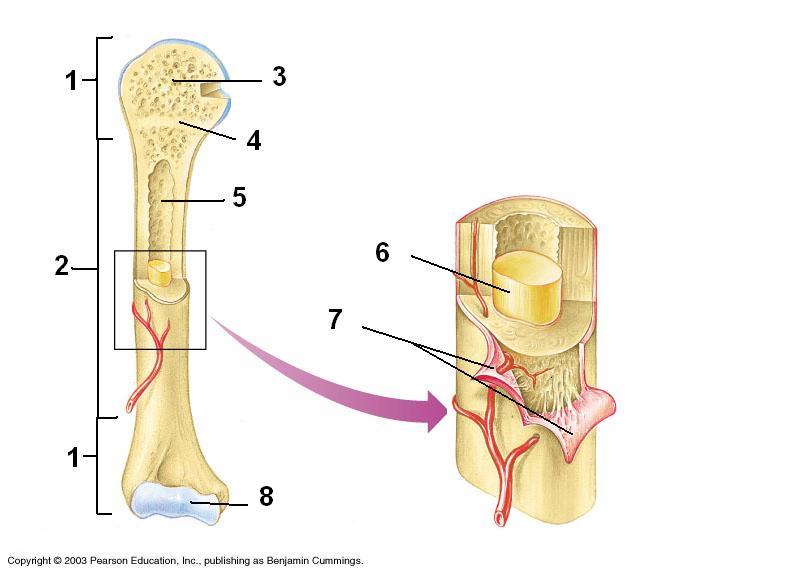
The shaft of the bone is also called the
a)
epiphysis
b)
diaphysis
c)
endosteum
d)
periosteum
2.
Where are blood cells made? 
a)
Yellow marrow 
b)
Red marrow
c)
Spongy Bone 
d)
Periosteum
3.
Which of the following is filled with yellow marrrow? 
a)
medulary cavity
b)
spongy bone
c)
periosteum
d)
compact bone
4.
What are functions of the skeleton?
a)
Protection
b)
Blood cell production
c)
Movement
d)
All of these
5.
Which of these is a long bone?
a)
Femur
b)
Patella
c)
Scapula
d)
Carpal
6.
Which of these is an irregular bone(s)?
a)
Pelvis
b)
Humerus
c)
Phalanges
d)
Tarsals
7.
Which of these is a flat bone?
a)
Vertebra
b)
Tibia
c)
Fibula
d)
Frontal
8.
The primary mineral stored by compact bone is
a)
Calcium
b)
Selenium
c)
Zinc
d)
Magnesium
9.
This type of bone is solid throughout except for the central canals and lacunae.
a)
Compact Bone
b)
Spongy or Cancellous Bone
10.
This type of bone is porous, allowing blood vessels to move through it and containing bone marrow.
a)
Compact Bone
b)
Spongy or Cancellous Bone
11.
What is structure 8?
a)
trabecular bone
b)
periosteum
c)
yellow marrow
d)
medullary cavity
12.
Covering on the end of the bones as represented in structure D. Also on the end of B.  Provides protection
a)
red bone marrow
b)
yellow bone marrow
c)
articular cartilage
d)
medullary cavity
13.
The hardest, most dense part of the bone tissue is the
a)
periosteum
b)
spongy bone
c)
osteoblast
d)
compact bone
14.
OUTER COVERING OF BONE THAT COVERS DIAPHYSIS AND IS LOCATION WHERE MUSCLES ATTACH
a)
ARTICULAR CARTILAGE
b)
OSTEON
c)
HAVERSIAN CANAL
d)
PERIOSTEUM
15.
If cartilage remains in this "specific" area, then growth is still occurring; it is located at the end of long bone
a)
Epipyseal plate
b)
 Medulary Cavity 
c)
Diaphysis 
d)
Endosteum 
16.
The ends of the long bone are anatomically referred to as the: 
a)
Epiphyseal plate 
b)
Medulary Cavity 
c)
Periosteum 
d)
Epiphysis 
17.
This lines the medullary cavity
a)
Periosteum 
b)
Endosteum 
c)
Diaphysis 
d)
Osteoblasts 
18.

Which of these is a short bone?

a)

Femur

b)

Patella

c)

Scapula

d)

Ulna

19.

What bone is #15?

a)

The Fibula

b)

The Pelvic Bone

c)

The Patella

d)

The Tibia

20.

Number 1 is pointing at what?

a)

The Skull

b)

The Mandible

c)

The Clavicle

d)

The Sternum

21.

what bone is #14 pointing at?

a)

The Tibia

b)

The Fibula

c)

The Patella

d)

The Femur

22.

The Clavicle is indicated by what number?

a)

#6

b)

#2

c)

#8

d)

#11

23.

#11 is pointing to what bone?

a)

Pelvic Bone

b)

The Femur

c)

The Ulna

d)

The Patella

24.

What bone is indicated by #3

a)

The Ulna

b)

The Radius

c)

The Femur

d)

The Humerus

25.

What number is pointing at the ribs?

a)

#1

b)

#11

c)

#10

d)

#9

26.

What bone is #4 pointing at?

a)

The Ulna

b)

The Humerus

c)

The Radius

d)

The Sternum

27.

What bone is #9 pointing at?

a)

The Clavicle

b)

The Ribs

c)

The Sternum

d)

The Humerus

28.

What number is pointing at the Ulna?

a)

#5

b)

#4

c)

#3

d)

#6

29.

What bone is #8 pointing at?

a)

The Mandible

b)

The Jaw

c)

The Skull

d)

The Clavicle

30.

The Femur is number?

a)

#9

b)

#5

c)

#13

d)

#6

31.

What number is the Fibula?

a)

#15

b)

#7

c)

#6

d)

#14

32.

How many bones are in the human body?

a)

25

b)

127

c)

206

d)

389

33.

What are the 4 types of bones?

a)

Flat, Long, Irregular, Short

b)

Flat, Irregular, Clumped, Long

c)

Irregular, Raised, Long, Flat

d)

Long, Flat, Irregular, Small

34.

What do bones need to grow?

a)

candy

b)

water

c)

green vegetables

d)

calcium

35.

What is a fracture?

a)

Long bone

b)

A small break in a bone

c)

Piece of a bone

d)

Bone made of cartilage

36.

What was unique about Mr. Bones hands?

a)

One was missing a bone

b)

Both thumbs were pointing the same direction

c)

One had an extra bone

d)

They were both showing the palm side

37.

Ribs are counted from _________________

a)

Right to Left

b)

Bottom Up

c)

Left to Right

d)

Top Down

38.

What are bones like on the inside?

a)

Thin and brittle

b)

Thick and strong

c)

Heavy and rough

d)

Soft and spongy

39.

Bones give your body ___________

a)

Shape

b)

Posture

c)

Flexibility

d)

Weakness

40.

What does bone marrow produce?

a)

Water

b)

Hair

c)

Blood

d)

Muscles

41.

individual parts of a hard interior framework that provides shape and protection for the human body.

a)

Cartilage

b)

Torso

c)

Skull

d)

Bones

42.

the rubbery, flexible material that sometimes connects bones and provides shape for some body part, including the nose and ears.

a)

Skeleton

b)

Cartilage

c)

Bones

d)

Skull

43.

where separate bones come together and allow the body (arms, legs, fingers, etc.) to bend

a)

joints

b)

torso

c)

cartilage

d)

skull

44.

the system that includes all of the bones in the body

a)

Bones

b)

Skeleton

c)

Skull

d)

Joints

45.

the hollow case, made from 18 fused bony plates and 2 jaw bones, that surround and protects the brain, inner ears, and eyes

a)

Torso

b)

Joints

c)

Skull

d)

Bones

46.

the main part of the body, including shoulders, chest, abdomen, and hips

a)

Torso

b)

Skull

c)

Bones

d)

Cartilage

47.
The mandible helps you 
a)
Chew 
b)
run
c)
pick up something
d)
move your eyebrows 
48.
which bones can be found in your hand
a)
tarsals and metatarsals 
b)
raptors and velosaraptors 
c)
carpals and metacarple
d)
pop and corn 
49.
The smallest bones in the foot are the  ...
a)
metatorius 
b)
metamorphius 
c)
metacarpals
d)
metatarsals 
50.
This bone is often broken while playing sports, it is attached only to the shoulder and crosses the top of the ribcage 
a)
patella
b)
scapula
c)
clavicle
d)
ulna
51.
the small bone that covers the knee joint is known as ....
a)
the fibula
b)
the truthula
c)
the ribella
d)
the patella
52.
the main function of the skull is to 
a)
bang against the wall when frustrated
b)
protect the brain and sensory organs of the head
c)
to protect the chest, heart and lungs from damage
53.
The radius and ulna are in the 
a)
the lower leg
b)
the hip
c)
the lower arm
d)
the upper arm
54.

this bone is often fractured during CPR

a)

sternum

b)

mandible

c)

scapula

d)

carpals

55.

The longest bone in the leg is called ...

a)

funny

b)

longinoneum

c)

tibia

d)

femur

56.

the cervical, thoracic, lumbar sacral and coccyx form the ......

a)

vertebral tunnel

b)

pelvic girdle

c)

vertebral column

d)

verbatum

57.

Axial bones include...

a)

arm bones

b)

leg bones

c)

skull, vertebrae, rib cage

d)

rib cage and shoulders

58.

Which is an example of how the structure of a bone helps its function?

a)

big, flat breastplate for protecting heart

b)

thick leg bones to support our weight

c)

curved spine for shock absorption

d)

all of the above are good examples

59.

What is the outer covering of a bone called?

a)

bone marrow

b)

periosteum

c)

compact bone

d)

spongy bone

60.

What is bone marrow's job?

a)

produce red blood cells

b)

produce calcium

c)

tell the bones when to move

d)

protect inner organs

61.

What part of a bone contains hollow spaces?

a)

bone marrow

b)

periosteum

c)

compact bone

d)

spongy bone

62.

Why are bones hollow?

a)

so we can fly

b)

makes us light enough to move around

c)

allows for maximum protection

d)

protects your spinal cord

63.

How are skeletal and muscular systems connected?

a)

bones send calcium to muscles

b)

skeletal muscles attach to bones to allow for movement

c)

muscles protect all our bones

d)

bones allow for oxygen to reach muscles

64.

Which is the most basic/smallest unit?

a)

muscles

b)

muscle tissue

c)

muscle cell

d)

the muscular system

65.

Skeletal muscles.....

a)

are voluntary

b)

are attached to our bones

c)

get stronger with exercise

d)

all the above are true

66.
One function of the skeletal system is _______ especially in regards to the vital organs, such as the brain, heart, and lungs.
a)
Protection
b)
Storage
c)
Synthesis
d)
Movement
67.

The point between the Diaphysis and Epiphysis where growth occurs (Still Growing)

a)

Epiphysial Plate

b)

Epiphysial Line

c)

Metaphysis

d)

Concentric Lamellae

e)

Osteons

68.

Which is a cell that builds new bone?

a)

osteoclast

b)

osteoblast

c)

osteocyte

d)

osteodontknow

69.
Bones that originate within sheetlike layers of connective tissue.
a)
partial bones
b)
chondritic bones
c)
intramembranous bones
d)
endochondral bones
70.
This type of bone is porous, allowing blood vessels to move through it and containing bone marrow.
a)
Compact Bone
b)
Spongy or Cancellous Bone
71.
Structure #5 is the 
a)
medullary cavity
b)
periosteum
c)
epiphysis
d)
diaphysis
72.

What are the different shapes of bones in human skeleton?

a)

long, short, flat and irregular

b)

round, long, short and oval

c)

long, irregular and short

73.
The location where two bones meet
a)
Ligament
b)
Joint
c)
Cramp
d)
Dislocation
74.
The Skeletal System does what?
a)
Support your body
b)
Help your body move with muscles
c)
all of the above
d)
protect your organs
75.
What makes muscles stronger?
a)
steroids
b)
food
c)
sleeping
d)
exercise
76.
Tendons connect what two things?
a)
Bone to Bone
b)
Bone to Muscle
c)
Muscle to Muscle
d)
Muscle to Organs
77.

What is Osteoporosis?

a)

Bone density decrease

b)

Only affects women

c)

Something you only have to worry about after you're 50+ years old

d)

Bone density increase

78.

Which is not a tissue?

a)

tendon

b)

muscle

c)

ligament

d)

They all are

79.

Physical activity reduces the risk of osteoporosis by putting__________ under stress ______the destiny of the bones.

a)

joints & decreases

b)

bones & increases

c)

ligaments & increases

d)

bones & decreases

80.

What is NOT a contributing factor to the development of Osteoporosis?

a)

Being Physical Active

b)

Family History

c)

A diet low in Calcium and Vitamin D

d)

Excess Sodium and Caffeine intake

e)

decline in estrogen

81.

Who is more likely to develop Osteoporosis?

a)

Men

b)

Women

82.

Which is NOT a way to prevent the development of Osteoporosis

a)

Maximizing peak bone density

b)

Engaging in regular physical activity

c)

Eating a healthy diet rich in Vitamin D and Calcium

d)

Nothing-you don't need to worry about it until your over 50

83.
Bones that originate within sheetlike layers of connective tissue.
a)
partial bones
b)
chondritic bones
c)
intramembranous bones
d)
endochondral bones
84.
Bones that begin as masses of cartilage later replaced by bone tissue.
a)
intramembranous bones
b)
entraspecific bones
c)
ethmodial bones
d)
endochondral bones
85.
Bone forming cells are called...
a)
osteoblasts
b)
osteocytes
c)
osteoclasts
d)
osteons
86.
Most bones of the skeleton are formed by...
a)
endochondral ossification
b)
gender specific ossification
c)
intramembranous ossification
d)
hyaline ossification
87.
The process of replacing connective tissue to form an intramembranous bone.
a)
endochondrial ossification
b)
gender specific ossification
c)
intramembranous ossification
d)
hyaline ossification
88.
In long bones, bone tissue begins to replace hyaline cartilage in the center of the diaphysis or the...
a)
secondary ossification center
b)
primary ossification center
c)
medullary ossification center
d)
transverse ossification center
89.
The band of cartilage in the epiphysis where secondary ossification occurs.
a)
zone of ossification 
b)
ephiphyseal plate
c)
hyaline plate
d)
Z line
90.
Multinucleated cells that break down the calcified matrix of bone.
a)
osteoblasts
b)
osteoclasts
c)
osteons
d)
osteocytes
91.
Abnormal swings in blood sugar are less likely in individuals who exercise regularly in part due to the appearance of osteocalcin hormone.
a)
True
b)
False
92.
The effects of this female sex hormone is stronger than male counterpart resulting in females typically reaching their max heights earlier.
a)
testosterone 
b)
 calcitonin
c)
estrogen
d)
insulin 
93.
The bones of athletes are typically stronger and heavier than nonathletes due to the stress applied to the bones by muscles.
a)
True
b)
False
94.

Which ossification produces flat bones?

a)

Endochondral ossification

b)

Intramembranous ossification

95.

What type of cartilage is involved in the endochondral ossification?

a)

Fibrocartilage

b)

Elastic cartilage

c)

Hyaline cartilage

96.

Which cell creates the marrow cavity in the center of the long bone?

a)

Osteogenic cell

b)

Osteoclast

c)

Osteocyte

d)

Osteoblast

97.

Which cell deposits bone to the lining of the bone marrow (endosteum)?

a)

Osteoblast

b)

Osteocyte

c)

Osteogenic cell

d)

Osteoclast

98.

In adults, where do you find cartilage in the bone?

a)

bone marrow

b)

at the ends of the bone

c)

compact bone

d)

spongy bone

99.

In growing individuals, where would you find cartilage in the bone?

a)

epiphyseal plate

b)

bone marrow

c)

blood vessel

d)

compact bone

100.

What's occurring at the epiphyseal plate?

a)

the bone becomes cartilage

b)

the cartilage stays as cartilage

c)

the cartilage becomes bone

d)

the bone becomes a bone

101.

At which zone do the chondrocytes multiply?

a)

reserve cartilage

b)

cell proliferation

c)

cell of hypertrophy

d)

calcification

e)

bone deposition

102.

At which zone are the chondrocytes die?

a)

reserve cartilage

b)

cell proliferation

c)

cell of hypertrophy

d)

calcification

e)

bone deposition

103.

At which zone do the cartilage rest?

a)

reserve cartilage

b)

cell proliferation

c)

cell of hypertrophy

d)

calcification

e)

bone deposition

104.

At which zone do the chondrocytes enlarge?

a)

reserve cartilage

b)

cell proliferation

c)

cell hypertrophy

d)

calcification

e)

bone deposition

105.

At which zone do minerals get deposited, calcified cartilage matrix?

a)

reserve cartilage

b)

cell proliferation

c)

cell of hypertrophy

d)

calcification

e)

bone deposition

106.

After the cartilage dies and minerals are deposited, what type of bone is being formed at the zone of bone deposition?

a)

compact

b)

sponge

107.

Appositional growth is when the bone

a)

develops

b)

thickens

c)

elongates

108.

What do osteoclasts secrete that is attracted to Cl- which leads to the dissolving of calcium phosphate?

a)

Na+

b)

H+

c)

K+

d)

H

109.

Which cell secretes enzymes that digest collagen?

a)

Osteogenic cells

b)

Osteocytes

c)

Osteoclast

d)

Osteoblast