wayground logo

Free Printable Worksheets

Font size

S
M
L
XL
Worksheets

2021-22 Chemistry T1 Final

Total questions: 115

Worksheet time: 3hrs 56mins

Name
Class
Date
1.

The SI unit for temperature is __?__.

a)

degree fahrenheit (° F)

b)

degree celsius (° C)

c)

kelvin (K)

d)

degree centigrade (°C)

2.

The metric prefix "kilo" means __?__.

a)

one tenth (0.1)

b)

one thousandth (0.001)

c)

one hundred (100)

d)

one thousand (1,000)

3.
You know 1000 mg = 1 g.  Convert 2.5 grams into milligrams.
a)
25 mg
b)
25,000 mg
c)
250 mg
d)
2500 mg
4.

How many minutes are in 17 years?

a)

5,256,000min

b)

525,600min

c)

8,935,200min

d)

31,536,000min

5.
What charge does a proton have?
a)
positive
b)
negative
c)
no charge
d)
neutral
6.
Where are protons located in the atom?
a)
orbitals
b)
nucleus
c)
rings
d)
positive
7.
If an atom loses an electron, does the atom become more positive or more negative?
a)
more positive
b)
more negative
c)
both
d)
neither
8.
Group 1 elements, except for hydrogen, they are reactive and usually exist as compounds with other elements.
a)
alkaline earth metal
b)
halogen
c)
alkali metal
d)
representative element
9.
A highly reactive group 17 element.
a)
halogen
b)
metalloid
c)
noble gas
d)
alkali metal
10.
An extremely unreactive group 18 element.
a)
halogen
b)
alkali metal
c)
noble gas
d)
alkaline earth metal
11.
Elements that are generally gases or dull brittle solids that are poor conductors of heat and electricity.
a)
noble gas
b)
halogen
c)
nonmetal
d)
metalloids
12.
Covalent compounds
a)
Share electrons
b)
transfer electrons
c)
contain a sea of electrons
d)
conduct electricity
13.
What is the number of valence electrons for Silicon?
a)
1
b)
2
c)
6
d)
4
14.
What is the correct formula for Sodium Oxide?
a)
NaO
b)
NaO2
c)
Na2O
d)
Na2O2
15.
Name CCl4
a)
carbon carbon tetraiodide
b)
carbon tetrachloride
c)
monocarbon tetrachloride
d)
water
16.
Name...HBr
a)
Bromic acid
b)
Hydrogen bromide
c)
Hydrobromic acid
d)
Bromous acid
17.
a substance formed when two or more elements are chemically bonded together
a)
Element Soup
b)
Pure Element
c)
Ion
d)
Compound
18.
type of reaction in which two or more elements combine to form a more complex compound
a)
Double Displacement
b)
Single Displacement
c)
Synthesis
d)
Decomposition
19.
type of chemical reaction where an element reacts with a compound and takes the place of another element in that compound
a)
Double Displacement
b)
Single Displacement
c)
Synthesis
d)
Decomposition
20.
N2 +  3H2 → 2NH3 
How many moles of hydrogen are needed to react with 2 moles of nitrogen?
a)
6
b)
2
c)
3
d)
1
21.
As water begins changing from liquid to solid, it will ____ & _____.
a)
freeze, shrink
b)
freeze, expand
c)
condensate, shrink
d)
condensate, expand
22.

In order to convert to Kelvin, you add ______ to the Celsius measurement.

a)

372

b)

273

c)

237

d)

732

23.
salt water is a 
a)
compound
b)
element
c)
heterogeneous mixture
d)
solution
24.
When dissolved in water, acids produce:
a)
bases
b)
salts
c)
hydrogen ions
d)
hydroxide ions
25.

What element is being Oxidized?

___ HNO3 + ___ H2S ___> ___ NO + ___ S + ___ H2O

a)

N

b)

H

c)

O

d)

S

26.
What is oxidation number of Fe in FeO ?
a)
+2
b)
-2
c)
0
d)
+1
27.
If an atom loses electrons during a chemical reaction, the atom was:
a)
Oxidized
b)
Reduced
c)
Neutralized
d)
Precipitated
28.
Identify the equipment shown here:
a)
graduated cylinder
b)
Erlenmeyer flask
c)
beaker
d)
volumetric flask
29.
Identify the equipment shown here:
a)
beakers
b)
flasks
c)
decanters
d)
graduated cylinders
30.
What is used to protect your eyes from chemicals, broken glass, and fire?
a)
Fire blanket
b)
Eye wash
c)
Goggles
d)
Flask
31.
When is it OK to eat or drink in the lab?
a)
Always
b)
Never
32.
When in the lab...
a)
long sleeves and loose clothing should be rolled up
b)
closed toe shoes should be worn
c)
long hair should be pulled back
d)
all of the above
33.
Ionic Bonding involves...
a)
The transfer of protons
b)
The transfer of nuetrons 
c)
The transfer of electrons
d)
None Of the above
34.

Bond breaking releases energy.

a)

true

b)

false

35.

The name of FeCl₂ is

a)

iron chloride

b)

iron (II) chloride

c)

iron (I) chloride

d)

iron dichloride

36.

LiBr is called

a)

lithium bromine

b)

lithium (I) bromine

c)

lithium bromide

d)

lithuim (I) bromide

37.

What is the name of the compound Na2(SO4)?

a)

Sodium sulfate

b)

Sodium sulfide

c)

Sodium sulfite

d)

Sodium sulfuroxide

38.

Which of these combinations is an ionic compound made of?

a)

Metal and Metal

b)

Nonmetal and Nonmetal

c)

Metal and Nonmetal

d)

Cation and Cation

39.
What is the name of N2O3
a)
Nitrogen trioxide
b)
Dinitrogen oxide
c)
Dinitrogen trioxide
d)
Nitrogen oxide
40.
What is the chemical formula for Tetrasulfur pentoxide?
a)
SO
b)
S4O
c)
S4O5
d)
S5O4
41.
What is a positivly charge atom called?
a)
cation
b)
anion
42.

What are the reactants in the chemical equation pictured?

a)

CH4 and CO2

b)

CH4 and O2

c)

CO2 and H2O

d)

O2 and H2O

43.
What is a coefficient?
a)
The small number on the right of the chemical symbol.
b)
The large number to the left of a formula.
44.
Which problem is balanced?
a)
PbO2 + 2H2
b)
SO2 + H20 --> H2SO4
c)
2Na + 2H2O --> 2NaOH + H2
45.
What is the little number after an element in a chemical equation called.
Example: H2
a)
Coefficient 
b)
Subscript
c)
Atom
d)
Equation
46.
Balance this equation
_Zn+_HCl-->_ZnCl+_H2
a)
1,1,2,1
b)
1,1,1,2
c)
1,2,1,1
d)
2,1,1,1
47.
What does the Law of Conservation of Mass state?
a)
Matter cannot be gained or lost in a chemical reaction.
b)
Matter can only be lost in a chemical reaction.
c)
Matter can only be gained in a chemical reaction.
d)
Matter can be gained and lost in a chemical reaction. 
48.
Balance this equation-
__P+ __O--> __P2O3
a)
it is already balanced
b)
2, 1, 3
c)
1, 2, 3
d)
1, 3, 2
49.
Number of H in 3(NH₄)₂CrO₄
a)
4
b)
6
c)
8
d)
24
50.

All of the following are physical properties of matter EXCEPT ____.

a)

mass

b)

color

c)

melting point

d)

ability to rust

51.

Which state of matter has a definite volume and takes the shape of its container?

a)

solid

b)

liquid

c)

gas

d)

liquid and gas

52.

Which state of matter is characterized by having an indefinite shape, but a definite volume?

a)

solid

b)

liquid

c)

gas

d)

none of the answers

53.

Which of the following is a homogeneous mixture?

a)

salt water

b)

beef stew

c)

sand and water

d)

soil

54.

The chemical symbol for iron is ____.

a)

fe

b)

FE

c)

Fe

d)

Ir

55.

Which of the following is a chemical property?

a)

color

b)

hardness

c)

freezing point

d)

ability to react with oxygen

56.

All of the following changes to a metal are physical changes EXCEPT ____.

a)

bending

b)

melting

c)

rusting

d)

polishing

57.

Which of the following indicates that a chemical change has happened during cooking?

a)

The food darkens

b)

Bubbles form in boiling water.

c)

Butter melts.

d)

Energy is transferred from the stove to a pan.

58.

What happens to matter during a chemical reaction?

a)

Matter is neither destroyed or created.

b)

Some matter is destroyed.

c)

Some matter is created.

d)

Some matter is destroyed and some is created.

59.

The smallest particle of an element that retains the properties of that element is a(n) ____.

a)

atom

b)

electron

c)

proton

d)

neutron

60.

Which of the following is true about subatomic particles?

a)

Electrons are negatively charged and are the heaviest subatomic particle.

b)

Protons are positively charged and the lightest subatomic particle.

c)

Neutrons have no charge and are the lightest subatomic particle.

d)

The mass of a neutron nearly equals the mass of a proton.

61.

What is the relative mass of an electron?

a)

1/1840 the mass of a hydrogen atom

b)

1/1840 the mass of a neutron + proton

c)

1/1840 the mass of a C-12 atom

d)

1/1840 the mass of an alpha particle

62.

All atoms are ____.

a)

positively charged, with the number of protons exceeding the number of electrons

b)

negatively charged, with the number of electrons exceeding the number of protons

c)

neutral, with the number of protons equaling the number of electrons

d)

neutral, with the number of protons equaling the number of electrons, which is equal to

the number of neutrons

63.

The nucleus of an atom is ____.

a)

the central core and is composed of protons and neutrons

b)

positively charged and has more protons than neutrons

c)

negatively charged and has a high density

d)

negatively charged and has a low density

64.

The atomic number of an element is the total number of which particles in the nucleus?

a)

neutrons

b)

protons

c)

electrons

d)

protons and electrons

65.

Isotopes of the same element have different ____.

a)

numbers of neutrons

b)

numbers of protons

c)

numbers of electrons

d)

atomic numbers

66.

An element has an atomic number of 76. The number of protons and electrons in a neutral atom of the

element are ____.

a)

152 protons and 76 electrons

b)

76 protons and 0 electrons

c)

38 protons and 38 electrons

d)

76 protons and 76 electrons

67.

The mass number of an element is equal to ____.

a)

the total number of electrons in the nucleus

b)

the total number of protons and neutrons in the nucleus

c)

less than twice the atomic number

d)

constant number for the lighter elements

68.

How many protons, electrons, and neutrons does an atom with atomic number 50 and mass number 125 contain?

a)

50 protons, 50 electrons, 75 neutrons

b)

75 electrons, 50 protons, 50 neutrons

c)

120 neutrons, 50 protons, 75 electrons

d)

70 neutrons, 75 protons, 50 electrons

69.

What is the number of electrons in the outermost energy level of an oxygen atom?

a)

2

b)

4

c)

6

d)

8

70.

The modern periodic table is arranged in order of increasing atomic ____.

a)

mass

b)

charge

c)

number

d)

radius

71.

Of the elements Pt, V, Li, and Kr, which is a nonmetal?

a)

Pt

b)

V

c)

Li

d)

Kr

72.

The atomic number of an element is the total number of which particles in the nucleus?

a)

neutrons

b)

protons

c)

electrons

d)

protons and electrons

73.

Which of the following elements is a transition metal?

a)

cesium

b)

copper

c)

tellurium

d)

tin

74.

The metals in Groups 1A, 2A, and 3A ____.

a)

gain electrons when they form ions

b)

all form ions with a negative charge

c)

all have ions with a 1+ charge

d)

lose electrons when they form ions

75.
How many sig. fig. are in the number below:
106.00
a)
2
b)
3
c)
4
d)
5
76.
How many sig. fig. are in the number below:
705000
a)
2
b)
3
c)
5
d)
6
77.
Which measurement contains 3 sig figs?
a)
200 mL
b)
20.0 mL
c)
0.02 mL
d)
0.020mL
78.

Convert the following to scientific notation.

0.000480

a)

4.8 x 10⁻⁴

b)

4.80 x 10⁻⁴

c)

48 x 10-5

d)

4.80 x 10⁴

79.
Round 1047.78 to three sig figs
a)
104
b)
105
c)
1050
d)
1050.00
80.
A bottle of hand sanitizer is 88mL. What is its volume in Liters?
a)
.88 Liters
b)
.088 Liters
c)
8.8 Liters
d)
88 Liters
81.
240 cm = ___________ m
a)
2400
b)
24
c)
2.4
d)
0.24
82.

What step does every scientific experiment begin with?

a)

hypothesis

b)

question/problem

c)

procedures

d)

conclusion

83.
Calculate the answer to the following problem and round the final answer to the correct number of sig figs:
24.567 + 0.04478 =
a)
24.61178
b)
24.612
c)
24.611
d)
24.61
84.
Calculate the answer to the following problem and round the final answer to the correct number of sig figs:
4.627 / 0.00371 = 
a)
1247.169811
b)
1250
c)
1247
d)
1240
85.
Describe the accuracy and precision of the image
a)
Accurate and Precise
b)
Accurate and not precise
c)
Not Accurate and Precise
d)
not accurate and not precise
86.
Which is NOT a diatomic molecule?
a)
Fluorine
b)
Nitrogen
c)
Boron
d)
Bromine
87.

Convert 72⁰F to Celsius (5/9 x (0F - 32))

a)

2.2⁰C

b)

222⁰C

c)

22.2⁰C

d)

161.6⁰C

88.

Convert 35⁰F to Celsius (5/9 x (0F - 32))

a)

1.6⁰

b)

1.7⁰C

c)

2.0⁰

d)

16.6⁰C

89.
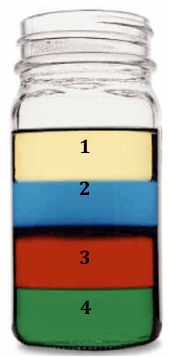
Put the liquids in order from most dense to least dense?
a)
4, 3, 2, 1
b)
1, 2, 3, 4
c)
3, 4, 2, 1, 
d)
4, 3, 1, 2
90.
What is the formula for density?
a)
density = mass x volume
b)
density = mass / volume
c)
density = mass + volume
d)
density = mass - volume
91.
Jack has a rock. The rock has a mass of 14 g and a volume of 2 cm3. What is the density of the rock?
a)
7 mL
b)
7 g/cm3
c)
28 g/cm3
d)
1/7 g/cm3
92.
What is the density of water?
a)
0 g/ml
b)
1 g/ml
c)
10 g/ml
d)
100 g/ml
93.
What is the volume of the fish?
a)
18.0 cm3
b)
6.0 cm
c)
38.0 cm3
d)
32.0 mL
94.
What is the transfer of heat by movement of liquids or gases?
a)
Radiation
b)
Convection
c)
Conduction
d)
Heat
95.
What is a transfer of heat energy by electromagnetic waves?
a)
Radiation
b)
Convection
c)
Conduction
d)
Heat
96.
What is the transfer of heat by direct contact?
a)
Convection
b)
Electromagnetic waves
c)
Radiation
d)
Conduction
97.
What is energy?
a)
Kinetic
b)
Movement
c)
Ability to do work, son.
d)
Thermal energy
98.
As the kinetic energy of the molecules in a substance increases, the temperature of the substance __________.
a)
increases
b)
decreases
99.
A high specific heat means...
a)
It heats up quickly with energy added
b)
It requires more energy to change temperature
100.
The symbol for specific heat is .......
a)
c
b)
Q
c)
m
d)
t
101.
What  is the formula to calculate heat energy required to raise the temperature of any substance?
a)
Q=mc∆t
b)
Q=mc
c)
Q= ½mv
d)
m=QC
102.

How many joules of heat are needed to raise the temperature of 10.0 g of aluminum from 22.0°C to 55.0°C, if the specific heat of aluminum is 0.903 J/g°C?

a)

298 Joules

b)

0.003 Joules

c)

297 J/g°C

d)

0.003 J/g°C

103.
A passenger jet has a speed of 900 km/h.
What is its speed in m/s?
(1 km = 1000 m)
a)
250 m/s
b)
324 m/s
c)
1,500 m/s
d)
2,500 m/s
104.

Convert 70,000 quarts/year to pints/day

a)

383.6 pints/day

b)

767.1 pints/day

c)

1,534.2 pints/day

d)

191.8 pints/day

105.
A passenger jet has a speed of 900 km/h.
What is its speed in m/s?
(1 km = 1000 m)
a)
250 m/s
b)
324 m/s
c)
1,500 m/s
d)
2,500 m/s
106.
A passenger jet has a speed of 900 km/h.
What is its speed in m/s?
(1 km = 1000 m)
a)
250 m/s
b)
324 m/s
c)
1,500 m/s
d)
2,500 m/s
107.
Name the acid: HC2H3O2
a)
Acetic Acid
b)
Acetous Acid
c)
Hydrogen Acetate
d)
Hydrogen Dicarbon Trihydrogen Dioxygen
108.
What is the formula for Hydrosulfuric Acid?
a)
H2(SO3)
b)
H2S
c)
H2(SO2)
d)
H2(SO4)
109.
What is the volume of liquid in this graduated cylinder?
a)
40.0 mL
b)
40.3 mL
c)
43.0 mL
d)
44.0 mL
110.

The branch of science that studies what "Stuff" is made of and how it interacts with other "Stuff".

a)

STEM

b)

Biology

c)

Chemistry

d)

Engineering

111.

We see chemistry in action in our lives when we...

a)

Bake cookies

b)

Take medicine

c)

Wash our clothes

d)

All of the above

112.
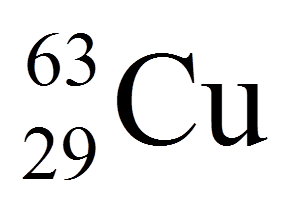
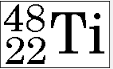
The top number in this isotope notation is
a)
the mass number
b)
the atomic number
c)
the atomic mass
d)
the neutron number
113.
The bottom number in this isotope notation is
a)
the mass number
b)
the atomic number
c)
the atomic mass
d)
the neutron number
114.
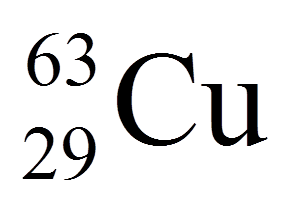
According to the isotopic notation for copper-63, how many neutrons are present in this type of atom?
a)
29
b)
34
c)
63
d)
92
115.
How many protons does this isotope of titanium have?
a)
48
b)
22
c)
26
d)
70