Wayground logo

Free Printable Worksheets

Font size

S
M
L
XL
Worksheets

PeriodicTable/Bonding Review

Total questions: 47

Worksheet time: 47mins

Name
Class
Date
1.

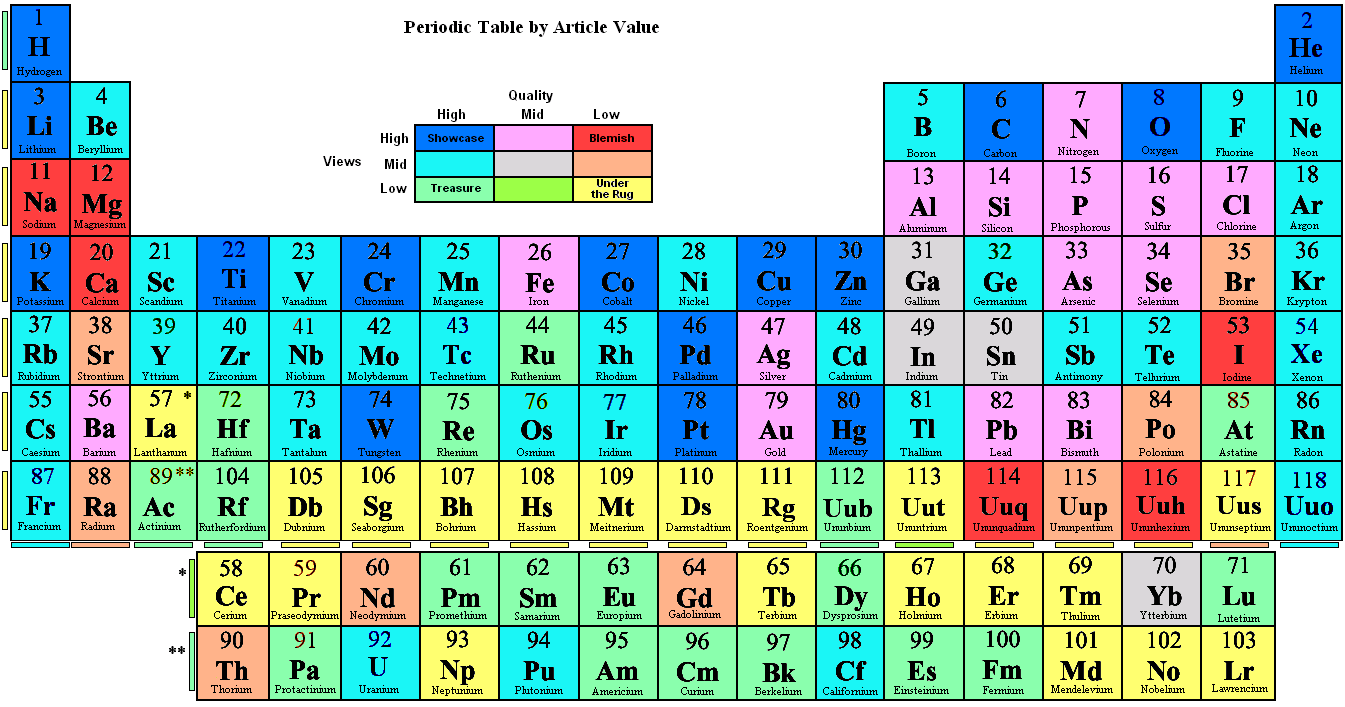
The vertical (up and down) columns in the Periodic Table are called

a)

groups/families

b)

towers

c)

periods

d)

atomic numbers

2.
The Modern Periodic Table of Elements is arranged by
a)
atomic mass
b)
atomic number
c)
valence electrons
d)
number of isotopes
3.
Sodium (Na) is found in period 
a)
3
b)
2
c)
4
d)
1
4.
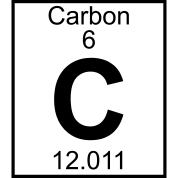
What does the 6 represent?
a)
atomic mass
b)
atomic number
c)
element name
d)
chemical symbol 
5.

Which of the below has the largest representation on the periodic table?

a)

metals

b)

nonmetals

c)

metaloids

d)

halogens

6.

What is the name for elements found in Group 1?

a)

halogens

b)

noble gases

c)

alkali metals

d)

alkaline earth metals

7.

What is the name given to elements found in Group 2 of the Periodic Table?

a)

transition metals

b)

halogens

c)

metalloids

d)

alkaline earth metals

8.

What is the name of the metals found in groups 3-12?

a)

transition metals

b)

nonmetals

c)

noble gases

d)

halogens

9.

Where are the metalloids found?

a)

far left, vertical

b)

stair step/diagonal

c)

far right horizontal

d)

at the bottom

10.

What group number are the halogens?

a)

18

b)

1

c)

2

d)

17

11.

What group number are the noble gases?

a)

17

b)

18

c)

14

d)

15

12.

How many valence electrons does Beryllium have?

a)

1

b)

2

c)

3

d)

4

e)

5

13.

How many valence electrons does Helium have?

a)

1

b)

2

c)

3

d)

4

e)

8

14.

How many valence electrons does Magnesium have?

a)

1

b)

2

c)

3

d)

4

e)

5

15.

How many valence electrons does Nitrogen have?

a)

1

b)

2

c)

3

d)

4

e)

5

16.

How many valence electrons does Iodine have?

a)

4

b)

5

c)

6

d)

7

e)

8

17.

How many valence electrons does Argon have?

a)

4

b)

5

c)

6

d)

7

e)

8

18.
Valence electrons are the...
a)
Innermost electrons
b)
Middle electrons
c)
Outermost electrons
d)
Any electrons
19.

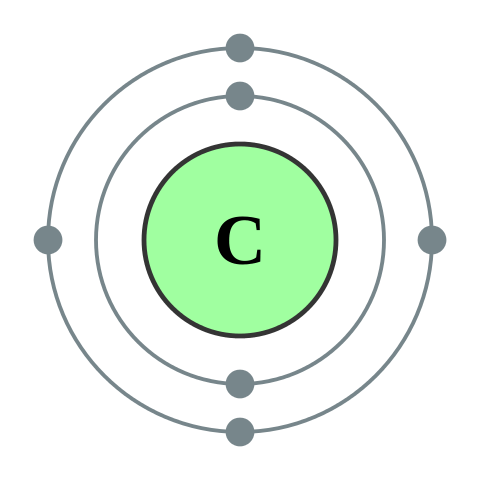
How many valence electrons does carbon have?

a)

4

b)

5

c)

6

d)

7

20.

Is this the correct Lewis Dot Structure for Boron?

a)

Yes

b)

No, missing electrons

c)

No, too many electrons

d)

No, dots are in wrong place.

21.

Is this correct way to draw the Lewis Dot Structure for Carbon?

a)

Yes

b)

No, too many electrons

c)

No, not enough electrons

d)

No, dots are in wrong places

22.

This could be the dot diagram of

a)

Mg

b)

Cl

c)

C

d)

O

23.

What is the goal of the Lewis Dot Structure?

a)

To determine the electron position.

b)

To show the element's valence electrons & bonding capabilities.

c)

To find the atomic mass of an element.

d)

To search for the number of electrons in an individual atom.

24.

Which ones are acceptable? (There may be more than 1 answer)

a)

b)

c)

25.

Which of these is incorrect?

a)
b)
26.
A positive ion is called a...
a)
Posion
b)
Anion
c)
Cation
d)
Proton
27.
What are ionic bonds?
a)
Valence electrons transferred between atoms
b)
Inner most electrons transferred between atoms
c)
Sharing electrons
28.
An electron has what kind of charge?
a)
no charge
b)
positive 
c)
negative
d)
it depends
29.

A proton has what charge?

a)
positive
b)
negative
c)
no charge
d)
it depends
30.
Atoms that gain electrons become...
a)
negatively charged
b)
positively charged
c)
remain neutrally charged
d)
21
31.
if METALS are more likely to LOSE electrons, they will form ...
a)
anions
b)
neutral atoms
c)
positive ions
d)
negative ions
32.
If an aluminum atom has 13 protons (+) and 10 electrons (-), what is it's charge?
a)
Al3+
b)
Al13+
c)
Al10+
d)
Al10-
33.
Which is most likely to form a negative ion?
a)
an element from group 17
b)
a metal
c)
an element from group 1
d)
an element with atoms that have eight valence electrons
34.
Which group is very nonreactive?
a)
Noble Gases
b)
Halogens
c)
Alkali Metals
d)
Transition Metals
35.
Ionic bonds are between...
a)
nonmetals and nonmetals
b)
carbon and oxygen
c)
metals and nonmentals
d)
hydrogen and chlorine
36.
Covalent bonds are between...
a)
two or more nonmetals
b)
sodium and chlorine
c)
metals and metals
d)
metals and nonmetals
37.
What kind of bond forms between two nonmetals?
a)
ionic 
b)
covalent
c)
metallic
d)
fake
38.
What kind of chemical bond forms between a metal and a nonmetal?
a)
ionic
b)
covalent
c)
fake
d)
metallic
39.
What is the name for an ion with a negative charge?
a)
cation
b)
anion
c)
onion
d)
union
40.
What kind of bond forms when atoms share electrons?
a)
ionic
b)
covalent
c)
artificial
d)
univalent
41.

What kind of bond forms when atoms exchange (transfer) electrons?

a)
ionic
b)
covalent
c)
artificial
d)
univalent
42.

Why do elements bond?

a)

To be friends

b)

To create a new element

c)

To become stable

d)

To get bigger

43.

Which of these is not a real bond in chemistry?

a)

James

b)

Ionic

c)

Covalent

d)

Metallic

44.

Which list of elements contains a metal, a metalloid, and a nonmetal?

a)

Ag, Si, I2

b)

Ge, As, Ne

c)

K, Cu, Br2

d)

S, Cl2 , Ar

45.

Which elements have the most similar chemical properties?

a)

boron and carbon

b)

oxygen and sulfur

c)

aluminum and bromine

d)

argon and silicon

46.

Elements will bond in order to obtain an ______ of electrons.

a)

duet

b)

octet

c)

odd number

d)

group

47.

Which diagram below shows the correct Lewis electron-dot diagram for a molecule PCl3?

I don't know why but i cant delete this question. THIS IS NOT ON OUR FINAL

a)

b)

c)

d)