
 Worksheets
Final Ancient China Test
Total questions: 59
Worksheet time: 30mins
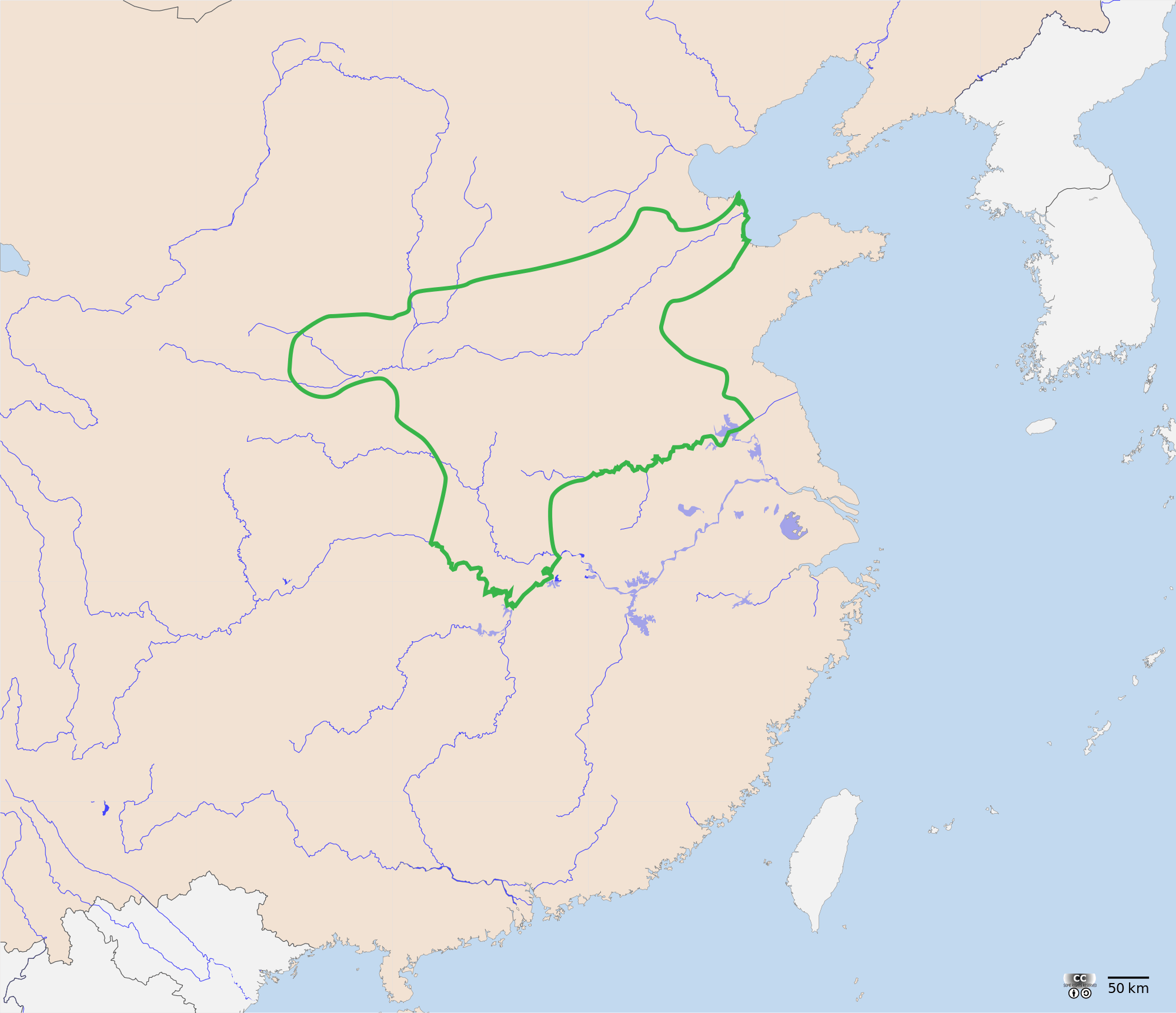


Which two rivers influenced Chinese civilizations?
Tigris and Euphrates
Nile and Tigris
Indus and Yellow
Yangtze and Yellow
What is the Yellow River also known as?
Huang He River
Mother River
China’s Sorrow
all of the above

The right of a Chinese Dynasty to rule with the blessings of the gods is called...?
The Mandate of Heaven
The Dynastic Cycle
The Heavenly Commandments
The Oracle Bones

What sort of Legalist policies did the emperor adopt?
strict laws and harsh punishments
unfair laws and mild punishments
easygoing laws and gentle punishments
fake laws and cruel punishments

Which of the following did the Emperor of Qin do to maintain his authority over China?
He created a government that he controlled personally
He divided his territory into 36 districts.
One official in each of the districts was responsible keeping the emperor informed.
all of these are correct

How did the emperor change the writing system?
He simplified the writing system by removing many characters.
He created a new writing system of his own and increased the number of characters.

The Emperor of Qin made trading easier by
standardizing money.
protecting traders from harm.
not punishing traders when they broke the law.

This scene from an ancient scroll shows the scholars being severely punished. Why did this happen?
The emperor hoped to stop criticism of the government.
The philosophers wanted to get back to nature.
The soldiers did not know how to read.
What allowed the Han to expand their dynasty?
their great wealth which allowed them to buy land
their military methods and new weapons
their skill in negotiating treaties
their ability to build alliances with their neighbors
What was the advantage of fish-scale armor produced by Han ironworkers?
It allowed soldiers to float if they fell into water.
It produced a smell that overpowered their enemies.
It was flexible enough to move with the body.
It allowed warriors to withstand very cold water.
What did the Han do with kites?
The Han used them to transport goods over long distances.
The Han used them for a variety of military purposes.
The Han used them to capture electricity during lightning storms.
The Han used them for entertainment.
How did the Han dynasty select its government officials?
Candidates had to belong to one of the highest-ranking families.
Candidates had to pay a large bribe to the hiring officials.
Candidates had to pass a difficult civil service exam.
Candidates had to be related to the emperor.
Every three years, civil servants
could be promoted or demoted depending upon an evaluation of their work.
were automatically promoted to the next level, regardless of job performance.
received a paid month off to deepen their knowledge of classic Chinese writings.
were moved into a new position, to prevent them from giving special favors to friends.
In addition to growing food for their families, Han farmers had to
grow enough food to stock the shared granaries
build their own homes.
give one month of unpaid labor to the government.
all of the above
How did the Han's skill in ironwork help the farmers?
Strong iron plows helped them plow the soil more easily.
Mechanical harvesters made from iron helped them harvest more crops in less time.
Iron harnesses allowed them to use horses to pull their wagons and plows.
Seed drills made from iron helped farmers plant significantly more crops.
Which invention helped Han farmers move much heavier loads than they could carry?
iron plow
wheelbarrow
chain pump
horse cart
People in ancient times valued salt because it was used to
preserve meat and vegetables
process silkworm fibers into cloth.
create steel out of iron ore.
produce gunpowder for use in fireworks.
Which artistic material was invented during the Han dynasty?
ink
paper
books
paint
Why was it important that the Han made silk production more efficient?
The Han emperor required huge quantities of silk for his palaces.
The Han navy used silk for the sails of their massive warships.
The Han knew of no other fibers from which to make clothing.
The Han had a valuable silk trade with people outside of China.
What impact did paper have on communication?
Fewer people wanted to create books because paper was too bulky and awkward to use.
Paper was so expensive that only very wealthy people could afford to use it.
Scholars refused to use paper for their writings, because it was less durable than silk or bamboo.
Paper was cheap enough that more people could communicate in writing.
The Chinese believed that it was important to position their temples, graves, and homes using direction. This led them to invent the
seismograph
magnetic compass
lodestone
moxibustion
How did ancient Chinese healers believe that illnesses could be cured?
by restoring the natural balance of the forces of yin and yang
by driving out the demons that were making the patient ill
by draining the bad blood from the patient’s body
by prayer and divine intervention
What natural events led the Chinese to invent the seismograph?
tornadoes
hurricanes
blizzards
earthquakes
Which of these describes a ruler who followed Legalism?
a ruler who believed in few rules and laws
a ruler who allowed people to write their own laws
a ruler who severely punished people who break laws
a ruler who ruled as little as possible
The Zhou claimed that they had the Mandate of Heaven, which they believed was
the majority of votes in an election.
permission from the people to rule.
a divine right to rule China.
a set of laws written by the first Zhou king.
Feudalism made government in China under the Zhou more stable as long as
the king shared power with the lords.
the lords shared power with peasants.
the king had absolute power over the lords.
the lord had more power than the king.
According to belief in the Mandate of Heaven, earthquakes and floods might be signs that:
The king did not govern well
The end of the world was near
The people did not obey the laws
The natural world ignored humans
Which phrase below best completes the following quotation?
“I am a follower of Confucius. I am the oldest of three children in my family. My younger sister and brother have to obey me. In return, I . . .”
"may do whatever I want."
"can punish them harshly."
"must set a good example."
"have to grant their wishes."
What was the Legalist view of human nature?
people are basically selfish
people are naturally curious
people are motivated by love
people want to do what is right
What did Hanfeizi say that rulers must do to avoid being overthrown?
exercise absolute power
let people do as they want
earn the Mandate of Heaven
be popular through good deeds
According to the Mandate of Heaven, why would the Heavens become displeased?
The emperor did not govern well
The end of the world was coming
People were not respecting the law
People were not respecting their elders

Which of these would Confucius have valued most highly?
riches
respect
freedom
creativity

Daoists taught that people could gain happiness by
reading the ancient texts
serving in government jobs
living in harmony with nature
working hard to become wealthy

Hanfeizi, whose teachings were the basis for Legalism, wrote that rulers should emphasize
honesty and trust
scholarship and ideas
trade and manufacturing
rewards and punishments


The Silk Road was important because
it helped the Han empire control the Mediterranean region
it extended a thousand miles across Asia
it linked Asian and western cultures for more a thousand years
it connected the Han and Egyptian empires

Which product was NOT exchanged on the Silk Road?
silk
plastic
exotic animals
spices
The Silk Road was a neatly paved road that allowed people to travel.
True
False



