
 Worksheets
Evolution Unit Comprehensive Review
Total questions: 55
Worksheet time: 29mins
A speciation in which new species evolve from a single ancestral species while inhabiting the SAME geographic region.
Sympatric speciation
Allopatric speciation
Complex speciation
Divergent speciation
Which of the following means "genetic changes in a species over time"
natural selection
speciation
evolution
fitness
Which are causes of speciation? Choose all that apply
Isolation caused by mountains, rivers and man-made structures
preference for different foods
change in environment
different mating behaviors
Speciation that caused by breeding occurring at different time of the day is called
behavioral isolation
temporal isolation
ecological isolation
habitat isolation
Which of the following lines of evidence shows that whales are descended from a land-dwelling, four-legged ancestor?
Whales have bone structures in their forelimbs and pelvis that are similar to those of terrestrial mammals
Whale embyros have similar structure to embryos of land-dwelling mammals, birds, and reptiles.
An analysis of DNA shows that whales' closest living relatives are hippopotamuses.
A, B, and C
Which of the following is required for a population to diverge into two separate species?
The two populations must have evolved different physical appearances.
The two populations must have mutated at least 10 times.
The two populations must have become reproductively isolated.
The two populations must have evolved analogous structures.
Extantion
Elimination
Extinction
Gene Flow
isolation from parent population
A single species speciates into several species that become more and more different over time is an example of....
When two totally unrelated species are shaped by the SAME environment in such a a way that they begin to resemble each other, this is an example of....

This is an example of....
symmetric evolution
Which of the following statements accurately describes the role of mutations in evolution?
Mutations are the raw material for natural selection, but most mutations do not result in evolution.
Most mutations result in a species becoming more dangerous or aggressive.
An organism can decide to mutate if the environment makes a mutation necessary for survival.
Mutations are almost always beneficial for an individual.

The palmarus longus tendon, pictured here, no longer serves a purpose in humans, but provides evidence of our species descendance from tree-dwelling ancestors. The palmarus longus tendon is an example of:
a vestigial structure
a homologous structure
bipedalism
convergent evolution
A new river forms and splits two separated populations, causing ______________ speciation
Sympatric
Allopatric
Extreme
Convergent
Which of the following forces of evolution requires a very small population in order to have a serious effect?
Genetic Drift
Non-Random Mating
Mutation
Gene Flow
Natural Selection
Which of the following forces of evolution requires a genetic mistake to be made when creating a sperm or egg cell?
Genetic Drift
Non-Random Mating
Mutation
Gene Flow
Natural Selection
Which of the following forces of evolution involves little to no exchange of organisms between two populations of the same species?
Genetic Drift
Non-Random Mating
Mutation
Gene Flow
Natural Selection
Which of the following forces of evolution results from organisms being picky with who they mate with?
Genetic Drift
Non-Random Mating
Mutation
Gene Flow
Natural Selection
An organism that is better adapted for an environment is considered to have better ____________.
phenotypes
fitness
resources
speciation
When ____ ____ is reduced between two populations, evolution & speciation will speed up.
Genetic Drift
Gene Flow
Predators & Prey
Selective Pressures
What is an unexpected, short-term event that causes the extinction of a large number of species?
Background Extinction
Foreground Extinction
Mass Extinction
Density Extinction
What is the predictable, long-term extinction of a very few organisms over a long period of time?
Background Extinction
Foreground Extinction
Mass Extinction
Density Extinction


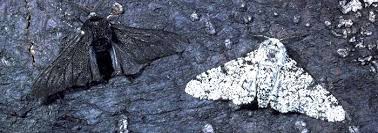
In your lab, how would your describe multiple birds feeding from the same food source at the same time?
competition
evolution
natural selection
variation
In your lab, what did the spoon represent?
Bird Beak
Snail shell
Environment
Fitness

The following would be an example of:
their bird beak allowed them to eat more food, and most likely live to produce more offspring
Homologous Structures
Vestigial Structures
Embryological Differences
What are the microscopic parts of cells that carry out necessary functions for that cell called?
Macromolecules
Organelles
Tissues
Adaptations
Deoxyribonucleic Acid is better known as:
Mutations
The Evolution Protein
Survival of the Fittest
DNA
A developing, unborn multicellular organism is known as a:
Blatocyst
Larva
Embryo
Tiny Wittle Baby

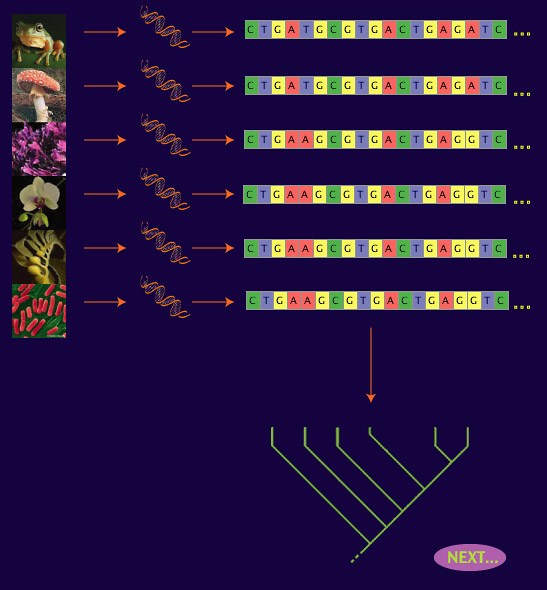
This evidence for evolution falls into what category?
Cellular
Genetic
Anatomical Structures
Embryology
A statement that is made that uses one or more of the five human senses is known as a/n:
Infere c
Theory
Observation
Fact
A statement that attempts to explain an observation is known as a:
Inference
Secondary Observation
Counter-attack
Hypothesis
What is a good summary for the concept of natural selection?
This scientist developed the theory of evolution as he studied the organisms of the Galapagos Islands
What ultimately determines whether a trait is an advantage or a disadvantage?
The type of mutation
The color of the
The environment
The number of offspring an organism has
Which of the following is an example of a selective pressure?
The predators in an area
The food in an area
The temperature in an area
All of these options are selective pressures
Which of the following selective pressures is abiotic?
The weather
The predators
The prey
The animals you are competing against

Mutate
decrease in number
Evolution (at its simplest) is nothing more than a change in a/n ____________ over time.
Organism
DNA
Population
Organelle

