
 Worksheets
Y7 Chem 6_3 BT Revision Practice matter and states 01
Total questions: 58
Worksheet time: 40mins
.......................... are the building blocks of life.
Sand is a ....................
.
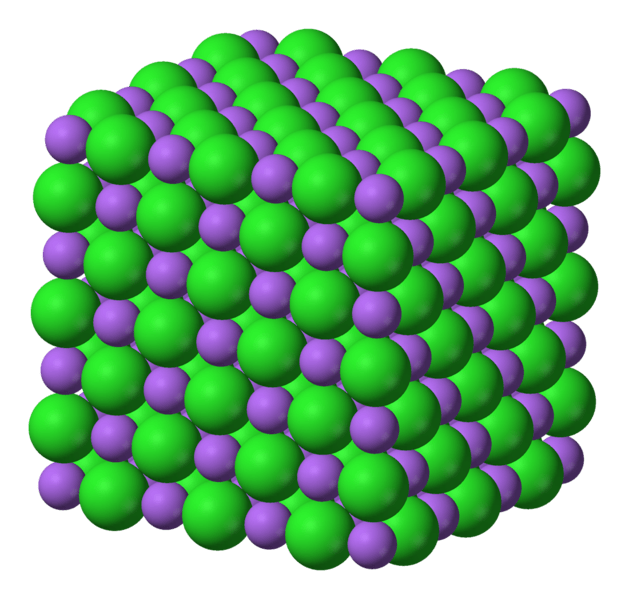
Which state of matter does this picture show?
Solid
Liquid
Gas
.
The particles in this state of matter
vibrate at fixed position
slide past each other
move freely and randomly in all directions
.
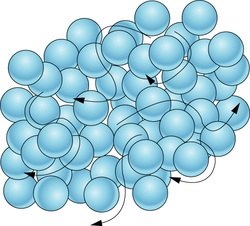
What state of matter does this picture show?
Solid
Liquid
Gas
.
The particles of this state of matter
vibrate at fixed position
slide past each other
move freely and randomly in all directions
.
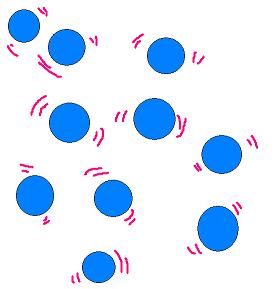
Which state of matter does this picture show?
Solid
Liquid
Gas
.
Do the gas have strong or weak intermolecular forces?
dont know
strong
weak
.
Particles in the gas with weak intermolecular forces?
do not move at all
move closer together
move further apart
vibrate at fixed position
As temperature increases, what happens to particles?
They speed up
They slow down
.
.
As temperature decreases, what happens to particles?
They speed up
They slow down
.
.


This image shows atoms going from ................
gas to liquid
liquid to gas
solid to liquid
liquid to solid
Water vapour is example of (a) state of matter
(a) state has a definite volume but not a definite shape
(a) has a fixed shape and volume
Lithium and phosphurus are example of (a) elements
(a) is an element exists as a liquid at normal temperature.
Rain is a (a) state
Gas has an ..................... ...................... weaker than in solid or liquid
intermolecular forces
intermolecular pressure
intramolecular forces
interatomic forces
The (a) forces are stronger in solid than in liquid
The .................... ........................ are weaker in liquid than in solid
(a)
Circle the solid.

Circle the liquid.
Circle the gas.
Which state of matter fills a container?
Solid
Liquid
Gas
Plasma
Which state of matter has a fixed volume and mass?
Solid
Liquid
Gas
Plasma
Which state of matter contains particles that flowand and slide freely past one another?
Solid
Liquid
Gas
Plasma

What state of matter is this
solid
liquid
gas
.

What state of matter is this
solid
liquid
gas
.

What state of matter is this
solid
liquid
gas
.
.
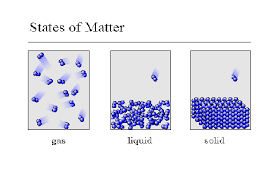
Knowdlege:
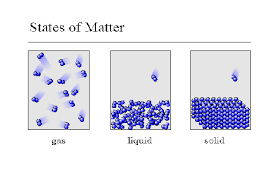
At all temperatures
solid particles vibrate in fixed position
liquid particles slide over each other
gas particles move freely and fast in all direction
.
.

The state of matter that has no definite size or shape is
Solid
Liquid
Gas
.

Particles in a ___ move quickly and are far apart.
gas
solid
liquid
.
What happens to particles when their temperature increases?
The particles move slower
The particles move faster
The particles lose mass
The particles gain mass
Knowdlege:
Factors affecting melting and boiling
weak intemolecular forece
arrangement of molecules
Size of molecules
.
What is a melting process of a solid:
When some heat is applied to the solid
the solid particles start to loosen
the orderly arrangement of the molecules will break down
molecules in the ice cube vibrate faster.
interaction forces between the molecules become weaker
Definition of interconversion of states of matter
one state of matter changes to another state
back to the original state
.
.
Mass is the measure of the ................... of ............
(a)
Knowdge:
The intermolecular forces between the water molecules are strong enough to pull and keep the molecules closer together.
intermolecular forces
strong
closer
.
The intermolecular forces between the water molecules are (a) enough to pull and keep the molecules closer together.
The ...................... ................... between the water molecules are strong enough to pull and keep the molecules closer together.
(a)
The intermolecular forces between the water molecules are strong enough to pull and keep the ................. ................. together.
(a)
Knowdge:
................................ is more compressible
Gas
Gas
.
.
........................... is more compressible
Gas
solid
liquid
plasma

