wayground logo

Free Printable Worksheets

Font size

S
M
L
XL
Worksheets

Evolution Exam

Total questions: 72

Worksheet time: 1hrs 2mins

Name
Class
Date
1.

Evolution states that we all originated from a common

a)

Fossil

b)

Ancestor

c)

Ninja Warrior

d)

Analogy

2.

Natural Selection occurs in

a)

species, not individuals.

b)

individuals, not species.

3.

Why would it be beneficial for organisms to produce large numbers of offspring?

a)

it encourages competition for finite resources

b)

it promotes the chance of favorable mutations

c)

it allows for more gene flow between populations

d)

it increases the chances that some will survive

4.

What kind of Selection does this graph represent?

a)

Directional

b)

Stabilizing

c)

Disruptive

d)

Extinction

5.

What kind of Selection does this graph represent?

a)

Directional

b)

Stabilizing

c)

Disruptive

d)

Extinction

6.

Which statement about the ancestry of the lizards from the genus Gallotia is best supported by this information?

a)

The common ancestor of the lizards first colonized the island of El Hierro.

b)

The ancestors of each species came from different continents at different times.

c)

The common ancestor of the lizards probably came from America.

d)

The ancestors of each species evolved in Spain and were brought to the islands at the same time.

7.
Which of the following is a fossil?
a)
a plant that has recently died
b)
a group of organisms that can reproduce
c)
a structure or organ that no longer functions
d)
a trace of an organisms that existed in the past
8.
In natural selection, the selective agent is the
a)
humans
b)
mutations
c)
breeders
d)
environment
9.
what did Charles Darwin observe in finch populations of the Galapagos Islands off the coast of South America?
a)
different species on different islands
b)
all species on one of the islands
c)
identical species on all the islands
d)
the same species as North America
10.
Mutations are important because they bring about
a)
death of the organism in which they develop
b)
genetic variation needed for a population to evolve
c)
benefits for the individual, not for the population
d)
Hardey-Weinberg equilibrium within a population
11.

What is the term for a feature that allows an organism to survive better in its environemtn?

a)

variation

b)

adaptation

c)

homologous structure

d)

vestigial structure

12.
What is the process in which humans breed organisms for certain traits?
a)
natural selection
b)
inheritance
c)
artificial selection
d)
descent withOUT modification
13.
Natural selection results in change over time by acting on traits that are
a)
heritable
b)
new
c)
mutated 
d)
better than the best
14.
The Physical remains of a plant or animal preserved in rock or Earth's crust. 
a)
Adapt
b)
Fossil
15.
Charles Darwin came up with this theory 
a)
Natural Selection
b)
Mutation
16.
To adjust to a changing environment
a)
Mutation
b)
Adapt
17.
Most of the species found in fossil form are _______________. 
a)
Alive
b)
Extinct
18.
Darwin wrote that organisms with traits that are best suited to the environment will ________________
a)
increase in number
b)
become extinct
19.
This scientist came up with the idea of natural selection.
a)
Jean Baptiste Lamarck
b)
Gregor Mendel
c)
Charles Darwin
d)
Thomas Malthus
20.
Inherited trait that helps an organism survive is a(n) __________.
a)
Fossil
b)
Adaptation
c)
Ancestor
d)
Natural selection
21.
Survival of the fittest or when favorable adaptations reproduce faster is called what?
a)
Evolution
b)
Adaptation
c)
Natural selection
d)
Fossilization
22.
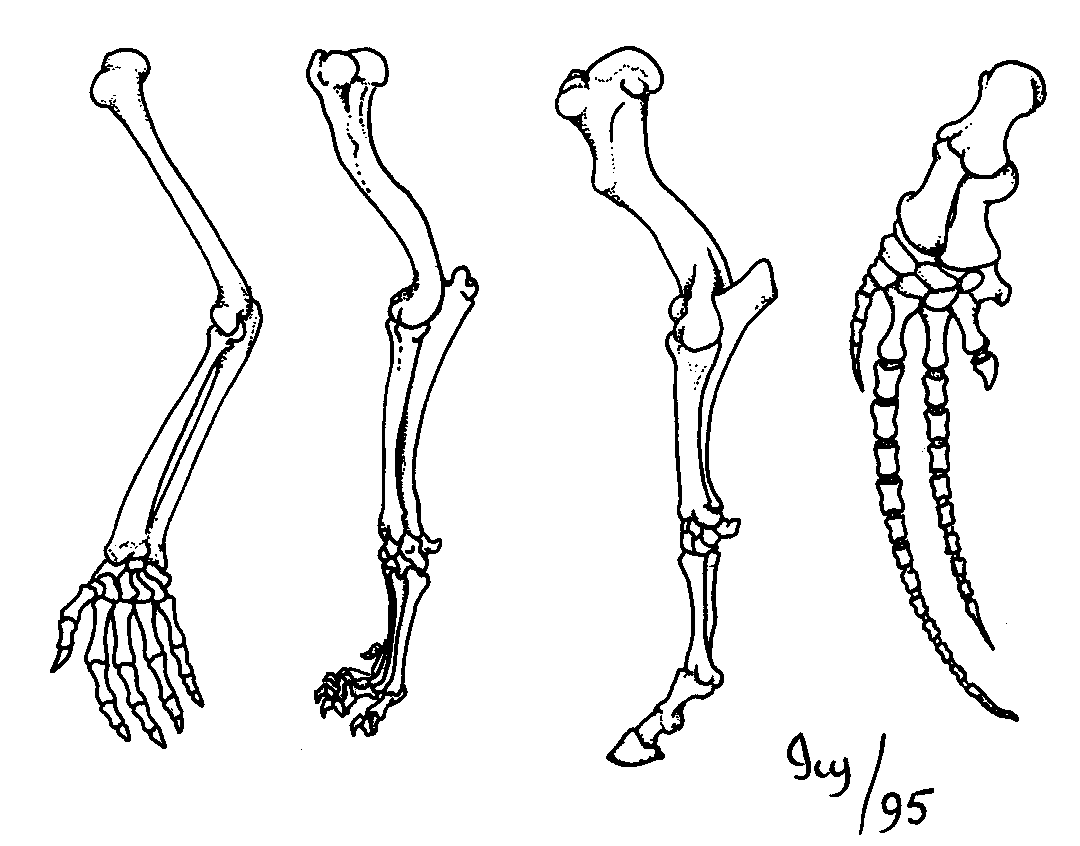
Structures with the same parts have different functions; suggests that organisms share a common ancestry
a)
vestigial structures
b)
homologous structures
c)
adaptive radiation
d)
fossil
23.
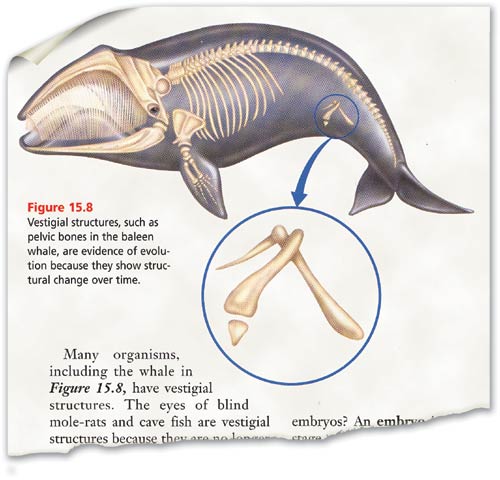
Which of the following is an example of a vestigial structure?
a)
the wings of a red-tailed hawk
b)
the hind limbs of a house cat
c)
the fins of sharks
d)
the tailbone of a human
24.
The diagram shows fossils in different rock layers. Which of these statements about the age of these fossils is most likely correct?
a)
Fossil A and C are the same age
b)
Fossil B is older than fossil C
c)
Fossils A is older than fossil B
d)
Fossil D is older than fossil C
25.

What do we call a change in a species over time?

a)

Adaptation

b)

Evolution

c)

Extinction

d)

Environmental influences

26.
Ostrich wings are examples of
a)
homologous structures
b)
vestigial structures
c)
adaptations
d)
traits
27.
Why do embryologist study embryos?
a)
to see if they are related
b)
to understand adaptations
c)
to determine the age
d)
to learn what parents are vestigial
28.
What is embryology?
a)
the age of organisms
b)
the oldest stage of development
c)
the life span of an organism
d)
the earliest growth stage of development
29.
The environment around Manchester, England, changed during the Industrial Revolution.  How did this change affect peppered moths living in the area?
a)
Natural selection favored moths with dark wings because predators could not see them on the soot-colored trees.
b)
Natural selection favored moths with white wings that were easy for predators to see.
c)
Natural selection favored moths with white wings because predators could not see them on the soot-colored trees.
d)
Natural selection caused moths with white wings to become extinct.
30.
Which of the following is a term for a group of similar organisms that can reproduce fertile offspring?
a)
individual
b)
population
c)
species
d)
fossil
31.
If an organism has a vestigial structure, that structure likely once had a function in a(n)
a)
close relative
b)
early ancestor
c)
unrelated organism
d)
embryological stage
32.
Mutations are important because they bring about
a)
death of the organism in which they develop
b)
genetic variation needed for a population to evolve
c)
benefits for the individual, not for the population
d)
Hardey-Weinberg equilibrium within a population
33.
Extinction can occur because of which of the following?
a)
All can be causes of extinction.
b)
Increased competition with other species
c)
New predators within the environment
d)
Loss of habitat and/or catastrophes
34.
This scientist came up with the idea of natural selection.
a)
Jean Baptiste Lamarck
b)
Gregor Mendel
c)
Charles Darwin
d)
Thomas Malthus
35.
The fossil record provides evidence that 
a)
Fossils cannot be dated.
b)
All species were formed during Earth’s formation and have changed little since then.
c)
The fossilized species have no connection to today’s species.
d)
Older species gave rise to more-recent species.
36.
Individuals that are better able to cope with the challenges of their environment tend to  
a)
Decrease in population over time.
b)
Leave more offspring than those less suited to the environment.
c)
Leave fewer offspring than those less suited to the environment.
37.
What is the term for a feature that allows an organism to survive in its environment?
a)
adaptation
b)
variation
c)
homologous structure
d)
vestigial structure
38.
a)
analogous structures
b)
homologous structures
c)
vestigial structures
d)
none of the above
39.
What is the process of which humans breed organisms for certain traits?
a)
artificial selection
b)
descent without modification
c)
inheritance of acquired characteristics
d)
natural selection
40.
Vertebrate embryos pass through similar stages of development is evidence for
a)
use and disuse
b)
homologous structures
c)
common ancestry
d)
acquired characteristics
41.
Individuals that are well adapted to their environment will survive and produce
a)
better traits
b)
stronger genes
c)
more offspring
d)
fewer mutations
42.
All the individuals of a species that live in a particular area are called a 
a)
group
b)
population
c)
variation
d)
fossil
43.
The remnant of an organ that had a function in an early ancestor is known as a(n)
a)
vestigial structure
b)
analogous structure
c)
homologous structure
d)
fossil structure
44.
Who said that geological forces acting today are the same ones that have been acting in the past?
a)
Lamarck
b)
Darwin
c)
Hutton
d)
Lyell 
45.
What is the study of the distribution of organisms around the world?
a)
geology
b)
biogeography
c)
paleontology
d)
geography
46.
What is the most helpful thing when looking at a fossil record?
a)
size of the fossil
b)
color of the fossil
c)
surface area of the rocks found around the fossil
d)
depths in which the fossils are found
47.
If scientist were to find 4 fossil that appear to be of the same ancestor, what can be concluded?
a)
number of each fossil are similiar
b)
members of the group living today live together
c)
fossils were found in the same rock layer
d)
fossils have similar chacteristics
48.

________ structures are reduced in size or function due to lack of use.

a)

vestigial

b)

homologous

c)

cladistic

d)

phylogenic

49.
What is the term for a feature that allows an organism to survive in its environment?
a)
adaptation
b)
variation
c)
homologous structure
d)
vestigial structure
50.

A remains or traces left over of an organism from the past is called a _______.

a)

Ancestor

b)

Skeleton

c)

Fossil

d)

Imprints

51.
Survival of the fittest or when favorable adaptations reproduce faster is called what?
a)
Evolution
b)
Adaptation
c)
Natural selection
d)
Fossilization
52.

Structures with the same structure have different functions; suggests that organisms share a common ancestry

a)

vestigial structures

b)

homologous structures

c)

adaptive radiation

d)

fossil

53.
The ability of an organism to survive and reproduce in its specific environment 
a)
diversity.
b)
evolution
c)
adaptation
d)
 fitness
54.
Since the 1800s humans have stopped burning coal, and the trees have returned to their original color. Which moth will be more successful in this environment?
a)
Dark moth
b)
Light moth
c)
Both will be equally successful
d)
Neither will be successful
55.

Genetic mutations are the direct cause of which of the following?

a)

Aliens

b)

The Avengers

c)

Variations

d)

8th grade behavior

56.
The struggle for existence against other members of an organisms species is
a)
Competition
b)
Natural Selection
c)
gene flow
d)
genetic drift
57.
Mutations are a change in what?
a)
DNA
b)
tRNA
c)
genotype
d)
phenotype
58.
In the graph shown, how many species of lizards seem to have beneficial adaptations?
a)
1
b)
2
c)
3
d)
4
59.
Mistakes or changes that occur int he DNA sequence are called....
a)
adatations
b)
Darwinism
c)
mutations
d)
natural selection
60.
What does this picture model?
a)
DNA structure of the horse
b)
Evolution of the horse
c)
Extinction of the horse
d)
Singular traite of the horse
61.
What is it called when an organism is best adapted to its environment, it will survive and reproduce more successfully than other organisms less adapted?
a)
cloning
b)
evolution of all species
c)
natural selection
d)
selective breeding
62.
Mutations are important because they bring about
a)
death of the organism in which they develop
b)
genetic variation needed for a population to evolve
c)
benefits for the individual, not for the population
d)
Hardey-Weinberg equilibrium within a population
63.

What is the term for a feature that allows an organism to survive better in its environemtn?

a)

variation

b)

adaptation

c)

homologous structure

d)

vestigial structure

64.
Natural selection results in change over time by acting on traits that are
a)
heritable
b)
new
c)
mutated 
d)
better than the best
65.
The gradual change in species over time is...
a)
Evolution
b)
Nucleotide 
c)
Adaptation
d)
Natural Selection
66.
Who is the father of evolution?
a)
Darwin
b)
Mendel
c)
Newton
d)
Einstein
67.
What is another name for natural selection?
a)
survival of the smartest
b)
survival of the fastest
c)
survival of the biggest
d)
survival of the fittest
68.
Surviving and reproducing show that an organism
a)
is adapting
b)
is not adapting
c)
is forming fossils
d)
is not reproducing
69.

Adaptations are:

a)

physical or behavioral tendencies.

b)

physical or behavioral characteristics that help an organisms survive and reproduce.

c)

physical or behavioral characteristics that do not help the organism in any way.

d)

genetic mutations that have gone wrong.

70.
Another word for adapt is ____________.
a)
change
b)
create
71.
Which term refers to the process by which individuals that are better suited to the environment survive and reproduce therefore passing down their genes to their offspring? 
a)
Evolution 
b)
Variation 
c)
Adaptation
d)
Natural Selection 
72.
Darwin's expedition was called the Voyage of the _________.
a)
Titanic
b)
Beagle