
 Worksheets
Intro to Business Final
Total questions: 64
Worksheet time: 31mins
The four elements of communication are: (IB CSI 1,2,3)
Message, sender, receiver and feedback
Sender, message and receiver
Message, feedback, verbal and nonverbal
Books, television, computers and radio
You can help control prejudice by: (IB CSI 1,2,3)
believing your first impression and not allowing others to influence your thoughts.
believing only what your parents taught you about other races.
evaluating all information before making a judgement.
doing all of the above.
Good listening skills include: (IB CSI 1,2,3)
a message, a sender, and a reveiver.
labeling, cultural sensitivity, and talking slowly.
verbal message, written communication and a receiver
showing interst, hearing the message, and not interrupting
It is a communication between individuals in a personal relationship which builds through time and involves their thoughts and feelings to a certain level. (IB CSI 1,2,3)
Intrapersonal communication
Public communication
Interpersonal communucation
Small group communication
In this type of communication you think and learn about yourself, talk and reason with yourself, and evaluate yourself. (IB CSI 1,2,3)
Public communication
Interpersonal comunucation
Online communication
Intrapersonal communication
Having a face-to-face conversation with your friend is an example of what type of communication? (IB CSI 1,2,3)
Intrapersonal communication
Interpersonal communication
Small group communication
Public communication
In this principle of communication, all elements interact and affect each other. (IB CSI 1,2,3)
Communication has no opposite.
Communication is dynamic.
Communication is unrepeatable and irreversible.
Communication is competence-based.
Being able to stand up for your own rights in a calm and positive way is called? (IB CSI 1,2,3)
Verbal Communication
Assertiveness
Confidence
Being Bold

How we sit, stand, and use facial expressions all send nonverbal messages. (IB CSI 1,2,3)
True
False
Emotional intelligence is ________________________________. (IB CSI 1,2,3)
being smart about emotional situations
the ability to understand, use, and manage our emotions.
never getting angry
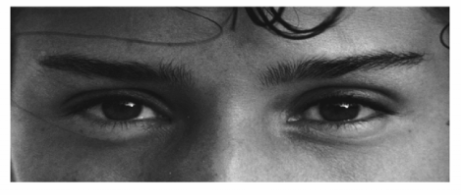
What emotion are the eyes showing? (IB CSI 1,2,3)
Playful
Comforting
Irritated
Boring
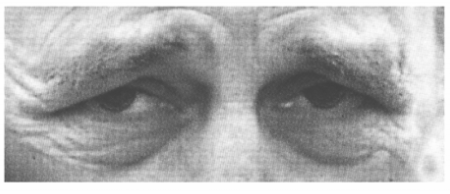
What emotion are the eyes showing? (IB CSI 1,2,3)
Terrified
Upset
Arrogant
Annoyed
What is scarcity? (IB EA 1,2)
Giving something up to have something else
Extra cost of production
The condition that results form having unlimited wants with limited resources
Rise in general level of prices and workers need more money
What is choice? (IB EA 1,2)
The act of picking or deciding
The best option possible
When something is very good
When someone has no say in a matter
Which of the following is NOT a natural resource? (IB EA 1,2)
Oil
Water
Car
Air
Which of the following IS a capital resource? (IB EA 1,2)
Wood
Computer
Labor
Knowledge
My business makes tacos and maps. If I spend all my time making tacos, what is my opportunity cost? (IB EA 1,2)
Tacos
Maps
You make a decision without looking at the costs and benefits. Have you used marginal analysis? (IB EA 1,2)
Yes
No
A business with one owner (IB EA 1,2)
Sole Proprietorship
Partnership
Corporation
Monopoly
A business with 2 directly involved owners (IB EA 1,2)
Sole proprietorship
partnership
corporation
monopoly
A business with multiple owners that are not directly involved (IB EA 1,2)
Sole proprietorship
partnership
corporation
monopoly
Decisions in the economy are based on buyer/seller choices (IB EA 1,2)
Command
Market
Mixed
Traditional
Read the list below.
Types of Economic Barriers
Tariff
Quota
Regulation
?
Which term replaces the question mark in the list? (IB GEA 1,2)
Embargo
Trade Zone
Globalization
Common currency
What outcome is a drawback of treaties such as the North American Free Trade Agreement (NAFTA)? (IB GEA 1,2)
increased safety regulations
job loss in domestic industries
higher wages for low-skill workers
reduced innovation among entrepreneurs

Which statement explains the most likely cause of the action described in the headline. (IB GEA 1,2)
The U.S. exports more to Iran than it imports.
Iran wants to prevent manufacturing jobs from shifting to the U.S.
The U.S. objects to the way the government of Iran treats its citizens.
Iran has an abundant supply of resources the U.S. uses for its domestic industries.

Examine the diagram.
Which word best replaces the question mark in the diagram. (IB GEA 1,2)
Democracy
Resources
Wealth
Tariffs
Which sentence describes a criticism of the World Trade Organization (WTO)? (IB GEA 1,2)
It raises prices by promoting protectionist policies.
It promotes free trade mainly to benefit wealthy nations.
It leads nations to use economic embargoes more often.
It hurts small businesses by blocking fair trade practices.
What is an embargo? (IB GEA 1,2)
What is a quota? (IB GEA 1,2)
What is a tariff? (IB GEA 1,2)
What are regulations? (IB GEA 1,2)
Why do several companies chose to manufacture their product in countries like China and India? (IB GEA 1,2)
An aptitude is: (IB ES 1,2,3,4,5,6,7)
an activity one likes to do
the potential for learning a skill
a skill you have developed
the ability to perform a task due to training and experience
A skill is: (IB ES 1,2,3,4,5,6,7)
the ability to perform a task due to training and experience
an activity one likes to do
the potential to learn something
something you have already developed
Which is NOT an employability skill? (IB ES 1,2,3,4,5,6,7)
work ethic
cooperation
interest
self-motivation
Which is NOT a type of career choice? (IB ES 1,2,3,4,5,6,7)
Internship
job
trade
career
Which is NOT a work-based learning opportunity? (IB ES 1,2,3,4,5,6,7)
apprenticeship
co-op program
job shadowing
trade
A job is: (IB ES 1,2,3,4,5,6,7)
a particular skilled profession
work a person does for pay
one or more jobs in the same or related field of interest
work done for free
Which is NOT a job search resource (IB ES 1,2,3,4,5,6,7)
research
networking
job shadowing
work-based learning
Which is NOT part of the research process (IB ES 1,2,3,4,5,6,7)
classified ads
referrals
websites
employment agencies
Which is considered a skill? (IB ES 1,2,3,4,5,6,7)
creating a spreadsheet
keying 60 words a minute
creating desktop publishing documents
all of these are skills
Which is NOT a personal quality? (IB ES 1,2,3,4,5,6,7)
communication
cooperation
integrity
responsibility
Which is considered worth ethic? (IB ES 1,2,3,4,5,6,7)
a person's ability to change to fit circumstances
arriving on or before the stated time
working with others to reach a common goal
a set of values based on the moral virtues of hard work
In this level, entrepreneurs feel the need to step up and ask some help from the people around them. They delegate and hire potential employees to do the work. (IB EN 1,2,3,4,5)
(a)
Starting and owning a person's own business (IB EN 1,2,3,4,5)
corporation
entrepreneurship
sole proprietorship
partnership
Some people become entrepreneurs by turning part-time work experiences into full-time businesses. (IB EN 1,2,3,4,5)
True
False

Which is NOT a common characteristic of an entrepreneur? (IB EN 1,2,3,4,5)
risk-taker
creative
organized
irresponsible

Most entrepreneurs work long hours, but they create their own schedule. (IB EN 1,2,3,4,5)
True
False

ALL entrepreneurs have a college degree. (IB EN 1,2,3,4,5)
True
False

A target market is (IB EN 1,2,3,4,5)
a group of investors willing to put capital into a business
a generational group of individuals
a group of consumers at which a product/service is aimed
an industry willing to sell and market your product
Entrepreneurs create ____________________ for themselves and others. (IB EN 1,2,3,4,5)
wealth
risk
plans
none of these

What is the purpose of a business plan? (hint: choose 2 correct answers) (IB EN 1,2,3,4,5)
To document your financial activity during one year
Legal document to be filed with the SEC
States the purpose and vision of your company
States the amount of capital you need to run the company

What information should NOT be included in a business plan? (IB EN 1,2,3,4,5)
Your financing needs
Your basic business concept
Your marketing plan
Your assets and liabilities

An economic choice is a decision about how to use resources. Businesses have to make a decision about which goods to produce and how much to make. This is a picture of a what? (IB MWCC 1,2,3,4,5)
service
good
human resource
capital resource

Categorize this resource as being a nonrenewable resource of a renewable resource. (IB MWCC 1,2,3,4,5)
renewable resource
nonrenewable

Categorize this resource as being a nonrenewable resource of a renewable resource. (IB MWCC 1,2,3,4,5)
renewable resource
nonrenewable resource

Categorize this resource as being a nonrenewable resource of a renewable resource. (IB MWCC 1,2,3,4,5)
nonrenewable resource
renewable resource
A consumer might choose to spend his money on a pair of skates instead of going to the movie. In this case, which one is the opportunity cost? (IB MWCC 1,2,3,4,5)
movie
pair of skates
A consumer might choose to spend his money on some popcorn at the movie and not a bag of M & Ms. Which one is the opportunity cost? (IB MWCC 1,2,3,4,5)
M & Ms
popcorn

What do you think will happen to the demand of pumpkins in the fall? (IB MWCC 1,2,3,4,5)
the demand will go down
the demand will go up

Classify the picture as a certain industry. (IB MWCC 1,2,3,4,5)
high-tech
agriculture
manufacturing

Classify the picture as a certain industry. (IB MWCC 1,2,3,4,5)
agriculture
high-tech
manufacturing

Classify the picture as a certain industry. (IB MWCC 1,2,3,4,5)
manufacturing
agriculture
high-tech

Canada sells lumber and paper to companies here in the states. This makes lumber and paper an ___________. (IB MWCC 1,2,3,4,5)
import
export

