wayground logo

Free Printable Worksheets

Font size

S
M
L
XL
Worksheets

Chemistry

Total questions: 178

Worksheet time: 3hrs 26mins

Name
Class
Date
1.

How many atoms of sodium (Na) are in one molecule of baking soda?

a)

1

b)

2

c)

3

d)

4

2.

Ozone and Oxygen molecules are the same substance because they both are made only of oxygen atoms.

a)

true

b)

false

3.

What is the chemical symbol for carbon?

a)

C

b)

Ca

c)

Cn

d)

Crn

4.

Molecules bonded together make up atoms.

a)

true

b)

false

5.

How many atoms make up one molecule of laughing gas?

a)

1

b)

2

c)

3

d)

4

6.

When we combined vinegar and baking soda and created carbon dioxide what was the product?

a)

vinegar

b)

carbon dioxide and baking soda

c)

carbon dioxide

d)

vinegar and baking soda

7.

In a chemical reaction or change a new substance is not created.

a)

true

b)

false

8.

If there is a rise in temperature during a chemical reaction it is called a _________________ reaction.

a)

endothermic

b)

exothermic

9.

Atoms are mostly made up of...

a)

empty space

b)

electrons

c)

solids and liquids

10.

What did the second man drink?

a)

Arsenic

b)

Hydrogen Peroxide

c)

Helium Oxolate

11.

What is Batman's favorite element?

a)

Na

b)

H

c)

O

d)

Cl

12.
A _________ is a substance made of two or more DIFFERENT elements chemically combined. 
a)
mixture
b)
compound
c)
substance 
13.
A mixture can be separated by ________ means. 
a)
physical
b)
chemical
14.
"C" is the element symbol for which element?
a)
calcium
b)
carbon
c)
chlorine
d)
cadmium
15.
The characteristics or properties of metals include
a)
shiny and solid
b)
ductile and malleable
c)
lose electrons
d)
all of the above
16.
Which particle contributes the negative charge to the atom?
a)
proton
b)
electron
c)
neutron
d)
nucleus
17.
Water is an element?
a)
true
b)
false
18.
Gold is an example of a(n) 
a)
pure element
b)
pure compound
c)
pure mixture
19.

What is the number of protons that the element in this image contain?

a)

14

b)

7

c)

15

d)

18

20.

True or False? Neutrons have a negative charge

a)

True

b)

False

21.

A pure substance that is a compound is made out of

a)

particles of more than one type of atom

b)

particles of the same type of atom

c)

a mixture of two or more substances that can be physically separated

22.

A molecule is

a)

a singular particle of a particular element

b)

another name for an element

c)

2 or more atoms that are combined

23.

protons

a)

negative charge, nucleus

b)

positive charge, shells

c)

positive charge , nucleus

d)

neutral charge, nucleus

24.

electrons

a)

no charge, nucleus

b)

positive charge, nucleus

c)

negative charge, shells

d)

negative charge, nucleus

25.

neutrons

a)

no charge, shells

b)

positive charge, nucleus

c)

neutral, no charge, nucleus

d)

negative charge, shells

26.

What does a represent?

a)

Proton

b)

Neutron

c)

Electron

27.

What does b represent?

a)

Proton

b)

Neutron

c)

Electron

28.

What does c represent?

a)

Proton

b)

Neutron

c)

Electron

29.

What is the atomic mass of this element?

a)

20

b)

60

c)

40

d)

41

30.

What is the symbol of this element?

a)

Calcium

b)

P

c)

Ca

d)

C

31.

What is the atomic number of this element?

a)

20

b)

60

c)

40

d)

41

32.
A chemical change happens when...
a)
a substance is changed at the atomic level 
b)
bonds are broken and formed 
c)
a new substance is made
d)
all of the above! 
33.
A catalyst  
a)
is added to a reaction to make it slow down 
b)
breaks apart and is changed 
c)
provides an energetic short cut to the products 
34.
Chemical Formulas ...
a)
are written in alphabetical order 
b)
represent the destruction or creation of atoms 
c)
represent how atoms are arranged in a chemical reaction 
35.
The compounds or elements present at the end of a reaction 
a)
reactants
b)
catalyst
c)
products
d)
energy 
36.
The compounds and elements that are present at the beginning of a reaction:
a)
reactants
b)
catalyst
c)
products
d)
energy 
37.
Which of the following reactions is a combustion reaction ? 
a)
MgCO3 + O2 → MgO + CO2  
b)
C3H8 + 5O2 → 3CO2 + 4H2O 
c)
6CO2 + 6H2O → C6H12O6 + 6O2 
d)
6CO2 + 6H2O → C6H12O6 + 6O2 
38.
What is the law of Conservation of Mass?
a)
A measure of how much mass is created or destroyed. 
b)
Mass can neither be created nor destroyed during a chemical reaction. 
39.
Explain this graph
a)
A catalyst is used to speed up the reaction rate
b)
The catalyst provides a short cut to the products
c)
The red line shows how the catalyst saves energy 
d)
All of these choices
40.
Which of the following is a decomposition reaction?
a)
MgCo3 --> MgO + CO2 
b)
SO3 + H2O --> H2SO4
c)
2 Mg + O2 --> 2MgO 
41.
What kind of change is a phase change?
a)
Physical - it's still the same substance
b)
chemical - it's made of chemicals 
42.
What is a product?
a)
The starting substance
b)
The ending substance
43.
Using the following chemical reaction
Hydrogen + Oxygen --> water
Identify the reactant(s).
a)
Hydrogen and Oxygen
b)
water
44.
Using the following chemical reaction
Hydrogen + Oxygen --> water
Identify the product(s).
a)
Hydrogen and oxygen
b)
water
45.
Angelina mixes 2 substances together in a beaker. The beaker becomes hot and the liquid changes color.
Did a chemical reaction occur?
a)
yes, because the properties changed and a new substance was made.
b)
no, because the properties did not change.
46.
What is a reactant?
a)
The starting substance
b)
The ending substance
47.
Which of the following are NOT signs that a chemical reaction occured?
a)
the properties changed
b)
bubbles of gas formed
c)
color stays the same
d)
smells different
48.
What is a precipitate?
a)
a change in color 
b)
a change in temperature
c)
a solid formed
d)
a gas formed
49.
Alex wants to mix two substances together and to find out if a chemical reaction happens. What should he do?
a)
test the solubility before and after mixing
b)
measure the volume before and after mixing
c)
measure the mass before and after mixing
d)
test the density of the before substance but not the after substances.
50.
a student mixes  apple juice, water, and cinnamon together. Did a chemical reaction occur?
a)
Yes, because the apple juice changed the color of the water.
b)
yes, because the temperature stayed the sam
c)
no, because the properties stayed the same.
d)
yes, because dissolving is always a chemical reaction.
51.
Burning is always a chemical reaction.
a)
True
b)
false
52.
Sandra was burning a vanilla candle. Was there a chemical reaction?
a)
no, because burning is never a chemical reaction.
b)
Yes, because the properties of the wick changed.
c)
yes, because heat was added.
d)
no, because the ash formed was a different substance.
53.
Which of the following is NOT a chemical reaction?
a)
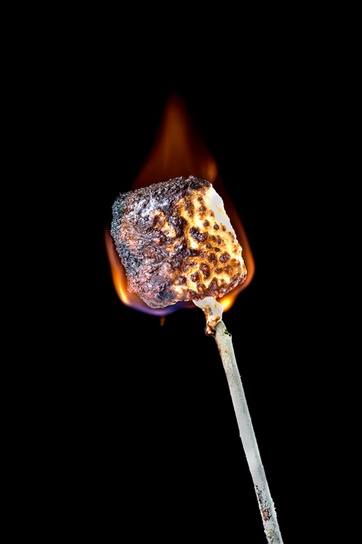
burning a marshmallow in a campfire.
b)
a campfire
c)
acid rain turning a copper roof green.
d)
Dissolving red Koolaid in water.
54.
Which of the following is a chemical reaction?
a)
Burning bread in the toaster.
b)
melting wax in a microwave.
c)
dissolving salt in water
d)
boiling water to make steam.
55.
A _________ is a substance made of two or more DIFFERENT elements chemically combined. 
a)
mixture
b)
compound
c)
substance 
56.
A mixture can be separated by ________ means. 
a)
physical
b)
chemical
57.
"C" is the element symbol for which element?
a)
calcium
b)
carbon
c)
chlorine
d)
cadmium
58.
The characteristics or properties of metals include
a)
shiny and solid
b)
ductile and malleable
c)
lose electrons
d)
all of the above
59.
Which particle contributes the negative charge to the atom?
a)
proton
b)
electron
c)
neutron
d)
nucleus
60.
Water is an element?
a)
true
b)
false
61.
Gold is an example of a(n) 
a)
pure element
b)
pure compound
c)
pure mixture
62.

What is the number of protons that the element in this image contain?

a)

14

b)

7

c)

15

d)

18

63.

True or False? Neutrons have a negative charge

a)

True

b)

False

64.

A pure substance that is a compound is made out of

a)

particles of more than one type of atom

b)

particles of the same type of atom

c)

a mixture of two or more substances that can be physically separated

65.

A molecule is

a)

a singular particle of a particular element

b)

another name for an element

c)

2 or more atoms that are combined

66.

protons

a)

negative charge, nucleus

b)

positive charge, shells

c)

positive charge , nucleus

d)

neutral charge, nucleus

67.

electrons

a)

no charge, nucleus

b)

positive charge, nucleus

c)

negative charge, shells

d)

negative charge, nucleus

68.

neutrons

a)

no charge, shells

b)

positive charge, nucleus

c)

neutral, no charge, nucleus

d)

negative charge, shells

69.

What does a represent?

a)

Proton

b)

Neutron

c)

Electron

70.

What does b represent?

a)

Proton

b)

Neutron

c)

Electron

71.

What does c represent?

a)

Proton

b)

Neutron

c)

Electron

72.

What is the atomic mass of this element?

a)

20

b)

60

c)

40

d)

41

73.

What is the symbol of this element?

a)

Calcium

b)

P

c)

Ca

d)

C

74.

What is the atomic number of this element?

a)

20

b)

60

c)

40

d)

41

75.
What is a pure substance that cannot be broken down into any other substance by physical or chemical means. Ex: Gold, Silver, Oxygen, & Nitrogen
a)
element
b)
compound
c)
mixture
d)
salad
76.
What is a  pure substance made of two or more elements chemically combined in a set ratio. Ex: CO2 has a set ratio of 1:2, meaning for every one carbon atom there are two oxygen atoms.
a)
element
b)
compound
c)
mixture
d)
salad
77.
What is an atom which has gained or last electrons called?
a)
isotope
b)
atom
c)
ion
d)
balanced
78.
What type of property can only be observed by changing the substance into a new substance. Ex: Flammability, oxidation
a)
chemical
b)
physical
79.
What type of mixture contains visible parts (like a salad or a pizza or granite)
a)
homogenous
b)
heterogenous
80.
What is matter
a)
Anything which is solid
b)
Anything that takes up space and has mass
c)
when something is wrong
81.
Gold is an example of a(n) 
a)
pure element
b)
pure compound
c)
pure mixture
82.
Air is an example of a(n)
a)
element
b)
compound
c)
heterogenous mixture
d)
homogenous mixture
83.
In a mixture items can be separated __________
a)
chemically
b)
physically
84.
Phase changes (going from a solid to a liquid to a gas) are what types of changes?
a)
chemical
b)
physical
85.
Elements in a compound can be separated __________
a)
physically
b)
chemically
86.
who developed the modern day periodic table of elements?
a)
Darwin
b)
Shultz
c)
Hooke
d)
Mendeleev
87.
On the Periodic Table each element increases by one _________
a)
electron
b)
proton
c)
neutron
d)
letter
88.
A row across the Periodic Table where each element has the same number of energy shells
a)
column
b)
family
c)
period
89.
In a family or column, the elements have similar properties because they all have the same number of
a)
protons
b)
neutrons
c)
valence electrons
d)
electrons
90.
What is the octet rule?  How many valence electrons can the first three periods hold?
a)
8
b)
2
c)
2 8 8
d)
2 8 16
91.
Whether or not bonds form is due to the ?????
a)
valence electron configurations
b)
protons
c)
atomic mass
d)
chance
92.
In what type of bond are electrons gained or lost?  This happens between a metal and a non-metal?
a)
ionic
b)
covalent
c)
subatomic
93.
In this type of bond electrons are shared by two non-metals
a)
ionic
b)
covalent
c)
subatomic
94.
The Law of Conservation of Matter says
a)
Matter can be created, but not destroyed
b)
matter can be destroyed, but not created
c)
matter cannot be created or destroyed
95.
When heat is added to matter, the molecules tend to 
a)
move faster and farther apart
b)
slow down
c)
nothing, heat has no impact on the state of matter
d)
freeze
96.

What is the name of this compound?

a)

ethanol

b)

ethanal

c)

ethanone

d)

methanal

97.

What is the name of this compound?

a)

propan-2-al

b)

propanane

c)

propanone

d)

propanal

98.

Which compound is a structural isomer of Z-but-2-ene?

a)

butane

b)

E-but-2-ene

c)

cyclobutane

d)

methylbut-2-ene

99.

Which equation is a propagation step in the conversion of trichloromethane into tetrachloromethane by reaction with chlorine in the presence of ultraviolet light?

a)

CHCl3 + Cl2 ⟶ CCl4 + HCl

b)

●CCl3 + ●Cl ⟶ CCl4

c)

CHCl3 + ●Cl ⟶ CCl4 + ●H

d)

●CCl3 + Cl2 ⟶ CCl4 + ●Cl

100.

How many structural isomers are there with the molecular formula C3H6BrCl?

a)

4

b)

5

c)

6

d)

7

101.

How many different alkenes are formed when 2-bromo-3-methylbutane reacts with ethanolic potassium hydroxide?

a)

2

b)

3

c)

4

d)

5

102.

An organic compound is found to contain 40.0% carbon, 6.7% hydrogen and 53.3% oxygen.Which of the following compounds could this be?

a)

Ethanol

b)

Ethanoic acid

c)

Methanol

d)

Methanoic acid

103.

Which one of the following mechanisms is not involved in the reaction sequence below?

CH3CH3 → CH3CH2Cl → CH3CH2OH → CH2=CH2 → CH3CH2Br

a)

electrophilic addition

b)

electrophilic substitution

c)

nucleophilic substitution

d)

free-radical substitution

104.

What is the correct systematic name for

a)

2-bromo-3-methylpent-2-ene

b)

2-bromo-3-ethylbut-2-ene

c)

3-bromo-2-ethylbut-2-ene

d)

4-bromo-3-methylpent-3-ene

105.

What is the correct systematic name for

a)

2-ethyl-3,4-dimethylpent-2-ene

b)

4-ethyl-2,3-dimethylpent-3-ene

c)

2,3,4-trimethylhex-3-ene

d)

3,4,5-trimethylhex-3-ene

106.
Measure to the nearest milliliter.
a)
73 mL
b)
73.1 mL
c)
76 mL
d)
76.1 mL
107.
Which piece of equipment is shown in the picture?
a)
Graduated Cylinder
b)
Meter Stick
c)
Triple-Beam Balance
d)
Beaker
108.
What is the measurement using the correct number of sig. figs.?
a)
8.5mL
b)
8.50mL
c)
8.45mL
d)
8.4mL
109.
What is the measurement using the correct number of sig. figs.?
a)
89cm
b)
88.9cm
c)
88.90cm
d)
88cm
110.
What is the volume of Object X?
a)
10.0 cm3
b)
15.0 cm3
c)
20.0 cm3
d)
25.0 cm3
111.
What is measured with a graduated cylinder?
a)
Passage of time
b)
Distance from one thing to another
c)
Weight of an object
d)
Volume of liquid
112.

What is the temperature shown?

a)

12 ⁰F

b)

15 ⁰F

c)

-12 ⁰F

d)

14 ⁰F

113.

How long is line segment K?

a)

3 mm

b)

3 cm

c)

4 cm

d)

6 mm

114.

What is the reading of the meniscus?

a)

36mL

b)

45mL

c)

35.0mL

d)

30.5mL

115.

What is the volume of the glue stick (in the picture)?

a)

15 mL

b)

23 mL

c)

8 mL

d)

7 mL

116.
Which of the following is an example of nuclear fusion? 
a)
A plutonium atom is used to start a chain reaction that detonates a nuclear weapon 
b)
A uranium atom is split apart into lighter elements
c)
 Two hydrogen atoms are combined to form a helium atom
d)
Two hydrogen atoms bond with an oxygen atom to form a water molecule 
117.
In what part of an atom can protons be found? 
a)
Inside the electrons
b)
Inside the neutrons 
c)
Inside the atomic nucleus 
d)
 Inside the electron shells
118.
What is NOT a characteristic of gamma radiation?
a)
Most dangerous type of radiation
b)
High energy, high penetration
c)
stopped by thin metal
d)
Stopped by several feet of concrete or several inches of lead
119.
What is NOT a characteristic of an alpha particle?
a)
A negatively charged electron
b)
Stopped by paper
c)
A positively charged particle
d)
Low penetration
120.
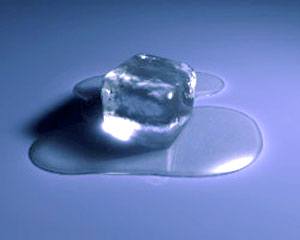
Has the symbol
a)
Alpha
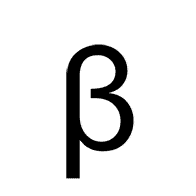
b)
Beta 
c)
Gamma
d)
electron
121.
Has the symbol
a)
Alpha
b)
Beta
c)
Gamma
d)
proton
122.
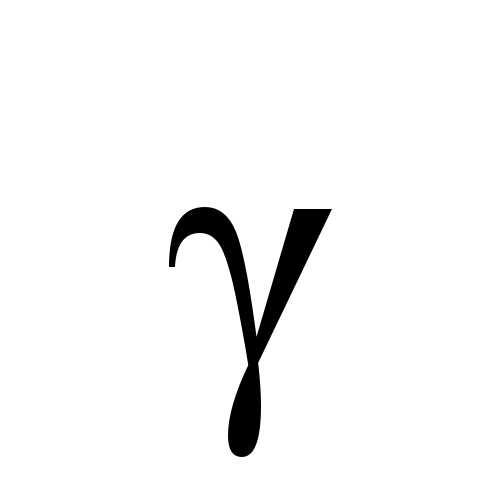
Has the symbol
a)
Alpha
b)
Beta
c)
Gamma
d)
neutron
123.
In order of most to least penetrating radiation we have
a)
Alpha , Beta,  Gamma
b)
Beta , Gamma , Alpha
c)
Gamma, Beta, Alpha
d)
Gamma, Alpha, Beta
124.
Which type of nuclear radiation is being emitted here?
a)
Alpha
b)
Beta
c)
Gamma 
d)
none
125.
Has a mass of 4 and a charge of +2
a)
Alpha
b)
Beta
c)
Gamma
d)
neutron
126.
Which type of nuclear radiation is being emitted here along with Rn
a)
alpha
b)
beta
c)
gamma
d)
none
127.
This is an example of...
a)
Fission  reaction
b)
Fusion reaction
c)
Decomposition reaction
d)
Combustion
128.
How does nuclear fusion compare to nuclear fission? 
a)
Nuclear fusion produces no radioactive waste
b)
Nuclear fusion produces more radioactive waste
c)
. Nuclear fusion is cheaper and easier to produc
d)
Nuclear fusion requires rare, expensive elements to work
129.
Which of the following best describes the process of nuclear fission? 
a)
Splitting an atom's nucleus apart 
b)
Separating an atom's electrons from its nucleus 
c)
Fusing two atomic nuclei together 
d)
Splitting an atom's electrons in half 
130.
If Thorium-234 undergoes a beta decay, What element will be left in its place?
a)
Actinium-234
b)
Thorium-233
c)
Protactinium-234
d)
Radium-230
131.
What do carbon-12 and carbon-14 have in common? 
a)
They have the same number of protons
b)
They have the same number of neutrons
c)
 They have the same atomic mass
d)
They have the same atomic weight
132.
How is carbon-12 different from carbon-14?
a)
They have a different number of protons 
b)
They have a different number of electrons
c)
They have a different number of neutrons
d)
They are different elements 
133.
If we start off with element 5024X after an gamma decay we get another element that looks like
a)
5224X
b)
5023X
c)
5024X
d)
5025X
134.
If we start off with element 5024X after an beta decay we get another element Y that looks like
a)
5023Y
b)
4622Y
c)
5025Y
d)
5024Y
135.
If we start off with element 5024X after an alpha decay we get another element Y that looks like
a)
5022Y
b)
 4622Y
c)
4820Y
d)
5426Y
136.

An isotope that has an unstable nucleus is called a(n):

(a)  

137.

The three types of nuclear radiation are _______ radiation, _________radiation, and _____________ radiation.

a)

alpha, beta, and gamma

b)

theta, beta, and kappa

c)

alpha, beta, positron

138.

After one ____________ of a radioactive element, half of the original radioactive material remains.

a)

half-life

b)

cycle

c)

decay

139.

The conversion of an atom of one element to an atom of another element is called (a)   .

140.

In a(n) ___________, particles released from one nuclear reaction collide with other particles and cause more nuclear reactions.

a)

nuclear fission reaction

b)

nuclear fusion reaction

141.

In ___ _____reactions, small nuclei combine, producing a large nucleus and releasing large amounts of energy.

a)

nuclear fission

b)

nuclear fusion

142.

Radioisotopes are used to both ___________ and ________ medical problems.

(a)  

143.

spontaneous emission from the nucleus of an atom

a)

positron

b)

radioactivity

c)

alpha particle

d)

gamma radiation

e)

beta particle

144.

emitted helium nucleus

a)

positron

b)

radioactivity

c)

alpha particle

d)

gamma radiation

e)

beta particle

145.

energetic electron from decomposed neutron

a)

positron

b)

radioactivity

c)

alpha particle

d)

gamma radiation

e)

beta particle

146.

high-energy photons emitted by a radioisotope

a)

positron

b)

radioactivity

c)

alpha particle

d)

gamma radiation

e)

beta particle

147.

particle of charge +1 and mass equal to that of an electron

a)

positron

b)

radioactivity

c)

alpha particle

d)

gamma radiation

e)

beta particle

148.

radiation detector that makes use of a gas-filled metal tube

a)

scintillation counter

b)

Geiger counter

c)

neutron moderation

d)

neutron absorption

e)

film badge

149.

Chemistry is the study of

a)

chemicals and chemical reactions

b)

carrying out experiments

c)

smelly experiments

d)

the universe

150.

A chemical is

a)

a harmful substance

b)

something that explodes or smells funny

c)

a substance or material

d)

Something that can make you high

151.

A particle is

a)

anything microscopic

b)

a small tiny unit of a chemical

c)

an atom

d)

a compound

152.

An atom is

a)

any small simple particle

b)

a small unit particle of an element

c)

a small unit particle of a compound

d)

a molecule

153.

A molecule is

a)

a particle made up of atoms joined together

b)

a particle made up of different types of atoms joined together

c)

any partilcle

d)

a compound

154.

An element is

a)

a simple chemical

b)

a complex chemical

c)

a simple partilcle made of one type of atom

d)

a particle made of different types of atoms

155.

A compound is

a)

a simple chemical

b)

a simple chemical made of one type of atom

c)

a simple chemical made up of two different types of atom

d)

a simple chemical made up of different types of atom

156.

Which is the odd one out below ?

a)

hydrogen

b)

copper

c)

copper chloride

d)

scandium

157.

Which is the odd one out below ?

a)

water

b)

carbon tetrachloride

c)

nitrogen

d)

carbon dioxide

158.

Which of the following is a compound

a)

air

b)

nitrogen

c)

carbon

d)

carbon monoxide

159.

Which homolgous series contains a C=C double bond?

a)

alkanes

b)

alkenes

c)

alcohols

d)

carboxylic acids

160.

Which homolgous series contains only C-C single bonds?

a)

alkanes

b)

alkenes

c)

alcohols

d)

carboxylic acids

161.

Which type of polymerisation uses only one monomer?

a)

addition polymerisation

b)

condensation polymerisation

162.

Which type of polymerisation uses two different monomers, both contain a functional group at each end?

a)

addition polymerisation

b)

condensation polymerisation

163.

What is made when a dicarboxylic acid reacts with a diol?

a)

a polyamide

b)

a polyester

c)

an evaporation polymer

d)

a condensation polymer

164.

-COOH is the functional group for...

a)

alcohols

b)

esters

c)

carboxylic acids

d)

amides

165.

-COO is the functional group for...

a)

alcohols

b)

esters

c)

carboxylic acids

d)

amides

166.

-OH is the functional group for...

a)

alcohols

b)

esters

c)

carboxylic acids

d)

amides

167.

An alcohol can be __________________ to form a carboxylic acid

a)

oxidised

b)

reduced

c)

polymerised

d)

broken down

168.

Alcohols can be oxidised by...

a)

combustion

b)

freezing

c)

decomposition

d)

addition

169.

Acidified potassium dichromate is an example of...

a)

an alkali

b)

a reducing agent

c)

a fuel

d)

an oxidising agent

170.

Name this carboxylic acid

a)

ethanoic acid

b)

prpoanoic acid

c)

butyl butanoate

d)

butanoic acid

171.

Name this ester

a)

ethyl ethanoate

b)

propyl ethanoate

c)

methyl ethanoate

d)

ethyl methanoate

172.

What catalyst is used in making esters?

a)

sodium hydroxide

b)

iron

c)

sulfuric acid

d)

lithium oxide

173.

alkene + ? --> alcohol

a)

hydrogen

b)

oxygen

c)

water

d)

carbon dioixde

174.

alcohol + ? --> carboxylic acid

a)

hydrogen

b)

oxygen (oxidising agent)

c)

water

d)

carbon dioixde

175.

carboxylic acid + ? --> ester

a)

water

b)

alkene

c)

alcohol

d)

alkane

176.

Name the polymer formed from this monomer

a)

chloroethene

b)

chloroethane

c)

dichloroethene

d)

dichloroethane

177.

Name the monomer that forms this polymer

a)

ethane

b)

ethanol

c)

ethene

d)

methene

178.

True or false? A catalyst is required for the hydration of ethene.

a)

True

b)

False