wayground logo

Free Printable Worksheets

Font size

S
M
L
XL
Worksheets

HBS Practice Final Exam

Total questions: 83

Worksheet time: 2hrs 33mins

Name
Class
Date
1.

Motor neurons carry impulses __________ the brain

a)

towards

b)

away from

c)

within

2.

Which of the following describes the function of the Na/K Pumps in the neuron membrane?

a)

depolarizing the cell by allowing Na into the cell

b)

repolarizing the cell by allowing K out of the cell

c)

rearranging Na and K back to return cell to resting state

3.

Which of the following correctly outlines a reflex arc?

a)

Motor neuron - interneuron - sensory neuron

b)

Sensory neuron - interneuron - motor neuron

c)

Sensory neuron - interneuron - brain - motor neuron

4.

The dendrites of a neuron carry a stimulus

a)

Towards the cell body

b)

Away from the cell body

c)

Through the cell body

5.

During resting membrane potential, the inside of a neuron has a _______________ charge

a)

negative

b)

positive

c)

neutral

6.

Myelin is located on the ____________ and functions to ____________ nerve transmission.

a)

dendrite - speed up

b)

dendrite - slow down

c)

axon - speed up

d)

axon - slow down

7.

Neurotransmitters bind to complementary sites on a cell called

a)

receptors

b)

axon terminals

c)

cell bodies

8.

Reaction time is ___________________ than reflex time.

a)

faster

b)

slower

c)

same

9.

Depolarization occurs when the inside of a cell becomes _________________ due to _________ gates opening.

a)

positive - potassium

b)

negative - potassium

c)

positive - sodium

d)

positive - sodiium

10.

The spaces between myelin on an axon are called

a)

axon gaps

b)

nodes of ranvier

c)

dendrite dents

11.

Which of the following nervous system disorders occurs as a result of tangled plaques forming in brain tissue?

a)

Huntington's disease

b)

Alzheimer's disease

c)

Parkinson's disease

12.

Which of the following disorders is associated with a decrease in the neurotransmitter called dopamine?

a)

parkinson's disease

b)

epilepsy

c)

ALS

13.

Which of the following diagnoses best describes a disorder that involves seizure activity?

a)

MS

b)

ALS

c)

epilepsy

14.

Which of the following diseases does NOT affect memory or mental cognition?

a)

ALS

b)

Huntington's

c)

Alzheimers

15.

What is the name is the area of the brain marked here in blue?

a)

Frontal lobe

b)

Temporal Lobe

c)

Cerebellum

d)

Occipital lobe

16.

What is the name of the region of the brain shown here in yellow?

a)

Cerebellum

b)

Temporal Lobe

c)

Parietal lobe

d)

Frontal lobe

17.

What is the region of the brain shown here in pink?

a)

Medulla oblongata

b)

Temporal lobe

c)

Occipital lobe

d)

Parietal lobe

18.

What is the region of the brain shown here in green?

a)

Frontal lobe

b)

Temporal lobe

c)

Parietal lobe

d)

Occipital lobe

19.

What region of the brain would include the motor cortex?

a)

blue

b)

green

c)

yellow

d)

red

20.

What region of the brain is shown here in striated white?

a)

Occipital lobe

b)

motor cortex

c)

sensory cortex

d)

Cerebellum

21.

Vision

a)

occipital

b)

Frontal

c)

Temporal

d)

Parietal

22.

Happiness

a)

occipital

b)

Frontal

c)

Temporal

d)

Parietal

23.

Language

a)

occipital

b)

Frontal

c)

Temporal

d)

Parietal

24.

Reasoning

a)

occipital

b)

Frontal

c)

Temporal

d)

Parietal

25.

Taste

a)

occipital

b)

Frontal

c)

Temporal

d)

Parietal

26.

Temperature

a)

occipital

b)

Frontal

c)

Temporal

d)

Parietal

27.

Blood Pressure

a)

occipital

b)

Frontal

c)

Brain Stem

d)

Parietal

28.

Movement

a)

occipital

b)

Frontal

c)

Temporal

d)

Parietal

29.

Balance

a)

occipital

b)

Frontal

c)

Temporal

d)

Cerebellum

30.

What region of the brain would include the sensory cortex?

a)

Occipital lobe

b)

green

c)

yellow

d)

red

31.

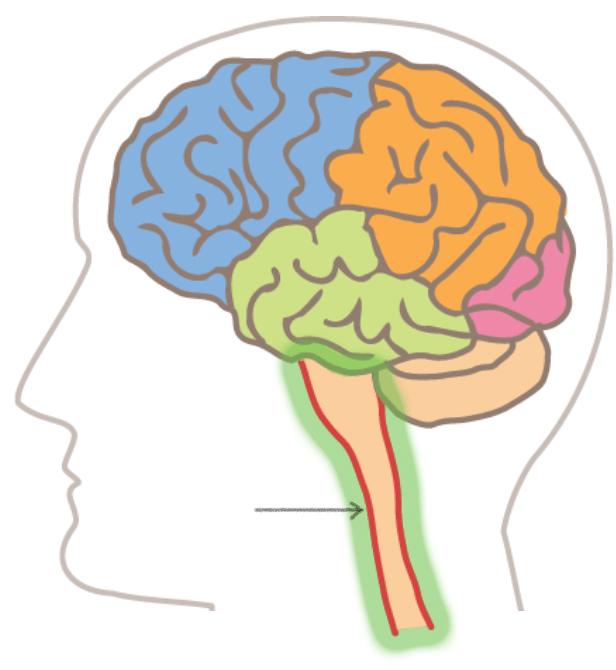
Identify the area of the brain highlighted.

a)

Brain stem

b)

Cerebellum

c)

Spine

d)

Medulla oblongata

32.
Area of cerebrum that allows us to speak
a)
Broca's Area
b)
Wernicke's area
c)
Precentral Gyrus
d)
Postcentral Gyrus
33.

Which is the name of the raised portions of the brain surface?

a)

gyrus

b)

sulcus

c)

cortex

d)

medulla

34.
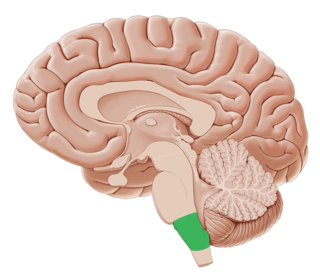
What is this?
a)
Pons
b)
Medulla Oblongata
c)
Cerebellum
d)
Hypothalamus
35.
Identify Letter A
a)
Adrenal Gland
b)
Renal Artery
c)
Renal Vein
d)
Renal Pelvis
36.
Identify Letter B
a)
Adrenal Gland
b)
Renal Artery
c)
Renal Vein
d)
Renal Pelvis
37.
Identify Letter C
a)
Adrenal Gland
b)
Renal Artery
c)
Renal Vein
d)
Renal Pelvis
38.
Identify Letter D
a)
Adrenal Gland
b)
Renal Artery
c)
Renal Vein
d)
Renal Pelvis
39.
Identify Letter E
a)
Ureter
b)
Renal Capsule
c)
Renal Coretx
d)
Renal Medulla
40.
Identify Letter H
a)
Ureter
b)
Renal Capsule
c)
Renal Coretx
d)
Renal Medulla
41.
Identify Letter J
a)
Renal Pyramid
b)
Major Calyx
c)
Minor Calyx
d)
Renal Medulla
42.
Identify Letter A
a)
Bowman's Capsule
b)
Afferent Arteriole
c)
Efferent Arteriole
d)
Glomerulus
43.
Identify Letter D
a)
Bowman's Capsule
b)
Afferent Arteriole
c)
Efferent Arteriole
d)
Glomerulus
44.
Identify Letter G
a)
Renal Artery
b)
Renal Vein
c)
Descending Loop of Henle
d)
Proximal Convoluted Tubule
45.
Identify Letter H
a)
Renal Artery
b)
Renal Vein
c)
Descending Loop of Henle
d)
Proximal Convoluted Tubule
46.
Identify Letter I
a)
Distal Convoluted Tubule
b)
Collecting Duct
c)
Peritubular Capillaries
d)
Proximal Convoluted Tubule
47.
Identify Letter J
a)
Distal Convoluted Tubule
b)
Collecting Duct
c)
Peritubular Capillaries
d)
Proximal Convoluted Tubule
48.
Identify Letter M
a)
Ascending Loop of Henle
b)
Vasa Recta
c)
Loop of Henle
d)
Collecting Duct
49.
_______________ is an important hormone in blood sugar regulation.
a)
progesterone
b)
glucagon
c)
FSH
d)
T4
50.
The brain and spinal cord are part of the ______________.
a)
central nervous system
b)
peripheral nervous system
c)
auxillary nervous system
d)
axial nervous system
51.
The ________________ of the neuron acts as an insulator.
a)
axon
b)
terminal
c)
dendrite
d)
myelin
52.
Breathing and circadian rhythm are controlled by the ___________________.
a)
brain stem
b)
occipital lobe
c)
parietal lobe
d)
cerebellum
53.
Surgery to correct vision, such as LASIK, changes the shape of the __________.
a)
retina
b)
lens
c)
pupil
d)
cornea
54.
________________ muscles involve voluntary contractions.
a)
skeletal
b)
smooth
c)
cardiac
d)
optic
55.
Which of the following statements is true?
a)
the heart is superior to the brain
b)
the distal humerus touches the clavicle
c)
the ear is lateral to the eye
d)
the large intestine is in the thoracic cavity.
56.
When thyroid hormone levels rise, less ___________ is released by the hypothalamus which begins the process of bring thyroid hormone back to normal levels
a)
thyrotopin releasing hormones
b)
thyroid stimulating hormone
c)
thyroxine
d)
follicle stimulating hormone
57.
Bile is made by which digestive organ?
a)
Gallbladder
b)
Stomach
c)
Rectum
d)
Liver
58.
Which digestive organ makes digestive juices to help the small intestine absorb nutrients?
a)
Liver
b)
Gallbladder
c)
Pancreas
d)
Esophagus
59.
As waste moves through the digestive system, the ______ absorbs water before storing waste in the rectum.
a)
Small intestine
b)
Stomach
c)
Esophagus
d)
Large intestine
60.
Gastric juices in the stomach digest food into a thick liquid.  This is...
a)
Mechanical digestion
b)
Chemical digestion
61.
What does mucus do?
a)
Digests food in the mouth.
b)
Digests food in the stomach
c)
Protects the stomach from digesting iteself
d)
Absorbs nutrients from food so the body has energy.
62.
Urine is carried from the kidneys to the bladder by two thin tubes called:
a)
Ureters
b)
Tubulars
c)
Capillaries
d)
Urinary Tract 
63.
Which one of the following is NOT a substance typically reabsorbed by the tubules under normal healthy conditions?
a)
urea
b)
water
c)
glucose
d)
amino acids
64.
Functional unit of the kidney
a)
Renal hilum
b)
nephron 
c)
Renal medulla
d)
Renal pelvis 
65.
What is the correct order of the steps of function within the nephron? 
a)
Secretion, Reabsorption, Filtration 
b)
Filtration, Secretion, Reabsorption 
c)
Filtration, Reabsorption, Secretion 
d)
Secretion, Filtration, Reabsorption
66.
During the process of filtration in the nephron, most of the water, glucose, and vitamins are:
a)
stored in the bladder
b)
excreted through the ureters
c)
reabsorbed into the blood
d)
concentrated in the urine
67.
Which types of muscle tissue are voluntary
a)
Cardiac Muscle
b)
Smooth Muscle
c)
Skeletal Muscle
d)
Skeletal Muscle and Smooth Muscle
68.
What are the THREE types of Muscles?
a)
cold, hot, and warm
b)
Smooth, Rough, and Skeletal
c)
Skeletal, Smooth, and Cardiac
69.
The Five regions of the spine are:
a)
Vetebrae,Lumbar,
Thoracic
Sacrum,
Coccygeal
b)
Fascicle, Lumbar, Sacrum, Thoracic
c)
Cervical, Thoracic, Lumbar, Sacrum, Coccyx
d)
Cervical, Thoracic, Lumbar, Sacrum, 
70.
My nose is ______________ to my shoulders
a)
inferior
b)
superior
71.
What term means AWAY from the midline of the body?
a)
Medial
b)
Lateral
c)
Contralateral
d)
Ipsilateral
72.
Which of the following is NOT a function of the skeleton?
a)
Production of blood cells
b)
Gives the body form
c)
Protects internal organs
d)
Creates Movement
73.
Fingerprint scan, vein recognition, and facial recognition are just a few examples of
a)
biometrics
b)
forensic anthroplogy
c)
bioinformatics
d)
epigenetics
74.
Which of the following statements is true?
a)
the heart is superior to the brain
b)
the distal humerus touches the clavicle
c)
the ear is lateral to the eye
d)
the large intestine is in the thoracic cavity.
75.

Label the pupil

a)

I

b)

D

c)

E

d)

J

e)

B

76.

Label the optic nerve

a)

H

b)

I

c)

K

d)

D

e)

G

77.

Label the Iris

a)

D

b)

E

c)

A

d)

I

e)

K

78.

Label the retina

a)

K

b)

B

c)

E

d)

G

e)

F

79.

Label the optic disc/blind spot

a)

I

b)

G

c)

J

d)

H

e)

F

80.

Label the lens

a)

H

b)

B

c)

A

d)

F

e)

E

81.

Label the Sclera

a)

F

b)

G

c)

C

d)

H

e)

K

82.

Label the aqueous humor.

a)

A

b)

B

c)

C

d)

D

e)

E

83.

Label the vitreous humor.

a)

F

b)

G

c)

H

d)

I

e)

J