wayground logo

Free Printable Worksheets

NEW

Font size

S
M
L
XL
Worksheets

STAAR Mock 2019

Total questions: 80

Worksheet time: 1hrs 3mins
Name
Class
Date
1.
Which of the following is the correct order of organization in living things from most basic (simple) to most complex?
a)
a.  Organism, cell, tissue, organ, organ system
b)
a.  Organ system, organ, tissue, cell, organism
c)
a.  Cell, tissue, organ, organ system, organism
d)
a.  Cell, organ, tissue, organ, organism, organ system
2.
The smallest level of organization of life in an organism
a)
tissue
b)
cell
c)
organ
d)
organ system
3.
This is a example of........ 
a)
organ system
b)
cells
c)
organ
d)
tissue
4.
Water temperature would be an example of ...
a)
a biotic factor.
b)
an abiotic factor.
5.
A collection of organisms that belong to different populations but all live in the same area and interact with one another.
a)
Population
b)
Ecosystem
c)
Community
d)
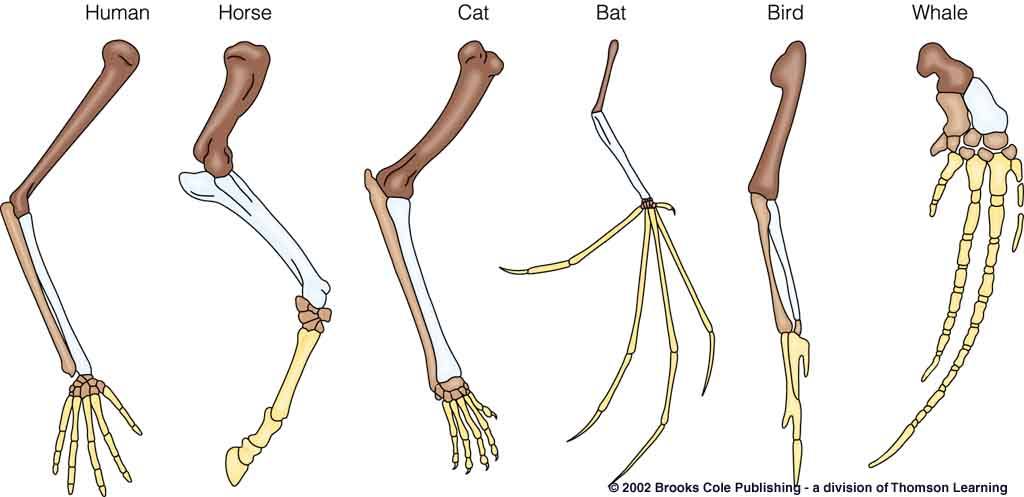
Ecosphere
6.
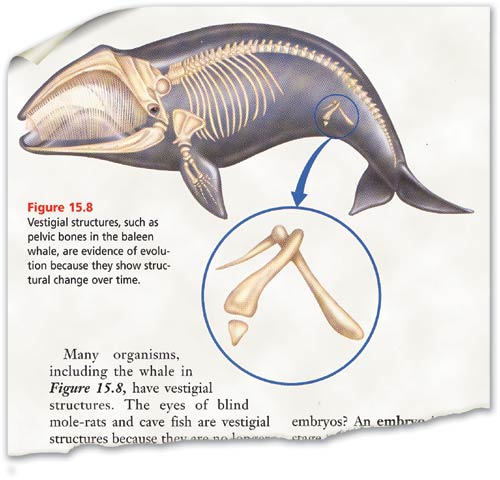
A collection of organisms that make up a community as well as all of the nonliving aspects of the environment.
a)
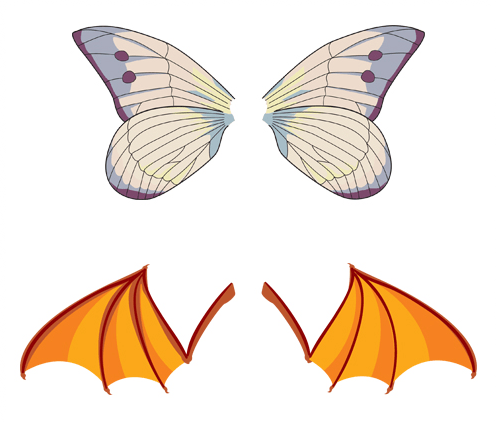
Population
b)
Community
c)
Habitat
d)
Ecosystem
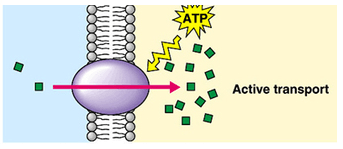
7.
Copper compounds are used to control the growth of algae and other aquatic plants. Copper interferes with photosynthesis in these organisms. What would be the most likely result of an accidental spill of these compounds in an aquatic environment?
a)
Fish would grow larger than usual
b)
Zooplankton would increase
c)
Plants would increase in size and decrease in number
d)
The plant populations would be reduced
8.
Insecticides are sprayed over a large area in an effort to reduce the number of grasshoppers that are eating the corn plants. How will this change affect this food chain? 
a)
The number of grasshoppers will increase
b)
The number of lizards will increase
c)
The number of lizards and hawks will decrease
d)
The number of grasshoppers, lizards, and hawks will decrease
9.
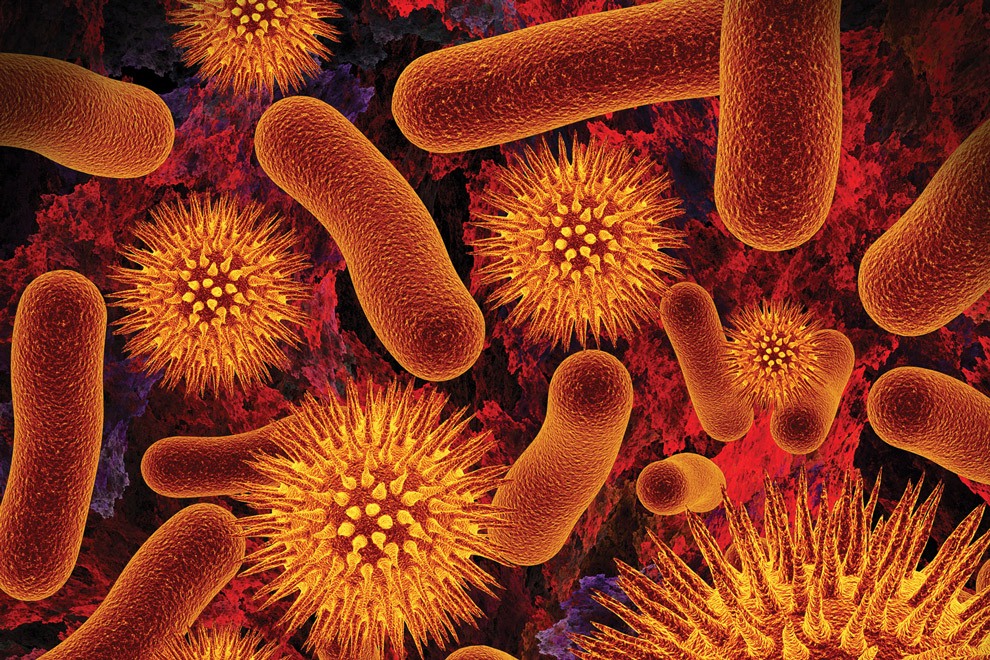
Are microorganisms helpful or harmful?
a)
Helpful
b)
Harmful
c)
Both
d)
Neither
10.
Microorganisms can be found:
a)
The the ocean, inside and outside your body
b)
On plants and animals
c)
In medicine and your food
d)
All of the above
11.
Cattle egrets forage (feed) in fields among cattle. The egret gets easy access to flying insects stirred up by the cattle, and the cattle don't care if they are there or not.
a)
mutualism
b)
commensalism
c)
competition
d)
parasitism
12.
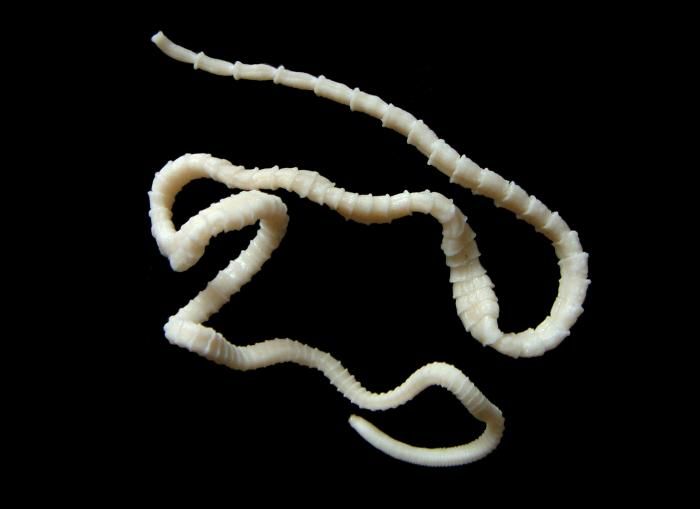
A tapeworm and a cat have this type of relationship.
a)
mutualism
b)
parasitism
c)
commensalism
d)
competition
13.
What type of symbiosis?  Hummingbirds feed on nectar from flowers.  The flowers are pollinated by hummingbirds as they move from flower to flower.
a)
commensalism
b)
mutualism
c)
parasitism
d)
predation
14.
A frog eats a fly. The frog and fly are demonstrating ________.
a)
mutualism
b)
competition
c)
predator/prey
d)
parasitism
15.
An inherited trait that helps those organisms that have it to survive
a)
niche
b)
structure
c)
characteristic
d)
adaptation
16.
The role an organism plays in its ecosystem
a)
niche
b)
behavior
c)
structure
d)
function
17.
Coloring or another physical characteristic that help an organism blend in with its environment
a)
mimicry
b)
camouflage
c)
hibernation
d)
migration
18.
When an organism copies a characteristic of something else in order to better its chances for survival and reproduction
a)
hibernation
b)
camouflage
c)
mimicry
d)
migration
19.
Which best describes what a food chain shows you?
a)
Energy flow through an ecosystem
b)
Food flowing through an ecosystem
c)
Consumers going into other consumers
d)
Who eats who
20.
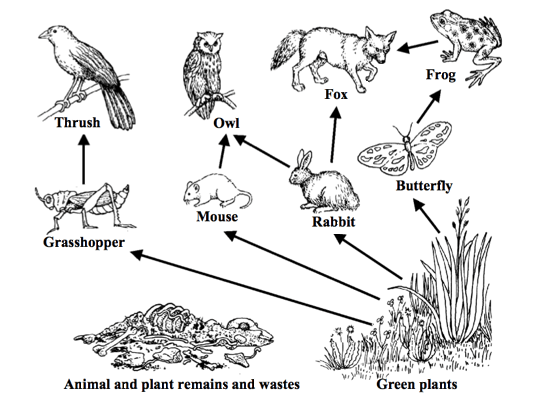
The owl receives energy from which organisms?
a)
grasshopper and mouse
b)
mouse and rabbit
c)
rabbit and butterfly
d)
butterfly and frog
21.
In an ecological pyramid, which type of organism always has the least amount of energy available?
a)
Producers
b)
Herbivores
c)
Carnivores
d)
Top Predator
22.
What biomolecule do enzymes belong to? 
a)
Carbohydrate
b)
Lipid
c)
Nucleic Acid
d)
Protein
23.
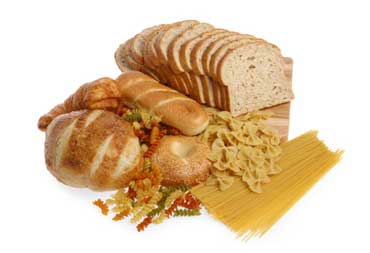
Which biomolecule is found in pasta and bread?
a)
Lipid
b)
Protein
c)
Nucleic Acid
d)
Carbohydrate
24.
Which biomolecule is a main source of quick energy?
a)
Nucleic Acid
b)
Protein
c)
Lipid
d)
Carbohydrate
25.
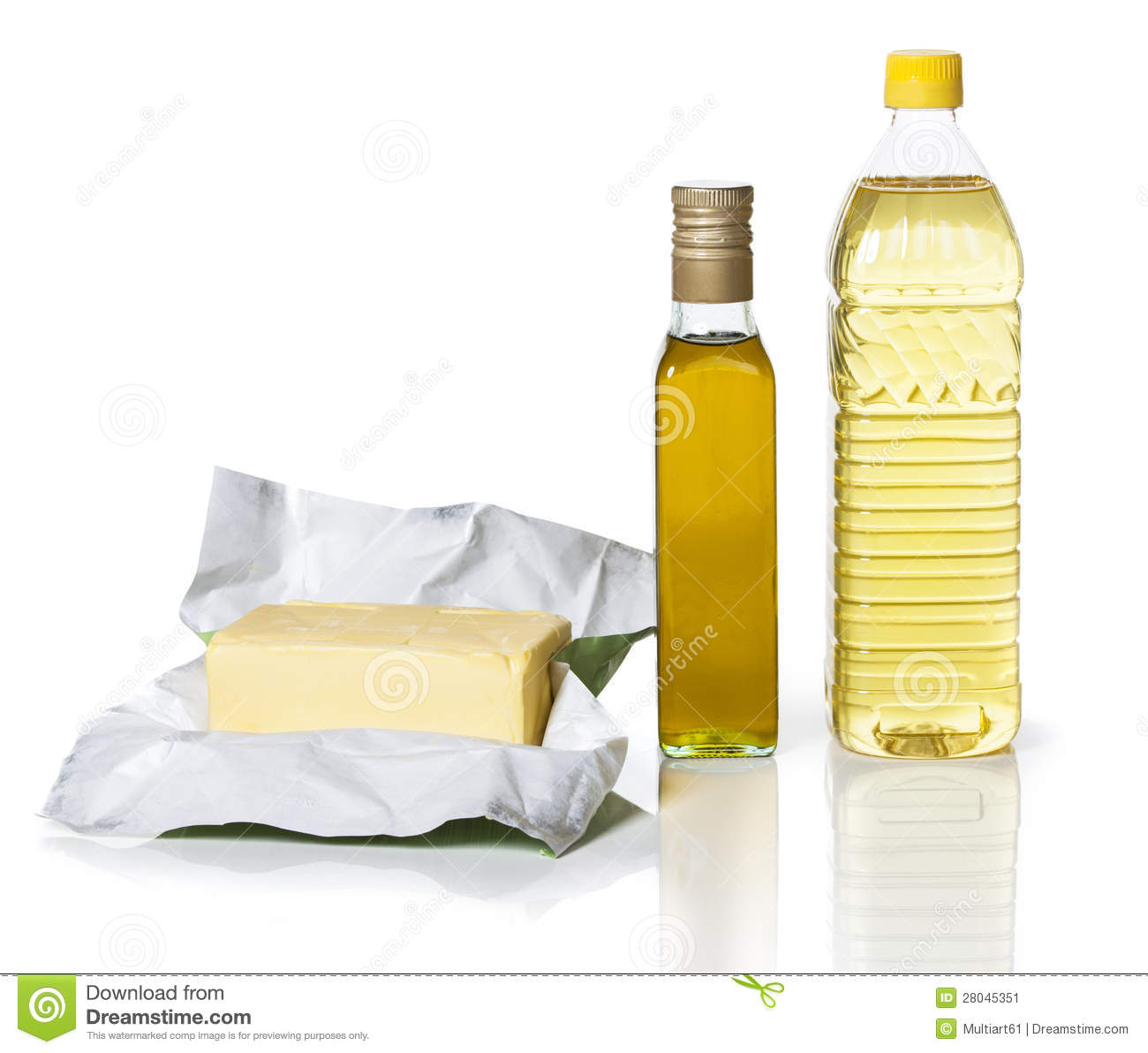
Which biomolecule is found in fats, oils, and waxes and is a source of long-term energy
a)
Proteins
b)
Nucleic Acid
c)
Lipids
d)
Carbohydrate
26.
Which biomolecule is made of nucleotides and contain you DNA?
a)
Carbohydrate
b)
Lipids
c)
Protein
d)
Nucleic Acid
27.

Which biomolecule helps form muscles?

a)

Nucleic Acid

b)

Carbohydrate

c)

Protein

d)

Lipids

28.

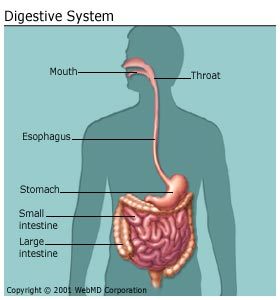
This is the long tube that propels food from your mouth to your stomach.

a)

trachea

b)

cardiac sphincter

c)

esophagus

d)

Fundic

29.

The main function of this organ is the absorption of nutrients

a)

stomach

b)

liver

c)

pancreas

d)

small intestine

30.
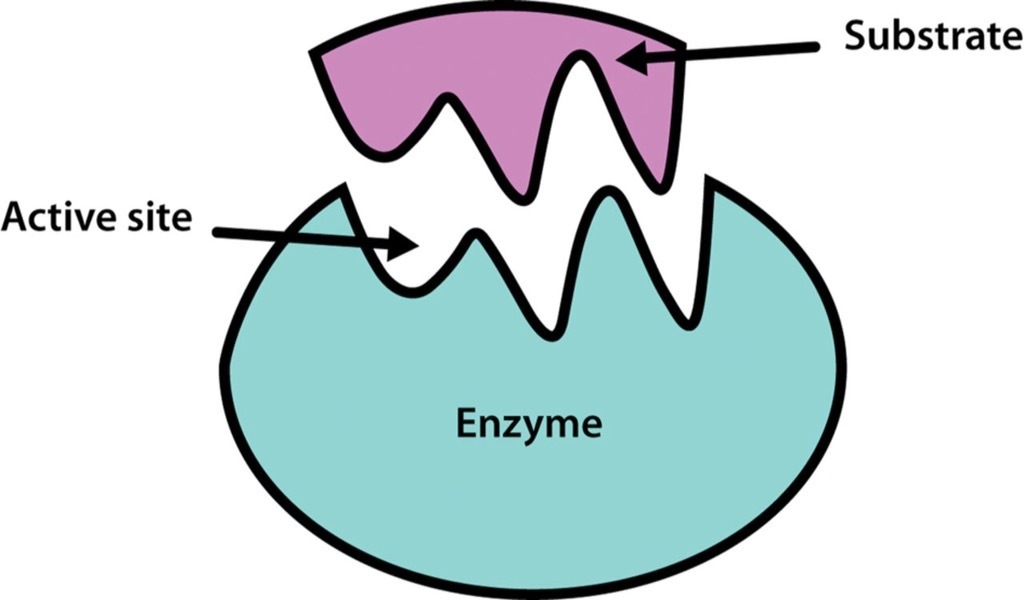
What is the purpose  of an enzyme?
a)
give permission for the reaction
b)
raise activation energy
c)
speed up reactions
d)
control how many reactions occur
31.
Enzymes are capable of increasing the rate of a chemical reaction within a living cell.  Enzymes accomplish this through which of the following means?
a)
reducing the number of products   
b)
reducing the activation energy
c)
increasing the temperature of the cell
d)
increasing the concentration of reactants 
32.
Eukaryotic cells are complex.
a)
true
b)
false
33.
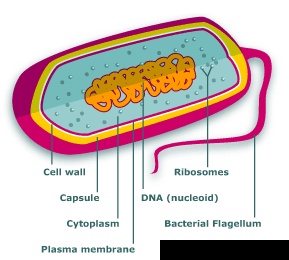
Which type of cell?
a)
Prokaryote
b)
Eukaryote
34.
Which of the following is found inside a prokaryote?
a)
cytoplasm
b)
DNA
c)
ribosomes
d)
all of these
35.
What do viruses need to reproduce?
a)
they need genetic material
b)
They need a host cell
c)
They need  bacteria
d)
They need insulin
36.

Viruses _____.

a)

use the host cell to copy themselves and then viruses to synthesize their own proteins

b)

metabolize food to produce their own ATP

c)

use the host cell to copy themselves and make viral proteins

d)

manufacture their own ATP, proteins, and nucleic acids

37.

Which of the following can be effective in preventing the onset of viral infection in humans?

a)

taking antibiotics

b)

taking vitamins

c)

taking drugs that inhibit transcription

d)

getting vaccinated

38.
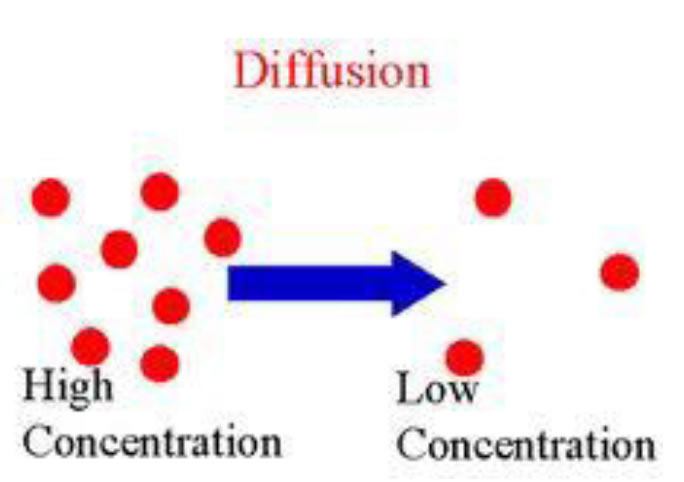
Movement of particles from high to low concentration. 
a)
Passive Transport
b)
Active Transport
39.
ATP is a form of energy.
a)
Passive Transport
b)
Active Transport
40.
Which of the following is the correct equation for PHOTOSYNTHESIS?
a)
CO+ light + H2O --> O+ Sugar
b)
CO+ sugar + H2O --> O+ light
c)
O2 + light + H2O --> CO+ Sugar
d)
CO+ O2 + H2O --> Light+ Sugar
41.
In which way are photosynthesis and cellular respiration different?
a)
Cellular respiration stores ATP, while photosynthesis releases ATP.
b)
Cellular respiration produces oxygen, while photosynthesis uses oxygen.
c)
Photosynthesis releases energy, while cellular respiration stores energy.
d)
Photosynthesis used carbon dioxide, while cellular respiration produces carbon dioxide.
42.
The process to go from DNA to mRNA is _______
a)
translation
b)
transcription
c)
replication
43.
The process to go from mRNA to a protein is called ____
a)
transcription
b)
rRNA
c)
replication
d)
translation
44.
What is a series of events a cell goes through as they grow and divide?
a)
Cell Division
b)
Cell Cycle
c)
Cytokinesis
d)
Mitosis
45.
During what phase of the cell cycle is DNA replicated?
a)
G1 phase
b)
S phase
c)
G2 phase
d)
M phase
46.
Put the following stages of mitosis in order: anaphase, prophase, metaphase, and telophase. 
a)
prophase, metaphase, telophase, anaphase
b)
prophase, anaphase, metaphase, telophase
c)
prophase, metaphase, anaphase, telophase
d)
prophase, telophase, metaphase, anaphase
47.

A human body (somatic) cell usually has how many chromosomes?

a)

6

b)

22

c)

4

d)

46

48.

What kind of cells are made in MEIOSIS?

a)

Haploid Gametes

b)

Diploid Somatic Cells

c)

Skin Cells

d)

Liver Cells

49.
When an area of a chromatid is exchanged with the matching area on a chromatid of its homologous chromosome, _________________ occurs
a)
crossing over
b)
mutagenesis
c)
hybridization
d)
fertilization
50.
Why do we need meiosis?
a)
To double the number of chromosomes going into sex cells
b)
To halve the number of chromosomes going into sex cells
c)
To triple the number of chromosomes going into sex cells
d)
To not change the number of chromosomes going into sex cells
51.
All offspring plants in the F1 generation were purple because purple is the ______________ trait.
a)
Heterozygous
b)
Homozygous
c)
Dominant
d)
Recessive
52.
A __________ is a segment of DNA that codes for a particular protein, which leads to a particular trait.
a)
Gene
b)
Allele
c)
Codon
d)
Nucleotide
53.
Which of the following is an example of a GENOTYPE?
a)
25%
b)
Blue
c)
1:2:1
d)
Bb
54.
Which of the following is an example of a PHENOTYPE?
a)
25%
b)
Blue
c)
1:2:1
d)
Bb
55.
Survival of the Fittest and Evolution were proposed by what scientist?
a)
Charles Darwin
b)
Albert Einstein
c)
Steven Hawking
d)
Isaac Newton
56.
Where the better adapted organisms survive to pass traits along to offspring.
a)
Evolution
b)
Natural Selection
c)
Extinction
d)
Artifical Selection
57.
Why are advantageous traits more likely to be passed onto offspring?
a)
Because they are more likely to survive and reproduce.
b)
Because they come from dominant alleles.
c)
Because they come from recessive alleles.
d)
Because the trait is an acquired phenotype.
58.
This mechanism of evolution occurs when individuals migrate between populations.
a)
Extinction
b)
Gene flow
c)
Genetic drift
d)
Natural Selection
59.

All of the genetic information found in a population.

a)

population

b)

genetic drift

c)

evolution

d)

gene pool

60.
Humans, birds, whales, and lizards all have similar arm bones. What is the reason for this?
a)
The function of these bones is the same in all animals
b)
They live in similar environments
c)
They have a common ancestor
d)
All organisms resemble humans
61.

What is suggested by the similarity of early embryos of different species of vertebrates?

a)

no evolutionary relationships between the groups

b)

evolution from a distant common ancestor

c)

similar environments in the past

62.

The hip bones in a whale are examples of

a)

homologous structures

b)

analogous structures

c)

fossils

d)

vestigial structures

63.
The structures shown are_________
a)
homologous
b)
heterologous
c)
analogous
d)
vestigial
64.
How would you describe this evolution?
a)
Homologous structure
b)
Analogous structure
c)
Structural adaption
d)
Functional adaption
65.
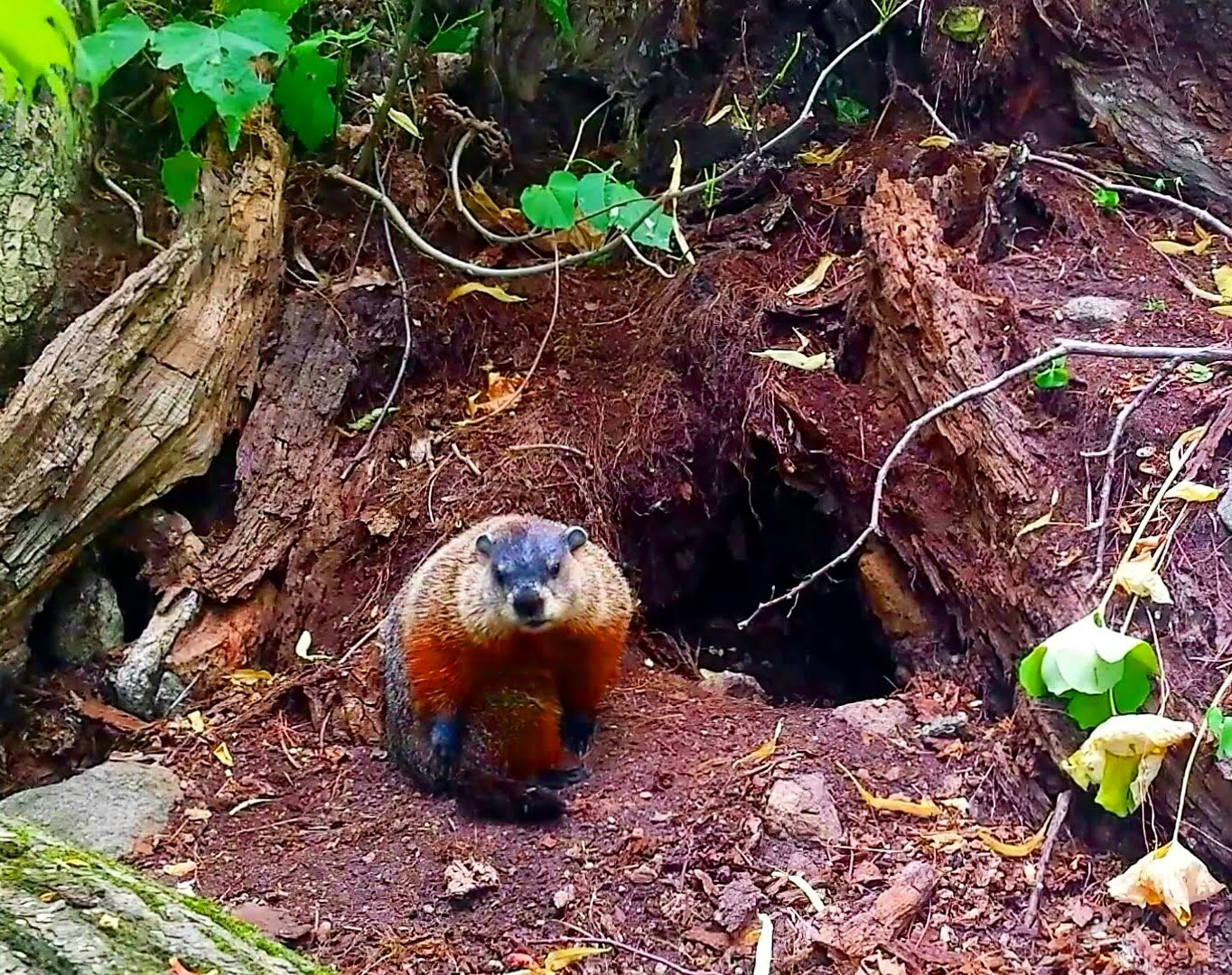
What type of symbiosis?  Skunks often live in burrows that have been dug and abandoned by woodchucks.  
a)
commensalism
b)
mutualism
c)
parasitism
d)
predation
66.
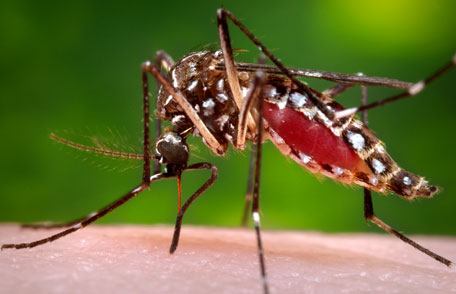
When a mosquito bites you, you are the __________ and the mosquito is the  ____________.
a)
host, hostess
b)
parasite, host
c)
host, parasite
d)
prey, predator
67.
What is an heterotroph
a)
An organism that can produce its own form of energy (via the Sun) 
b)
An organism that consumes only plants for energy
c)
Various organisms that consume other organisms for energy
d)
An organism that decomposes other organisms 
68.
What are the major differences between a species and a population
a)
Populations consist of ALL of the individual organisms within a species in a given area/ecosystem that are fertile
b)
Populations are a collection of many different types of species that are not related to each other
c)
Populations are just a larger amount of individuals
d)
Populations are the number of individuals within a species that are identical 
69.
The amount of energy that usually transfers from one trophic level to the next...
a)
10%
b)
20%
c)
80%
d)
50%
70.
Low to High
a)
Passive Transport
b)
Active Transport
71.
This picture represents which type of cellular transport?
a)
passive transport
b)
endocytosis
c)
exocytosis
d)
osmosis
72.

What are these structures call that are found on the lining of the small intestine?

a)

Gallbladder

b)

Villi

c)

Sphincter

d)

Duodenum

73.
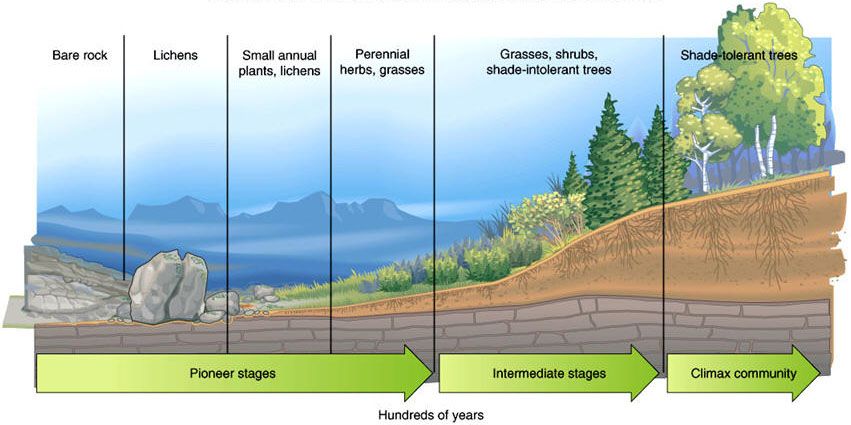
What is the order of succession shown in this figure?
a)
A, B, C, D
b)
B, A, D, C
c)
C, D, A, B
d)
D, A, B, C
74.
The picture shows what type of succession?
a)
primary
b)
secondary
c)
tertiary
d)
quadanary
75.
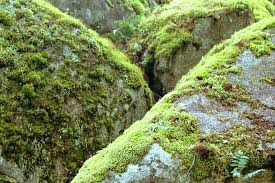
What are examples of pioneer species in a primary succession?
a)
Bushes and Shrubs
b)
Oak trees
c)
Mossess and Lichens 
d)
A rose Bush
76.
What is a substance called if it speeds up a chemical reaction?
a)
reusable
b)
catalyst
c)
specific
d)
fragile
77.
What 3 letters do enzymes typically end in?
a)
-ose
b)
-ase
c)
-ese
d)
-tic
78.
Which chemical is classified as an enzyme?
a)
Galactose
b)
Lipid
c)
Protease
d)
Manganese dioxide
79.
Letter D...
a)
active site
b)
enzyme
c)
substrate
d)
products
80.
What happens to an enzyme if the temperature gets too hot?
a)
Denatures 
b)
Deforms
c)
Dies
d)
Disfigures