
Font size
 Worksheets
Unit 3: Biogeochemical Cycles Test
Total questions: 82
Worksheet time: 59mins
Decomposition is found during which of the following cycles?
Choose all the apply.
Phosphorus
Cycle
Carbon
Cycle
Nitrogen
Cycle
Water Cycle
Nitrogen is found in which of the following:
Fats
(lipids)
Nucleic Acids
(DNA + RNA)
Proteins
Carbohydrates
(Sugar + Starch)
Which of the following is evaporation of water from plants?
Precipitation
Nitrification
Transpiration
upllift
The Phosphorus cycle is important because phosphorus is contained in
(choose all that apply)
sugars
DNA
proteins
starches
RNA
Carbon Dioxide (CO2) is released in which of the following processes?
photosynthesis
decomposition
combustion
cellular respiration
Animals get the carbon they need by
Nitrogen fixation
photosynthesis
cellular respiration
ingestion of plants and animals
In the carbon cycle, the only process that removes CO2 from the atmosphere is
combustion
cellular respiration
decomposition
photosynthesis
The main way nitrogen is removed from the atmosphere and changed into a form plants can use is
Nitrogen Fixation
Nitrification
Ammonification
Denitrification
Each process in the nitrogen cycle is carried out by
bacteria
mice
cows
plants
Decomposers include which of the following?
plants
fungi
bacteria
algae
Ammonification is the process by which decomposers convert wastes and dead organisms into ____.
ammonium
NH4+
Nitrate
NO3-
Nitrite
NO2-
nitrogen gas
N2
Denitrification is the process by which bacteria
Make ammonium
NH4+
Create Nitrate
NO3-
Create Nitrite
NO2-
Return nitrogen gas to the air
N2
Nitrification is the process by which bacteria
Make ammonium
NH4+
Create Nitrate
NO3-
Create Nitrite
NO2-
Return nitrogen gas to the air
N2
Biogeochemical Cycles are important because
matter in an ecosystem is finite and must be recycled
living things need Nitrogen, Carbon, and Phosphorus to make the building blocks of cells
they aren't important and it is a waste of time learning about them
If matter didn't cycle, organisms would eventually run out of materials to build new cells
Plants can take in Nitrogen directly from the air.
TRUE
FALSE
Legumes are plants like beans, clover, and alfalfa that have bacteria living in nodules on their roots. These bacteria fix nitrogen into a form the plant can use and in return the bacteria get nutrients from the plant as well as a place to live.
This relationship can be best described as ____.
Competition
parasitism
mutualism
commensalism
Which of the following are true of biogeochemical cycles?
They ensure that nutrients are used only once by organisms.
The create new materials to replace lost ones.
They increase the total amount of matter over time.
They can be affected by human activity.
Which of the following is an example of how biogeochemical cycles are important in sustaining life?
The atoms of water molecules are destroyed during a drought.
Oxygen atoms are converted into carbon during cellular respiration.
Nitrogen in wastes are converted into useable nutrients for other organisms.
New carbon atoms are created during the carbon cycle.
Eutrophication is caused by
excess nutrients building up in the water.
industrial point-source pollution.
unlined landfills and septic tanks.
wastewater from homes mixing with drinking water.
How does eutrophication cause the death of aquatic organisms
the build up of carbon dioxide in the water
the lack of nitrogen in the water
the lack of carbon dioxide in the water
the lack of oxygen in the water
The two critical nutrients in eutrophication are... (select two)
nitrates
phosphates
carbon dioxide
dissolved oxygen
In eutrophication, dissolved oxygen levels decrease because
bacteria use it as they decompose organic material
algae uses it during photosynthesis
it reacts with hydrogen to form H2O (water)
fish use it up as they consume algae
Which would most likely happen if too many nutrients entered an estuary?
Nutrients would be used up by the fish and plants, keeping the estuary in balance.
Algal blooms would lower dissolved oxygen levels, causing fish to suffocate.
Algal blooms would decrease, leaving few food resources for fish.
Nutrients would sink to the bottom, increasing soil deposition.
Which would most likely happen if too many nutrients entered an estuary?
Nutrients would be used up by the fish and plants, keeping the estuary in balance.
Algal blooms would lower dissolved oxygen levels, causing fish to suffocate.
Algal blooms would decrease, leaving few food resources for fish.
Nutrients would sink to the bottom, increasing soil deposition.
What can be a source of nitrates for eutrophication in rivers?
fertilisers
plastic bottles
paper
sewage
In eutrophication, what directly causes the death of fish?
The plants use up oxygen in respiration
The fish are poisoned by high CO2 levels
Bacteria use up oxygen in respiration
The fish use up oxygen in respiration
In eutrophication, what does 'algal bloom' refer to?
The rapid increase in the number of bacteria
The rapid increase in the number of plants
The rapid decrease in the number of fish
The rapid increase in the amount of nitrates in the river
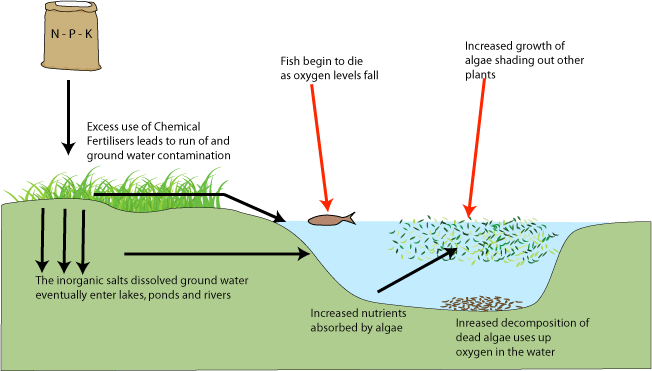
An increase in the amount of nutrients in a lake is known as
calcification
cellular respiration
eutrophication
photosynthesis
Which gas do plants release, that humans depend on for survival?
Water
Carbon Dioxide
Oxygen
Sugar

Evaporation

Condensation

Precipitation

Transpiration
How does the human body return carbon to the atmosphere in the carbon cycle?
Waste products
Photosynthesis
Cellular respiration
Formation of glucose
Which of the following is an example of human impact on the carbon cycle?
The increased production of methane gases from cattle farms
The burning of fossil fuels
The cutting down of trees for lumber
Driving automobiles
All of the above
What is the largest reservoir for nitrogen?
the ocean
rocks and minerals
the atmosphere
bacteria
Why do living things need nitrogen?
To get energy
To make amino acids
To make proteins
To make proteins AND amino acids
Excess carbon in the atmosphere can make the ocean more _______________.
Acidic
Basic
Neutral
photosynthesis

Carbon is passed through the food chain as ___________ and other organic molecules.
sugars
starches
proteins
nucleic acids

What is the carrying capacity of the graph?
1000
8000
800
600

What happens if a population grows past its carrying capacity?
The population keeps growing
The population starts to die off
The entire species will go extinct
The carrying capacity just increases

The largest number of individuals that an environment can support long term is...
carrying capacity
emigration
immigration
population density
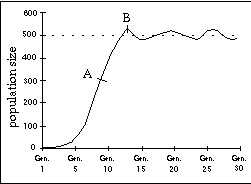
What is the carrying capacity of the graph?
around 500
more than 800
less than 300
around 700
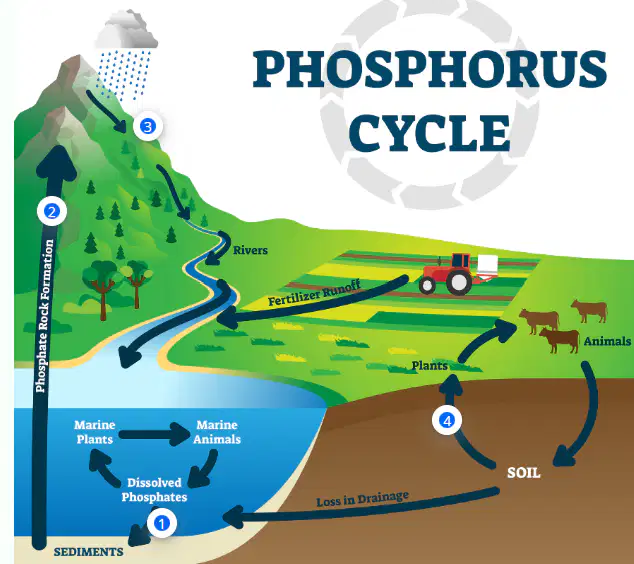
Number one in the phosphorus cycle is referencing?
assimilation
uplifting
weathering
sedimentation
Phosphorus is stored long-term in rocks - primarily sedimentary - so one of the primary means of accessing this phosphorus is by bringing the rock to the surface via __________
nitrification
denitrification
uplifting
assimilation
Number two in the phosphorus cycle is referencing?
assimilation
uplifting
weathering
sedimentation

The process of plants losing water through their leaves is called ____.
condensation
evaporation
transpiration
exhaling
Process by which animals obtain and digest nutrients by consuming plants or other animals.
Assimilation
Excretion
Decomposition
Respiration
In the carbon, nitrogen, & phosphorus cycles, __________________ is a crucial step in transferring essential nutrients from the inorganic reservoirs (such as the soil, atmosphere etc.) to the organic components of living organisms, forming the basis of the food web and supporting life processes.
decomposition
hydration
uplifting
assimilation
Most of the earth's surface is covered with
land.
polar ice.
salt water.
fresh water.
Groundwater is an important source of drinking water especially in Florida. The water is found in an underground reservoir called a /an
aquifer.
hydrofer.
tide pool.
riparian zone.
What percent of the earth is covered by water?
20%
50%
70%
85%
Where is most of the Earth’s freshwater located?
in lakes
in rivers
in oceans
in glaciers
About 3% of the water on Earth is freshwater. Only about 40% of that freshwater is available for human use. Why is so much freshwater unavailable for human use?
It is frozen.
It is polluted.
It is salt water.
It is in aquifers.
Three percent of the water on Earth is freshwater. Less than 0.5% of all the freshwater on Earth is found
underground.
in aquifers.
in rivers and lakes.
frozen, in ice caps and glaciers.

This is a picture of a large sheet of ice that moves very slowly across the land. This sheet of ice covers the land and is only found where temperatures are extremely cold. What is this large sheet of ice called?
glacier
lake
pond
sea
What is groundwater?
water that fills space between rocks of Earth
water found within a lake or pond
water that is evaporated from the surface of Earth
water that is found in the ocean

Rivers are
Freshwater
Saltwater
Salinity is the amount of salt in a body of water.
True
False

The graph above shows the chemicals and/or pollutants that are polluting our groundwater. Use this graph above to answer the following question. As the United States' population continues to grow, what is likely to be the greatest threat to our groundwater?
Fertilizer (nitrates)
Sewage
Chemical spills from petroleum
Salinity (salt)
The following are the PHYSICAL CHARACTERISTICS of wastewater, EXCEPT
Turbidity
Total Dissolved Solids
Color
Alkalinity
In waste-water treatment, generally the Flotation method is used for the separation of solid particles that are:
heavier than water
only green in color
only black in color
lighter than water
A well oxidized sewage contains nitrogen mainly as:
Nitrates
Nitrites
Free ammonia
None of these
second step in sewage treatment
screening
grit settlement
primary sedimentation
use of aerobic bacteria
fourth step in sewage treatment
screening
grit settlement
primary sedimentation
use of aerobic bacteria
What is a sewage treatment plant?
The place where water is cleaned, filtered and tested before re-entering the water cycle.
The place where water is cleaned, filtered and tested before going to our houses.
The network of pipes that carry sewage (dirty water) from our houses.
The place where water is bottled for drinking.
What should you NEVER EVER flush down a toilet or sink?
(Choose all that apply)
Grease/cooking oil
Condoms
Flushable wipes
Tampons/Pads (Feminine hygiene products)
Toothpaste with fluoride

