
 Worksheets
Cell Unit Test Review
Total questions: 66
Worksheet time: 2hrs 47mins

What piece supports the microscope and is used to transport the microscope from one place to another?
Eyepiece
Stage
Base
Light Source

What piece holds and turns the objective lenses into viewing position?
Aperture
Objective
Nosepiece
Stage Clips
Which of the following should you NOT do when handling a microscope?
Only use lens paper for cleaning
Carry with one hand
Always store covered
Be careful of cords
What should you use to clean the microscope?
Only lens paper
Only tissue paper
Only paper towels
Only Windex
True of False: You should always store microscopes covered.
True
False
True of False: If the adjustment knobs are not turning, you should force them to turn.
True
False

What piece supports the body tube and is also used to transport the microscope from one place to another, along with the base?
Arm
Stage
Aperture
Objective

What piece contains a high-power magnifying lens (40x)?
HIgh-power Objective
Eyepiece
Low-power Objective
Stage

What piece contains a low- power magnifying lens (4x)?
HIgh-power Objective
Eyepiece
Low-power Objective
Stage

What piece is the platform that supports the microscope slide?
Base
Diaphragm
Stage Clips
Stage

What piece holds the microscope slide in place ?
Base
Diaphragm
Stage Clips
Stage

What piece is a hole in the stage that allows light to pass through the slide?
Aperture
Diaphragm
Light Source
Stage

What piece controls the amount of light that enters the microscope ?
Aperture
Diaphragm
Light Source
Arm

What piece is a larger knob usually found on either the body tube or the arm and it is used to focus the image under low power?
Aperture
Fine Adjustment Knob
Diaphragm
Course Adjustment Know
What piece is the smaller knob, found near the course adjustment knob, and is used to focus the image under low and high power?
Aperture
Fine Adjustment Knob
Diaphragm
Course Adjustment Know

What piece is found between the base and the stage and shines light through the object being viewed and into the microscope ?
Aperture
Fine Adjustment Knob
Light Source
Stage Clips

Which statement is a part of the cell theory?
all cells come from preexisting cells
bacteria are prokaryotic cells
eukaryotic cells are complex
humans are multicellular

The ___ is the basic unit of structure and function of organisms
atom
cell
matter
all other answers are correct

Who looked at cork and named the cell?
Robert Hooke
Van Leeuwenhoek
Robert Brown
Francesco Redi

This scientist stated: "All animals are made of cells".
Matthias Schleiden
Theodor Schwann
Robert Hooke
Rudolf Virchow

The scientist who stated: All plants are made of cells.
Matthias Schleiden
Rudolf Virchow
Robert Hooke
Aristotle


What tool do you use to view the cells?
metric ruler
centrifuge
microscope
pipette


What scientist proposed that all cells come from preexisting cells
Theodor Schwann
Robert Hooke
Rudolf Virchow
Matthias Schleiden

What type of cell has no nucleus?
prokaryotic
eukaryotic
plant
animal

what type of cell has a nucleus and complex organelles
prokaryotic
eukaryotic
bacteria
I am fluid filled within the cell
Mitochondrion
Vacuole
cytoplasm
Cell membrane






Structures that transport and ship proteins like UPS,
Ribosomes
Lysosomes
Organelles
Golgi Bodies

How does a cell membrane keep harmful stuff out of the cell?
Regulates what enters and leaves the cell
Flexibility
Protective barrier
Structure and support

In what organelle is the genetic material found inside?
Endoplasmic Reticulum
Golgi Complex
Nucleolus
Nucleus

What organelle is called the "powerhouse" of a cell?
Endoplasmic Reticulum
Nucleus
Mitochondria
Nucleolus
What is the function of the mitochondria?
Structure that manufactures ribosomes
Structures that converts nutrients to energy
Stack of membranes that packages chemicals
Structure that contains DNA and directs the cell

Where does photosynthesis occur?
mitochondria
stomata
xylem
chloroplast
Cell membranes are found in
Only animal cells
Only Prokaryotic cells
Only Eukaryotic cells
All Eukaryotic and Prokaryotic cells

I make proteins for the cell. What am I?
ribosome
mitochondria
chloroplast
lysosome



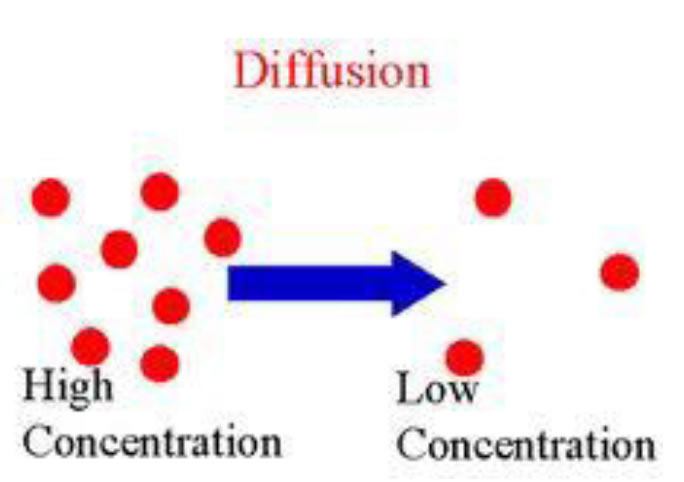
The movement of particles from an area of high to low concentration is known as--
Passive Transport
Active Transport
What is it called when large molecules move across the cell membrane from an area of high concentration to an area of low concentration through a protein channel?
Diffusion
Osmosis
Active Transport
Facilitated Diffusion
Cell membrane transport that occurs without energy is called--
active transport
endocytosis
passive transport
exocytosis

