wayground logo

Free Printable Worksheets

Font size

S
M
L
XL
Worksheets

States of Matter Review (old)

Total questions: 57

Worksheet time: 57mins
Name
Class
Date
1.
What is happening when my ice cream changes from a solid to a liquid?
a)
freezing
b)
melting
c)
burning
d)
evaporation
2.
What is happening when my water bottle in the freezer goes from a liquid state to a solid state?
a)
melting
b)
evaporating
c)
freezing
d)
cutting
3.
What happens when my glass of water is sitting in the sun and disappears into a gas?
a)
evaporation
b)
burning
c)
melting
d)
freezing
4.
My glass of ice water is sitting in the sun and has droplets of water on the outside of the glass. What is happening?
a)
condensation
b)
evaporation
c)
melting
d)
freezing
5.
Which form of matter does not take the shape of its container?
a)
liquid
b)
gas
c)
solid
d)
air
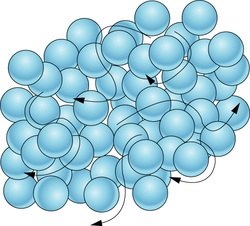
6.

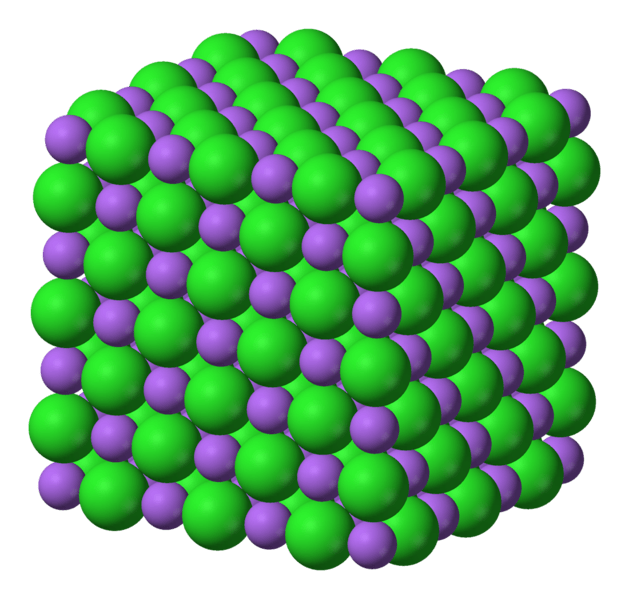
Which state of matter does this picture show?

a)

Solid

b)

Liquid

c)

Gas

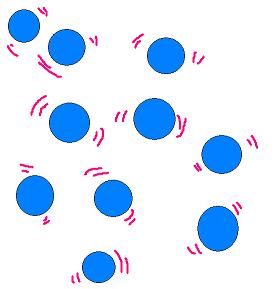
7.

What state of matter does this picture show?

a)

Solid

b)

Liquid

c)

Gas

8.

Which state of matter does this picture show?

a)

Solid

b)

Liquid

c)

Gas

9.
A gas that has a pressure of 2 atm and a volume of 10 L.  What would be the new volume if the pressure was changed to 1 atm?
a)
P1/T1 = P2/T2
b)
P1V1 = P2V2
c)
V1/n1 = V2/n2
d)
PV = nRT
10.
A sample of a gas has a volume of 852 mL at 298 K. What temperature is necessary for the gas to have a volume of 945 mL?
a)
Pt = P1 + P2 + P3 + ...
b)
P1V1 = P2V2
c)
V1/T1 = V2/T2
d)
P1V1/T1 = P2V2/T2
11.
If a nitrogen gas occupies a volume of 500 ml at a pressure of 0.971atm. What volume will the gas occupy at a pressure of 1.50 atm?  
a)
P1V1 = P2V2
b)
PV = nRT
c)
P1/T1 = P2/T2
d)
V1/n1 = V2/n2
12.
Determine the number of moles in a container of gas at STP with a volume of 99.2 L. 
a)
V1/n1 = V2/n2
b)
PV = nRT
c)
P1/T1 = P2/T2
d)
V1/T1 = V2/T2
13.
A container is filled with H2, and H2O. What is the partial pressure of H2 when the pressure of water is 17 kPa. The total pressure of the gases is 750 kPa.
a)
P1V1 = P2V2
b)
Pt = P1 + P2 + P3 +...
c)
P1/T1 = P2/T2
d)
V1/n1 = V2/ n2
14.
A sample of gas with a volume of 30.0 mL at 25.0oC is heated to 50.0oC.  What is the new volume of the gas?
a)
P1V1 = P2V2
b)
P1/T1 + P2/T2
c)
PV = nRT
d)
V1/T1 = V2/T2
15.
If the pressure exerted by a gas at 298 K in a volume of 0.044 L is 3.81 atm, how many moles of gas are present?
a)
P1/T1 = P2/T2
b)
PV = nRT
c)
V1/n1 = V2/n2
d)
P1V1 = P2V2
16.
A gas fills a balloon at a temperature of 27 oC and 1 atm of pressure. What will the pressure of the balloon be if the gas is heated to 127 oC?
a)
P1V1 = P2V2
b)
PV = nRT
c)
P1/T1 = P2/T2
d)
V1/T1 = V2/T2
17.
A 220.0 mL sample of helium gas is in a cylinder at 105 kPa and 275 K. The piston is pushed in until the sample has a new temperature of 310 K and new pressure of 150 kPa. What is the new volume of the gas? 
a)
P1V1/T1 = P2V2/T2
b)
PV = nRT
c)
P1V1 = P2V2
d)
Pt = P1 + P2 + P3 + ...
18.
A gas is at a pressure of 12 atm, a volume of 23 L, and a temperature of 200K. If the pressure is raised to 14 atm,  and the temperature is increased to 300K. What is the new volume of the gas?
a)
P1V1/T1 + P2V2/T2
b)
PV = nRT
c)
P1V1 = P2V2
d)
P1/T1 = P2/T2
19.
The gas in the container is at a pressure of 3.00 atm at 298 K.  What would be the pressure in the container at 325 K?
a)
P1/T1 = P2/T2
b)
P1V1 = P2V2
c)
V1/T1 = V2/T2
d)
PV = nRT
20.
A container has 0.504 moles of a gas at a volume of 2680 mL.  When the number of moles changes to 0.423 moles, what is the new volume?
a)
PV = nRT
b)
V1/n1 = V2/n2
c)
P1V1/T1 = P2V2/T2
d)
P1V1 = P2V2
21.
If the total pressure is 0.99 atm, and the partial pressure of carbon dioxide and hydrogen sulfide is 0.05 atm and 0.02 atm respectively.  What will be the partial pressure of the remaining air?
a)
P1V1 = P2V2
b)
Pt = P1 + P2 + P3 + ...
c)
PV = nRT
d)
P1/T1 = P2/T2
22.
A 1.25 L volume of gas contains 4.5 moles.  How many moles will be in 0.75 L?
a)
PV = nRT
b)
P1V1 = P2V2
c)
P1V1/T1 = P2V2/T2
d)
V1/n1 = V2/n2
23.
What type of relationship is Charles' Law?
a)
Inverse
b)
Direct
c)
Not enough information
d)
#goals
24.
When Pressure increases then the Volume must...
a)
Increase
b)
decrease
25.
When Volume increases then Pressure must...
a)
Increase
b)
Decrease
26.
What type of relationship to pressure and volume have?
a)
direct
b)
inverse
c)
no relationship
d)
I don't know
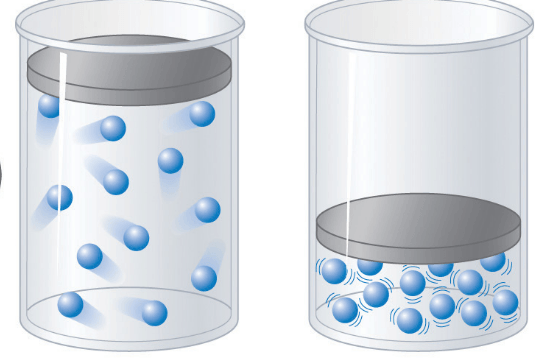
27.
Which container will have a lower pressure?
a)
left
b)
right
c)
they both have the same pressure
d)
I don't know
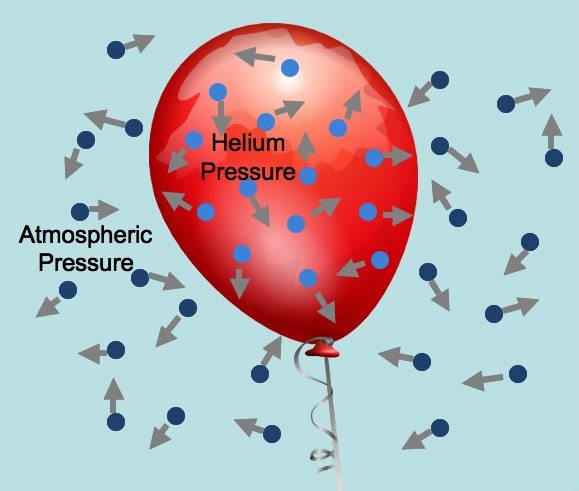
28.
What causes pressure?
a)
The walls of the container
b)
The vacuum in the container
c)
The collisions of the particles
d)
Atmospheric pressure acting on the outside walls
29.
When a basketball is left outside in the cold it goes flat because the volume of air inside the ball has been reduced. What  gas law does this represent?
a)
Boyle's Law
b)
Charles's Law
30.
If a balloon is cooled what will happen to the volume?
a)
Volume will increase
b)
Volume will decrease
c)
Volume will not change
31.
In order to convert to Kelvin, you add ______ to the Celsius measurement.
a)
372
b)
273
c)
237
d)
732
32.
In the ideal gas law, which variable represents the gas constant?
a)
n
b)
R
c)
T
d)
V
33.

Which gas will diffuse at the slowest speed?

a)

oxygen (32 g/mol)

b)

carbon dioxide (44 g/mol)

c)

bromine (80 g/mol)

d)

hydrogen (2 g/mol)

34.
Diffusion is the movement of molecules from an area of _____ concentration to an ______ concentration
a)
High, low
b)
Low, high
c)
Low, low,
d)
High, high
35.
The picture  is an example of _________________.
a)
isotonic
b)
diffusion
c)
osmosis
d)
active transport
36.

The escape of molecules through a small hole is called

a)

Effusion

b)

Diffusion

37.

Surface tension is the property of water in which...

a)

water molecules at the surface tend to stick together.

b)

water spills easily.

c)

water tends to be see-through.

38.

Describe COHESION.

a)

Water molecules attracted to other substances.

b)

Water molecules climbing upwards against the force of gravity.

c)

Water molecules dissolving many substances because of its polarity.

d)

Water molecules attracted to other water molecules.
39.

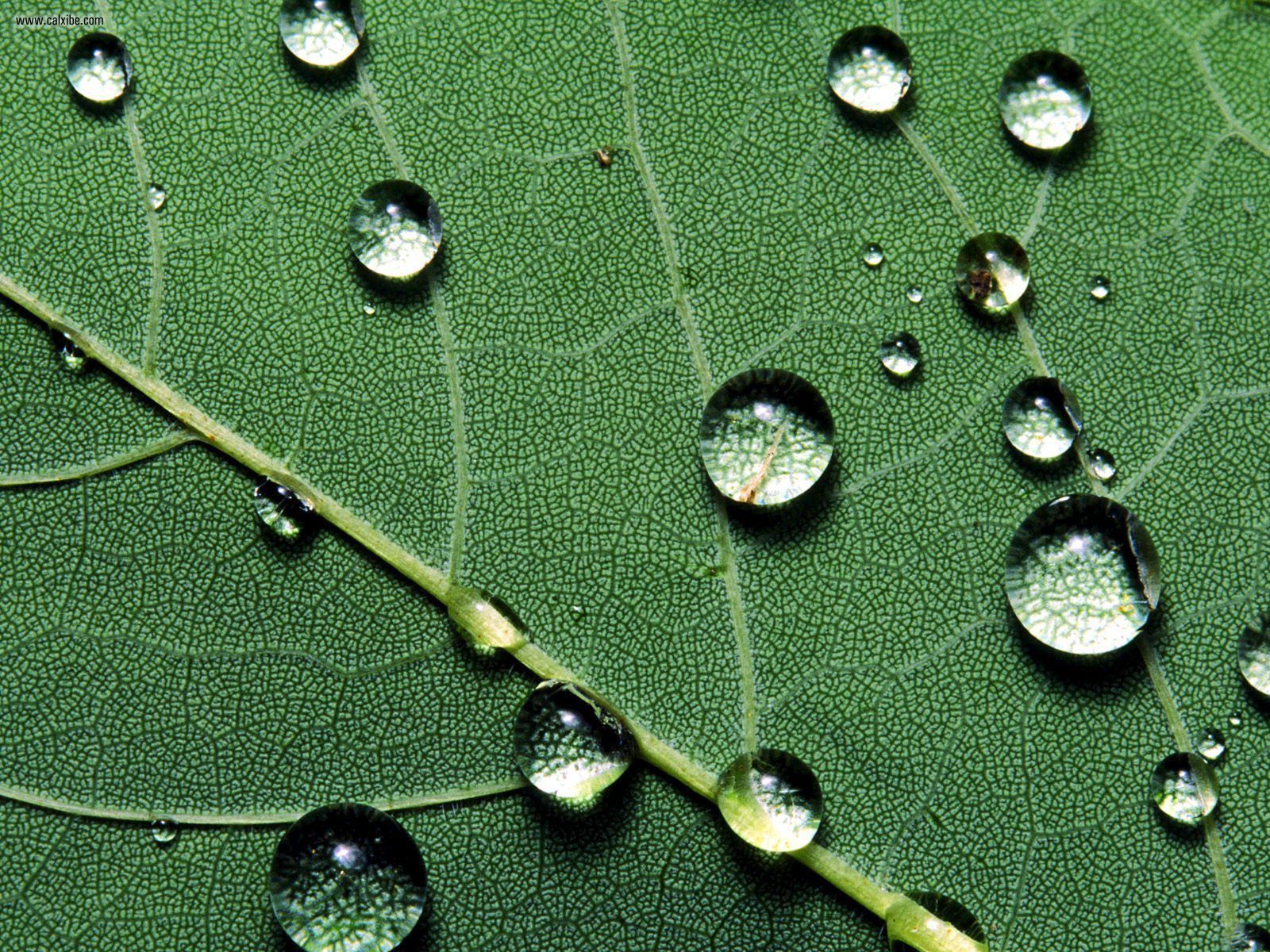
Refer to the picture of water sticking to a leaf; this is occurring because of:

a)

Adhesion

b)

Cohesion

40.
Why does water move from the roots to the leaves of plants through the plants' tiny tubes?
a)
specific heat 
b)

capillary action

c)

atoms

d)
density
41.

High viscosity can be described as...

a)

a liquid that flows quickly

b)

a liquid that flows slowly

42.

What is Viscosity?

a)

A fluids colour.

b)

A fluids temperature.

c)

A fluids resistance to flow.

43.

Which substance has the weakest intermolecular forces?

a)

Substance A, boiling point of 75 °C

b)

Substance B, boiling point of 105 °C

c)

Substance C, boiling point of 25 °C

d)

Substance d, boiling point of 45 °C

44.
As pressure decreases, boiling point___
a)
decreases
b)
increases
c)
decreases then increases
d)
increases then decreases
45.
Liquids with weak intermolecular forces
a)
contain a lot of kinetic energy
b)
easily evaporate
c)
cannot diffuse
d)
freeze easily
46.
What state of matter is X?
a)
solid 
b)
liquid
c)
gas
d)
supercritical fluid
47.
What state of matter is Y?
a)
solid 
b)
liquid
c)
gas
d)
supercritical fluid
48.
What state of matter is Z?
a)
solid 
b)
liquid
c)
gas
d)
supercritical fluid
49.
What change occurs from F to E?
a)
sublimation
b)
deposition
c)
melting
d)
condensation
50.
What change occurs from E to C?
a)
sublimation
b)
freezing
c)
melting
d)
boiling
51.
What change occurs from C to D?
a)
condensation
b)
vaporization
c)
melting
d)
sublimation
52.

According the KMT, the particles are in

a)

different states

b)

organized patterns

c)

constant motion

d)

various containers

53.

According to the KMT, increasing the temperature of particles will

a)

give off energy

b)

increase motion

c)

decrease volume

d)

increase pressure

54.
What line segment represents only the solid state?
a)
A-B
b)
B-C
c)
C-D
d)
D-E
55.
True or false: melting and freezing occur at the same temperature!
a)
True
b)
False
c)
I don't know
56.
A substance's heating curve is shown in the graph.  What is its boiling point?
a)
100 C
b)
60 C
c)
80 C
d)
20 C
57.

What happens at absolute zero?

a)

There is no particle motion

b)

Everything turns to a solid

c)

Everything turns into a gas

d)

There are no more particles