
 Worksheets
POST-TEST PS 1-2: Matter and its Interactions
Total questions: 60
Worksheet time: 3610secs
Reactivity (bubbling, fizzing) is a --- property.
Chemical
Physical

______________________ can only be recognized when substances react or do not react chemically with one another.
Physical properties
Chemical properties
Flammable properties
Colorful properties

A characteristic that can be determined without changing the chemical identity of a substance is a ________ property.
Chemical
Physical
Intensive
Material
What happens to the fundamental particles during a physical change?
What happens to the fundamental particles during a chemical change?
Serena is mixing a material into a beaker filled with a liquid. She notices that the material seems to disappear into the liquid. What physical property of the material is Serena most likely observing?
solubility
conductivity
magnetism
density
The Statue of Liberty is made of copper that has turned green because it has undergone a change. What can be said about this change?
The change is a physical change because the copper in the statue is still there.
The change is a physical change because a new chemical is formed on the outside of the statue.
The change is a physical change because the color of the statue has changed.
The change is not a physical change because a new chemical is formed on the outside of the statue.
A scientist is examining an unknown solid. Which procedure would most likely help determine a chemical property of the substance?
heating it to find the temperature at which it melts
exposing it to a flame to see if it catches on fire
hitting it with a hammer to determine if it breaks or bends
placing it in water to find out whether or not it dissolves
In a science lab, Cash mixes two clear liquids together in a beaker. Bubbles are produced, and a white solid forms and settles to the bottom. He plans to heat the beaker over low heat and make more observations.
A physical change occurred, so if Cash heats it, the white solid will dissolve to form the original mixture of clear liquids.
A physical change occurred, so even if Cash heats it, the white solid will remain.
A chemical change occurred, so if Cash heats it, the white solid will dissolve to form the original mixture of clear liquids.
A chemical change occurred, so even if Cash heats it, the white solid will remain.
A student mixes yellow powder with water. Which observation would prove a CHEMICAL change occurred?
The powder DISSOLVED in the water
The water turned the COLOR yellow
The bag's TEMPERATURE changed
The STATE OF MATTER changed
Which of the following is NOT an example of a physical change?
Crumpling paper
Sharpening a pencil
Clothes shrinking in the dryer
Milk turning sour
What type of property is heat conductivity?
physical property
chemical property
What type of change is tearing paper?
physical change
chemical change
Which of the following is a correct description of a chemical change?
The change only affects the appearance of a substance.
The change results in the formation of new substances.
The substance remains the same.
Only the color of the substance changes.
Which is NOT a sign of a chemical change?
Formation of bubbles
UNEXPECTED change in color
Melting
Change in odor
What is the law of conservation of mass?
Mass is always lost in a chemical reaction.
Mass remains the same before and after a reaction.
Mass is gained after a chemical reaction.
Mass only changes if heat is added.
In a chemical reaction, the substances that are produced are called:
Reactants
Elements
Products
Compounds
Which of the following describes what happens to atoms during a chemical reaction?
Atoms are created.
Atoms are destroyed.
Atoms are rearranged.
Atoms are unchanged.
The symbols on the left side of a chemical equation represent:
Products
Reactants
Coefficients
Formulas
What is a balanced chemical equation?
When there is the same number of atoms of each element on both sides of the equation
When only reactants are on the left side
When the masses of reactants are higher than products
When there is one product and one reactant
In a chemical reaction, what is represented by the arrow symbol?
It shows that products are to the left of the arrow.
It means 'yields' or 'produces.'
It separates elements from compounds.
It shows that mass will increase.
Which statement is true about atoms in a chemical reaction?
Some atoms are destroyed during the reaction.
Atoms are rearranged but their number stays the same.
Atoms only change in number when a reaction is balanced.
Atoms disappear when new substances are formed.
When water is heated and turns into steam, this is an example of:
A chemical change
A physical change
Mass conservation
A new substance forming
How is mass affected when bonds break and reform in a chemical reaction?
Mass is created
Mass is destroyed
Mass is conserved
Mass only changes if a gas is produced
Which best describes the concept of a 'reactant'?
A substance that is produced by a chemical reaction
A substance that undergoes a chemical reaction
A molecule that does not change during a reaction
A compound that exists only in physical changes
Which of the following would NOT necessarily be considered evidence of a chemical change?
one or more substances change state (liquid to gas, etc)
a mixture bubbles and foams without a heat source
a mixture forms a precipitate
a mixture becomes hot without a heat source
Which of the following is NOT a chemical property?
state of matter
photosensitivity
combustability
flammability
_______ is a characteristic of a material that can be observed without actually changing the identity of the substance.
a chemical property
a physical property
Activation Energy
decomposition
How many reactants are shown in the following chemical equation?
2H3PO4 + 3CaCO3 --> Ca3(PO4)2 + 3H2O + 3CO2
3
7
2
5
A solid compound that forms and settles out of a solution during a double displacement reaction is called _______.
an aqueduct
a catalyst
a precipitate
a reactant
Which of the following is an example of an exothermic reaction?
all of the examples given are correct
fireworks
campfires
glow sticks
Substances that are used to help speed up a reaction (without actually becoming a part of it) are called _______.
limiting reactants
inhibitors
precipitates
catalysts

Does this follow the law of conservation of mass:
Yes No
Yes
No

Does this follow the law of conservation of mass:
Yes No
Yes
No
Which of the following physical properties of matter describes an substance's ability to dissolve?
Solubility
Boiling Point
Viscosity
Surface Tension
Blue color: Chemical or Physical Property
Reacts with acid: Chemical or Physical Property
Melting point: Chemical or Physical Property
Reacts with water: Chemical or Physical Property
Boiling point: Chemical or Physical Property
A property that is different depending on how much of that material is present.
Extensive property
Intensive property
Chemical property
Physical property
A property that is specific to the material, no matter how much or little of that material is tested and can be used to identify the material.
Extensive property
Intensive property
Chemical property
Physical property
A property that, when observing the property, changes the chemical formula of the material.
Extensive property
Intensive property
Chemical property
Physical property

Before mixing sugar into hot tea, a student recorded the observations
shown in the table. Which physical property of the sugar will stay the same after the
sugar is mixed with the hot tea?
Color
Texture
Mass
Shape
In an endothermic reaction, heat is ...
taken in
given out
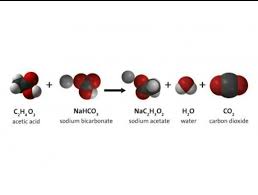
Sodium bicarbonate is a __________________.
Reactant
Product


TRUE or FALSE:
A characteristic property of matter remains the same regardless of the sample size, making it an intensive property
TRUE
FALSE

