
 Worksheets
Earth-Moon-Sun System
Total questions: 61
Worksheet time: 1hrs 9mins
Name
Class
Date
1.
The Earth's _?_ is an imaginary line that goes from the North Pole to the South Pole.
a)
equator
b)
axis
c)
prime meridian
d)
equinox
2.
The spinning of an object on its axis is called _?_.
a)
orbit
b)
rotation
c)
revolution
d)
tide
3.
What are the reasons for the seasons?
a)
Earth's tilt and rotation.
b)
Earth's rotation and revolution.
c)
Earth's tilt and revolution.
d)
Earth's tilt and resolution
4.

When the Northern Hemisphere of Earth is leaning away from the Sun, What season is the Southern Hemisphere experiencing?
a)
Summer
b)
Winter
c)
Spring
d)
Fall
5.
When the Northern Hemisphere is pointing towards the sun, what season is the Southern Hemisphere?
a)
Winter
b)
Spring
c)
Fall
d)
Summer
6.
How long does it take for the Earth to rotate once?
a)
24 hours
b)
365 days
c)
27.3 days
d)
27.3 hours
7.
It takes the Earth _______ days to travel all the way around the Sun.
a)
28
b)
100
c)
24
d)
365
8.
What is at the center of the Solar System?
a)
Earth
b)
Moon
c)
Sun
d)
Jupiter
9.
When the Earth travels all the way around the Sun, it is called a . . .
a)
Revolution
b)
Rotation
c)
Leap Year
d)
Spin
10.
How many seasons are there?
a)
1
b)
2
c)
3
d)
4
11.
The rotation of the Earth causes . . .
a)
day & night
b)
summer & winter
c)
fall & spring
d)
Leap Year
12.
It takes just about a month for the moon to -
a)
completely revolve around the Earth
b)
travel to Earth
c)
leave its orbit
d)
revolve around the Sun
13.
When does the Southern Hemisphere experience the coldest weather?
a)
When the Earth's orbit is the fastest
b)
When the South Pole is tilted toward the Sun
c)
When the South Pole is tilted away from the Sun
d)
When the northern and southern hemispheres get equal amount of sunlight
14.

Which season is taking place in the Northern Hemisphere in Position 3?
a)
Winter
b)
Spring
c)
Summer
d)
Fall
15.
The Earth's tilt is _?_degrees.
a)
0
b)
90
c)
23.5
d)
41
16.

If the Earth rotated slower, how would that affect the length of the day?
a)
longer day
b)
shorter day
c)
same time, 24 hours
17.
What are the reasons for the seasons?
a)
Earth's tilt and rotation.
b)
Earth's rotation and revolution.
c)
Earth's tilt and revolution.
d)
Earth's tilt and resolution
18.
What would happen if the Earth's axis was tilted at a greater angle than it is now?
a)
Days would be more than 24 hours.
b)
Days would be less than 24 hours.
c)
Hotter summers, colder winters
d)
More tilt would not make a difference.
19.

Which diagram(s) BEST represent(s) the position of the Moon during a New moon?
a)
A
b)
B
c)
C
d)
A and C
20.
What causes the phases of the Moon to change over the course of a month?
a)
The moon's orbit (revolution)
b)
The moon's spin (rotation)
c)
The earth's orbit (revolution)
d)
The earth's spin (rotation)
21.

Name this phase of the moon.
a)
waning crescent
b)
waxing crescent
c)
waning gibbous
d)
waxing gibbous
22.
If Earth revolved more slowly, what would happen?
a)
Years would be longer.
b)
Years would be shorter.
c)
Summer would be longer.
d)
Winter would be shorter.
23.
What Moon phases do spring tides occur?
a)
new and full
b)
1st & 3rd quarters
24.
What Moon phases do neap tides occur?
a)
new and full
b)
1st & 3rd quarters
25.
Which of the following causes the ocean’s tides?
a)
The Earth's spinning makes the oceans slosh like a bathtub.
b)
The Earth's gravity pulling on the moon.
c)
The Sun and Moons gravity pulling on the Earth.
d)
The Sun's gravity pulling on the moon.
26.
Which of the following causes the ocean’s tides?
a)
The Earth's spinning makes the oceans slosh like a bathtub.
b)
The Earth's gravity pulling on the moon.
c)
The Sun and Moons gravity pulling on the Earth.
d)
The Sun's gravity pulling on the moon.
27.
The Earth has a North and South magnetic pole.
a)
True
b)
False
28.
What causes us to only see the same side of the moon?
a)
The Moon's tilt.
b)
The Moon's gravity.
c)
The Moon's rotation and revolution are at the same pace.
d)
None of the above
29.
Season are caused only by the Earth's tilt.
a)
True
b)
False
30.
Rotaion is the spinning of Earth on its axis.
a)
True
b)
False
31.
Waxing is when the Moon is becoming less lit each day.
a)
True
b)
False
32.
During an equinox, the Sun is directly over the?
a)
Tropic of Capricorn
b)
Tropic of Cancer
c)
Equator
d)
Santa's Workshop
33.
Fall and Spring occur during ___.
a)
solstices
b)
equinoxes
c)
New Moons
d)
Full Moons
34.
Winter and Summer occur during ___.
a)
solstices
b)
equinoxes
c)
Full Moons
d)
New Moons
35.
Which phase of the moon does not reflect any sunlight toward Earth?
a)
New Moon
b)
Full Moon
c)
Waning Gibbous
d)
Waxing Gibbous
36.
Which occurs after the full moon?
a)
waning crescent
b)
waxing crescent
c)
waning gibbous
d)
waxing gibbous
37.
From Earth we only see one side (the same side) of the moon all the time.
a)
True
b)
False
38.
An equinox occurs when the Sun is positioned directly over the equator.
a)
True
b)
False
39.
It takes the Earth _______ days to travel all the way around the Sun.
a)
28
b)
100
c)
24
d)
365
40.
When the Moon is directly between the Sun and the Earth, what phase would the Moon be in?
a)
Full Moon
b)
New Moon
c)
Half Moon
d)
Waxing Crescent
41.

What phase of the moon is this?
a)
Waxing Gibbous
b)
Waning Gibbous
c)
Waxing crescent
d)
Waning crescent
42.

What phase of the moon is shown?
a)
waning gibbous
b)
1st quarter
c)
waxing crescent
d)
Waxing gibbous
43.

Name the phase of the moon that comes BEFORE this moon phase.
a)
waxing gibbous
b)
waning gibbous
c)
waning crescent
d)
waxing crescent
44.

What is the phase of the Moon at position #5?
a)
New Moon
b)
Third Quarter Moon
c)
First Quarter Moon
d)
Full Moon
45.

Name the phase of the moon that comes AFTER this moon phase.
a)
waxing gibbous
b)
full moon
c)
1st quarter
d)
3rd quarter/last quarter
46.
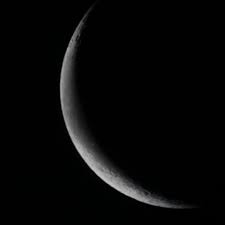
Name the moon phase
a)
waning crescent
b)
waxing crescent
c)
waning gibbous
d)
waxing gibbous
47.
When the Earth is between the Moon and the Sun, it is most likeky a:
a)
Full Moon
b)
Half Moon
c)
3rd Quarter Moon
48.

Name this moon phase.
a)
new moon
b)
1st quarter moon
c)
last quarter moon
d)
waning gibbous
49.

What is this moon phase?
a)
waning crescent
b)
waxing crescent
c)
waning gibbous
d)
waxing gibbous
50.

Name this moon phase.
a)
1st quarter
b)
3rd/last quarter
c)
new moon
d)
waxing crescent
51.

Name this moon phase.
a)
waxing crescent
b)
waxing gibbous
c)
waning gibbous
d)
waning crescent
52.

Name the phase of the moon that comes BEFORE this moon phase.
a)
waxing gibbous
b)
waning gibbous
c)
waning crescent
d)
waxing crescent
53.
As the moon's shape appears to get smaller, we say that the moon is _.
a)
swelling
b)
waxing
c)
waning
d)
disappearing
54.

Does this picture represent a waxing or waning moon?
a)
waxing
b)
waning
55.
The cycle of the moon lasts about a _.
a)
day
b)
year
c)
week
d)
month
56.
The cycle of the moon lasts about a _.
a)
day
b)
year
c)
week
d)
month
57.

Name this phase of the moon.
a)
waning crescent
b)
waxing crescent
c)
waning gibbous
d)
waxing gibbous
58.
Name this moon phase.
a)
new moon
b)
1st quarter moon
c)
last quarter moon
d)
waning gibbous
59.
What is this moon phase?
a)
waning crescent
b)
waxing crescent
c)
waning gibbous
d)
waxing gibbous
60.
Does this picture represent a waxing or waning moon?
a)
waxing
b)
waning
61.
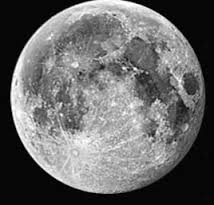
Name the moon phase
a)
First Quarter
b)
Last Quarter
c)
New Moon
d)
Full Moon
100 %

