wayground logo

Free Printable Worksheets

Font size

S
M
L
XL
Worksheets

material gworl

Total questions: 167

Worksheet time: 7hrs 55mins

Name
Class
Date
1.
Functions in energy production, known as the energy factory of the cell
a)
mitochondria
b)
chloroplast
c)
vacuole
d)
cytoplasm
2.
The control center that controls all the functions of the cell
a)
cytoplasm
b)
cell wall
c)
cell membrane
d)
nucleus
3.
Contains chlorophyll and is where photosynthesis takes place. Found in plant cells only.
a)
mitochondria
b)
chloroplast
c)
vacuole
d)
cytoplasm
4.
Semi-permeable layer around the cell that encloses the contents of the cell
a)
nucleus
b)
cell membrane
c)
cell wall
d)
chloroplast
5.
jelly-like substance that is located between the cell membrane and the nucleus
a)
mitochondria
b)
chloroplast
c)
vacuole
d)
cytoplasm
6.
I am found in plant cells. I am rigid, strong & stiff. I give support to the plant cell.  I give the cell it's box shape
a)
cell membrane
b)
cell wall
c)
chlorophyll
d)
mitochondria
7.
I am located in the nucleus – I’m the genetic material of a cell
a)
cytoplasm
b)
membrane
c)
chromosomes/DNA
d)
vacuole
8.
   I provide the cell with protection and controls what comes in and out of the cell.
a)
nucleus
b)
cell wall
c)
cell membrane
d)
mitochondria
9.
I store water in both plant and animal cells. What am I?
a)
cytoplasm
b)
ribosomes
c)
vacuole
d)
lysosomes
10.

A large central vacuole is found in a _____ cell.

a)

animal

b)

plant

11.

What is the function of a chloroplast?

a)

makes proteins for animal cells

b)

allows materials in and out of the cell

c)

provides structure and support

d)

absorbs sunlight for photosynthesis

12.
The major function of ribosomes is to
a)
Make fats
b)
Synthesize protein
c)
Digest protein
d)
Make sugars
13.
Which of the following is an enzyme filled organelle that breaks down waste in the cell?
a)
lysosomes
b)
chloroplast
c)
mitochondria 
d)
Golgi apparatus 
14.
which of the following transports material within the cell?
a)
Golgi apparatus 
b)
Endoplasmic reticulum
c)
cell wall 
d)
ribosomes
15.
Where are proteins made?
a)
Golgi body
b)
Mitoichondrion
c)
Chromosomes
d)
Ribosomes
16.

Carbohydrates...

a)

can keep you awake at night

b)

help you with homework

c)

store energy and are made of one or more sugar molecules

d)

take a long time to eat

17.

When your body tries to keep it's internal conditions within certain limits that is called...

a)

Homeostasis

b)

Sleeping

c)

Hibernating

d)

Running

18.

What is the function of the cell wall?

a)

Allows plants and fungi to grow upward against the force of gravity

b)

Keeps energy

c)

Takes away sunlight

d)

Stores food

19.

What is the nucleus?

a)

The control center of a cell because it contains genetic material called DNA

b)

Small molecules

20.

Which organelles are only found in plant cells?

a)

Cell wall and Chloroplasts

b)

Ribosomes and Golgi Bodies

c)

Endoplasmic Reticulum and Cell Wall

d)

Nucleus and Cell membrane

21.

What is the function of chloroplasts?

a)

Eats large bugs

b)

Captures energy from the sun and uses it to produce food

c)

Stays happy

d)

Uses water to help plants grow

22.

What is the cytoplasm?

a)

A thick fluid made mostly of water

b)

A network of fibers that helps the cell maintain its shape
23.
Which biomolecule is made of nucleotides and contain you DNA?
a)
Carbohydrate
b)
Lipids
c)
Protein
d)
Nucleic Acid
24.
Which biomolecule has sugars and starches?
a)
Lipids
b)
Proteins
c)
Carbohydrates
d)
Nucleic Acid
25.
Which biomolecule functions include enzymes­ which speeds the rate of chemical reactions, structural components in cells, mechanical functions in muscles and cytoskeleton, cell signaling, and immune response; provides structure and helps with chemical reactions 
a)
Protein
b)
Lipids
c)
Carbohydrate
d)
Nucleic Acid
26.
Which biomolecule is important source of energy for humans; glucose for human cells, tissues, and organs; provides fiber, sugar, and starches; provides structural support, cell wall, and cell membrane maker?
a)
Nucleic Acid
b)
Lipid
c)
Carbohydrate
d)
Protein
27.
Which biomolecule includes fats, such as triglycerides, oils, waxes, and steroids (cholesterol); insoluble in water; provides energy storage, insulation, part of cell membrane, and hormones 
a)
Nucleic Acid
b)
Lipids
c)
Carbohydrate
d)
Protein
28.
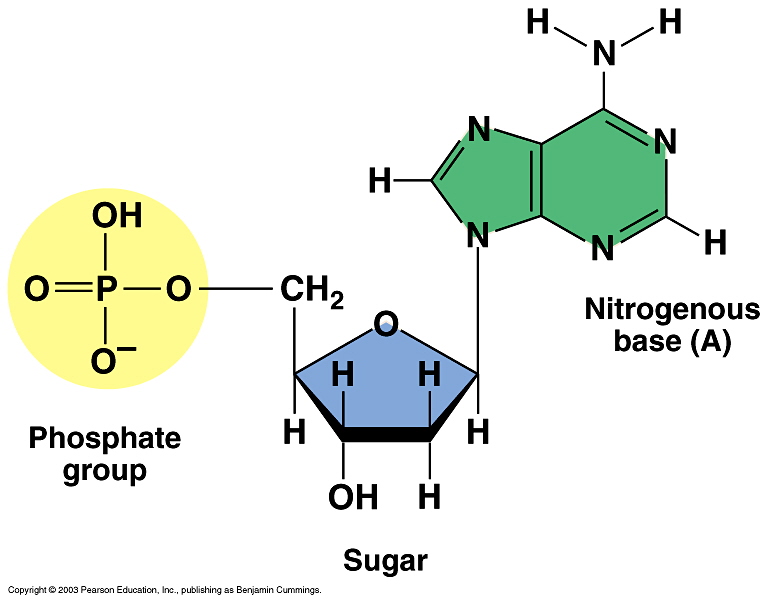
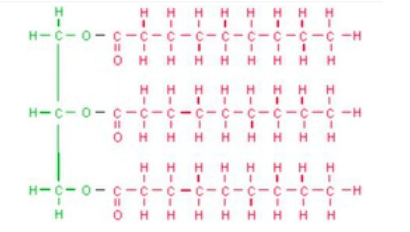
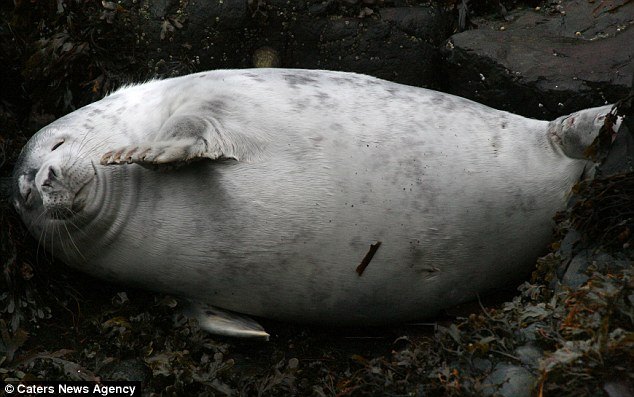
Identify the biomolecule
a)
Carbohydrate
b)
Lipid
c)
Protein
d)
Nucleic Acid
29.
Identify the biomolecule
a)
Lipid
b)
Protein
c)
Carbohydrate
d)
Nucleic Acid
30.
What is the monomer for a protein?
a)
Monosaccharide
b)
Triglyceride
c)
Amino Acid
d)
Nucleotide
31.
This biomolecule would be used for
a)
Building enzymes
b)
Storing energy
c)
Key source of energy
d)
Storing genetic information
32.
Lipids are made up of which of the following?
a)
glycerol and fatty acids tails
b)
glycerol and monolipids
c)
fatty acids and phosolipids
d)
amino acids and nucleotides
33.
What is the monomer of nucleic acids?
a)
Glycerol
b)
Monosaccharides
c)
Amino Acids
d)
Nucleotides
34.
Which biomolecule is this a picture of?
a)
Protein
b)
Nucleic Acid
c)
Lipid
d)
Carbohydrate
35.
The arrangement of which three components is used to distinguish one molecule from another?
a)
carbon, hydrogen, and oxygen
b)
glucose, fructose, and ribose
c)
peptide, fatty acid, and purine
d)
water, carbon dioxide, and notrogen
36.
The waxy, organic substances used by aquatic birds to coat their feathers, when analyzed consists mostly of 
a)
lipids
b)
proteins
c)
carbohydrates
d)
nucleic acids
37.
What do disaccharides, such as sucrose, and polysaccharides, such as starch, have in common?
a)
They are lipids made of fatty acids.
b)
They are proteins made of amino acids.
c)
They are nucleic acids made of nucleotides.
d)
They are carbohydrates made of simple sugars.
38.
Which group of organic compounds contains fatty acids?
a)
Carbohydrates
b)
Lipids
c)
Nucleic Acids
d)
Proteins
39.
Which of the following answers links a biomolecule with one of its proper functions?
a)
Lipids - Store genetic information
b)
Carbohydrates - short term energy storage
c)
Nucleic Acids - Catalyze reactions
d)
Proteins - long term energy storage
40.
Peptide bonds in proteins can be broken down by the enzyme peptidase. Adrian orders a hamburger and French fries for lunch. He adds cheese and mayonnaise to his hamburger and then sits down to eat lunch with his friends. Which structure would most likely result from the action of peptidase in Adrian’s stomach?
a)
Lipids
b)
Glucose
c)
Nucleic Acid
d)
Amino Acid
41.
How many sugar-phosphate strands exist in each RNA molecule?
a)
4
b)
2
c)
1
d)
None
42.
Which organic macromolecules are composed of chains of amino acids that join to form the structural components of organisms.
a)
Carbohydrates
b)
Proteins
c)
Amino Acids
d)
Lipids
43.
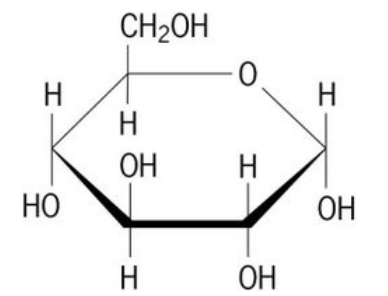
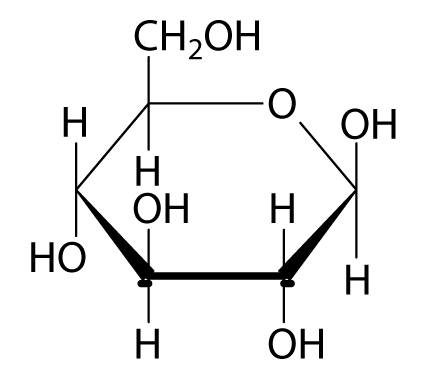
This diagram shows the molecular structure of glucose.

Simple sugars like glucose can be used to make larger organic molecules. Identify a larger molecule made from simple sugars.
a)
Carbohydrates
b)
Lipids
c)
Monosaccharides
d)
Amino Acids
44.
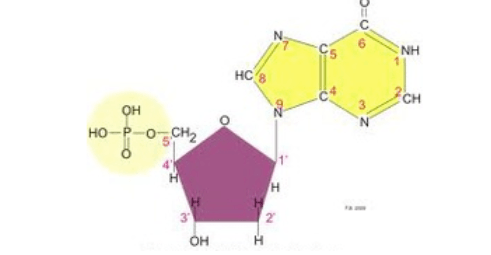
The molecule in the diagram plays what role in the body?
a)
Releasing Energy
b)
Forming part of the sugar-phosphate backbone of DNA
c)
Storing Fat
d)
Controlling blood glucose levels
45.
The monomers used to synthesize proteins are called ____________.
a)
Nucleotides
b)
Fatty Acids
c)
Amino Acids
d)
Sugars
46.
The four most common elements found in biomolecules are:
a)
Carbon, Nitrogen, Phosphorus, Bromine
b)
Sulfur, Nitrogen, Iron, Carbon
c)
Sulfur, Phosphorus, Carbon, Oxygen 
d)
Carbon, Oxygen, Nitrogen, Hydrogen
47.
Which biomolecule is this a picture of?
a)
Protein
b)
Nucleic Acid
c)
Lipid
d)
Carbohydrate
48.
Which biomolecule is this a picture of?
a)
Protein
b)
Nucleic Acid
c)
Lipid
d)
Carbohydrate
49.
Which biomolecule is responsible for insulation and LONG term energy storage?
a)
Proteins
b)
Nucleic Acids
c)
Lipids
d)
Carbohydrates
50.
Which biomolecule includes sugars and starches? (Hint: simple or complex)
a)
Lipids
b)
Proteins
c)
Carbohydrates
d)
Nucleic Acids
51.
Which biomolecule group includes fats, oils, and waxes?
a)
Proteins
b)
Nucleic Acid
c)
Lipids
d)
Carbohydrate
52.
What biomolecule do enzymes belong to? 
a)
Carbohydrate
b)
Lipid
c)
Nucleic Acid
d)
Protein
53.

What is the function of carbohydrates?

a)

provides quick energy

b)

stores energy

c)

helps with growth and repair of tissues

d)

stores genetic information

54.

What is the function of lipids?

a)

provides quick energy

b)

stores energy

c)

helps with growth and repair of tissues

d)

stores genetic information

55.

What is the function of proteins?

a)

provides quick energy

b)

stores energy

c)

helps with growth and repair of tissues

d)

stores genetic information

56.

What is the function of nucleic acid?

a)

provides quick energy

b)

stores energy

c)

helps with growth and repair of tissues

d)

stores genetic information

57.

What is the monomer for carbohydrates?

a)

Monosaccarides

b)

Fatty Acids

c)

Amino Acids

d)

Nucleotides

58.

What is the monomer for Lipids?

a)

Monosaccarides

b)

Fatty Acids

c)

Amino Acids

d)

Nucleotides

59.

What is the monomer for proteins?

a)

Monosaccarides

b)

Fatty Acids

c)

Amino Acids

d)

Nucleotides

60.

What is the monomer for nucleic acid?

a)

Monosaccarides

b)

Fatty Acids

c)

Amino Acids

d)

Nucleotides

61.

Which are examples of a carbohydrate?

a)

glucose, pasta, bread

b)

fats, oils, waxes

c)

meats, enzyme, lactase, eggs

d)

DNA, RNA

62.

Which are examples of lipids?

a)

glucose, pasta, bread

b)

fats, oils, waxes

c)

meats, enzyme, lactase, eggs

d)

DNA, RNA

63.

Which are examples of proteins?

a)

glucose, pasta, bread

b)

fats, oils, waxes

c)

meats, enzyme, lactase, eggs

d)

DNA, RNA

64.

Which are examples of Nucleic Acids?

a)

glucose, pasta, bread

b)

fats, oils, waxes

c)

meats, enzyme, lactase, eggs

d)

DNA, RNA

65.
Which biomolecule is this a picture of?
a)
Protein
b)
Nucleic Acid
c)
Lipid
d)
Carbohydrate
66.
Which biomolecule is this a picture of?
a)
Protein
b)
Nucleic Acid
c)
Lipid
d)
Carbohydrate
67.

Which biomolecule is also known as enzymes?

a)

Carbohydrate

b)

Lipid

c)

Nucleic Acid

d)

Protein

68.

Which biomolecule helps form muscles?

a)

Nucleic Acid

b)

Carbohydrate

c)

Protein

d)

Lipids

69.
Plants and animal cells are examples of ___ cells 
a)
prokaryotic cells 
b)
eukaryotic cells 
70.
Which of the following is found inside a prokaryote?
a)
cytoplasm
b)
DNA
c)
ribosomes
d)
all of these
71.
Where is the DNA found in a prokaryotic cell? 
a)
floating around in the cytoplasm 
b)
in the nucleus 
72.
What type of cell has a nucleus? 
a)
eukaryotic
b)
prokaryotic 
73.
One example of a prokaryote is a...
a)
fungus
b)
bacteria
c)
animal
d)
plant
74.
Both prokaryotes and eukaryotes have a nucleus.
a)
True
b)
False
75.

In what organelle is the genetic material found inside?

a)

cell membrane

b)

chloroplast

c)

nucleus

d)

ribosome

76.

What organelle is called the "powerhouse" of a cell?

a)

mitochondria

b)

nucleus

c)

cell wall

d)

cell membrane

77.

A large central vacuole is found in a _____ cell.

a)

animal

b)

plant

78.

What is the function of a chloroplast?

a)

makes proteins for animal cells

b)

allows materials in and out of the cell

c)

provides structure and support

d)

absorbs sunlight for photosynthesis

79.

What is the structure that contains DNA and directs the cell?

a)

endoplasmic reticulum

b)

central vacuole

c)

cell wall

d)

nucleus

80.
Which is not a part of cell theory?
a)
All organisms are made of cells
b)
All existing cells come from preexisting cells
c)
All matter is composed of living cells
d)
The cell is the most basic unit of life
81.
Microscopic single-cells that do not have a nucleus or other membrane-bound organelles. 
a)
DNA
b)
RNA
c)
Eukaryotes
d)
Prokaryotes
82.

A cell wall...

a)

is very soft and flexible

b)

is very rigid, and supports the plant cell, giving it its shape

c)

is the part that is inside the plant's nucleus
83.

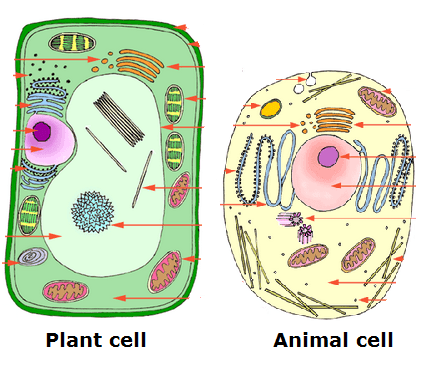
What distinguishes a plant cell from an animal cell? (How do you tell them apart) Hint: There's 3 ways (Check all 3)

a)

Central Vacuole

b)

Mitochondria

c)

Cell Wall

d)

Ribosomes

e)

Chloroplasts

84.

The 3 parts of the Cell Theory are...?

a)

All living things are composed of cells

Cells are the basic units of structure and function in living things

All cells are produced from other cells

b)

All living things are composed of cells

Cells are the basic units of dance and vibes in living things

All cells are destroyed from other aliens

c)

All living things are composed of Jell-O

Cells are the basic units of structure and function in living things

All cells are produced from factories in Canada

d)

All living things are composed of cells

Cells do karate and practice eating whole pies in their free time

All cells are produced from other cells

85.

There are how many main Bio-molecules that help make up cell organelles?

a)

2

b)

6

c)

4

d)

5

86.

These foods contain A LOT of which Bio-molecule that our body LOVES to use for Energy?

a)

Protein

b)

Nucleic Acids

c)

Baconidis

d)

Carbohydrates

87.

Our bodies use this Bio-molecule as it's building material. Often found in meats, eggs, and dairy products.

a)

Carbohydrates

b)

Proteins

c)

Lipids

d)

Baconidis

88.

I am the Bio-molecule responsible for mapping out everything. I am like a blue print to a living organism.

a)

Nucleic Acids

b)

Lipids

c)

Proteins

d)

Carbohydrates

89.

I am the Bio-molecule responsible for storing unused energy and can be used by living organisms as long term, slow energy.

a)

Proteins

b)

Lipids

c)

Carbohydrates

d)

Baconidis

90.

Cellular Respiration occurs within me and I am in BOTH plant and animal cells. I am a....

a)

Nucleus

b)

Golgi Body

c)

Cytoskeleton

d)

Mitochondria

91.

The Golgi Apparatus/Body is responsible for doing what within a cell?

a)

gathers simple molecules

b)

gathers simple molecules and combines them to make lysosomes

c)

gathers simple molecules and combines them to make molecules that are more complex

d)

gathers simple molecules and combines them to make molecules that are more fun than others

92.

I like to be thought of as the "storage bubble" for both plant and animal cells. I am a...

a)

Cell Membrane

b)

Cytoskeleton

c)

Vacuole

d)

Endoplasmic Reticulum

93.

I am the "brain" of the cell or the "control center" for everything happening within the cell. I am a...

a)

Golgi Body/Apparatus

b)

Nucleus

c)

Ribosome

d)

Lysosome

94.

Photosynthesis takes place within me. I am a...

a)

Mitochondria

b)

Cell Wall

c)

Chlorine

d)

Chloroplast

95.

I am often referred to as the "packaging system" within a cell. I "package" proteins and ship them to the Golgi Body. I am a...

a)

Cytoplasm

b)

Endoplasmic Reticulum

c)

Baconidis

d)

Golgi Body

96.

I am the "waste removal expert" within a cell, removing unwanted material. Like a garbage man, I am a...

a)

Waste Management

b)

Nucleus

c)

Ribosome

d)

Lysosomes

97.

I decide what goes in and out of the cell. I am fluid like and found in BOTH plant and animal cells. I am a...

a)

Cell Wall

b)

Cell Membrane

c)

Cytoplasm

d)

Golgi Apparatus

98.

I provide plant cells their rigid shape. I am the...

a)

Basketball that Nic Quarne left in Mr. Woller's room last week

b)

Cytoskeleton

c)

Cell Membrane

d)

Cell Wall

99.

I am found in a plant cell and I provide a "central" and LARGE amount of storage. I am a...

a)

Central Vacuole

b)

Cytoplasm

c)

Central Membrane

d)

Mitochondria

100.

I provide structure from within the cell so it doesn't collapse inwards upon itself. I am made of micro-filaments. I am the...

a)

Cytoskeleton

b)

Cytoplasm

c)

Baconidis

d)

Cell Wall

101.

What is a solute?

a)

A substance dissolved in another substance

b)

the substance doing the dissolving

102.

What is a solvent

a)

The one doing the dissolving

b)

The substance dissoved in another substance

103.

How do the particles move in diffusion?

a)

From a region of low concentration to a region of high concentration

b)

From a region of high concentration to a region of low concentration

c)

From a region of low concentration to a region of low concentration

d)

From a region of high concentration to a region of high concentration

104.

How long does diffusion last?

a)

Until the concentration of particles in the system is equal

b)

(Select this answer and I swear i'll make it harder for you in the assessment task)

c)

Until a region in the system has a greater concentration of particles than the other

d)

Until the particles disappear from the system

105.

What happens to the concentration of carbon dioxide in you cells when you exercise

a)

Increase

b)

Decrease

c)

Remain constant

106.

What hapens to the concentration of oxygen in the body cells when you exercise?

a)

Increase

b)

Decrease

c)

Remain constant

107.

Which diagram best shows the end result of diffusion?

a)

F

b)

G

c)

H

d)

J

108.

What does a 'region with high concentration' mean?

a)

An area with a SMALL number of particles

b)

An area with a LARGE number of particles

c)

An area with an UNEVEN number of particles

d)

An area with no particles

109.

Diffusion moves along the __________

a)

concentration gradient

b)

Avogadro's constant

c)

conservation of energy

110.

When does diffusion stop?

a)

After a day and a night

b)

When the particles are evenly spread out

c)

When there are no particles left

d)

When all the particles leave the system
111.
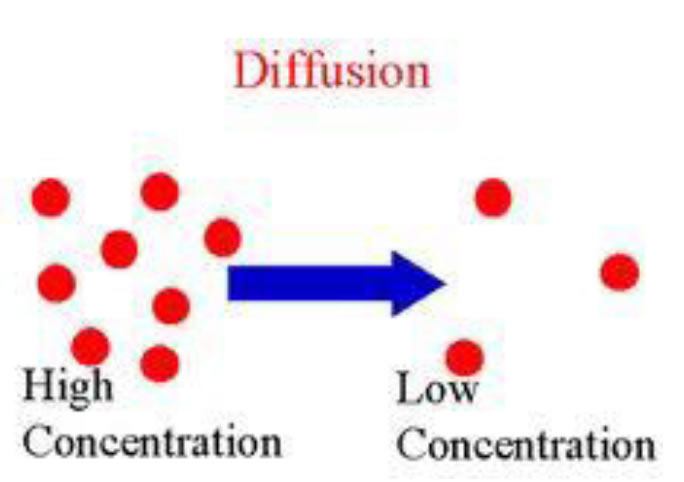
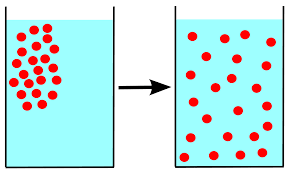
The picture below is an example of _________________.
a)
osmosis
b)
isotonic
c)
diffusion
d)
active transport
112.
Osmosis is the movement of _____ across a membrane.
a)
food
b)
energy
c)
oxygen
d)
water
113.
During osmosis
a)
water moves from high to low concentration
b)
large or oddly shaped molecules move across a cell membrane
c)
water moves when energy is used
d)
proteins are built
114.
Permeable means
a)
things can pass through
b)
the concentration levels are different
c)
it is permanent
d)
things are stuck
115.
What is the definition of  Selective Permeability?
a)
The movement of materials across the cell membrane that requires NO ENERGY from the cell.
b)
The movement of materials through (or across) the cell membrane
c)
The ability of the cell membrane to allow some things to pass through while preventing other things from passing through.
d)
The movement of molecules from an area of high concentration to a area of low concentration 
116.
Passive transport requires no
a)
concentration gradients
b)
osmosis
c)
motion
d)
energy
117.
What is diffusion?
a)
when molecules move 
b)
when molecules move from a high concentration to a low.
c)
no movement 
d)
molecules move everywhere
118.

Diffusion is the net movement of molecule from a region of ...1...to region of ...2....

a)

1: lower concentration, 2: higher concentration

b)

1: higher concentration, 2: lower concentration

c)

1: lower concentration, 2: lower concentration

d)

1: higher concentration, 2: higher concentration

119.

The diagram shows two chambers with different concentration of molecules separated by a selectively permeable membrane. Predict what will happen to the water molecules ?

a)

move from B to A due to diffusion

b)

move from B to A due to osmosis

c)

move from B to A due to active transport

d)

move from A to B due to osmosis

120.

Active transport is movement of particles through the cell membrane from a region of ...1... to a region of ...2... using energy in the form of ...3...

a)

1: lower concentration, 2: higher concentration, 3: NADPH

b)

1: higher concentration, 2: lower concentration, 3: NADPH

c)

1: higher concentration, 2: lower concentration, 3: ATP

d)

1: lower concentration, 2: higher concentration, 3: ATP

121.

Which of the following is a sample of active transport?

a)

movement of oxygen from alveoli into red blood cell

b)

movement of water across cell membrane

c)

plant root absorbing mineral ions from the soil

d)

uptake of water by the root hair of the plant

122.

Which of the following is a sample of osmosis?

a)

plant root absorbing mineral ions from the soil

b)

the scent from a bunch of flowers spreads throughout a room

c)

carbon dioxide move from air into leaves through stomata.

d)

plant root absorbing water from the soil

123.

The diagram shows an experiment using a potato. Which shows the result of the experiment after 24 hours?

a)
b)
c)
d)
124.

Which one is the definition of Diffusion ?

a)

movement of particles through the cell membrane from a region of lower concentration to a region of higher concentration using energy in the form of ATP.

b)

passage of water molecules from a region of their higher concentration to a region of their lower concentration through a partially permeable membrane

c)

net movement of molecule from a region of higher concentration to region of lower concentration. Molecule down a concentration gradient

d)

net movement of molecule from a region of lower concentration to region of higher concentration. Molecule down a concentration gradient

125.

Which one is the definition of Osmosis ?

a)

movement of particles through the cell membrane from a region of lower concentration to a region of higher concentration using energy in the form of ATP.

b)

passage of water molecules from a region of their higher concentration to a region of their lower concentration through a partially permeable membrane

c)

net movement of molecule from a region of higher concentration to region of lower concentration. Molecule down a concentration gradient

d)

net movement of molecule from a region of lower concentration to region of higher concentration. Molecule down a concentration gradient

126.
Which type of transport requires an input of energy?
a)
Passive Transport
b)
Osmosis
c)
Simple Diffusion
d)
Active Transport
127.
What is the difference between active and passive transport?
a)
Active does not need energy and passive uses ATP (energy)
b)
Active uses ATP (energy) and passive does not need energy
c)
Active stores transport proteins and passive releases 
d)
Active uses hormones and passive does not 
128.

Active transport is the movement of large materials across a cell membrane from ______ to ______ concentration

a)

high to low

b)

low to high

c)

high to high

d)

low to low

129.

Active transport across a cell membrane from low to high concentration, requires

a)

energy (ATP)

b)

no energy

c)

water

d)

oxygen

130.

Which one is the definition of active transport?

a)

movement of particles through the cell membrane from a region of lower concentration to a region of higher concentration using energy in the form of ATP.

b)

passage of water molecules from a region of their higher concentration to a region of their lower concentration through a partially permeable membrane

c)

net movement of molecule from a region of higher concentration to region of lower concentration. Molecule down a concentration gradient

d)

net movement of molecule from a region of lower concentration to region of higher concentration. Molecule down a concentration gradient

131.
The picture is an example of...
a)
active tranport
b)
passive transport
c)
diffusion
d)
osmosis
132.
Even though the concentration of salt is high in some gland cells and low in the blood, these cells can move salt out of blood and into the cells.  This is an example of
a)
passive transport
b)
active transport
c)
diffusion
d)
osmosis
133.
The roots of a plant contain a high concentration of minerals and the soil contains a lower concentration.  The roots absorb minerals from the soil.  This is an example of
a)
passive transport.
b)
active transport.
c)
diffusion
d)
osmosis
134.
Cells sometimes use energy to transport materials across the cell membrane.  This is called
a)
photosynthesis
b)
osmosis
c)
cellular respiration
d)
active transport
135.

What might happen if a cell did not have any ATP/energy?

a)

It would not have enough energy to do active transport

b)

It's cell membrane would break

c)

The transport proteins would not be needed.

136.
Osmosis is the movement of _____ across a membrane.
a)
food
b)
energy
c)
oxygen
d)
water
137.
This cell organelle helps organisms maintain homeostasis by controlling what substances may enter or leave cells.
a)
vacuole
b)
nucleus
c)
cell membrane
d)
cell wall
138.
This egg has shrunk, what type of solution was it placed in?
a)
hypotonic solution
b)
hypertonic solution
c)
isotonic solution
d)
active transport
139.
You put a cell into a solution, the cell grows. Is the solution hypotonic or hypertonic to the cell? 
a)
hypertonic
b)
hypotonic
c)
isotonic
d)
not enough information
140.
What type of solution allows water to enter the plant cell?
a)
hypotonic solution
b)
hypertonic solution
c)
isotonic solution
d)
active transport
141.
An ISOTONIC solution has a(n) ______________ concentration of solute (dissolved stuff) than inside the cell.
a)
lower
b)
equal
c)
higher
142.
If a cell is placed in a HYPOTONIC solution, water will move _________ of the cell, causing it to ___________.
a)
into, swell
b)
out of, shrivel
c)
in and out of the cell, stay the same
143.
What type of solution is this cell in?
a)
Isotonic
b)
Hypertonic
c)
Hypotonic
d)
diffused
144.
What type of solution is this cell in?
a)
Isotonic
b)
Hypertonic
c)
Hypotonic
d)
diffused
145.
What type of solution is this cell in?
a)
Isotonic
b)
Hypertonic
c)
Hypotonic
d)
diffused
146.

Is it safe to drink salt water?

a)

Yum, so salty!

b)

No, you could die of dehydration.

147.
Movement of particles from high to low concentration. 
a)
Passive Transport
b)
Active Transport
148.
What is it called when molecules move across the cell membrane from an area of high concentration to an area of low concentration through a carrier protein?
a)
Diffusion
b)
Osmosis
c)
Active Transport
d)
Facilitated Diffusion
149.
The cell below is in a _________ solution.
a)
Hypotonic
b)
Hypertonic
c)
Isotonic
150.
The cell below is in a _____________ solution.
a)
Hypertonic
b)
Hypotonic
c)
Isotonic
151.
When the concentration of particles inside of a cell is the same as the concentration of particles outside of the cell. 
a)
active transport
b)
concentration
c)
diffusion
d)
equilibrium
152.
Something is ___________ ____________
when some molecules can cross the membrane while others cannot. 
a)
Selectively (or Semi) Permeable 
b)
Totally Transparent
c)
Liquid Licorice 
d)
Heavily Patrolled 
153.

Which part of the phospholipid is hydrophobic?

a)

The head

b)

The tails

c)

Only one tail

d)

The heart

154.

Nemo and other ocean dwelling fish cannot survive in freshwater because......

a)

freshwater is hypertonic to Nemo's cells and will result in water leaving them causing the cells to shrink

b)

freshwater is hypotonic to Nemo's cells and will result in water leaving them causing the cells to shrink

c)

freshwater is hypertonic to Nemo's cells and will result in water entering them causing the cells to swell and burst

d)

freshwater is hypotonic to Nemo's cells and will result in water enter them causing the cells to swell and burst

155.
Endocytosis is defined as
a)
the movement of large molecules from the inside of the cell to the outisde of the cell using channel proteins. 
b)
the movement of large molecules from the inside of the cell to the outisde of the cell membrane vesciles. 
c)
 the movement of large molecules from the outside of the cell to the inside of the cell using membrane vesciles.
d)
the movement of large molecules from the outside of the cell to the inside of the cell using channel proteins. 
156.
Exocytosis is the movement of
a)
any type of substance from outside the cell to the inside of the cell. 
b)
very large substances from outside the cell to the inside of the cell. 
c)
any type of substance from inside the cell to the outside.
d)
very large substances from inside the cell to the outside.
157.
Active transport _______ and is the movement of a substance from _____ to _____ concentration
a)
requires energy, high to low
b)
requires no energy, low to high
c)
 requires no energy, high to low
d)
 requires energy, low to high
158.
If something goes "along" its concentration gradient it goes from
a)
an area of low concentration to an area of high concentration
b)
an area of high concentration to an area of low concetration
159.
Passive transport
a)
 always occurs slowly
b)
 does not require energy
c)
requires energy
160.
In this image, the cell is using which type of molecular transport?
a)
Osmosis
b)
Diffusion 
c)
Endocytosis
d)
Exocytosis 
161.
Large particles being encased in a vesicle and brought into the cell.
a)
endocytosis
b)
exocytosis
c)
passive transport
d)
active transport
162.
A type of active transport that releases particles that were enclosed from a cell when the membrane of the vesicle fuses with that of the cell membrane
a)
Exocytosis
b)
Osmosis
c)
Mitosis
d)
Endoyctosis
163.
Moving particles while using a cell's energy
a)
Osmosis
b)
Diffusion
c)
Photosynthesis
d)
Active Transport
164.
What is the term that means "a condition in which the concentration of a substance is equal throughout a space"?
a)
equilibrium
b)
exocytosis
c)
endocytosis
d)
phospholipid
165.
This picture represents what type of cell transport?
a)
endocytosis
b)
exocytosis
c)
osmosis
d)
passive transport
166.
This picture represents which type of cellular transport?
a)
passive transport
b)
endocytosis
c)
exocytosis
d)
osmosis
167.
Which of the following is not a type of passive transport?
a)
Osmosis
b)
Diffusion
c)
Endocytosis
d)
Facilitated Diffusion