wayground logo

Free Printable Worksheets

Font size

S
M
L
XL
Worksheets

PreAP Chemistry 1st 9 Weeks Exam REVIEW

Total questions: 167

Worksheet time: 6hrs 25mins

Name
Class
Date
1.

How is mass determined

a)

subtracting the protons and electrons

b)

subtracting the protons and neutrons

c)

adding the protons and neutrons

d)

adding the protons and electrons

2.

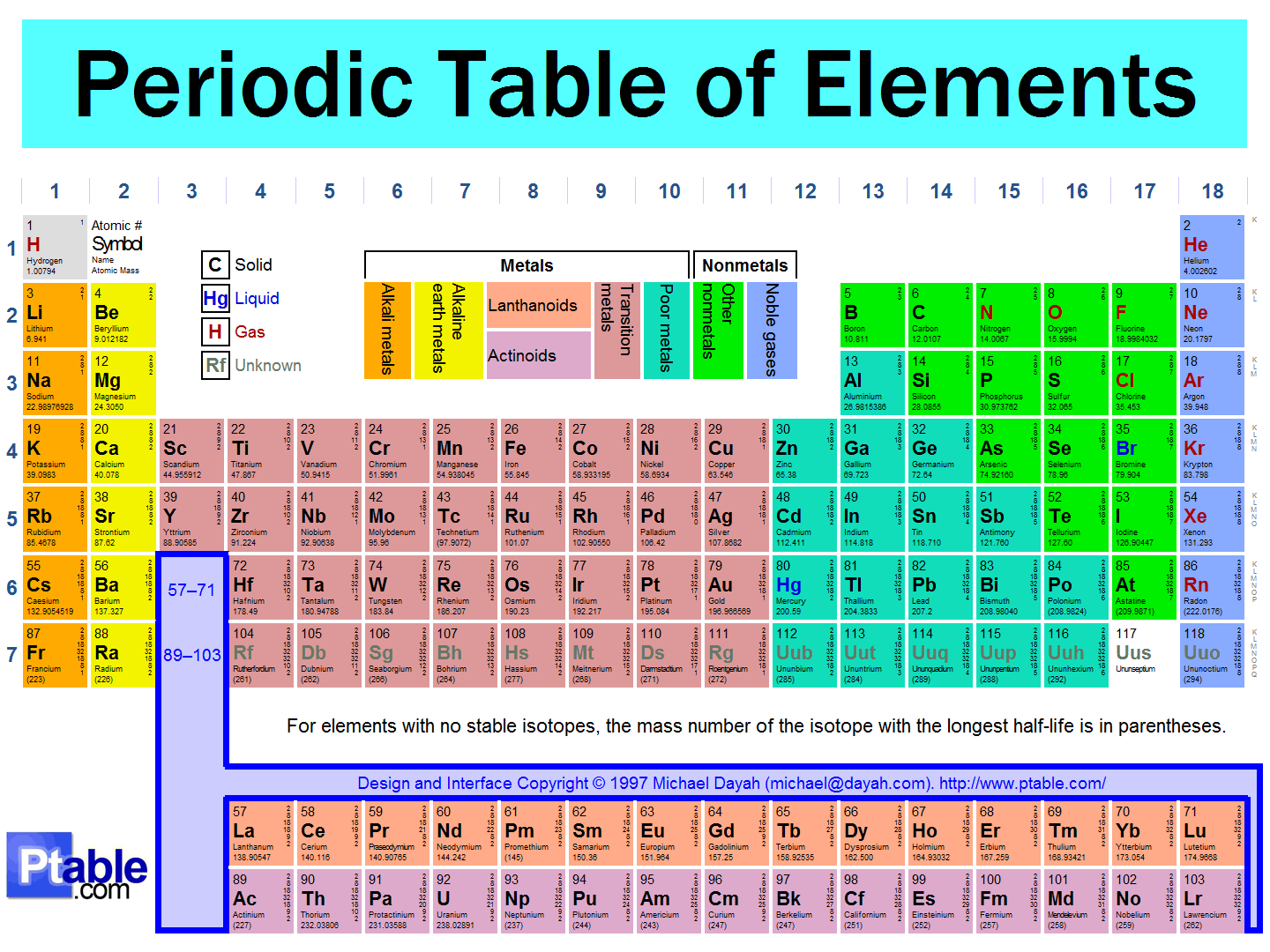
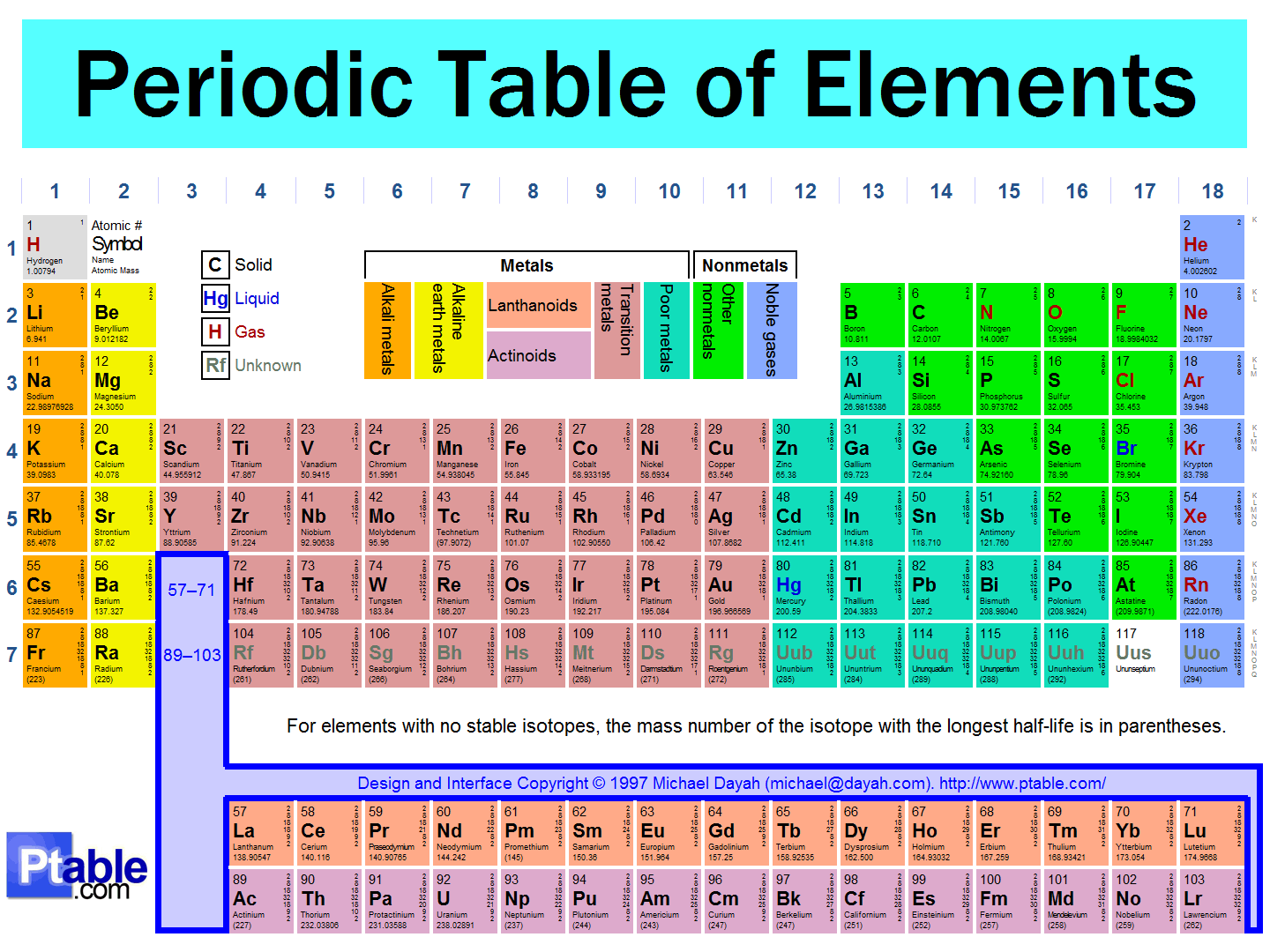
How many electrons does Nitrogen have? Hint use your period table

a)

3

b)

4

c)

7

d)

14

3.

Which subatomic particle has the least mass?

a)

Nucleus

b)

Neutron

c)

Electron

d)

Proton

4.
What element is represented in this Bohr Model? 
a)
Carbon
b)
Hydrogen
c)
Aluminum
d)
Lithium
5.

What is the atomic number of this atom? (Use your notes)

a)

2

b)

4

c)

6

d)

none of the above

6.

How many neutrons does this atom have?

a)

1

b)

2

c)

3

d)

4

7.

How many protons does this atom have?

a)

1

b)

2

c)

3

d)

4

8.

How many electrons does atom have?

a)

1

b)

2

c)

3

d)

4

9.

How many valence electrons does this atom have?

a)

1

b)

2

c)

3

d)

4

10.

Valence Electrons

a)

determine the charge of the atom

b)

determine the atomic mass

c)

determine the atom's chemical properties

d)

determine the charge of an atom

11.
What subatomic particles would you find in the nucleus of an atom?
a)
Protons only
b)
Protons and Neutrons
c)
Neutrons and Electrons
d)
Protons and Electrons 
12.
What subatomic particle is electrically neutral (no charge)?
a)
Proton
b)
Ion
c)
Neutron
d)
Electron
13.
What subatomic particle(s) would be found orbiting the nucleus?
a)
Neutrons only
b)
Electrons only
c)
Protons and Neutrons
d)
Protons and Electrons
14.

The horizontal row on the periodic table is called a <----------->

a)

group

b)

family

c)

period

d)

atomic number

15.

A vertical column is called...

a)

group

b)

tower

c)

period

d)

crew

16.

Which element is a metal?

a)

Boron (B)

b)

Sodium (Na)

c)

Argon (Ar)

d)

Silicon (Si)

17.

Which element is a non-metal?

a)

Potassium (K)

b)

Carbon (C)

c)

Sulfur (S)

d)

Neon (Ne)

18.

The elements along the staircase are called

a)

metals

b)

nonmetals

c)

metalloids

d)

noble gases

19.

How shiny a metal is

a)

luster

b)

brittle

c)

malleable

d)

dull

20.
How many valence electrons are elements trying to reach in their outer shells?
a)
1
b)
2
c)
5
d)
8
21.
Which of these grouping of elements could have the characteristic of brittle?
a)
Metal
b)
Nonmetal
22.
Nonmetals occur to the ________of the dark zig-zag on the periodic table. 
a)
A. right
b)
B. middle
c)
C. left
23.

How many neutrons are in Sample A?

a)

28

b)

52

c)

24

d)

55

24.

How many electrons are in Sample A?

a)

26

b)

28

c)

24

d)

22

25.

What is the Mass Number of Sample A?

a)

24

b)

52

c)

28

d)

26

26.

What is the charge of Sample A?

a)

+1

b)

0

c)

+2

d)

-1

27.

Which is the proper symbol for Sample A?

a)

Mg

b)

Ti

c)

C

d)

Cr

28.

How many protons are in Sample B?

a)

19

b)

18

c)

20

d)

39

29.

How many neutrons are in sample B?

a)

39

b)

19

c)

20

d)

18

30.

What is the mass number of Sample B?

a)

20

b)

39

c)

19

d)

18

31.

Which is the proper symbol for Sample B?

a)

F

b)

Fl

c)

K

d)

P

32.

How many protons are there in Sample D?

a)

78

b)

195

c)

117

d)

77

33.

How many electrons are in Sample D?

a)

195

b)

78

c)

117

d)

178

34.

What is the charge of Sample D?

a)

0

b)

+1

c)

-1

d)

+2

35.

Which is the proper symbol for Sample E

a)

Sr+2

b)

Kr-2

c)

Se-2

d)

Se+2

36.

Is sample A an ion, isotope or atom?

a)

Ion

b)

Isotope

c)

Atom

d)

Isotope and Ion

37.

Is Sample B an atom, ion or isotope?

a)

atom

b)

ion

c)

isotope

d)

isotope and ion

38.

Is sample D an atom, isotope or ion?

a)

atom

b)

isotope

c)

ion

d)

isotope and ion

39.

Is sample F an atom, ion or isotope?

a)

atom

b)

ion

c)

isotope

d)

ion and isotope

40.

What is the charge of Sample G?

a)

+2

b)

-2

c)

0

d)

-1

41.

Which subatomic particle does not factor in to the mass of the atom?

a)

proton

b)

electron

c)

neutron

42.
Which of these grouping of elements could have the characteristic of luster (shiny)?
a)
Metal
b)
Nonmetal
c)
metalloids
d)
Both metals and metalloids
43.
Which of the following is a good conductor of heat?
a)
Metal
b)
Nonmetal
c)
Metalloid
44.
Which of these is a property of metals?
a)
It's malleable
b)
It can't conduct electricity
c)
They are used in food
d)
It's very brittle
45.
Which of the following properties refers to the ability of metals to be drawn into wires?
a)
A. malleability 
b)
B. compressibility
c)
C. ductility
d)
D. luster
46.
Metals appear to the _______ of the dark ziz-zag line on the periodic table. 
a)
A. right
b)
B. middle
c)
C. left
47.
Nonmetals occur to the ________of the dark zig-zag on the periodic table. 
a)
A. right
b)
B. middle
c)
C. left
48.
What element in Group 1 is not a metal but a nonmetal?
a)
Helium
b)
Lithium
c)
Hydrogen
d)
Oxygen
49.
How would this element be classified?
a)
Metal
b)
Nonmetal
c)
Metalloid
d)
Metamorphic
50.

Which item on this element square is the chemical symbol?

a)

Copper

b)

29

c)

Cu

d)

63.546

51.
Which one can be found on the periodic table?
a)
Compound 
b)
Element
52.
When two or more elements chemically combine
a)
element
b)
compound
c)
mixture
d)
solution
53.
What is water?
a)
element
b)
compound
c)
mixture
54.
What is sugar?
a)
element
b)
compound
c)
mixture
55.
What is gold?
a)
element
b)
compound
c)
mixture
56.
What is krypton?
a)
element
b)
compound
c)
mixture
57.
Which of the following chemical formulas represents a compound? 
a)
C3
b)
O2
c)
CH3CHO
d)
H2
58.
Which of the following atomic symbols for bromine is written correctly?
a)
bR
b)
BR
c)
Br
d)
br
59.
Which of the following is a pure substance?
a)
O2
b)
Al2CO5
c)
C6H12O6
d)
SiO2
60.
Which of the following is a pure substance?
a)
CO
b)
C02
c)
Co
d)
H2O
61.
 Which of the following atomic symbols is written correctly? 
a)
OH
b)
oH
c)
fe
d)
H
62.
How many different elements are in this chemical formula: C2H2ClK3
a)
6
b)
8
c)
2
d)
4
63.
Which one has more than one type of atom in it?
a)
Element
b)
Compound 
64.
Which statement best describes an element?
a)
made from mixture 
b)
thousands in the world
c)
pure, made of only one atom
d)
can be separated 
65.
Which one has more than one type of atom in it?
a)
Element
b)
Compound 
66.
Compounds are different than elements because compounds are -
a)
A combination of two or more elements.
b)

B)not able to be broken down into parts
c)
made from the same type of atoms
d)
a pure substance, elements are not
67.
The smallest particle of any particular type of matter is known by which of the following terms?
a)
Element
b)
Chemical
c)
Atom
d)
Substance
68.
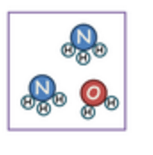
This picture represents which of the following?
a)
element
b)
compound
c)
mixture
69.
This picture represents which of the following?
a)
element
b)
compound
c)
mixture
70.
Which of the following is not a compound?
a)
HCl
b)
Cl
c)
NaCl
d)
CO2
71.
Compounds are represented by a...
a)
Capital Letter
b)
Chemical symbol 
c)
Chemical formula 
d)
Chlorine 
72.

A __________ is a subatomic particle with a positive charge.

a)

proton

b)

neutron

c)

electron

d)

nucleus

73.

This is the location of electrons in an atom.

a)

nucleus

b)

protons

c)

orbitals

d)

neutrons

74.

How many valence (outer) electrons does an Oxygen atom have?

a)

2

b)

6

c)

8

d)

16

75.

A __________ is a subatomic particle with a negative charge.

a)

proton

b)

neutron

c)

electron

d)

nucleus

76.

What is the average atomic mass of Magnesium?

a)

12.011

b)

14.007

c)

22.990

d)

24.305

77.

What is the atomic number of this element?

a)

17

b)

18

c)

35

d)

35.453

78.

How many electrons can fit on the 1st energy level (orbital) for any Bohr Model?

a)

2

b)

6

c)

8

d)

10

79.

In the molecule C6H12O6, how many hydrogen atoms are there?

a)

1

b)

6

c)

12

d)

24

80.

A __________ is a subatomic particle with a neutral charge.

a)

proton

b)

neutron

c)

electron

d)

nucleus

81.

If an atom of Phosphorus has 16 neutrons, what is it's mass number?

a)

15

b)

16

c)

30.974

d)

31

82.

___________ simplify the Bohr Model by showing only the outer valence electrons used for bonding.

a)

Lewis Dot Diagrams

b)

Bohr Models

c)

Electron Clouds

d)

Periodic Tables

83.

If an atom of Sodium has a mass number of 23, it will have...

a)

23 protons

b)

11 neutrons

c)

12 protons

d)

12 neutrons

84.

Protons + Neutrons =

a)

the average atomic mass

b)

mass number

c)

number of electrons

d)

APE MAN

85.
Electrons and protons ______ each other (#14)
a)
attract
b)
repel
86.
As an electron gets closer to the nucleus the _______ to the nucleus gets _____. (#15)
a)
attraction; weaker
b)
attraction; stronger
c)
repulsion; weaker
d)
repulsion; stronger
87.
For an electron to move from an energy level close to the nucleus to an energy level far from the nucleus it would need to ____ energy.  (#16)
a)
gain
b)
lose
88.
For an electron to move from an energy level far from the nucleus to an energy level close to the nucleus it would need to ____ energy.  (#17)
a)
gain
b)
lose
89.
Consider the transition of n=5 to n=2 on the Bohr model of the hydrogen atom. This electron transition ____ energy. (#19a)
a)
releases
b)
absorbs
90.
Consider the transition of n=5 to n=2 on the Bohr model of the hydrogen atom. This electron moves from a ____ energy state to a ____ energy state. (#19b)
a)
lower; lower
b)
higher; higher
c)
higher; lower
d)
lower; higher
91.
Consider the transition of n=5 to n=2 on the Bohr model of the hydrogen atom. This transition gives of what color light?
a)
violet
b)
blue-violet
c)
blue-green
d)
red
92.
Which color of visible light has the highest energy?
a)
Blue
b)
Yellow
c)
Green
d)
Red
93.
How does the energy of an electron change as it gets closer to the nucleus?
a)
It increases
b)
It stays the same
c)
It decreases
d)
It depends on the situation
94.
As an electron moves from n=4 to n=1, is energy absorbed or released?
a)
absorbed
b)
released
95.
Which transition requires more energy?
a)
n=1 to n=2
b)
n=1 to n=5
96.
Which transition of electrons will have the longest wavelength?
a)
n=1 to n=2
b)
n=1 to n=5
97.
Which color has the highest frequency
a)
Red
b)
Blue
c)
Yellow
d)
Violet
98.
Which color has the longest wavelength?
a)
violet
b)
orange
c)
red
d)
green
99.
All colors of light travel at...
a)
different speeds
b)
the same speed
100.

According to the Bohr Model, an electron gains or loses energy by:

a)

Jumping from an S orbital to a P orbital

b)

Moving faster or slower in an allowed orbit.

c)

Jumping from a low energy level to a higher energy level and visa versa.

d)

Jumping from one atom to another atom.

101.

A hydrogen atom is in a ground state when its electron:

a)

Remains at the lowest energy level.

b)

Has moved away from the atom to the ground.

c)

Is moving back and forth through the nucleus.

d)

Has stopped moving.

102.

Hydrogen produces a line spectrum in the visible light range with:

a)

four color lines

b)

three color lines

c)

two color lines

d)

one color line

103.

When an electron in a hydrogen atom jumps from an orbit farther from the nucleus to an orbit closer to the nucleus, it:

a)

emits four photons, one for each of the color lines observed in the line spectrum of hydrogen

b)

emits a single photon with an energy equal to the energy difference of the two orbits

c)

emits a number of photons dependent on the number of energy levels jumped over

d)

none of the above

104.

The general relationship between energy and wavelength of an electromagnetic wave can be described as:

a)

indirect

b)

constant

c)

disproportional

d)

direct

105.

The modern model of the atom describes the:

a)

speed of the electron

b)

probability of the electron's location

c)

probability of the electron's size

d)

defined path of the electron

106.

An absorbance spectrum was taken of a colored solution. What was the color of the solution?

a)

yellow

b)

green

c)

violet

d)

blue

107.
Valence electrons are: 
a)
Electrons farthest away from the nucleus
b)
Electrons closest to the nucleus
c)
Electrons that just come and go - they don't stay with the atom
108.
What is the charge of an atom that has lost one electron?
a)
-1
b)
-2
c)
+1
d)
+2
109.
What is the charge of an atom that has gained one electron?
a)
-1
b)
-2
c)
+1
d)
+2
110.
Higher frequency = _________ energy
a)
Higher
b)
Lower
111.
Every element has its own unique atomic spectra.
a)
True
b)
False
112.
A three-dimensional region around a nucleus where an electron may be found is called a(n
a)
orbit
b)
circle
c)
orbital
d)
circuit
113.
Based on the picture, choose the best description of how wavelength and frequency are related
a)
As wavelength increases, frequency increases
b)
As frequency increases, wavelength remains the same
c)
As frequency increases, wavelength decreases
d)
frequency and wavelength mean the same thing
114.
The emission spectra is produced when 
a)
electrons release energy as they move to their excited state.
b)
electrons absorb energy as they move to their excited state.
c)
electrons release energy as they return to the ground state.
d)
electrons absorb energy as they return to the ground state.
115.
Which wave has a greater frequency?
a)
A
b)
B
116.
Which letter represents wavelength?
a)
A
b)
B
c)
C
d)
D
117.
In a Bohr model, what is the lowest energy level called? 
a)
Excited State
b)
Ground State
c)
Quantum State
d)
Emission State
118.
Why do elements give off different colors?
a)
Electrons are losing different amounts of energy.
b)
Electrons are gaining different amounts of energy.
c)
Electrons are staying the ground state.
d)
Electrons are staying in the excited state.
119.
In a Bohr model, what is the state called when electrons have absorbed energy?
a)
Excited State
b)
Ground State
c)
Quantum State
d)
Emission State
120.
What is it called when an electron falls from a higher energy level to a lower energy level and a photon is given off?
a)
Absorption
b)
Emission
121.
Light travels at the same speed, regardless of the color.
a)
True
b)
False
122.
An object appears white because the object reflects all of the wavelengths of color.
a)
True
b)
False
123.
What is the particle of light or energy that an electron can absorb or emit?
a)
Quantum
b)
Quanta
c)
Photon
d)
Photo
124.
What is the amount of energy required to move an electron from one energy level to another?
a)
Quantum
b)
Quark
c)
Proton
d)
Excited state
125.
What kind of spectra does the picture represent?
a)
Emission spectra
b)
Absorption spectra
c)
Excited state spectra
d)
Quantum spectra
126.
What kind of spectra does the picture represent?
a)
Emission spectra
b)
Absorption spectra
c)
Excited state spectra
d)
Quantum spectra
127.
Light of a single wavelength is incident on a metal.  Electrons are released. The intensity of the light is then increased.
Which of the following changes occur?
a)
Rate of electron emission: increase.
Energy of electrons: increase.
b)
Rate of electron emission: decrease.
Energy of electrons: no change.
c)
Rate of electron emission: decrease.
Energy of electrons: increase.
d)
Rate of electron emission: increase.
Energy of electrons: no change.
128.
The photoelectric effect only occurs if the light shining on the metal is:
a)
coherent.
b)
above a minimum intensity.
c)
above a minimum frequency.
d)
above a minimum wavelength.
129.
Which statement about the photoelectric effect is correct?
a)
Electrons are emitted instantaneously.
b)
Electrons are not emitted below a certain wavelength.
c)
You can change the energy of the electrons by changing the intensity.
d)
Electron energy is independent of frequency.
130.
The photoelectric effect is when:
a)
Electrons collide inside a metal to release photons.
b)
One incident metal electron releases one photon.
c)
One incident photon releases one electron from a metal.
d)
Photons are absorbed in to metal ions releasing electrons.
131.
Does high-frequency or low frequency light cause the ejection of a greater number of electrons from a metal surface?
a)
only high frequency
b)
only low frequency
c)
both of them
d)
doesn't depend to frequency
132.
Which model of the atom said that electrons circle the nucleus in orbits of a fixed radius?
a)
Bohr model
b)
Quantum mechanical model
c)
Not true of either model
d)
Both Bohr and Quantum mechanical model
133.
Which model of the atom described electrons as waves?
a)
Bohr model
b)
Quantum mechanical model
c)
Not true of either model
d)
Both Bohr and Quantum mechanical model
134.
Which model of the atom is the best model for describing the electron today?
a)
Bohr model
b)
Quantum mechanical model
c)
Not true of either model
d)
Both Bohr and Quantum mechanical model
135.
What is the experiment where light is shone on the surface of metal, causing electrons to be emitted?
a)
photoelectric effect
b)
photon effect
c)
quantum mechanical effect
d)
quantized effect
136.
Light exhibits wavelike behavior as it travels through space and exhibits particle like behavior as it interacts with matter.
a)
True
b)
False
137.
24.1% of all the isotopes of a an element have a mass of 75.23 amu, 48.7% have a mass of 74.61 amu, and 27.2% have a mass of 75.20 amu.
What is the average mass of this element?
a)
74.92 amu
b)
24.97 amu
c)
75.01 amu
d)
74.51 amu
138.
Atom 1 has Mass=12  Protons=6
Atom 2 has Mass= 14 Electrons=6
Are these atoms isotopes of each other or different elements?
a)
Different Elements - Mg & Si
b)
Different Elements - Ar & Ca
c)
Isotopes of Carbon
d)
Isotopes of Magnesium
139.
Which conversion factor should be used to solve the following, "How many moles in 28 grams of CO2?"
a)
1 mol = 22.4 L 
b)
1 mol = 44.01 g
c)
1 mol = 6.02x10²³ atoms
d)
more than one
140.
What is the molar mass of Hydrogen Peroxide (H2O2)?
a)
48 g/mole
b)
34.02 g/mole
c)
36.5 g/mole
d)
35.5 g/mole
141.
What are the units for molar mass?
a)
grams
b)
amu
c)
grams/mole
d)
liters
142.
The number 6.02 x 10²³, which is the number of particles found in a mole. 
a)
molar mass
b)
mole
c)
Avogadro's number
d)
hydrate
143.
How many moles are in 16.94g of water?
a)
16.94 mol H2O
b)
0.9401 mol H2O
c)
305.3 mol H2O
d)
1.063 mol H2O
144.
How many molecules are in 9.44 moles of AlCl3?
a)
5.68 molec AlCl3
b)
5.68x1024 molec AlCl3
c)
0.705 molec AlCl3
d)
1.25x10²³ molec AlCl3
145.
A solid is
a)
a substance that does not have a definite shape or volume
b)
a substance with a definite volume, but no definite shape
c)
a substance with a definite shape and volume
d)
a substance whose particles glide past one another
146.
A liquid is
a)
a substance that does not have a definite shape or volume
b)
a substance with a definite volume, but no definite shape
c)
a substance with a definite shape and volume
d)
a substance whose particles vibrate
147.
Which states of matter have a definite volume?
a)
solid and gas
b)
solid and liquid
c)
gas and liquid
d)
solid, liquid, and gas
148.
Molecules in a solid are
a)
close together
b)
glide past each other
c)
far apart
149.
Changes can usually be reversed
a)
chemical change
b)
physical change
150.
Changes in states of matter (from liquid to gas , solid to liquid, etc)
a)
chemical change
b)
physical change
151.
A change that only affects the appearance of a substance (its size, shape, or state of matter)
a)
physical change
b)
chemical change
152.
melting is an example of
a)
chemical change
b)
physical change
153.
Rusting nail
a)
Chemical change
b)
physical change
154.
baked cake
a)
chemical change
b)
physical change
155.
mixing sugar and lemon juice to make lemonade
a)
chemical change
b)
physical change
156.
change gives off an odor
a)
chemical change
b)
physical change
157.
slicing bread
a)
chemical change
b)
physical change
158.
change produces light and/or heat
a)
chemical change
b)
physical change
159.
A mixture that is NOT evenly distributed is called ....
a)
Compounded
b)
Homogenous
c)
Heterogenous
d)
Salty
160.
A combination that can be separated by physical processes is a .....
a)
Pure Substance
b)
Glucose
c)
Element
d)
Mixture
161.
If you change a substance into a new substance...
a)
Partial Change
b)
Physical Change
c)
Chemical Change
d)
Freezing
162.
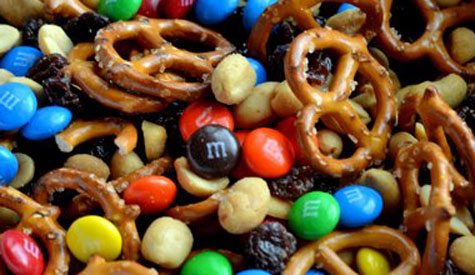
Mixture, such as mixed nuts or dry soup mix, in which different materials are unevenly distributed and are easily identified.
a)
suspension
b)
homogeneous mixture
c)
heterogeneous mixture
d)
colloid
163.
Substance with atoms that are all alike.
a)
element
b)
compound
c)
homogeneous mixture
d)
heterogeneous mixture
164.
This picture represents: 
a)
Element
b)
Compound
c)
Mixture of Elements
d)
Mixture of Compounds
165.
This picture represents: 
a)
Element
b)
Compound
c)
Mixture of Elements
d)
Mixture of Compounds
166.
What type of mixture is this?
a)
homogenous mixture
b)
chemical
c)
heterogeneous mixture 
d)
solid mix
167.
A combination that can be separated by physical processes is a .....
a)
Pure Substance
b)
Glucose
c)
Element
d)
Mixture