wayground logo

Free Printable Worksheets

Font size

S
M
L
XL
Worksheets

Biology 1 Midterm 2021

Total questions: 68

Worksheet time: 1hrs 1mins

Name
Class
Date
1.
All living things are made up of _____. 
a)
Cells 
b)
Bacteria 
c)
Virus 
d)
ATP
2.
Prokaryotic cells do NOT have a nucleus. 
a)
True 
b)
False 
3.
Which of the following is an example of a prokaryotic cell? 
a)
Virus 
b)
Plant Cell 
c)
Bacteria 
d)
Animal Cell 
4.
Eukaryotic cells do NOT have a nucleus. 
a)
True 
b)
False 
5.
Directs all cell activities through the DNA located there.
a)
Lysosomes
b)
Nucleus
c)
ribosomes
d)
Mitochondria
6.
Where are proteins made?
a)
Golgi body
b)
Mitoichondria
c)
Chromosomes
d)
Ribosomes
7.
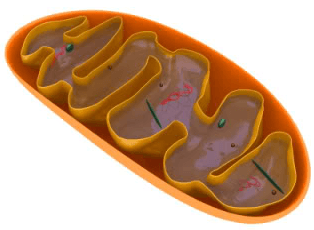
What are tiny organelles that convert glucose into ATP?
a)
Ribosomes
b)
Vesicles
c)
Cytoskeleton
d)
Mitochondria
8.
A rigid layer that lies outside the cell's  membrane is...
a)
Cytoskeleton
b)
Cilia
c)
Cell Wall
d)
Flagella
9.
The site of photosynthesis
a)
ribosome
b)
mitochondria
c)
chloroplast
d)
nucleus
10.
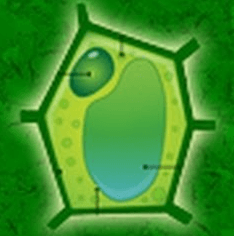
What kind of cell is this?
a)
Eukaryotic
b)
Prokaryotic
11.
Plants and animal cells are examples of ___ cells 
a)
prokaryotic cells 
b)
eukaryotic cells 
12.

Process of turning N2 gas in the atmosphere into ammonia (NH3) in soil

a)

Transpiration

b)

Respiration

c)

Nitrogen Fixing

d)

Nitrogen Dumping

13.

The maximum number of organisms that can sustainably live in an ecosystem

a)

Complete Party

b)

Maximum Population

c)

Carrying Capacity

d)

Critical Mass

14.

How much energy is passed from one trophic level to the next?

a)

22%

b)

88%

c)

10%

d)

2%

15.

Primary Consumer

a)

Most likely an herbivore

b)

Must find its own food

c)

Most likely eats meat “ONLY”

d)

The only autotroph

e)

Creates its own food through photosynthesis

16.

Secondary Consumer

a)

Creates its own food through photosynthesis

b)

Must find its own food

c)

Most likely an omnivore

d)

Most likely eats meat “ONLY”

e)

Most likely an herbivore

17.

Tertiary Consumer (Apex)

a)

Must find its own food

b)

Most likely eats meat “ONLY”

c)

The only autotroph

d)

Creates its own food through photosynthesis

e)

Most likely an omnivore

18.

Primary or Secondary Succession?

a)

Primary Succession

b)

Secondary Succession

19.
Which major macromolecule is being represented in this image? 
a)
carbohydrate
b)
lipid
c)
protein
d)
nucleic acid
20.

What type of macromolecule is being represented in this image? (CHON)

a)

carbohydrate

b)

lipid

c)

protein

d)

nucleic acid

21.
What are the building blocks of proteins?
a)
amino acid
b)
fatty acid
c)
nucleotide
d)
lipid
22.
Which of the following decreases the activation energy necessary to initiate the chemical change within the body?
a)
nucleotides
b)
enzymes
c)
amino acids
d)
fatty acids
23.
What are the single sugars that are the building blocks of carbohydrates?
a)
monosaccharides
b)
disaccharides
c)
polysaccharides
d)
amino acid
24.
REVIEW: Why will salt form a solution with water but sand will not?
a)
Salt is polar, while sand is non-polar
b)
Salt is non-polar, while sand is polar
c)
Salt and sand are polar
d)
Sand is more coarse than salt
25.
REVIEW: Which of the following represents a formula for a chemical compound?
a)
H2O
b)
P2
c)
C6
d)
H
26.
Which of the four major biological macromolecules can be easily identified by the nitrogen base and phosphate found in its structure?
a)
carbohydrate
b)
lipid
c)
protein
d)
nucleic acid
27.

Some insects and small organisms can walk on water due to

a)

Adhesion

b)

Capillary Action

c)

Surface Tension

d)

Specific heat

28.

The tendency of water molecules to attract to one another is known as

a)

Adhesion

b)

Cohesion

c)

Specific heat

d)

Capillary Action

29.

The ______________ is the part of the solution that dissolves the other substance.

a)

Large molecule

b)

small molecule

c)

Solvent

d)

Solute

30.

Water molecules are strongly attracted to one another due to _______________ bonds, which causes ________________.

a)

Hydrogen; Adhesion

b)

Hydrogen; Cohesion

c)

Ionic; Adhesion

d)

Ionic; Cohesion

31.

_________ bonds form through the electrical force between two oppositely charged ions, like salt, or sodium chloride (NaCl).

a)

Hydrogen

b)

Covalent

c)

Ionic

d)

Polar Covalent

32.

When a lake freezes over in the winter,

a)

the ice only forms on the top layer and acts as insulation for the rest of the lake.

b)

the ice freezes the entire lake into one giant ice cube.

c)

the ice freezes on the top layer, but then sinks to the bottom because ice is more dense than water.

d)

the ice only forms on the bottom layer, and melts quickly.

33.
285 kg = ____ g
a)
285,000
b)
285
c)
2,850
d)
28,500
34.

The cells of organisms in these two domains are prokaryotic:

a)

Archaea and protista

b)

Archaea and bacteria

c)

Plantae and animalia

d)

Bacteria and fungi

35.

Which of the following is NOT a characteristic of organisms in Kingdom Fungi

a)

They are eukaryotes

b)

They are mostly multicellular organisms

c)

It includes mushrooms and molds

d)

They are autotrophic

36.

Organisms from this group can live in some of the most extreme environments.

a)

Domain Eukarya

b)

Domain Bacteria

c)

Kingdom Protista

d)

Domain Archaea

37.

This group contains multicellular heterotrophs that bring food into their body and digest it internally.

a)

Kingdom Animalia

b)

Kingdom Plantae

c)

Kingodm Fungi

d)

Domain Bacteria

38.

Kingdoms Fungi, Protista, Plantae, and Animalia would all be placed in this domain because their cells have a nucleus:

a)

Domain Archaea

b)

Domain Bacteria

c)

Domain Eukarya

39.

Which of the following is not a type of protist?

a)

Animal-like

b)

Plant-like

c)

Bacteria-like

d)

Fungus-like

40.

These organisms would be in:

a)

Kingdom Plantae

b)

Kingdom Protista

c)

Kingdom Fungi

d)

Domain Archaea

41.

Which three kingdoms have organisms that are autotrophic (Select all that apply)

a)

Domain Bacteria

b)

Kingdom Protista

c)

Kingdom Animalia

d)

Kingdom Fungi

e)

Kingdom Plantae

42.

This represents organisms in:

a)

Kingdom Animalia

b)

Kingdom Protista

c)

Domain Archaea

d)

Kingdom Bacteria

43.

this is an organism that can make their own food

a)

prokaryotic

b)

eukaryotic

c)

autotrophic

d)

heterotrophic

44.

this is an organism that cannot make their own food

a)

prokaryotic

b)

eukaryotic

c)

autotrophic

d)

heterotrophic

45.

this is a cell that contains a nucleus

a)

prokaryotic

b)

eukaryotic

c)

unicellular

d)

multicellular

46.

this is a more advanced form of bacteria

a)

archaea

b)

eubacteria

c)

eukaryote

47.

These are very primitive forms of bacteria

a)

archaea

b)

eubacteria

c)

eukaryote

48.

this is a cell that lacks a nucleus

a)

prokaryotic

b)

eukaryotic

c)

unicellular

d)

multicellular

49.
Water at 0 degrees Celsius reaches
a)
freezing point
b)
boiling point
50.
Molecules in a liquid are
a)
packed tightly
b)
close together but move freely
c)
are spread far apart. 
51.
Molecules in a gas are
a)
packed tightly
b)
close together but move freely
c)
are spread far apart
52.
How does matter change?
a)
heat is added or taken away
b)
it is put in water
c)
it is put on a scale
53.
Boiling point of water is 
a)
0 degrees Celsius
b)
100 degrees Celsius
54.
Freezing point of water is
a)
100 degrees Celsius
b)
0 degrees Celcius
c)
0 degrees Fahrenheit
55.
6 cm =______mm 
(1 cm is 10 mm)
a)
.6
b)
6
c)
60
d)
600
56.
7,000 g = ____ kg
(1 kg = 1000 g
a)
70
b)
7000
c)
7
d)
0.07
57.
Convert 300 cm to m:
(100 cm = 1 m)
a)
3 m
b)
30 m
c)
0.3 m
d)
0.03 m
58.
1000 grams = _____ kilograms
a)
0.0001
b)
1,000,000
c)
10
d)
1
59.
Ed fills his sports bottle with 1 liter of water. After his bike ride, he drinks 200 milliliters of the water. How much water is left in Ed's sports bottle?
(1 liter = 1000 ml)
a)
800 mm
b)
8000 ml
c)
80 ml
d)
800 ml
60.

6 kg = _____ g

a)

6

b)

6000

c)

600

d)

.006

61.
40 cm = ______ mm
( 1 cm = 10 mm)
a)
4000
b)
40
c)
400
d)
None of the Above
62.
Which symbols best describe parasitism?
a)
+,+
b)
+,-
c)
+,0
d)
-,0
63.
A tapeworm and a cat have this type of relationship.
a)
mutualism
b)
parasitism
c)
commensalism
d)
competition
64.
Silverfish live and hunt with army ants. They share the prey.  They neither help nor harm the ants. 
a)
Mutualism 
b)
Parasitism 
c)
Commensalism 
65.
Yucca flowers are pollinated by yucca moths. The moths lay their eggs  in the flowers where  the larvae hatch and eat some of the developing seeds. Both species benefit.  
a)
Mutualism 
b)
Parasitism 
c)
Commensalism 
66.
Mistletoe extracts water and nutrients from the spruce tree to the tree's detriment (harm). 
a)
Mutualsim 
b)
Parasitism 
c)
Commensalism 
67.
A relationship between two organisms in which both organisms benefit. 
a)
Mutualism 
b)
Competition
c)
Parasitsm 
d)
Commensalism 
68.
Red-billed oxpeckers are birds that feed on parasites found on an impala. The impala gets rid of parasites and the red-billed oxpeckers get a yummy dinner. This is an example of _______.
a)
commensalism
b)
mutualism
c)
neutralism
d)
competition