Wayground logo

Free Printable Worksheets

Font size

S
M
L
XL
Worksheets

Physical Science Mid-term

Total questions: 83

Worksheet time: 1hrs 23mins

Name
Class
Date
1.

What is a substance produced when 2 or more elements combine and whose properties are different from the original elements

a)

compound

b)

mixture

c)

element

d)

atom

2.

What are states of matter?

a)

solid, liquid, color

b)

shape, temperature, gas

c)

liquid, texture, gas

d)

solid, liquid, gas

3.
Water freezing
a)
Chemical Change
b)
Physical Change
4.
a)
Physical Change
b)
Chemical Change
5.

During lab, what do you do first?

a)

read all directions

b)

wash your hands

c)

gather your materials

d)

get the fire extinguisher

6.

The smallest particle into which an element can be divided and still be the same element is a(n)

a)

proton

b)

neutron

c)

electron

d)

atom

7.

Which subatomic particle has a positive charge?

a)

proton

b)

nuetron

c)

electron

d)

atom

8.

Which subatomic particle has a negative charge?

a)

proton

b)

neutron

c)

electron

d)

atom

9.

Which TWO of the following subatomic particles are inside the nucleus?

a)

protons

b)

electrons

c)

neutrons

d)

There are no subatomic particles in the nucleus of an atom.

10.

Use a periodic table to help you determine the element in the image. (Hint: Use the # of protons.)

a)

carbon

b)

lithium

c)

beryllium

d)

nitrogen

11.

Use a periodic table to help you determine the element in the image. (Hint: Use the # of protons.)

a)

lithium

b)

oxygen

c)

magnesium

d)

carbon

12.

Use a periodic table to help you determine the element in the image. (Hint: Use the # of protons.)

a)

boron

b)

beryllium

c)

neon

d)

lithium

13.

How many protons does fluorine have?

a)

19

b)

1

c)

9

d)

10

14.

How many neutrons does nitrogen have?

a)

7

b)

14

c)

0

d)

6

15.

Using the diagram as a reference, how many electrons does lithium have in its OUTER shell?

a)

1

b)

3

c)

8

d)

2

16.

Using the diagram as a reference, how electrons does carbon have in its OUTER shell?

a)

2

b)

6

c)

4

d)

1

17.

Using the diagram as a reference, how electrons does neon have in its OUTER shell?

a)

10

b)

8

c)

2

d)

6

18.
If an atom has 12 positively charged subatomic particles, which of the following must it also have to be considered a neutral atom?
a)
12 neutrons
b)
12 electrons
c)
12 protons
d)
24 protons and neutrons
19.
What particle uniquely identifies an element?
a)
Number of Valence Electrons
b)
Number of Protons
c)
Number of Electrons
d)
Atomic Mass
20.
What is the number of protons that the element in this image contain?
a)
14
b)
7
c)
15
d)
18
21.
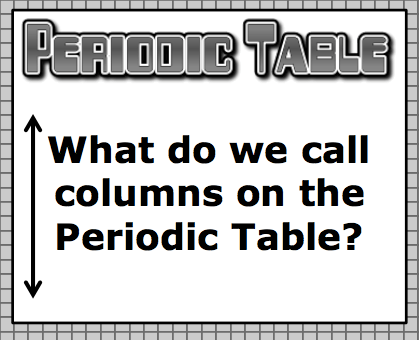
a)
Periods
b)
Groups
22.
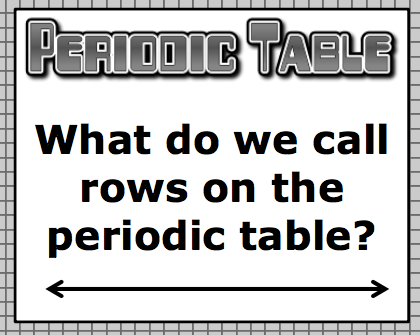
a)
Periods
b)
Groups
23.
How did Mendeleev arrange the elements?
a)
alphabetical 
b)
density
c)
melting point
d)
atomic mass
24.
Which of these element is the least metallic?
a)
Potassium (K)
b)
Carbon (C)
c)
Sulfur (S)
d)
Neon (Ne)
25.
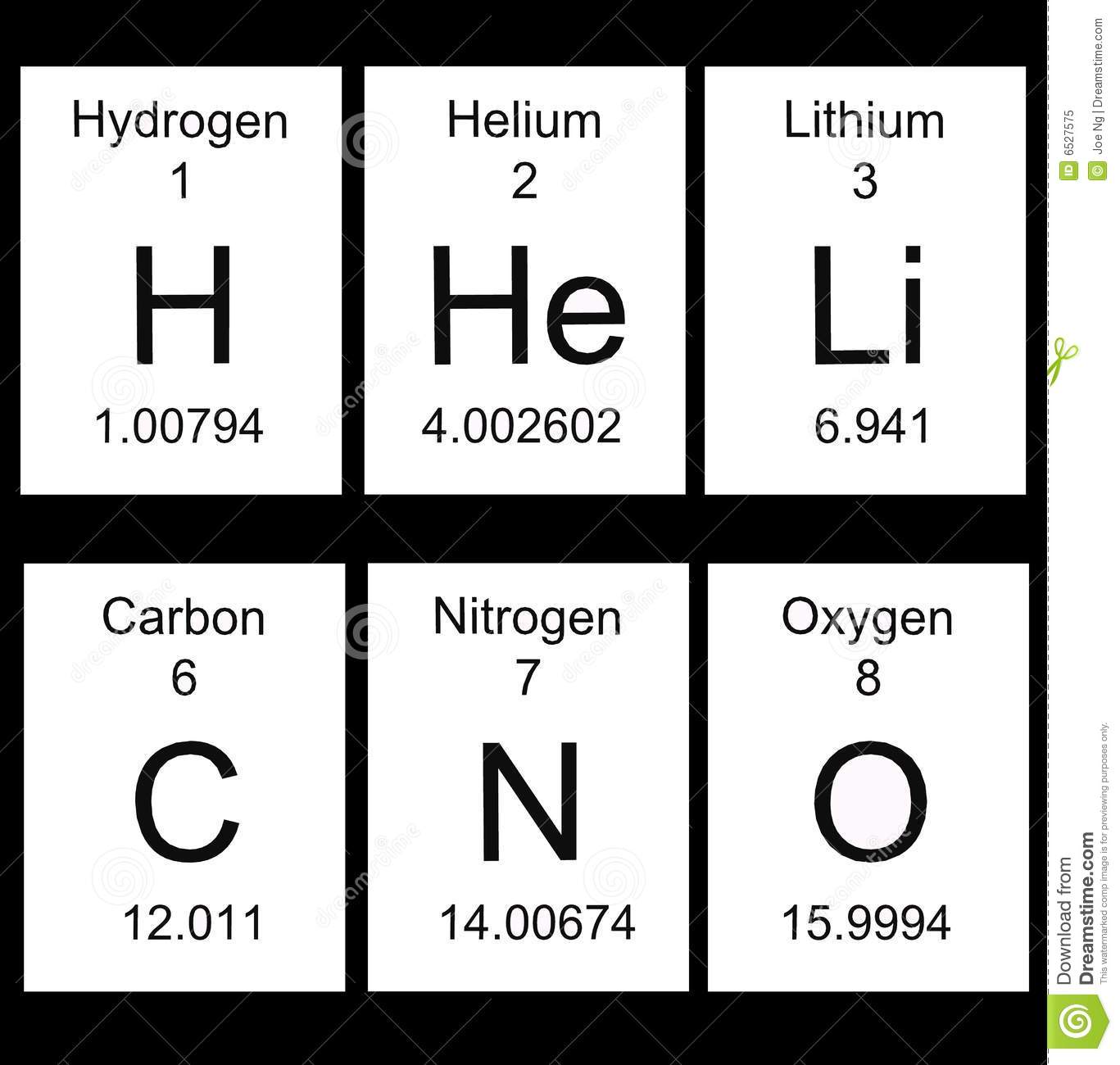
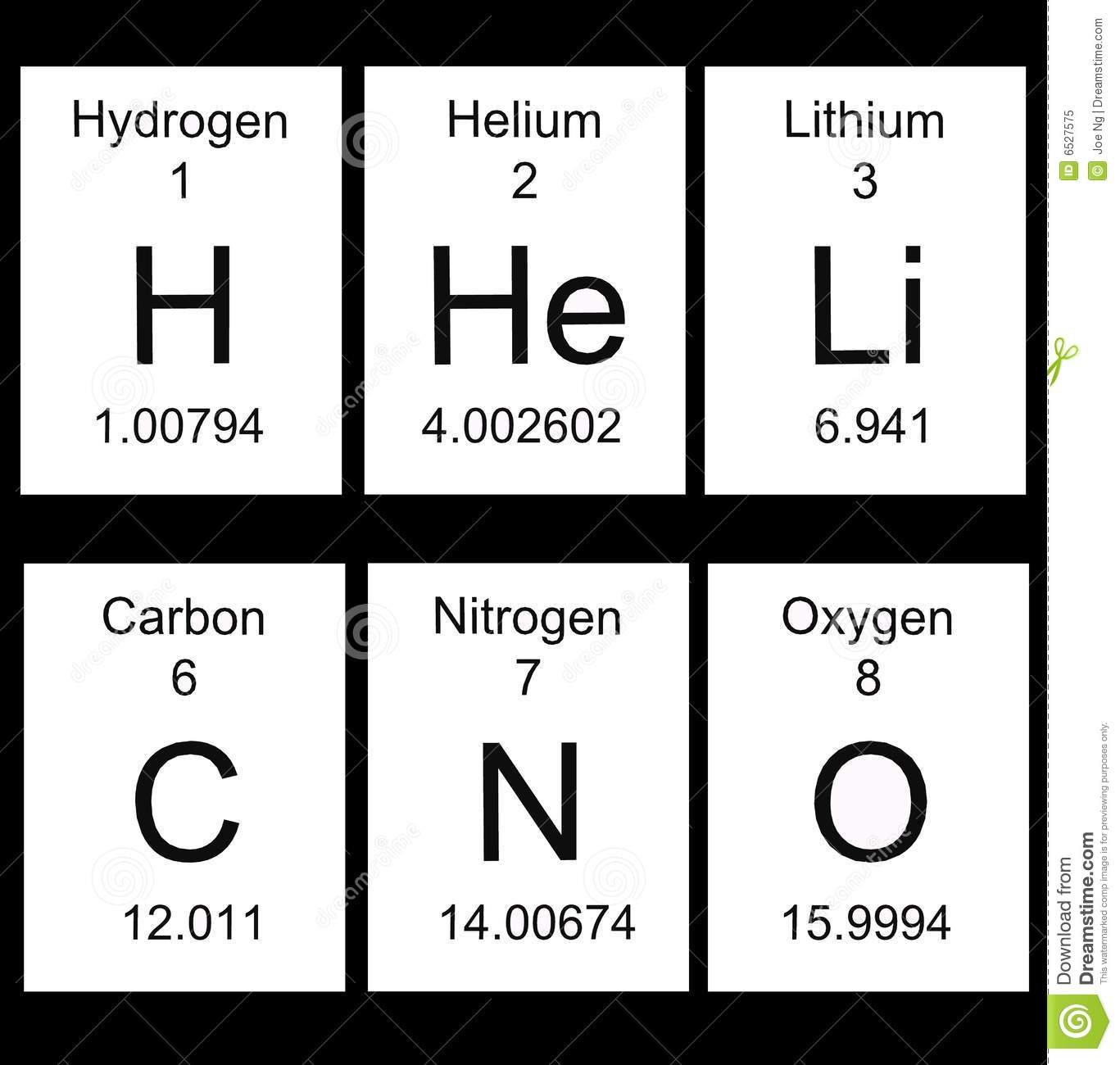
The number at the bottom of each square on the periodic table is the ...
a)
atomic number
b)
atomic mass
c)
chemical symbol
d)
element name
26.
The number at the top of each square on the periodic table is the ...
a)
atomic number
b)
atomic mass
c)
Chemical Symbol
d)
Element Name
27.
What is the chemical symbol for Lithium?
a)
H
b)
He
c)
Li
d)
N
28.
Most of the elements on the periodic table are classified as _____.
a)
Metals
b)
Nonmetals
c)
Metalloids
d)
Periods
29.

Carbon

a)

CA

b)

C

c)

Ca

d)

Cn

30.

Zinc

a)

Z

b)

Zi

c)

ZN

d)

Zn

31.

Copper

a)

CU

b)

Cp

c)

Cu

d)

Cr

32.
What is the atomic number?
a)
the number of protons
b)
the number of protons and neutrons
c)
the number of neutrons
d)
the number of protons and electrons
33.

What is the mass number and atomic number ?

a)

Mass number = 7, atomic number = 14

b)

Mass number = 14, atomic number = 7

34.

Which element is the Alkaline Earth Metal in period 5?

a)

V

b)

Ca

c)

Ba

d)

Sr

35.

Which element is a metal in period 4?

a)

K

b)

Ge

c)

Br

d)

Se

36.

Which element is a nonmetal in period 2?

a)

N

b)

B

c)

Be

d)

Li

37.

Balance this equation

_Al +_HCl --> _H2 +_AlCl3

a)

2,6,3,2

b)

it's already balanced

c)

4,12,3,4

d)

2,1,4,5

38.
What is the right part of a chemical equation called...
2H2 + O2 --> 2H2O
a)
Reactants
b)
Products 
c)
Yields 
d)
Chemical Equation 
39.
What is the little number after an element in a chemical equation called.
Example: H2
a)
Coefficient 
b)
Subscript
c)
Atom
d)
Equation
40.
2HI --> H2 + I2
a)
synthesis
b)
decomposition
c)
single replacement
d)
double replacement
41.
FeS + HCl --> H2S + FeCl2
a)
synthesis
b)
combustion
c)
single replacement
d)
double replacement
42.
Mg + HCl --> MgCl2 + H2
a)
combustion
b)
synthesis
c)
decomposition
d)
single replacement
43.

Mg + N2 →Mg3N2

a)

Synthesis

b)

Decomposition

c)

Single replacement

d)

Combustion

44.
Balance this equation
_N2 + _H2 --> _NH3
a)
1,2,3
b)
1,3,2
c)
1,1,2
d)
2,1,1
45.
When metals bond with non-metals they form what type of bonds
a)
covalent
b)
ionic
c)
cooperative
d)
lewis
46.
How do the following two elements bond together?
Na1+  F1-         
a)
NaF
b)
NaF3
c)
Na3F
d)
Na1F2
47.
How do the following two elements bond together?
Cr3+  O2-         
a)
CrO
b)
Cr3O2
c)
Cr2O3
d)
CrO3
48.
How do the following two elements bond together?
K1+  S2- 
a)
KS
b)
K8S
c)
K6S3
d)
K2S
49.
What is the formula for magnesium chloride?
a)
MgCl
b)
Mg2Cl
c)
MgCl2
d)
Mg(ClO3)2
50.
The first step in naming an ionic compound is always...
a)
Naming the anion
b)
Changing the ending to -ide
c)
Naming the cation
d)
Writing the cation charge
51.
Name the following ionic compound: BeCl2
a)
beryllium chlorine
b)
beryllium II chloride
c)
beryllium chloride
d)
beryllium dichloride
52.
How many valence electrons does a bromine atom have?
a)
1
b)
2
c)
6
d)
7
53.
What is the correct formula for the compound, lithium oxide?
a)
LiO
b)
Li2O
c)
LiO2
d)
Li2O2
54.
What is the formula for the compound formed by magnesium ions and nitrogen ions?
a)
MgN
b)
Mg2N3
c)
Mg3N2
d)
MgN3
55.
Name CCl4
a)
carbon carbon tetraiodide
b)
carbon tetrachloride
c)
monocarbon tetrachloride
d)
water
56.
Name BCl3
a)
boron chloride
b)
boron (III) chloride
c)
boron trichloride
d)
boron chlorine
57.
Give the formula for oxygen dichloride
a)
OCl2
b)

O2Cl2

c)
OCl
d)
O2Cl
58.
Give the formula for phosphorus trifluoride
a)
P3F
b)
PF
c)
PF3
d)
P3F3
59.
Name CO2
a)
carbon dioxide
b)
carbon monoxide
c)
carbon oxide
d)
monocarbon dioxide
60.
What is the name of N2O3
a)
Nitrogen trioxide
b)
Dinitrogen oxide
c)
Dinitrogen trioxide
d)
Nitrogen oxide
61.
What is the chemical formula for Tetrasulfur pentoxide?
a)
SO
b)
S4O
c)
S4O5
d)
S5O4
62.
What is the name of C3Cl8 ?
a)
Carbon octachloride
b)
Tricarbon octachloride
c)
Carbon trichloride
d)
Octacarbon trichloride
63.
What is the formula for Hexaboron Monosilicide
a)
B6Si
b)
BSi
c)
BSi6
d)
B6Si6
64.
What is the OFFICIAL name for H2O
a)
Hydrogen Oxide
b)
Oxygen Dinitride
c)
Agua
d)
Dihydrogen Monoxide
65.

Ionic bonds form between ---

a)

nonmetals.

b)

metals and nonmetals.

66.

Covalent bonds form between ---

a)

nonmetals.

b)

metals and metals

c)

metals and nonmetals

67.

Atoms form compounds to become more ---

a)

reactive

b)

stable

c)

explosive

d)

toxic

68.
The rate at which a radioactive element decays is its ____.
a)
quarter life
b)
whole life
c)
wonderful life 
d)
half life
69.
_______________ is the process by which unstable atoms emit radiation until they become stable.
a)
Radiation
b)
Chemical Reaction
c)
Radioactive Decay
d)
Isotopes
70.

Which unit below is the largest?

a)

Kilogram

b)

Gram

c)

Centigrams

d)

Milligrams

71.

What unit is used for measuring MASS in the metric system?

a)

Grams

b)

Liters

c)

Meters

d)

Miles

72.

Which unit of the metric system is used for measuring VOLUME?

a)

Meters

b)

Liters

c)

Grams

d)

Ounces

73.

What base unit is used in the metric system to measure LENGTH?

a)

Meters

b)

Liters

c)

Grams

d)

Miles

74.

Which unit is bigger?

a)

kilograms

b)

grams

75.
3 cm = ? mm
a)
30
b)
300
c)
3000
d)
0.3
76.
400 cg = ? g
a)
4
b)
40
c)
50
d)
400
77.
5000 m = ? km
a)
5
b)
10
c)
15
d)
20
78.
Convert 17 m to cm:
a)
0.17 cm
b)
0.017 cm
c)
1,700 cm
d)
170 cm
79.
1000 grams = _____ kilograms
a)
0.0001
b)
1,000,000
c)
10
d)
1
80.
To go from milliliters to liters, move the decimal point to the__
a)
left
b)
right
81.
7,000 g = ____ kg
a)
70
b)
700
c)
7
d)
0.07
82.
1 cm = ________mm
a)
1
b)
100
c)
10
d)
1000
83.
a)
Periods
b)
Groups