
 Worksheets
OnRamps Midterm Review
Total questions: 134
Worksheet time: 2hrs 0mins

Which type of cell is this?
Prokaryote
Eukaryote
Which of the following structures is ALWAYS found in both eukaryotic and prokaryotic cells?
nucleus
mitochondria
ribosomes
cell wall


Bacteria contain circular chromosomes called
Ribosomes
Coccus
Plasmids
Nucleus
The two types of appendages for movement are called..
Coccus and bacillus
Flagella and pili
Spirillum and pili
Flagella and bacillus


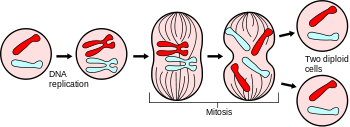
Cell theory states that...
cells are the basic building block of life
cells are cool
cells are microscopic
cells cannot be destroyed
One of the accepted scientific theories describing the origin of life on Earth is known as chemical evolution. According to this theory, which of the following events would need to occur first for life to evolve?
onset of photosynthesis
origin of genetic material
Synthesis of organic molecules
formation of the plasma membrane
Which types of organisms developed first due to the early environmental conditions on Earth?
prokaryotic and aerobic
prokaryotic and anaerobic
eukaryotic and aerobic
eukaryotic and anaerobic
The Miller-Urey experiment of 1953 was designed to test the hypothesis that lightning supplied the energy needed to turn atmospheric gases into organic molecules such as amino acids. Which of the following describes why the Miller-Urey theory is widely accepted today?
Amino acids spontaneously form from molecules in the atmosphere today.
Organic molecules are present today in extremely high concentrations.
The process of synthesizing organic molecules from a mixture of gases has been successfully modeled in the laboratory.
No other alternative hypotheses have been introduced.

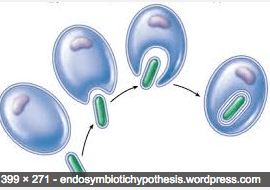
The diagram below shows a proposed theory of the origin of eukaryotic cells, called endosymbiosis.
Which of the following explains why cells that contained mitochondria-like organelles had an evolutionary advantage?
They were able to photosynthesize
They had more DNA
They were able to make more use of available energy
They were immune to bacterial invasion.
What are the three domains of life?
Animalia, Plantae, Fungi
Archaea, Bacteria, Eukarya
Kingdom, Phylum, Class
Mammalia, Reptilia, Aves
Which do BOTH prokaryotes and eukaryotes contain?
nucleus
mitochondria
ribosomes
cell wall

what is letter D in the animal call?
nucleolus
nucleus
endoplasmic reticulum
lysosome

which letter is the Cytoplasm
C
H
B
A


Contains most of the genes that control the eukaryotic cell. Contains the nucleolus and chromatin.
Nucleoid
Nucleus
Chromosome
Plasmid

Membrane bound sacs, larger than vesicles, stores water and dissolved nutrients
vesicle
vacuole
lysosome
perioxsome

Protective layer external to the cell membrane, consists of chitin
Bacterial Cell Wall
Plant Cell Wall
Protist Cell Wall
Fungal Cell Wall

Consists of DNA and protein, condenses to form chromosomes
Nucleus
Nucleolus
Chromatin
Ribosomes

Part of the endomembrane system, sacs of enzymes used to digest food and old, worn out cell parts
Peroxisome
Vesicle
Lysosome
Golgi Apparatus

Site of cellular respiration, produces ATP from sugar
Chloroplast
Mitochondria
Rough Endoplasmic Reticulum
Cytoplasm

Carries ER products to the Golgi
Transport vesicles
Vacuoles
Smooth ER
Cytoskeleton

Protective layer external to the cell membrane, consists of cellulose
Protist Cell Wall
Fungal Cell Wall
Plant Cell Wall
Prokaryotic Cell Wall

Forms the boundary of the cell, acts as a selective barrier allowing certain materials to pass but not others
Cell Wall
Cytoplasm
Cell Membrane
Nuclear Membrane

Supports the shape of the cell, anchors organelles and serves as a "track" for organelles to move on.
Cytoskeleton
Nuclear Membrane
Cell Wall
Gogli Apparatus

What must D be?
Vesicle
Nucleus
Vacuole
Lysosome


In the cell, macromolecules such as lipids and proteins are transported using____.
Vesicles
Ribosomes
Rough endoplasmic reticulum
DNA
Which of these is NOT a part of the endomembrane system?
Nuclear membrane
Endoplasmic reticulum
Golgi apparatus
Mitochondria
when some molecules can cross the membrane while others cannot.


In cell signaling, how is the flow of specific ions
regulated?
Opening and closing of ligand-gated channels
Transduction
Cytoskeleton rearrangement
Endocytosis
Many signal transduction pathways use second messengers to:
transport a signal through the lipid bilayer portion of the plasma membrane.
relay a signal from the outside to the inside of the cell.
relay the message from the inside of the membrane throughout the cytoplasm.
amplify the message by phosphorylating proteins.

This is an example of
paracrine signaling
endocrine signaling
autocrine signaling
juxtacrine signaling

What is being depicted in the image?
Amplification of the signal molecule
Enzymatic proteins inhibiting process of the signal transduction pathway
Kinase groups adding dimer groups to other enzymes
Diffusion of molecules within the cell due to the signaling molecule

Which letter represents the cell membrane?
A
B
C
D
E
Which letter represents the cell surface receptor protein?
A
B
C
D
E
Which letter represents the ligand?
A
B
C
D
E
N or C?
H or F?
What functional group is -OH
Hydroxyl
Carboxyl
Amino
Carbonyl Ketone

What functional group(s) is/are present on the molecule? (check all that apply)
Hydroxyl
Carboxyl
Methyl
Carbonyl Aldehyde

Classify the compound based on the functional group present.
ketone
ester
carboxylic acid


What functional group is -CH3
Methyl
Hydroxyl
Carboxyl
Carbonyl Ketone

A molecule that has a partial positive end and a partial negative end because of unequal sharing of electrons is a _______________.
nonpolar molecule
polar molecule
ionic compound
metalic compound
Atoms of a polar molecule share their atoms ___________.
Equally
Unequally
Polar molecules will dissolve in other polar molecules and nonpolar molecules will dissolve in other nonpolar molecules.
True
False
Polar molecules have
no charges.
slight positive and negative charges on opposite ends of the molecules.
only positive charges.
either positive or negative charges, but not both.
Why is it difficult to wash oil from your hands with plain water?
Both substances are polar. Like polarities repel.
Both substances are nonpolar. Like polarities repel.
Water is nonpolar, and oil is polar, so they will not combine.
Water is polar, and oil is nonpolar, so they will not combine.

All the following are monosaccharides EXCEPT:
Starch
Glucose
Fructose
flour

Which of these bonds are found in chain of carbohydrates?
Glycosidic Bonds
Phophodiester Bonds
Peptide Bonds
Hydrogen Bonds

Carbohydrates are our-
Quaternary source of energy
tertiary source of energy
secondary source of energy
primary source of energy

Which of the following correctly displays the paired forms of stored energy?
glycogen = liver and starch = potatoes
glycogen = potatoes and starch = liver
potatoes = liver and starch = glycogen

Cellulose is a structural carbohydrate found in-
plants
fungi
insects
polyvinyl

Which of the following is used for cell to cell signaling?
glycoprotein
chitin
cellulose
starch

What organism would have a peptidoglycan cell wall?
Bacteria
Insects
Algae
Mushrooms
Which types of carbohydrates are more healthy to consume and why?
Complete carbs because they give us all the energy we need
Simple carbs because they are easily broken down by the body to provide energy and are usually empty calories
Incomplete carbs because they don't contain as many calories as other types of carbs
Complex carbs because they provide a long term form of energy and usually have more nutrients
Fiber because this supplies you with the healthiest form of energy
The element _______is found in all of the organic compounds.
Iron
Carbon
Nitrogen
Oxygen
Monosaccharides are monomers of
Lipids
Nucleic Acids
Proteins
Carbohydrates

This is an example of what macromolecule?
Lipids
Nucleic Acid
Carbohydrate
Lipid
The main function of a carbohydrate is
long term energy storage
stores genetic information
short term energy storage
regulates and controls all body proccesses
Part of a phospholipid molecule can mix with water, but the other part cannot. This means the molecule is
hydrophobic
hydrophilic
amphipathic
ambidextrous


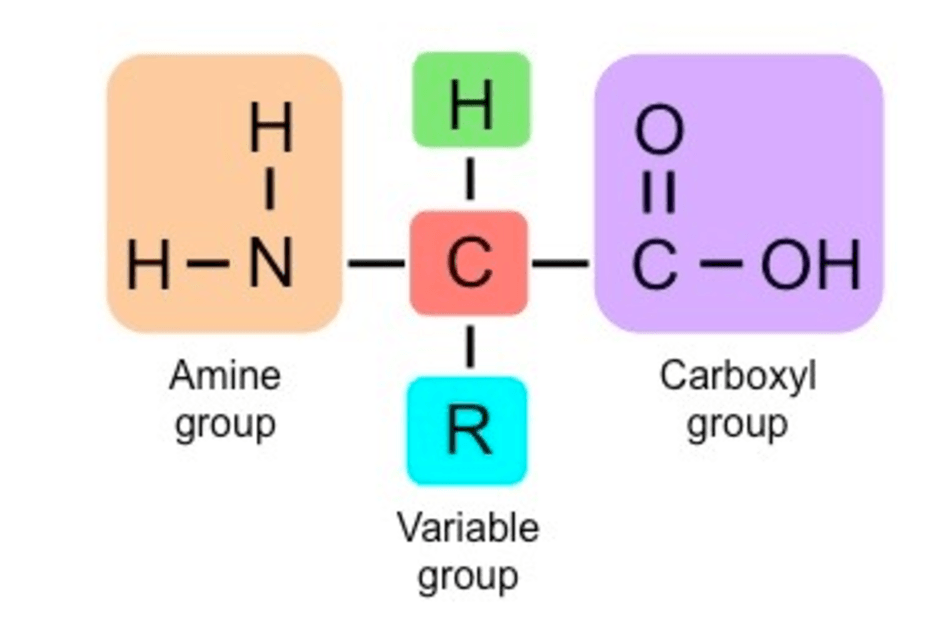
State four aspects of how the R g group of an amino acid vary from one another?
(a) is the bond that links two adjacent amino acids in a polypeptide chain.
When two amino acids combine through a condensation process, it will produce a (a) .
Which of the following pair of level of protein structure and its respective description is correct?
Primary protein - Linear sequence of amino acids in a polypeptide chain.
Secondary protein - The α helix and β pleated sheet of the polypeptide chain due to hydrogen bonds between the atoms of the polypeptide backbone.
Tertiary structure - The overall shape of a polypeptide chain resulting from interactions between the side chains of the various amino acids.
Quaternary structure - Association of two or more polypeptides
Which of the following pair of protein's function and its example is correct?
Enzymatic protein- Insulin
Storage protein - Albumin
Hormonal protein - Pepsin
Transport protein - Keratin
Motor protein - Myosin

What are the building blocks of protein called?
Lipids
amino acids
incomplete protein
enzymes

Which of the following describes the secondary structure of proteins?
The sequence of amino acids
The α-helix and β-pleated sheet folding
The folding of the polypeptide chain due to the 'R' groups
The joining of different protein molecules to make one big molecule

The main bonding in the secondary structure of a protein is due to.....
covalent bonding
ionic bonding
hydrogen bonding
polar bonding

The tertiary structure folding in proteins is primary due to the interactions of....
the 'R' groups
the 'P' groups
the 'A' groups
the 'S'

What is it called when the unique 3-D shape of a protein has been disrupted or 'unravelled'?
Denaturation
Deproteination
Decoupling
Depeptidasing

