wayground logo

Free Printable Worksheets

Font size

S
M
L
XL
Worksheets

Semester 1 Review Quiz

Total questions: 73

Worksheet time: 1hrs 13mins

Name
Class
Date
1.

How close a measurement is to the accepted value is called..

a)

Accuracy

b)

Precision

c)

Significant

d)

Estimate

2.
This bullseye demonstrates...
a)
High Accuracy & High Precision
b)
High Accuracy & Low Precision
c)
Low Accuracy & High Precision
d)
Low Accuracy & Low Precision
3.
This image is an example of...
a)
precision ONLY
b)
accuracy ONLY
c)
BOTH precision and accuracy
d)
NEITHER precision and accuracy 
4.
Change from standard form to scientific notation: 12,000,000
a)
12.0  x  107
b)
0.12  x  107
c)
1.2  x  106
d)
1.2  x  107
5.
Change from standard form to scientific notation:  450,000
a)
4.5  x  105
b)
45  x  105
c)
4.5  x  104
d)
4.5  x  106
6.
Try to change the number back to standard form:  6.79  x  104
a)
679,000
b)
6,790
c)
67,900
d)
6,790,000
7.

Which of the following shows an object at rest?

a)
b)
c)
d)
8.

Use the graph above and pick the most accurate description of the object's motion

a)

object is moving at constant speed

b)

object is speeding up

c)

object is at rest

d)

object is slowing down

9.

Use the picture above to choose the most accurate description of the object's motion

a)

object is speeding up in the positive direction

b)

object is slowing down in the positive direction

c)

object is speeding up in the negative direction

d)

object is slowing down in the negative direction

10.
What is the formula to calculate speed?
a)
Speed = time/distance
b)
Speed = distance/time
c)
Speed = distance x time
d)
Speed = time x distance
11.
A car travels 30 miles/hr for 3 hours, calculate the distance it will travel
a)
90 miles
b)
10 miles
c)
600 miles
d)
90 km
12.
A golf ball accelerates off a tee at 15m/s2, changing its velocity from 0m/s to 50 m/s down the fairway. How long did it take the golf ball to accelerate?
a)
750 seconds
b)
35 seconds
c)
0.3 seconds
d)
3.3 seconds
13.
How fast is the car traveling at 30 seconds?
a)
5m/s
b)
10m/s
c)
20m/s
d)
30m/s
14.

The SI unit for acceleration is

a)

mph

b)

ft/sec

c)

m/s2

d)

m/s

15.
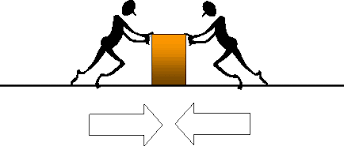
In a tug of war the left team pulls with a force of 200N. The right team pulls with a force of 150N.What is the resultant force?
a)
50N to the left.
b)
350N to the left.
c)
350N to the right.
d)
50N to the right.
16.
What is the acceleration of a 50 kg object pushed with a force of 500 newtons?
a)
100 m/s2
b)
25,000 m/s2
c)
10 m/s2
d)
25 m/s2
17.

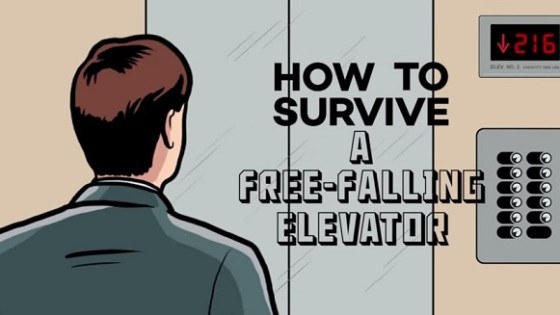
What is the force on a 1000 kg elevator that is falling freely at 9.8 m/sec2

a)

102.04 n

b)

9,800 n

c)

980 n

d)

103 n

18.

What is the relationship between a projectile's motion in the x-direction and the motion in the y-direction?

a)

direct relationship

b)

indirect relationship

c)

inverse relationship

d)

they are independent of each other

19.

In projectile motion, the horizontal velocity is

a)

constant (no acceleration)

b)

changing (there is acceleration)

20.

In projectile motion, the vertical velocity is

a)

constant (no acceleration)

b)

changing (there is acceleration)

21.
What would be the best first step to solving the equation?
-3=x+5
a)
add 3 to both sides
b)
subtract 5 from both sides
c)
add 5 to both sides
d)
subtract -5 from both sides
22.

Solve for x in the following equation:
x4\frac{x}{-4}  = 9

a)

13

b)

36

c)

-36

d)

49\frac{-4}{9}  

23.

Solve the equation for m.

15=4m+5-15=-4m+5  

a)

4

b)

7

c)

5

d)

2.5

24.

*A boat travels 12.0 m while it reduces its velocity from 9.5 m/s to 5.5 m/s. What is the magnitude of the boat’s acceleration while it travels the 12.0 m?

a)

1.3 m/s2

b)

2.5 m/s2

c)

3.0 m/s2

d)

7.5 m/s2

25.

A car starts from rest and accelerates uniformly over a time of 5.21 seconds for a distance of 110 m. Determine the acceleration of the car. Choose the appropriate equation.

a)

v=vo+at

b)

d=vot+1/2at2

c)

v2=vo2+2ad

d)

d=1/2(v+vo)t

26.

The unit we use to measure speed is ___.

a)

m/s

b)

m

c)

s

d)

m/s2

27.

The unit we use to measure distance is ___.

a)

m/s

b)

m

c)

s

d)

m/s2

28.

The unit we use to measure time is ___.

a)

m/s

b)

m

c)

s

d)

m/s2

29.

Which of the following symbols represent speed when time is zero?

a)

v

b)

v0

c)

a

d)

x

30.

*A golf ball starts with a speed of 2 m/s and slows at a constant rate of 0.5 m/s2, what is its velocity after 2 s?

a)

0 m/s

b)

0.5 m/s

c)

1 m/s

d)

1.5 m/s

31.

*How long would it take a car, starting from rest and accelerating uniformly in a straight line at 5 m/s2, to cover a distance of 200 m?

a)

9.0s

b)

10.5s

c)

12.0s

d)

15.5s

32.

If an object starts from rest, what is its initial velocity?

a)

Depends on the problem

b)

0

c)

-9.8m/s2

d)

Always positive

33.
What law is best described by inertia?
a)
1st
b)
2nd
c)
3rd
d)
law of conservation of mass
34.
a)
1st
b)
2nd
c)
3rd
d)
law of motion
35.
What Unit do we Measure Force in? 
a)
Newtons
b)
Joules
c)
Force
d)
Kilograms
36.
What is Newton's First Law
a)
F=ma
b)
Every action has an equal and opposite reaction
c)
An object at rest stays at rest, an object in motion stays in motion. 
d)
Friction 
37.
Which type of force(s) will cause a change in an object's motion?
a)
gravity
b)
zero net force
c)
balanced forces
d)
unbalanced forces
38.
A 20 kg bike accelerates at 10 m/s2.  what was the force
a)
25 Newtons
b)
20 Newtons
c)
200 Newtons
d)
10 Newtons
39.
Newton's third law states that any action will have a(n) _______ and ______ reaction
a)
Equal and similar
b)
Equal and opposite
c)
Equal and different
d)
Greater and opposite
40.
8 N to the left , and 4 N to the right. Find the net force. Is this balanced 
a)
12 N Right  No
b)
4 N Left  No
c)
12 N Right  Yes
d)
4 N Left  Yes
41.
You hit a wall with a stick.  The equal but opposite reaction is _____
a)
the wall pushes against you
b)
the stick pushes against you
c)
you push against the stick
d)
the wall pushes against the stick
42.
What is the acceleration of an object traveling at a constant velocity?
a)
10 m/s2
b)
0 m/s2
c)
250 m/s2
d)
20 m/s2
43.
If an object is stationary (not moving) the forces acting upon it are _____________
a)
unbalanced
b)
weak
c)
balanced
d)
Hulk Smash!
44.

A ____________ is a push or a pull on an object.

a)

friction

b)

force

c)

magnet

d)

gravity

45.
The sum of all forces acting on an object.
a)
Contact Force
b)
Balanced Force
c)
Unbalanced Force
d)
Net Force
46.

All objects have inertia

a)

True

b)

False

47.

Inertia depends on ______

a)

Velocity

b)

Speed

c)

Distance

d)

Mass

48.

More mass = More inertia

a)

True

b)

False

49.

The rate something is traveling in a certain time

(example: miles per hour)

a)

velocity

b)

inertia

c)

speed

50.

The rate something is traveling in a certain direction.

a)

speed

b)

inertia

c)

velocity

51.

The amount of MATTER in an object.

a)

momentum

b)

velocity

c)

mass

52.

Inertia is the tendency of an object to resist a change in its ___________.

a)

temperature

b)

shape

c)

size

d)

motion

53.

A force has both strength and _____.

a)

power

b)

direction

c)

color

d)

balance

54.
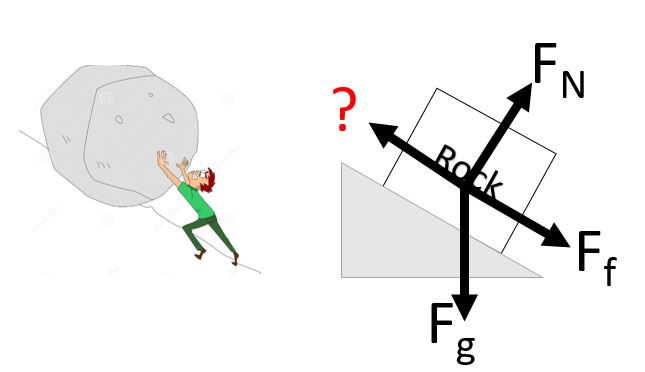
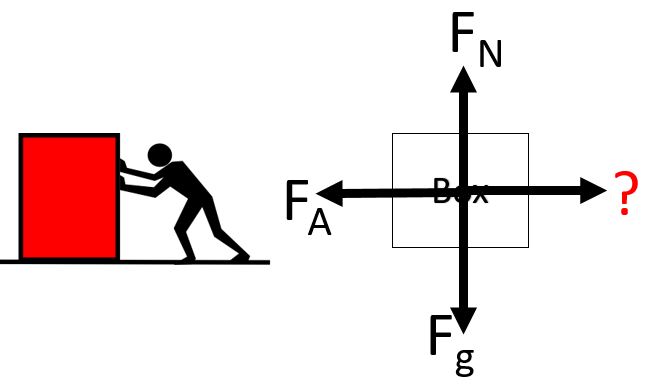
Name the missing force....
a)
weight force
b)
normal force
c)
frictional force
d)
tension force
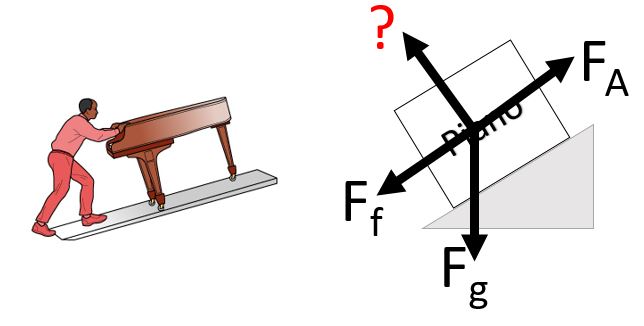
55.
Name the missing force...
a)
applied force
b)
weight force
c)
lift
d)
normal force
56.
Name the missing force...
a)
frictional force
b)
weight force
c)
thrust
d)
buoyant force
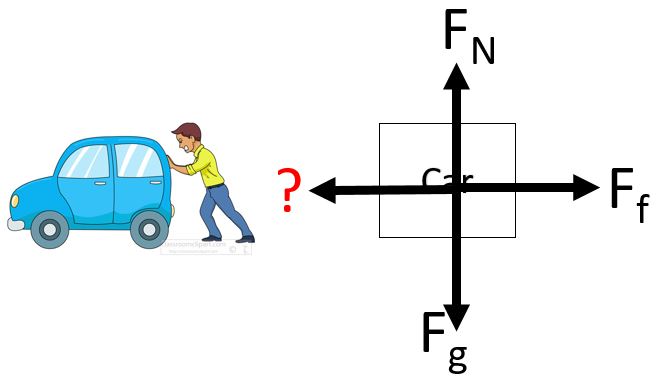
57.
Name the missing force...
a)
normal force
b)
applied force
c)
frictional force
d)
tension force
58.
Name the missing force...
a)
applied force
b)
weight force
c)
tension force
d)
drag
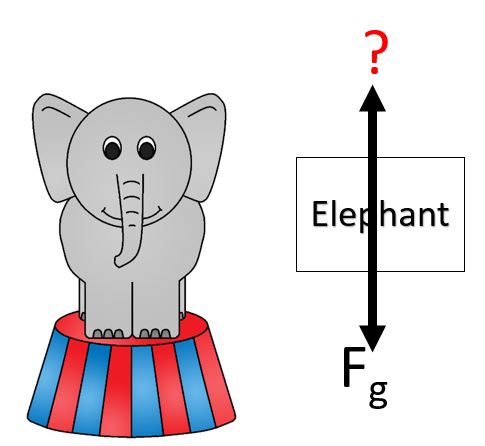
59.
Name the missing force...
a)
weight force
b)
normal force
c)
applied force
d)
frictional force
60.

Whenever an object is moving, there is always this force opposing the motion:

a)

inertia

b)

momentum

c)

friction

d)

applied force

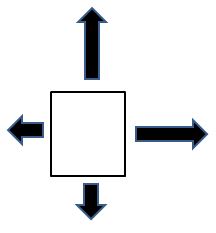
61.

This object would be moving (pick all that are correct):

a)

up

b)

down

c)

left

d)

right

62.

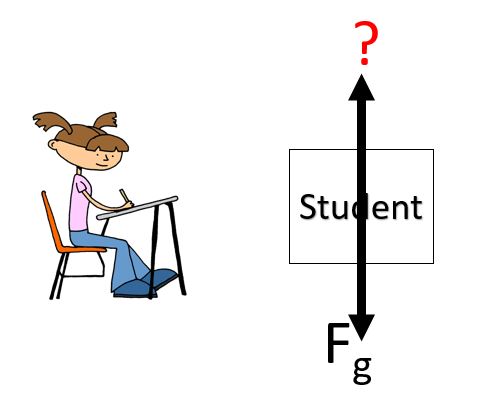
The down-arrow in this diagram is most-likely:

a)

gravity

b)

normal

c)

a push or pull

d)

friction

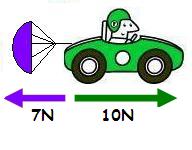
63.
What is the net force?
a)
17 N Right
b)
3 N Right
c)
3 N Left
d)
17 N Left
64.
Name the missing force...
a)
tension force
b)
frictional force
c)
normal force
d)
spring force
65.
What states that "every object in the universe attracts every other object"?
a)
Law of Universal Gravitation
b)
Newton's First Law of Motion
c)
My mother
d)
Inertia & gravity
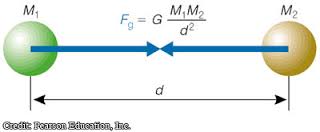
66.
If I double the distance between two objects, what happens to their gravitational Force?
a)
4x bigger
b)
4x smaller
c)
2x bigger
d)
2x smaller
67.
What happens to Gravitational force if I double both of the masses but don't change their distance?
a)
doubles
b)
half as big
c)
4x bigger
d)
4x smaller
68.
The law of universal gravitation is credited to whom?
a)
Einstein
b)
Galileo
c)
Darwin
d)
Newton
69.
Complete the following statement: The farther away two planets are the _______ the gravitational force between them.
a)
more
b)
same
c)
dosen't matter
d)
less
70.

If the distance between 2 masses is increased then the force of gravitation between them will...

a)

increase

b)

decrease

c)

stay the same

71.

If the mass of either m1 or m2 is increased then the force of gravitation between them will...

a)

increase

b)

decrease

c)

stay the same

72.

Centripetal force is an acceleration of an object moving in circular path whose direction is _________________________of the circular path and whose magnitude is equal to the square of the speed divided by the radius.

a)

towards the tangent

b)

towards the centre

c)

towards the minimum point

d)

towards the maximum point

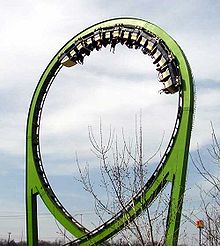
73.

Where is the net force when the rollercoaster is at the top of the loop?

a)

Towards the sky

b)

Towards the Right

c)

Towards the left

d)

Towards the center of the circle