wayground logo

Free Printable Worksheets

NEW

Font size

S
M
L
XL
Worksheets

Earth Science Final Review

Total questions: 70

Worksheet time: 1hrs 4mins

Name
Class
Date
1.

What was created by the nebular hypothesis?

a)

Galaxy

b)

Universe

c)

Black hole

d)

Solar System

2.

Latitude and Longitude are a way we use to map our world. Latitude MEASURES North and South of the equator.

a)

True

b)

False

3.
Branch of Earth Science that deals with the oceans, ocean currents, salinity, and ocean floor features.
a)
Hydrology
b)
Meterology
c)
Oceanography
d)
Geology
4.
Branch of Earth Science that deals with objects beyond the Earth's atmosphere.
a)
Meterology
b)
Astronomy
c)
Geology
d)
Climatology
5.
What branch of science does this picture represent?
a)
Oceanography
b)
Meteorology 
c)
Geology
d)
Astronomy
6.
What branch of science does this picture represent?
a)
Oceanography
b)
Meteorology 
c)
Geology
d)
Astronomy
7.

All of the Earth's water is found in which sphere?

a)

Geosphere

b)

Hydrosphere

c)

Biosphere

d)

Atmosphere

8.

In which sphere are all LIVING things found?

a)

Biosphere

b)

Lithosphere

c)

Asthenosphere

d)

Atmosphere

9.

Which list below includes the parts of a lab experiment?

a)

hypothesis, observation

b)

hypothesis, control, constant, variables

c)

data, conclusion

d)

problem, hypothesis, data

10.
A rock formed from fragments of other rocks is a(n)
a)
Metamorphic Rock
b)
Sedimentary Rock
c)
Extrusive Rock
d)
Igneous Rock
11.
An igneous rock containing large crystals is most likely a(n)
a)
Chemical Rock
b)
Foliated Rock
c)
Extrusive Rock
d)
Intrusive Rock
12.
A metamorphic rock in which the grains line up in parallel bands is a
a)
Clastic Rock
b)
Nonclastic Rock
c)
Nonfoliated Rock
d)
Foliated Rock
13.
As lava cools and crystallizes, what type of rock will form?
a)
Sedimentary
b)
Metamorphic
c)
Extrusive Igneous
d)
Intrusive Igneous
14.
When minerals line up in bands within a metamorphic rock, this rock is...
a)
Nonfoliated
b)
Foliated
c)
Igneous
d)
Sedimentary
15.

Millions of stars, several of them in space, and very far apart are all describing what?

a)

galaxies

b)

moon

c)

solar systems

d)

fusion

16.

Which of the following is Kepler's 1st law?

a)

orbital period squared = semi major axis distance cubed

b)

orbits are elliptical

c)

law of equal areas

d)

law of pie

17.

The change in seasons is a result of what?

a)

rotation

b)

ravioli

c)

revolution

d)

Earth's tilt on its axis as it revolves around the sun

18.

Which is most responsible for Earth's tides?

a)

the sun

b)

the moon

c)

mars

d)

humans

19.

In Earth science EMS stands for....

a)

Emergency Medical Services

b)

Energy Might Stall

c)

Electricity Makes Sense

d)

Electromagnetic Spectrum

20.

Nuclear fusion is described as ....

a)

4 helium protons fusing to make 1 hydrogen atom

b)

4 hydrogen protons splitting to make 4 helium atoms

c)

4 hydrogen protons fusing to make 1 Helium atom

d)

4 helium protons splitting to make 4 hydrogen atoms

21.

What is the name of the cloud that a star is formed in?

a)

Nebula / Stellar Nursery

b)

Supernova

c)

Main Sequence

d)

Dwarf

22.

When a Red Giant runs out of fuel, it become a:

a)

Supernova

b)

Nebula

c)

White Dwarf

d)

Main Sequence Star

23.

A small White Dwarf has a diameter similar to:

a)

The Sun

b)

The Earth

c)

The Moon

d)

A basketball

24.

What is a protostar?

a)

A star that has died

b)

A smaller than average star

c)

A big, blue star that is on the main sequence of the HR diagram

d)

A contracting mass of gas which represents an early stage in the formation of a star

25.

What is a red giant?

a)

It is what happens when a star begins fusing helium into carbon.

b)

It is a star on the main sequence of the HR diagram.

c)

It is a star that has died and is no longer fusing any material.

26.

What is a supernova?

a)

The measure of brightness of a star.

b)

Something that only low mass stars can do.

c)

A star that explodes, creating a great amount of light and energy.

27.

What is fusion?

a)

It is the measure of brightness of a star.

b)

The process of merging atoms together to create energy.

c)

It is the process of analyzing stars for what atoms they contain.

d)

It is a description of how massive a star is.

28.
What color of star is the hottest?
a)
Blue
b)
Red
c)
Yellow
d)
Orange
29.
The color of a star tells us its
a)
magnitude
b)
temperature
c)
size
d)
age
30.
The life cycles of stars are determined by their:
a)
mass (size)
b)
color
c)
distance from Earth
d)
luminosity
31.
Began a new era of astronomy when he concluded that the Sun was the center of the universe
a)
Aristotle
b)
Isaac Newton
c)
Claudius Ptolemy
d)
Nicolaus Copernicus
32.
Built a telescope and made discoveries which changed astronomy; discovered 4 moons of Jupiter
a)
Galileo Galilei
b)
Aristotle
c)
William Herschel
d)
Claudius Ptolemy
33.
He showed the laws governing astronomical bodies were the same laws governing motion on Earth
a)
Isaac Newton
b)
Charles Messier
c)
Tycho Brahe
d)
Hipparchus
34.
When we look at the sun, what layer are we viewing?
a)
photosphere
b)
chromosphere
c)
corona
d)
convection zone
35.
What layer of the sun's atmosphere gives the sun its "white halo" during a solar eclipse?
a)
chromosphere
b)
photosphere
c)
corona
d)
atmosphere
36.

What are the coordinates for the point (Portland) on this map?

a)

(46 degrees N, 121 degrees W)

b)

(30 degrees N, 50 degrees W)

c)

(121 degrees W, 46 degrees N)

d)

(40 degrees N, 90 degrees W)

37.
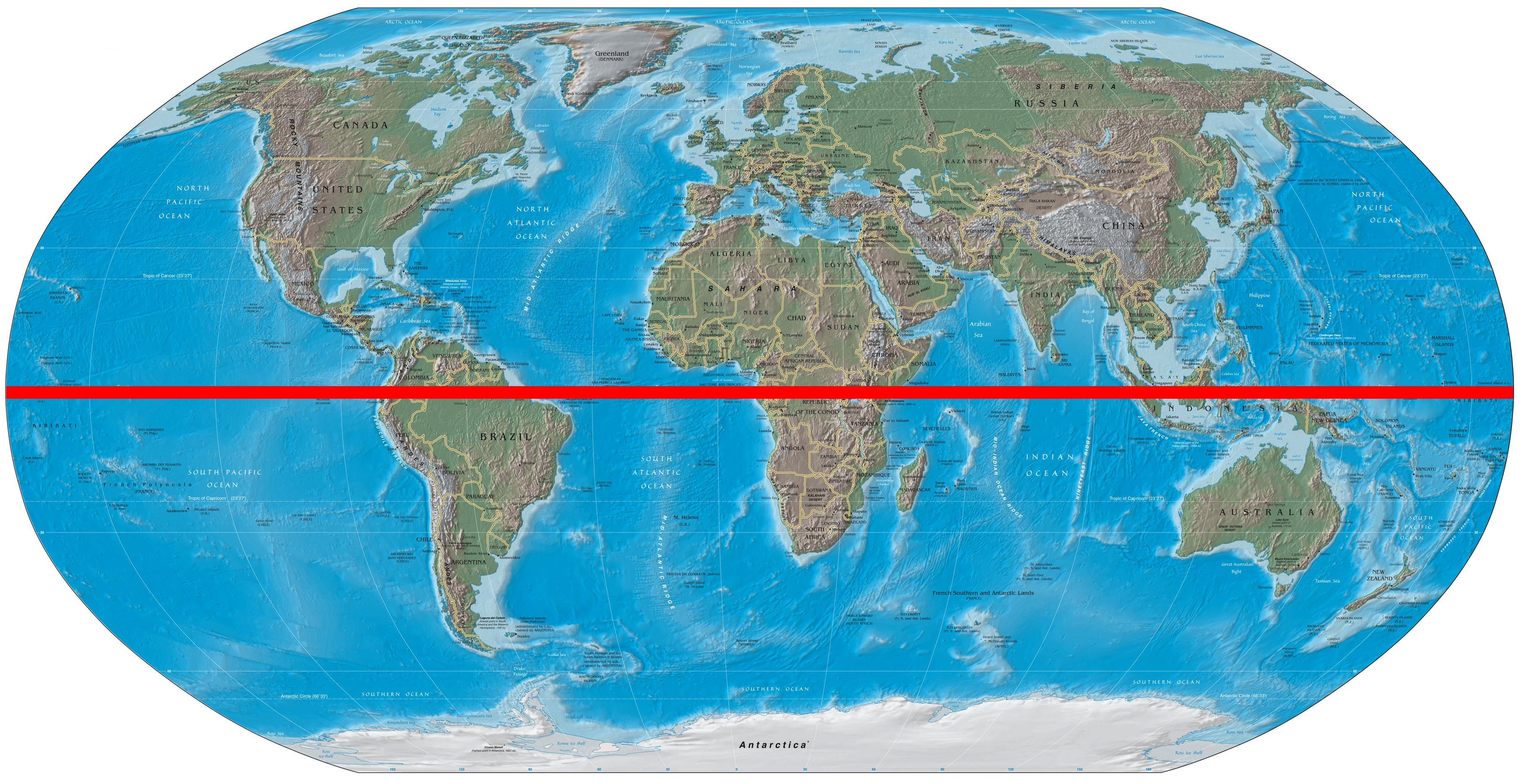
What is the name of this line at 0 degrees latitude?
a)
Prime Meridian
b)
Equator
c)
North Pole
d)
South Pole
38.
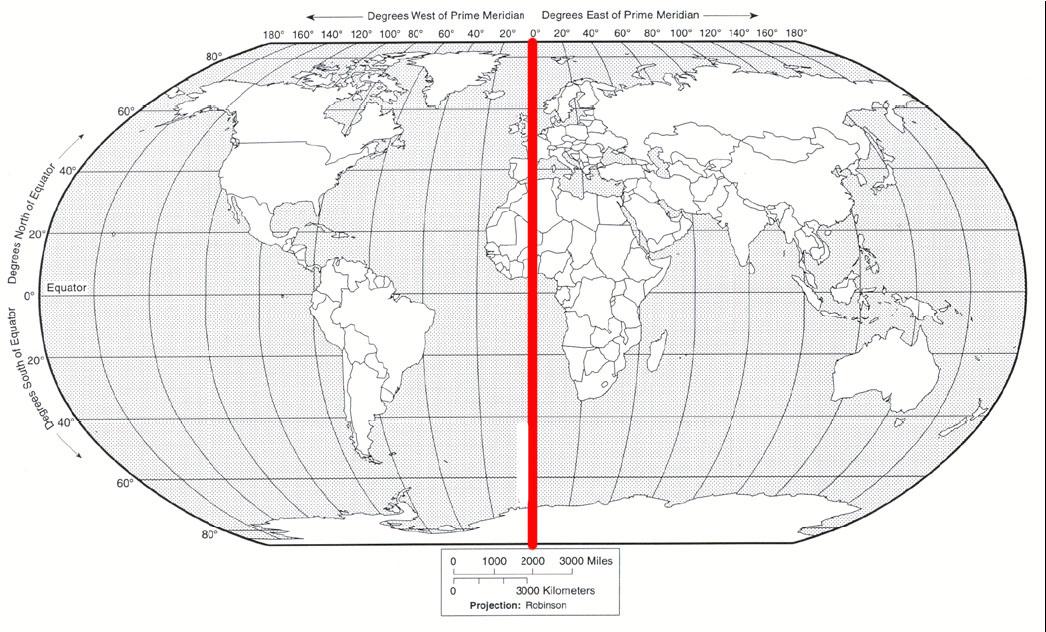
What is the name of the line at zero degrees longitude?
a)
Equator
b)
Prime Meridian
c)
North Pole
d)
South Pole
39.

Scientific idea that well tested and explains why something is the way it is

a)

Principle

b)

Theory

c)

Law

d)

Hypothesis

40.

What is the elevation at the top of the hill on the attached map?

a)

240 Feet

b)

Between 291 and 299 Feet

c)

300 Feet

d)

None of the Above

41.

What is the contour interval of this map?

a)

1500

b)

1600

c)

20

d)

240

42.
Scientists think that convection currents flow in Earth's
a)
continents
b)
mantle
c)
lithosphere
d)
inner core.
43.
Continental crust is made of 
a)
granite
b)
basalt
c)
water
d)
sandstone
44.
Which layer of Earth is made up of tectonic plates?
a)
outer core
b)
inner core
c)
asthenosphere
d)
lithosphere
45.
Earth's inner core is...
a)
a dense ball of solid iron and nickel.
b)
a layer of molten iron and nickel.
c)
a layer of hot rock.
d)
a layer of rock that forms Earth's outer skin.
46.

What is letter J?

a)

Heat and pressure

b)

Melting

c)

Deposition, Compaction, Cementation

d)

Weathering and erosion

47.

What is letter F?

a)

Heat and pressure

b)

Cooling

c)

Deposition, Compaction, Cementation

d)

Weathering and erosion

48.
What type of eclipse is this?
a)
Solar Eclipse
b)
Lunar Eclipse
49.

This model is showing us a...

a)

lunar eclipse

b)

solar eclipse

c)

phases of the moon

d)

earth eclipse

50.
What is the smaller, darker part of the shadow called in an eclipse?
a)
Penumbra
b)
Penumbrella
c)
Umbrella
d)
Umbra
51.
What is the bigger, less dark part of the shadow called in an eclipse?
a)
Penumbra
b)
Penumbrella
c)
Umbrella
d)
Umbra
52.
What moon phase is this? 
a)
new moon
b)
full moon
c)
waxing crescent
d)
waning crescent
53.

How was the moon formed?

a)

The moon has always been there

b)

Giant impact

c)

Capture of an asteroid

d)

A great wizard magically made it

54.

What is the Doppler Effect?

a)

A change in frequency due to the relative motion of a wave source and an observer

b)

When a wave overlaps with another wave

c)

When a wave bounces off of another object

d)

When a wave bends due to traveling through a different medium

55.
What does Reflecting Telescope have?
a)
Lens
b)
Mirrors
c)
Bat ears
56.
What does Refracting Telescope have?
a)
Sand
b)
Mirrors
c)
Lens
d)
Batmobile 
57.
Which property of a star is the brightness of a star at a standard distance?
a)
Apparent (magnitude) brightness
b)
Absolute (magnitude) brightness
c)
Luminosity
d)
Size of the star
58.
The brightness of a star as seen from Earth is its 
a)
apparent brightness.
b)
absolute brightness.
c)
parallax.
d)
reflective brightness.
59.
What type of plate boundary is this?
a)
Plate
b)
Divergent
c)
Convergent
d)
Transform
60.
What geologic feature/event would you most likely to find at a divergent boundary between two pieces of oceanic crust?
a)
Rift Valley
b)
Mid-Ocean Ridge
c)
Island Arc
d)
Flat land
61.
This is the plastic layer of the mantle on which pieces of the lithosphere move.
a)
Lithosphere
b)
Asthenosphere
c)
Mesosphere
d)
Crust
62.
This layer is divided into pieces called tectonic plates.
a)
Mesosphere
b)
Asthenosphere
c)
Mantle
d)
Lithosphere
63.
Which piece of evidence did Wegener use to prove continental drift?
a)
The shape of the continents
b)
Similar fossils found on separate continents
c)
Tree fossils found in odd places
d)
All of the above
64.
Shield volcanoes have:
a)
gently sloping sides
b)
a steep cone shape
c)
moderately sized sides
d)
long cracks along plate boundaries
65.
The volcanoes on the Hawaiian Islands form due to which of the following?
a)
Divergent Boundary
b)
Hot Spot
c)
Subduction Boundary
d)
Transform Boundary
66.

What igneous intrusion is labeled "E"

a)

Sill

b)

Dike

c)

Lacolith

d)

Batholith

67.

What igneous intrusion is labeled "F"

a)

Sill

b)

Dike

c)

Lacolith

d)

Batholith

68.

#4 is a...

a)

batholith

b)

laccolith

c)

dike

d)

sill

69.
The Hertzprung Russell Diagram consists of two axis that are labelled...
a)
Luminosity and Size
b)
Luminosity and Temperature
c)
Size and Age
d)
Mass and Temperature
70.

Which of the following are the brightest?

a)

red supergiants

b)

yellow main sequence

c)

red dwarfs

d)

white dwarfs