wayground logo

Free Printable Worksheets

Font size

S
M
L
XL
Worksheets

Anatomy & Physiology Semester 1 Final Review

Total questions: 186

Worksheet time: 31mins

Name
Class
Date
1.

Blood is example of __ tissue.

a)

Nervous

b)

muscle

c)

epithelial

d)

connective

2.

Which of the following epithelial functions is the primary role of glandular epithelium?

a)

Protection

b)

Secretion

c)

Absportion

d)

Support

3.

This type of epithelial tissue is found in the bladder.

a)

simple squamous

b)

stratified squamous

c)

transitional

d)

pseudostratified columnar

4.

Which tissue type lacks its own blood supply?

a)

stratified squamous epithelium

b)

adipose

c)

areolar

d)

Skeletal muscle

5.

Microvilli and goblet cells are common adaptations found in ___ tissue.

a)

Skeletal muscle

b)

Simple columnar epithelial

c)

Blood

d)

Nervous Tissue

6.

Osteoblasts are bone cells that:

a)

have ruptured

b)

immature cell still diving and undergoing cell division

c)

excreting something

d)

break down old bone material

7.

Which of the following are NOT true of Epithelial tissue?

a)

attaches to connective tissues via a basement membrane

b)

has a rich blood supply

c)

has a high rate of cell division

d)

has little extracellular space between cells

8.

Which of the following epithelial tissues is known for being located in an area of high diffusion like walls of blood vessels or in the alveoli of the lungs.

a)

Stratified Columnar

b)

Simple Columnar

c)

Stratified Squamous

d)

Simple Squamous

9.

Which type of tissue contains specialized cells called neurons?

a)

Epithelial

b)

Nervous

c)

Muscular

d)

Connective

10.

Which tissue is associated with having a matrix?

a)

Epithelial

b)

Nervous

c)

Muscular

d)

Connective

11.

All of the following are types of Loose Connective Tissue EXCEPT:

a)

Areolar

b)

Adipose

c)

Reticular

d)

Cartilage

12.

How many layers are found in pseudostratified columnar epithelium?

a)

1

b)

2

c)

more than 2

d)

it varies

13.
Towards the Front. 
[The eyes are _______ to the brain].
a)
Inferior
b)
Deep
c)
Lateral
d)
Anterior
14.
The scapula is on the anterior/posterior side of the body?
a)
deep
b)
posterior
c)
medial
d)
anterior
15.
The scapula is on the anterior/posterior side of the body?
a)
deep
b)
posterior
c)
medial
d)
anterior
16.
Away from midline
a)
Lateral
b)
Distal
c)
Superior
d)
Transverse
17.
Divides body into top and bottom portions (superior-head; inferior-feat)
a)
Medial Plane
b)
Sagittal
c)
Proximal 
d)
Transverse Plane
18.
A body part is above another part, or is closer to the head
a)
Superficial
b)
Lateral
c)
Superior
d)
Deep
19.
Body is standing straight, facing forward, upper limbs at side and palms facing forward. 
*right and left refer to "right" and "left" of the body in position.
a)
Sagittal
b)
Anatomical Position
c)
Anterior Position
d)
Anatomical Plane
20.
Toward the back; opposite of Anterior
a)
Superior
b)
Posterior
c)
Inferior
d)
Lateral
21.
Away from the origin or trunk
a)
Deep
b)
Distal
c)
Proximal
d)
Posterior
22.
The knee is _______ to the ankle.
a)
proximal
b)
lateral
c)
distal
d)
medial
23.
Closer to midline in relation to another part
a)
Deep
b)
Distal
c)
Medial
d)
Proximal
24.
The head is ______ to the chest.
a)
superior
b)
dorsal
c)
inferior
d)
ventral
25.
The bone is _____ to the skin.
a)
inferior
b)
superficial
c)
deep
d)
posterior
26.
The right shoulder is ______ to the sternum.
a)
medial
b)
proximal
c)
distal
d)
lateral
27.
The rib cage is _____ to the heart.
a)
proximal
b)
medial
c)
superficial
d)
distal
28.
Which is the correct structural order?
a)
tissue-cells-organ-organ system
b)
cells-tissue-organ system-organ
c)
tissue-cells-organ system-organs
d)
cells-tissue-organ-organ system
29.
The cranial cavity and the spinal (vertebral) cavity are both contained within the _______ cavity.
a)
dorsal
b)
ventral
c)
abdominal
d)
throacic
30.
Which body cavity contains organs including the stomach, spleen, liver, gallbladder, and pancreas?
a)
abdominal
b)
pelvic
c)
thoracic
31.
Which body cavity is located above the diaphragm and is surrounded by the rib cage?
a)
abdominal
b)
pelvic
c)
thoracic
32.
What is the sole of the foot named?
a)
Instep of the foot
b)
Sternal
c)
Plantar
33.
What is the carpal?
a)
The wrist
b)
The neck
c)
The ankle
d)
The elbow
34.

The two types of bone tissue are ___ and ___.

a)

long bone and short bone

b)

compact bone and spongy bone

c)

spongy bone and cartilage

d)

dense bone and compact bone

e)

bone and cartilage

35.

Which of the following is an example of a fibrous joint?

a)

shoulder

b)

pubis symphsis

c)

cranial sutures

d)

intervertebral discs

36.

There are ___ cervical, ___ thoracic, and ___ lumbar vertebrae

a)

5, 12, 7

b)

7, 12, 5

c)

5, 7, 12

d)

7, 5, 12

37.

The human integumentary system includes

a)

skin, nails, hair follicles and glands

b)

just the skin

c)

the epidermis, dermis, and subcutaneous layer

d)

muscles and bones

38.

The cells of the epidermis are supplied with nutrients from blood vessels located in the ___.

a)

epidermis

b)

dermis

c)

subcutaneous layer

d)

both epidermis and dermis

39.

Exposure to ultraviolet light darkens the skin by stimulating production of ___.

a)

melatonin

b)

hemoglobin

c)

carotene

d)

melanin

40.

The study of the various functions of the human body is called_________ while the study of the various parts is called ___________.

a)

anatomy, physiology

b)

physiology, anatomy

41.

Which of the following are incorrectly matched?

a)

flat bone - scapula

b)

short bone - femur

c)

long bone -humerus

d)

irregular bone - pelvis

42.

A cord of connective tissue that attaches a muscle to a bone is a

a)

tendon

b)

ligament

c)

aponeurosis

d)

sarcolemma

43.

Tissue that attach bone to bone is called

a)

tendons

b)

ligaments

c)

muscles

44.

The synovial joint that allows movement in one direction only, as in the elbow, is the

a)

hinge

b)

saddle

c)

pivot

d)

ball and socket

45.

A burn patient has blisters on her neck and forearm. This burn would be classified as

a)

first degree burn

b)

second degree burn

c)

third degree burn

d)

fourth degree burn

46.

The glands that secrete oil and soften and lubricate the skin are called the

a)

sweat glands

b)

sebaceous glands

c)

eccrine glands

d)

apocrine glands

47.

Osteoblasts ______ bone and osteoclasts ______ bone.

a)

destroy, build

b)

build, destroy

48.

Osteocytes are found in a space called

a)

canaliculi

b)

lamella

c)

Volkmann's canal

d)

lacuna

49.
The smallest unit of structure and function of life is
a)
Carbon
b)
Cell
c)
Tissue
d)
Organ
50.
Which structure is found inside of the nucleus and function includes making ribosomal RNA/ribosomes?
a)
nucleus
b)
nuclear membrane
c)
nuclear pore
d)
nucleolus
51.
Which organelle contains cristae inside its membrane that enclose important enzymes involved in the production of ATP?
a)
Chloroplasts
b)
Lysosomes
c)
Golgi Apparatus
d)
Mitochondria
52.
Which organelle functions to digest and breakdown old organelles and/or removal of pathogens?
a)
lysosomes
b)
mitochondria
c)
centrioles
d)
chromatin
53.
The cell membrane is 
a)
impermeable
b)
freely permeable
c)
semipermeable
d)
uhhhhhh
54.
Which structure would have fixed ribosomes attached to it, and is involved in "folding" proteins into their 3 Dimensional shapes?
a)
SER
b)
RER
c)
Golgi Apparatus
d)
Mitochondria
55.
Membrane renewal vesicles are produced by which organelle
a)
Rough endoplasmic reticulum
b)
Smooth endoplasmic reticulum
c)
Golgi Apparatus
d)
Lysosomes
56.
They are known to the the protein factories of the cell.
a)
Golgi bodies
b)
Mitchondria
c)
Lysosome
d)
Ribosome
57.
It is the “janitor” of the cell.
a)
lysosome
b)
ribosome
c)
vacuole
d)
cell membrane
58.
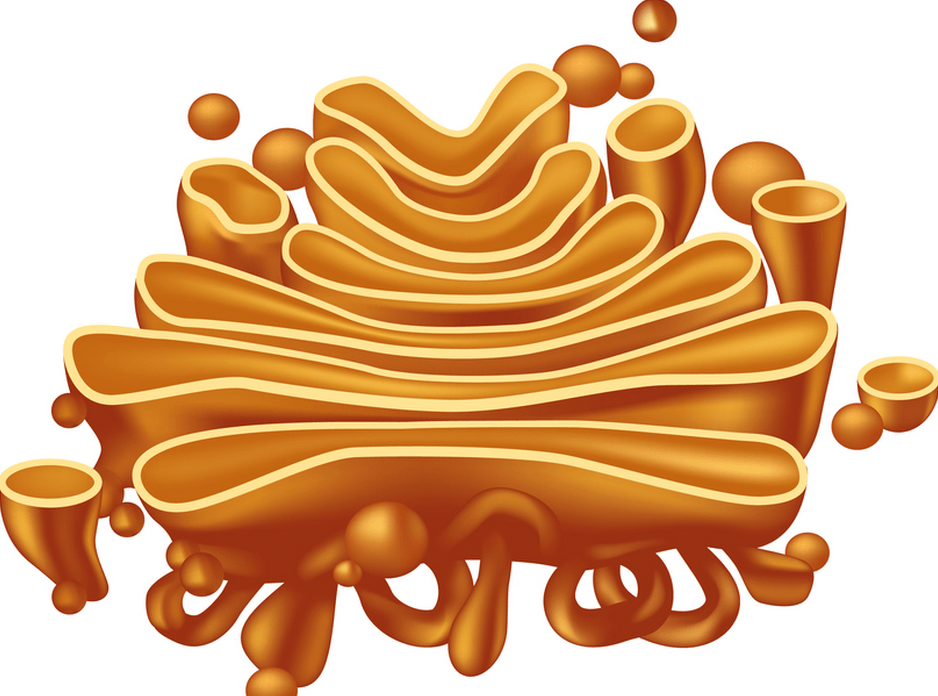
I am a protein packaging and shipping machine! Who am I?
a)
vacuole
b)
ribosome
c)
mitochondrion
d)
golgi apparatus
59.

Homeostasis refers to:

a)

changing internal conditions

b)

stable external conditions

c)

stable internal conditions

d)

changing external conditions

e)

none of these is correct

60.
What is the cell cycle?
a)
The gradual development of something, especially from a simple to a more complex form.
b)
The study of heredity and the variation of inherited characteristics.
c)
The branch of biology that deals with the relations of organisms to one another and to their physical surroundings.
d)
The series of events that take place in a cell leading to its division and duplication of its DNA to produce two daughter cells.
61.
Which part of the Cell Cycle takes the longest?
a)
Interphase
b)
Mitosis
c)
Prophase
d)
Cytokinesis
62.
What happens in the first part of Interphase?
a)
Mitosis
b)
Cell Growth
c)
DNA Replication
d)
Anaphase
63.
What part of the cell cycle results in the splitting of the new cells?
a)
Interphase
b)
Mitosis
c)
Metaphase
d)
Cytokinesis
64.
True or False. 
After a cell goes through cytokinesis, it starts mitosis all over again.
a)
True
b)
False
65.
What phase is this cell in?
a)
Cytokinesis
b)
Mitosis
c)
Prophase
d)
Metaphase
66.
What phase is this cell in?
a)
Mitosis
b)
Interphase
c)
Anaphase
d)
Telophase
67.
What phase is this cell in?
a)
Mitosis
b)
Cytokinesis
c)
Prophase
d)
Telophase
68.
What phase is this cell in?
a)
Mitosis
b)
Interphase
c)
Prophase
d)
Telophase
69.
What part of the cell cycle is this cell in?
a)
Mitosis
b)
Interphase
c)
Telophase
d)
Cytokinesis
70.
True or False.
Mitosis is made up of 5 phases.
a)
True
b)
False
71.
In what phase does chromatin condense to form chromosomes?
a)
Mitosis
b)
Interphase
c)
Prophase
d)
Anaphase
72.

Cells need to produce new cells in order to...

a)

replace cells that have died.

b)

create new chromosomes.

c)

obtain energy from sunlight.

d)

release energy from food.

73.
Which of the following is not a part of interphase?
a)
G2
b)
M
c)
G1
d)
S
74.
What are the lines in the picture called?
a)
Spindle Fibers
b)
Centromeres
c)
Chromsomes  
d)
Centriole 
75.
How many parts are there to the cell cycle? 
a)
2
b)
3
c)
4
d)
5
76.
The dark "spider" looking things on opposite sides of the cell are called "Spindle Fibers".  What is their job?
a)
Eating the chromosomes
b)
Pulling the chromosomes apart
c)
Putting the chromosomes together
77.
The heart is contained within this cavity (most specific)
a)
mediastinum
b)
pericardial
c)
pleural
d)
thoracic
78.
The lungs are located within this cavity
a)
pleural
b)
mediastinum
c)
brachial
d)
pelvic
79.

The cavity surrounded by a box is?

a)

Abdominal Cavity

b)

Pelvic Cavity

c)

Pleural Cavity

d)

Cranial Cavity

80.
a)

Cranial Cavity

b)

Pleural Cavity

c)

Pericardial Cavity

d)

Vertebral Canal

81.

The cavity surrounded by a box is?

a)

Thoracic Cavity

b)

Abdominal Cavity

c)

Pelvic Cavity

d)

Vertebral Canal

82.

What quadrant does number 3 Represent?

a)

Right Upper

b)

Left Upper

c)

Right Lower

d)

Left Lower

83.

What is section 1?

a)

Epigastric

b)

Left Hypochondriac

c)

Right Hypochondriac

d)

Right iliac

84.

What is section 2?

a)

Epigastric

b)

Left Hypochondriac

c)

Right Hypochondriac

d)

Right iliac

85.

What is section 7?

a)

Epigastric

b)

Left Hypochondriac

c)

Right Hypochondriac

d)

Right iliac

86.

What is section 4?

a)

Umbilical

b)

Left lumbar

c)

Right lumbar

d)

Right iliac

87.

What is section 5?

a)

Umbilical

b)

Left lumbar

c)

Right lumbar

d)

Right iliac

88.

The abdominal are is commonly subdivided in 2 ways.

a)

Nine regions only

b)

Nine regions and quadrants

c)

Just names on a tic tac board

d)

Quadrants only

89.
divides body into right and left halves
a)
sagittal plane
b)
mid-sagittal plane
c)
medial
d)
transverse plane
90.

Armpit area

a)

Acrominal

b)

Axillary

c)

Deltoid

d)

Nasal

91.

Front of the knee

a)

Femoral

b)

Popiteal

c)

Patellar

d)

Sural

92.

Upper arm area

a)

Antebrachial

b)

Brachial

c)

Antecubital

d)

Cubital

93.

separates thoracic from abdominal

a)

cranial

b)

spinal

c)

thoracic

d)

diaphragm

94.

space for the heart

a)

mediastinum

b)

abdominopelvic

c)

abdominal

d)

pelvic

95.

joint cavities

a)

orbital

b)

oral

c)

middle ear

d)

synovial

96.
The individual strands on duplicated chromosomes are called_____________
a)
Centromeres
b)
daughters
c)
Chromatids
d)
Karyotypes
97.
The ___________ holds the replicated sister chromatids together.
a)
centriole
b)
chromosomes
c)
centromere
d)
cycles
98.
The structure labeled A is a(n)
a)
chromatid
b)
centriole
c)
centromere
d)
chromophere
99.
The structures labeled B are
a)
centrioles
b)
chromatids
c)
centromeres
d)
chromopheres
100.

Each chromosome contains two identical _____.

a)

chromotids

b)

chromosomes

c)

first

d)

meiosis

e)

second

101.
Diffusion is the movement of particles
a)
from low to high concentration
b)
from  high to low concentration
c)
from equilibrium to areas of high concentration
d)
all of the above
102.
Moving from areas of LOW concentration to areas of HIGH concentration is called?
a)
Passive Transport
b)
Active Transport
c)
Diffusion
d)
Osmosis
103.
If the question asks about Osmosis, I will look for an answer about?
a)
Particles
b)
Salt
c)
Sugar
d)
Water
104.
Which is true about active transport?
a)
It requires energy
b)
it does not require energy
c)
It moves substances down the concentration gradient
d)
it moves material from high to low concentration
105.
What are two types of passive transport?
a)
endo and exocytosis 
b)
cookies and milk
c)
active and passive 
d)
Osmosis and diffusion
106.
What does it mean that a cell membrane is semi-permeable?
a)
It allows all substances in
b)
It allows some substances in
c)
It allows nothing in
107.
Passive transport requires no
a)
concentration gradients
b)
osmosis
c)
motion
d)
energy
108.
Engulfs large molecules and moves them inside the membrane.
Uses energy.
a)
exocytosis
b)
endocytosis
c)
protein channel 
d)
diffusion
109.
Engulfing a large substance from the inside of the cell to move it outside of the cell. 
Uses energy. 
a)
exocytosis
b)
endocytosis
c)
photosynthesis
d)
diffusion
110.
Particles move from high concentrations to low concentrations.
Doesn't need energy
a)
passive transport
b)
facilitated transport
c)
active transport
d)
exocytosis
111.
Osmosis is the movement of 
a)
water from low to high concentration
b)
particles from low to high concentration
c)
water from high to low concentration
d)
particles from high to low concentration
112.
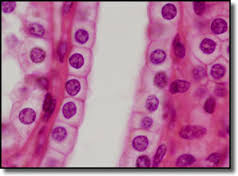
which tissue is this?
a)
Pseudostratified columnar
b)
Stratified Squamous
c)
Simple Columnar
d)
Transitional
113.
Salivary glands are 
a)
Endocrine Glands
b)
Exocrine Glands
114.
Identify:
a)
Pseudostratified
b)
Simple cuboidal
c)
Transitional
d)
Simple Squamous
115.
What type of connective tissue is this?
a)
Bone
b)
Cartilage
c)
Blood
d)
Adipose
116.
Intercalated discs are found in which muscle type?
a)
Cardiac
b)
Skeletal
c)
Lateral
d)
Smooth 
117.

The two ways to classify epithelium cells are

a)

number and size

b)

shape and color

c)

shape and number of layers

d)

color and number

118.

The four types of tissue are

a)

muscle, transitional, epithelial, connective

b)

muscle, nervous, epithelial, connective

c)

muscle, epithelial, connective, squamous

d)

cardiac, transitional, epithelial, connective

119.

Tissues work together and make up

a)

cells

b)

organelles

c)

molecules

d)

organs

120.

Jerome plays football and recently broke a bone in the tarsal region. This region is in the ________.

a)

foot

b)

wrist

c)

ankle

d)

shin

121.

Which layer is the top layer of the epidermis?

a)

Stratum basale

b)

Stratum lucidum

c)

Stratum granulosum

d)

Stratum corneum

122.

The nails are mostly made up of

a)

Sebum

b)

Follicular cells

c)

Hard keratin

d)

Simple squamous cells

123.
Full thickness burns involve damage to the 
a)
the epidermis, only
b)
the epidermis, dermis, and hypodermis
c)
the epidermis and dermis, only
d)
muscle, only
124.

Which epidermis layer is clear and thin?

a)

Stratum basale

b)

Stratum lucidum

c)

Stratum spinosum

d)

Stratum corneum

e)

Stratum granulosum

125.
Connective tissue is
a)
The tissue that protects, supports, binds together, stores fat, produces blood cells
b)
Tissue that is the lining, covering, and glandular tissue of the body
c)
Tissue that contracts and shortens to produce movement
126.
What is the most common fixed cell that produces the matrix in loose connective tissue? 
a)
Mast Cell
b)
Blast Cell
c)
Fibroblast
127.

Which of the following is not true about connective tissue?

a)

It has compact arrangement of cells.

b)

It has fibers.

c)

It is composed of extracellular matrix.

d)

Cells are scattered and varied.

128.

How does your body maintain homeostasis when your body temperature is on the rise?

a)

you shiver and get thirsty

b)

you overheat and pass out

c)

blood vessels dilate and you sweat

d)

you drink water and sleep

129.

True or False: When you feel thirsty, your body is trying to maintain homeostasis and get your fluid levels back to normal.

a)

True

b)

False

130.

True or False: Negative Feedback is bad; Positive feedback is good.

a)

True

b)

False

131.

What are the 4 parts of the Integumentary System?

a)

Skin

b)

Hair

c)

Heart

d)

Nails

e)

Sweat Glands

132.

The skin helps to ________________ the body.

a)

protect

b)

cover

133.

The IS system produces which Vitamin?

a)

A

b)

C

c)

D

134.

Which has a root and follicle at the end?

a)

Sweat glands

b)

Hair

c)

Nails

d)

Skin

135.
The waterproofing protein that fills the cells in the upper layers of the epidermis.
a)
Keratin
b)
Melatonin
c)
Melanin
d)
Actin
136.
This gland releases an oil known as sebum.
a)
Sebacious gland
b)
Apocrine Gland
c)
Eccrine Gland
d)
All of the above
137.
What is the top layer of the skin called?
a)
Dermis
b)
Hypodermis
c)
Epidermis
d)
Subcutaneous
138.
What is another name for the hypodermis?
a)
epidermis
b)
subcutaneous layer
c)
stratum basale
139.
What is the function of the arrector pili muscle?
a)
To secrete sebum
b)
To produce keratin
c)
To make hairs stand on end
d)
None of these
140.
Which of the following is in correct order of epithelial tissue from superficial to deep on the calf of your leg?
a)
stratum granulosum, stratum lucidum, stratum corneum, stratum spinosum, stratum basale
b)
stratum corneum, stratum granulosum, stratum spinosum, stratum basale
c)
Stratum corneum, stratum lucidum, stratum granulosum, stratum spinosum, stratum basale
d)
stratum basale, stratum spinosum, stratum granulosum, stratum lucidum, stratum corneum
141.
The coloring in the skin; found in the epidermis.
a)
Melanin
b)
Oil
c)
Perspiration
d)
Pores
142.
What is the condition called when your skin is a yellowish tint?
a)
Jaundice
b)
Albino
c)
Cyanosis
d)
Erythema
143.
What cell produces a dark brown pigment?
a)
Keratinocytes
b)
Melanocytes
c)
Merkel (Tactile) Cells
d)
Langerhans (dendritic) cell
144.

What type of lesion is an open sore that causes loss of tissue?

a)

Crust

b)

Erosion

c)

Fissure

d)

Ulcer

145.
a)
First Degree Burn
b)
Second Degree Burn
c)
Third Degree Burn
d)
Fourth Degree Burn
146.
A sunburn might be an example of a:
a)
1st degree burn
b)
2nd degree burn
c)
3rd degree burn
d)
4th degree burn
147.

The portion of the living skin that supports the nail plate as it grows toward the free edge is called the ______________.

a)

nail bed

b)

cuticle

c)

matrix

d)

ligament

148.

The ____________ is the whitish, half-moon shape underneath the base of the nail.

a)

sidewall

b)

lunula

c)

root

d)

free edge

149.

Ordinarily, replacement of a natural fingernail takes about _____________.

a)

6-12 months

b)

4-6 months

c)

6-8 months

d)

2-8 months

150.

c

a)

Cuticle

b)

Proximal Nail Fold

c)

Nail Matrix

d)

Nail Root

e)

Nail Bed

151.

Which of the following are functions of the bones?

a)

Support and Protection

b)

Attachment to the muscles

c)

Stores inorganic salts

d)

All of the above

152.

Articular cartilage is found in what part of the long bone?

a)

inside of the medullary cavity

b)

on the outer surface of the diaphysis

c)

the outer surface of the epiphyses

d)

in the spaces of the spongy bone

153.

What lines the medullary cavity and spaces of the spongy bone?

a)

Periosteum

b)

Epiphysis

c)

Intramembranous

d)

Endosteum

154.

Bone cells are known as

a)

Lacunae

b)

Osteocytes

c)

Collagen

d)

Osteon

155.

Osteogensis is known as

a)

Bone growth

b)

Bone development

c)

Bone-forming cells

156.

How many pairs of ribs are in the thoracic cage?

a)

7

b)

2

c)

12

d)

10

157.

What is the scientific name of the 'jaw bone'?

a)

Maxilla

b)

Mandible

158.

The bones at the end of our fingers and toes are known as _______________.

a)

Tarsals

b)

The phalanges

159.

The scientific name of the collar bone is the ____________.

a)

Scapula

b)

Clavicle

160.

The shoulder and hip are ball and socket joints.

a)

True

b)

False

161.

The forearm bone closest to the thumb is the __________.

a)

Ulna

b)

Radius

162.

The carpals are your ankle bones.

a)

True

b)

False

163.

The patella is commonly known as your knee cap.

a)

True

b)

False

164.

Long bones are longer than they are wide.

a)

True

b)

False

165.

An example of a saddle joint can be found in the thumb.

a)

True

b)

False

166.

Long bones have a _____ that makes up most of bone's length and is composed of compact bone

a)

epiphyseal plate

b)

yellow marrow

c)

diaphysis

d)

articular cartilage

167.

Which of the following statements about ribs is NOT true?

a)

false ribs are indirectly attached

b)

women have more ribs than men

c)

ribs are attached to the thoracic vertebrae

d)

floating ribs are not attached to the sternum

168.

Red bone marrow functions to

a)

produce fat

b)

produce blood cells

c)

store cells

d)

produce new bone cells

169.

Yellow marrow functions to ______.

a)

produce new bone cells

b)

store calcium

c)

store fat

d)

produce calcium

170.

How many vertebrae are in the neck?

a)

2

b)

4

c)

7

d)

12

171.
The site of bone growth on a long bone is called
a)
Epiphyseal plate
b)
diaphysis
c)
periosteum
d)
meduary cavity
172.

What bone of the pelvic girdle is colored purple (#1)?

a)

ilium

b)

ischium

c)

pubis

d)

sacrum

e)

coccyx

173.

What bone of the pelvic girdle is colored beige (#2)?

a)

ilium

b)

ischium

c)

pubis

d)

sacrum

e)

coccyx

174.

What bone of the pelvic girdle is colored pink (#3)?

a)

ilium

b)

ischium

c)

pubis

d)

sacrum

e)

coccyx

175.

What bone of the pelvic girdle is colored blue (#4)?

a)

ilium

b)

ischium

c)

pubis

d)

sacrum

e)

coccyx

176.

What bone of the pelvic girdle is colored blue (#5)?

a)

ilium

b)

ischium

c)

pubis

d)

sacrum

e)

coccyx

177.

The following is NOT one of the 3 Joint Classifications..

a)

Cartilaginous

b)

Cartilage

c)

Fibrous

d)

Synovial

178.

The joints that allow the most movement are called

a)

Fixed

b)

Fibrous

c)

Cartilaginous

d)

Synovial

179.

When kicking a football the knee

a)

Flexes

b)

Extends

c)

Abducts

d)

Adducts

180.
Identify the joint action being performed.
a)
Extension
b)
Flexion
c)
Abduction
d)
Adduction
181.
Hip and shoulder have examples of this type of joint
a)
ball and socket
b)
condyloid
c)
hinge
d)
gliding
182.
Fibrous joints are?
a)
freely moveable
b)
partially moveable
c)
immovable
183.
What are joints
a)
A place where one bone meets 
b)
A place where  two  bones meet 
c)
Bones don't meet 
d)
A place where three bones meet 
184.
What are functions of the skeleton?
a)
Protection
b)
Blood cell production
c)
Movement
d)
All of these
185.
The primary mineral stored by compact bone is
a)
Calcium
b)
Selenium
c)
Zinc
d)
Magnesium
186.

What type of tissue is cartilage?

a)

Connective

b)

Muscular

c)

Epithelial

d)

Nervous