
 Worksheets
Semester Review
Total questions: 142
Worksheet time: 2hrs 30mins
Which statement is true?
The galaxies are moving toward us.
The galaxies are moving away from us.
The universe remains static or unchanged in motion.
None of the above
As galaxies move away from our galaxy a shift on the electromagnetic spectrum (EMS) is noticed. This phenomena is
called _____________.
redshift
blueshift
unshift
blackshift
How does Cosmic Microwave Background Radiation support the Big Band Theory?
Microwaves are found everywhere in the universe.
Microwaves occurred at the time of the Big Bang
Microwaves are useful in our everyday lives
The universe's first light is a result of ...
electrons moving into their ground state
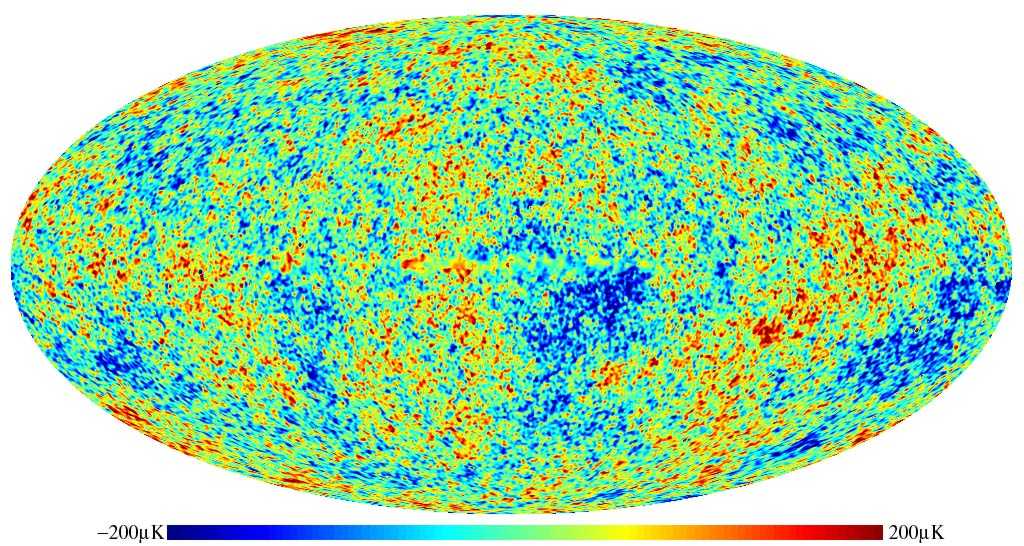
cosmic microwave background
the formation of protons
the first stars
The universe's first visible light can now be observed as ___.
starlight
CMB (Cosmic Microwave Background)
the doppler effect
long as you have a telescope
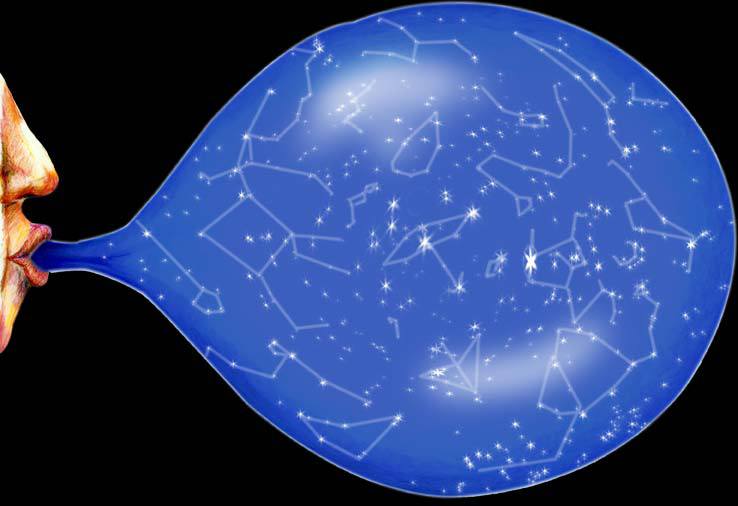
Why is the light from distant galaxies red-shifted?
They produce more red light than nearby galaxies
They are moving away from us
The longer wavelengths are filtered out more by dust
They are moving toward us
The main elements in the universe were hydrogen and helium until:
the big bang.
humans came along.
stars began doing fusion.
the redshift was discovered.
How does the abundance of hydrogen and helium support the Big Bang Theory.
Hydrogen and helium are elements on the Periodic Table
Hydrogen and helium are in the same ratio throughout the universe.
Hydrogen and helium have many current uses today
What is the significance of the Hubble Constant?
It is the age of the universe.
It is the rate the universe is expanding.
It is how fast galaxies are moving.
It is how far galaxies are from us.
What can we determine by using the Hubble constant?
age of the universe
velocity of galaxies
rate of universe expansion
all of these
True or False: Scientists know what started the Big Bang.
True
False
True or False: A theory is an absolute fact.
true
false
A theory is as good as it's ____.
evidence
belief
public support
social status

Which elements are in star 1?
H, He, Li, Na
H, Na
H, He, Li
Li, Na

The unknown emissions spectra belongs to the element
Hydrogen
Mercury
Neon
Sodium

The unknown emissions spectra belongs to the element
Hydrogen
Mercury
Neon
Sodium

The unknown emissions spectra belongs to the element
Hydrogen
Mercury
Neon
Helium
True or False: Emission spectrums are like fingerprints for elements.
true
false
According to the Big Bang Theory, as the universe expanded it ____.
cooled
warmed
The temperature of the universe:
is constant.
varies between 20 to 6,000 degrees Fahrenheit.
has increased to about 10,000 degrees Celsius.
has cooled to about 2.7 Kelvin.
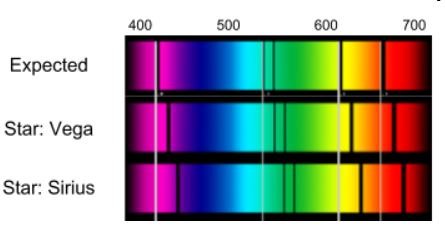
Why does redshift occur in stars/galaxies?
Light waves stretch as a star moves away
Light waves squish as a star moves away
Redshift does not occur in stars
Light waves change shape as stars move
Our universe is made of ________ hydrogen
25%
35%
74%
82%
Which of the following can be determined by starlight?
chemical composition
movement
surface temperature
all of these and more

The photosphere is letter __
D
G
E
B

The chromosphere is letter...
A
D
G
E

The corona is...
A
D
F
B

Sunspots are letter...
C
F
I
A

A solar flare is letter...
I
A
F
C

The core is letter...
H
G
E
A

The convection zone is letter...
E
G
B
D

A prominence is letter...
F
I
C
A

Identify the part of the sun at letter G.
Radiative Zone
Convection Zone
Photosphere
Chromosphere

Where in the sun does fusion take place?
core
radiative zone
flares
photosphere

Which part of the sun is so dense it takes 100,000's of years for energy to travel through?
chromosphere
photosphere
radiative zone
convection zone

Which part of the sun relies on the transfer of energy due to temperature difference?
Radiative zone
Convection zone
Photosphere
Core

Which is referred to as the atmosphere of the sun where flares and prominences take place.
chromosphere
photosphere
corona
convection zone

Sudden flash on the surface of the sun, often near sunspots.
CME (coronal mass ejection)
sunspot
prominence
solar flare

An explosion of plasma that follows magnetic field lines.
CME (coronal mass ejection)
sunspot
solar flare
prominence
A superheated "cloud" of magnetized plasma that escapes the sun.
CME (coronal mass ejection)
prominence
solar flare
sunspot

True or False: The life of a star is dependent upon the mass of the original star.
True
False

A protostar glows due to ___.
heat
fusion
A star spends the majority of its life as a _____.
protostar
main sequence star
white dwarf
neutron star

The majority of stars in space are ____.
main sequence stars
white dwarfs
brown dwarfs
neutron stars
Main sequence stars use ____ as fuel for nuclear fusion.
coal
hydrogen
helium
plasma
True or False: As long as the outward pressure from the core and the inward gravitational pull are equal, a star will maintain its size.
true
false
Select the options that are true for low mass stars
High temperature
Long life
Go supernova
Die as a white dwarf
Uses fuel slowly
A star that has high luminosity (brightness), releases ____ amounts of energy.
high
low

Red Giants and Supergiants use ____ as fuel for fusion.
hydrogen
helium
The left over remains of a low mass star that has died is a ___.
brown dwarf
white dwarf
neutron star
black hole

To say a star has died. What must be true about the star? The star no longer ____.
is alive
has fusion in the core
produces light
exists in the sky
Which type of star might go supernova?
low mass star
high mass star
Presently the most dense object in space with gravity so high that light cannot escape.
black hole
neutron star
supernova
white dwarf

The group of stars represented by the letter A are the...
giants
main sequence
supergiants
white dwarfs
The group of stars represented by the letter B are the...
giants
main sequence
supergiants
white dwarfs
The group of stars represented by the letter C are the...
giants
main sequence
supergiants
white dwarfs
The group of stars represented by the letter D are the...
giants
main sequence
supergiants
white dwarfs

Our current north star, Polaris, has a luminosity of 5,500 and a surface temperature of 5,400 Kelvin. What type of star is Polaris?
Giant
Main Sequence
Supergiant
White Dwarf

What type of star has a high luminosity and a low surface temperature?
Giant
Main Sequence
Supergiant
White Dwarf
What type of star has a low luminosity and a high surface temperature?
Giant
Main Sequence
Supergiant
White Dwarf

Which is hottest?
blue main sequence star
red main sequence star
yellow giant
red supergiant
Which star is the brightest?
blue main sequence star
red main sequence star
yellow giant
red supergiant

Why is a red supergiant more luminous than a red main sequence star?
The red supergiant is hotter.
The red supergiant has more surface area (is bigger).
Alpha Canis Majoris, has a luminosity of 0.02 and a surface temperature of 24,800 Kelvin. What type of star is Alpha Canis Majoris?
Giant
Main Sequence
Supergiant
White Dwarf
Sol, has a luminosity of 1 and a surface temperature of 5,800 Kelvin. What type of star is Sol?
Giant
Main Sequence
Supergiant
White Dwarf

What does it mean when a star has a luminosity is less than 1? For example Tau Centi is 0.4.
The star brighter than the sun.
The star is dimmer than the sun.
It takes less than 1 light year for the light to reach us.
The star is smaller than the sun.
The element used in the fusion process of a main sequence star like our sun is ____.
hydrogen
helium
carbon
iron
Elements heavier than iron form in a ___.
low mass star
supernova
giant
supergiant
True or False: Iron will form in a low mass star.
True
False
Fusion in stars occurs when the mass ___
contracts and cools
contracts and warms up
expands and cools
expands and warms up
In order for elements to form, the universe had to ____.
expand and cool
expand and warm up
contract and cool
contract and warm up
When a proton and a Hydrogen-2 atom fuse, _____ is made.
Hydrogen-3
Helium-3
Helium-4
Hydrogen-2
All of the hydrogen in the universe formed ___.
During the formation of the universe.
In the core of stars.
As a result of supernova.
In a black hole.
Why does a supergiant produce larger, heavier elements than a red giant? (check all that apply)
A supergiant has more starting mass.
A supergiant has a higher temperature.
A supergiant is bigger in size.
A supergiant has more gravity.
Why are neutrons important during the building of atoms?
Neutrons provide stability by keeping apart protons.
Neutrons naturally attract each other.
Neutrons have a negative charge, so they attract protons.
Neutrons make electrons.
Why doesn't a main sequence star fuse helium?
There isn't enough helium.
Main sequence stars only fuse hydrogen.
The conditions in the core won't allow helium fusion.
A red giant or supergiant fuses helium.
Does the mass of a star increase while going through the fusion process?
yes
no
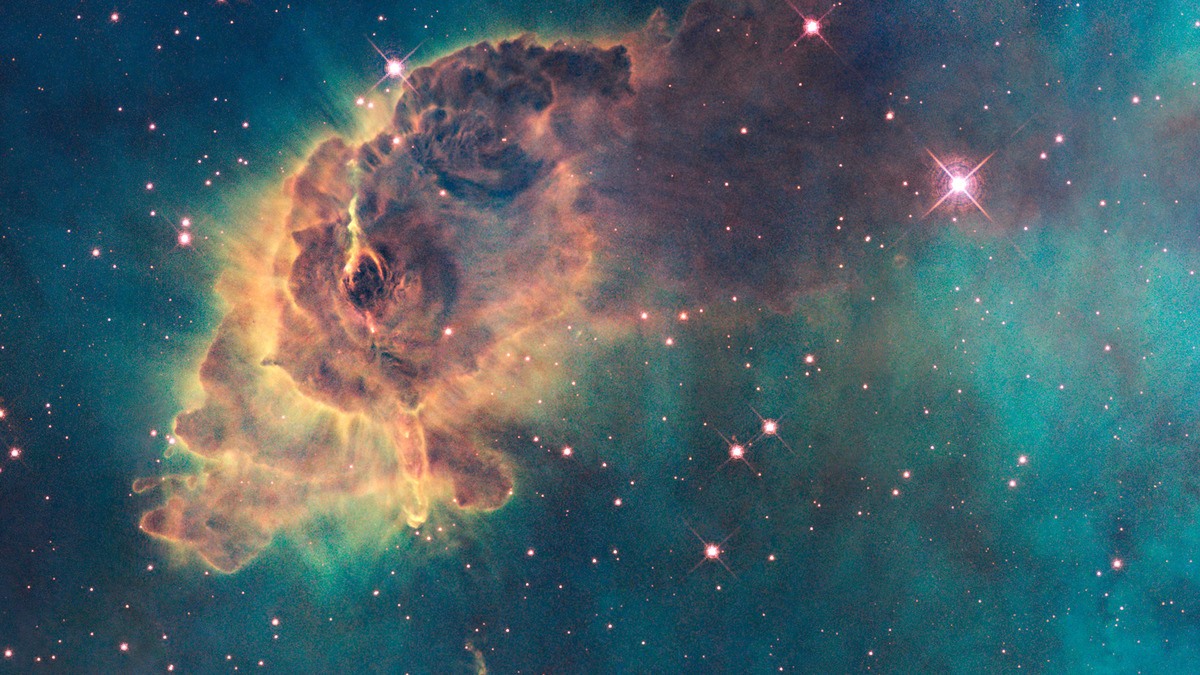
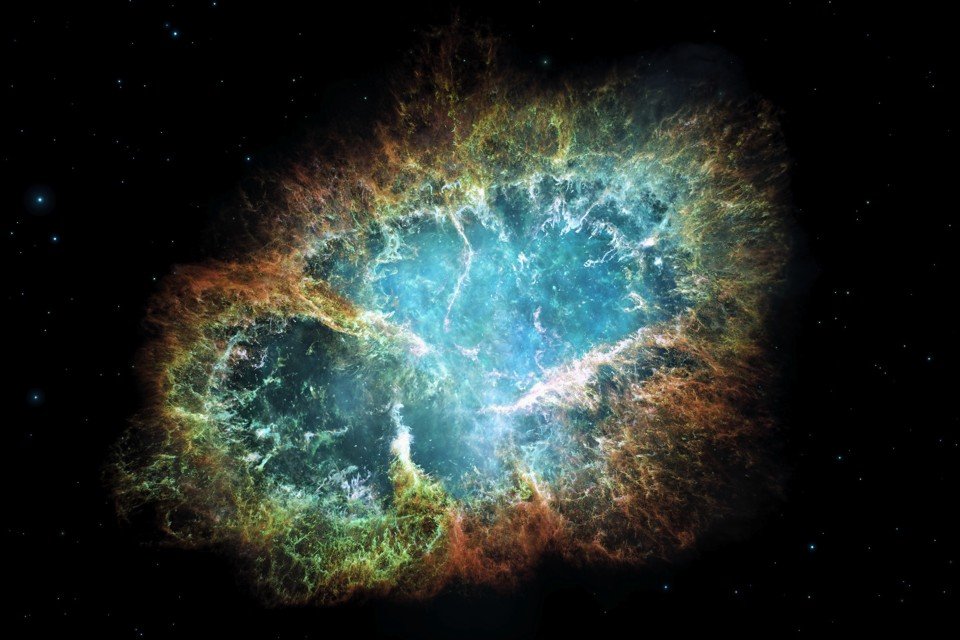
What will be the next stage in our star the sun's life cycle?
supernova
white dwarf
blackhole
red giant

How much matter in the solar system exists in the sun?
1%
99%
80%
20%

Which type of planet formed in its location due to its ability to withstand the heat from the sun?
Ice Giants
Gas Giants
Rocky/Terrestrial Planets
True or False: Earth cooled from the inside out.
True
False

A boundary where 2 plates slide past each other is a ___ boundary.
Transform
Convergent
Divergent

A boundary where the plates separate is a ____ boundary.
Divergent
Convergent
Transform

A _____ boundary occurs when 2 plates collide.
Divergent
Convergent
Transform
How do ocean core samples support the idea of seafloor spreading?
The age of the rocks get older as one moves away from a ridge.
The age of the rocks get younger as one moves away from a ridge.

Comparing the layers in core samples is an example of ___ dating.
absolute
relative
When oceanic and continental plates collide, why does the oceanic plate subduct beneath the continental plate?
Oceanic crust is less dense than continental crust.
Oceanic crust is more dense than continental crust.
It doesn't, the continental crust subducts.
What is the term for the idea that a lithospheric plate pulls itself into and across the mantle.
ridge push
slab pull
convection
doesn't happen
Which part of the earth contains the crust and topmost part of the mantle?
asthenosphere
lithosphere
atmosphere
heliosphere

Where is the youngest oceanic crust?
in the middle
at plate boundaries
at divergent boundaries
along the coasts

What type of boundary is circled?
convergent
divergent
transform

What geographic feature occurs at this boundary?
a rift
a mountain range
a volcanic arc
an island arc

What type of plates are colliding here?
continental - continental
oceanic - oceanic
continental - oceanic

Which type of boundary is circled?
convergent
divergent
transform

What type of plates are colliding here?
oceanic - oceanic
continental - continental
continental - oceanic

What type of geographic feature forms as a result of the collision circled?
rift
mountains
volcanic arc
island arc
True or False: Wegener was able to describe how the continents were moving.
true
false
A well tested and accepted explanation in science is a ____.
guess
hypothesis
theory
law
True or False: The theory of plate tectonics is still changing today.
True
False
How much matter in the solar system exists in the sun?
1%
99%
80%
20%
Which type of planet formed in its location due to its ability to withstand the heat from the sun?
Ice Giants
Gas Giants
Rocky/Terrestrial Planets

What caused Earth to melt during Earth's early formation?
fusion
radioactive decay
heat from the sun
True or False: Earth cooled from the inside out.
True
False

What caused the surface of Earth to form crust?
Water cooled it off.
Space cooled it off.
It has always had crust.
True or False: Gravity causes massive objects in space to become spheres.
True
False

Why don't asteroids become spheres?
They eventually do.
The mass isn't big enough.
They are rock.
They are not made of the right material.
Why did the gas giants form so far from the sun?
They had to.
It's where the gasses could collect.
The asteroid belt kept them there.
A ____ is an icy object that orbits the sun.
meteor
comet
asteroid

This geographic feature is a result of which boundary?
Convergent
Divergent
Transform
True or False: The magnetic stripes on either side of a divergent boundary are symmetrical.
true
false
When Earth was molten, the iron and nickel moved to what we now call the core. Why?
They are more dense so sank to the center.
They are less dense so sank to the center.
They are more dense and rose to the top.
They are less dense and rose to the top.
What is the amount of time it takes for half of a quantity of a radioactive element to decay.
radioactive decay
half life
half death
radiometric dating
True or False: Radioactive dating can be used to date fossils, (organic) dead life forms, and rocks.
true
false
Radiometric dating of _____ helped scientists determine the age of Earth.
asteroids
meteorites
Earth
Mars
The current estimate for the age of Earth is ____ years.
4.6 billion
6,000
4.3 billion
13.8 billion
Why is carbon dating not used for rocks deep beneath the surface or rocks we assume to be over 50,000 years old?
carbon's half life is too long
carbon's half life is too short
there are no rocks over 50,000 years
there is no carbon after 50,000 years
Which mountain range is evidence that the continents were once together?
Himalayan mountains
Aleutian islands
Appalachian and Caledonian mountains
Andes and Rocky mountains
Fossils of a mesosaurus were found on multiple continents. How does this provide evidence for plate tectonics? Select the correct answers.
It doesn't.
The mesosaurus is fresh water and couldn't cross the ocean.
Animals on different continents evolve differently.
It is a coincidence that mesosaurus fossils were found on Africa and South America.
What changed our view of the ocean floor from being a flat expanse to a floor with terrain like the land.
Hess's SONAR mapping
Discovery of the Mid-Atlantic Ridge
Fossil records
Ocean core samples
The initial discovery of this land feature showed scientists where the plates were separating between continents that were assumed once together.
East Africa Rift
Mid-Atlantic Ridge
Red Sea
Himalayas
Which plate is being subducted?
Nazca
South American
What type of geologic feature will occur at this boundary?
Volcanic mountains
Volcanic islands
Mountains
Rift valley

Which came first?
A
N
D
G
Why are uranium and lead used to date the same rocks?
In case the rock doesn't have one of those.
To verify and validate that the calculated ages match.
Otherwise no one would date them.
Doesn't matter, radiometric dating isn't valid.
New lithosphere can be made by which processes?
volcanoes
earthquakes
mountain formation
plate separation
Which type of boundary does NOT form new lithosphere?
Divergent
Transform
Convergent
All of these form new lithosphere.
Which type of Convergent boundary does not produce new lithosphere?
Oceanic-oceanic
Oceanic-continental
Continental-continental
None of these
Life plays a role in the destruction of rock formations as ____.
Mass Wasting
Weathering
Coastal Erosion

