wayground logo

Free Printable Worksheets

Font size

S
M
L
XL
Worksheets

The Final

Total questions: 121

Worksheet time: 30hrs 15mins

Name
Class
Date
1.

Which atom has the highest electronegativity?

a)

Li

b)

C

c)

N

2.

Select the largest unit.

a)

kilogram

b)

centigram

c)

decigram

d)

decagram

3.
What quantities vary between isotopes of an element?
a)
protons, electrons, and atomic mass
b)
protons, electrons, and atomic number
c)
neutrons and electrons
d)
neutrons and atomic mass
4.

15 m = _____ mm

a)

15,000

b)

1,500

c)

0.015

d)

150

5.
A meter is equal to how many centimeters?
a)
1000
b)
100
c)
10
d)
1
6.
Convert 3.75 kg to grams. 
a)
3750 g 
b)
375 g
c)
37.5 g
d)
3.750 g
7.

The base unit of metric length.

a)

Meter

b)

Liter

c)

Gram

8.

The base unit of metric volume.

a)

Meter

b)

Liter

c)

Gram

9.
1000 grams = _____ kilograms
a)
0.0001
b)
1,000,000
c)
10
d)
1
10.
Convert 3.75 kg to grams. 
a)
3750 g 
b)
375 g
c)
37.5 g
d)
3.750 g
11.

5.6 kg =

a)

5600 g

b)

560 g

c)

.0056 g

d)

56 g

12.

How many milliliters are there in

21.59 L?

a)

215.9

b)

2159

c)

21590

d)

215900

13.
42 L = ___mL
a)
4,200
b)
.0042
c)
4.20
d)
42,000
14.

How would you write 0.0005 in scientific notation?

a)

50 x 105

b)

5 x 10⁻⁴

c)

5 x 10⁻³

d)

.5 x 103

15.
Express the following in scientific notation:
.000457
a)
457 x 106
b)
457 x 10-6
c)
4.57 x10⁴
d)
4.57 x 10⁻⁴
16.

Argon (Ar) belongs to which group?

a)

Alkaline Earth Metals

b)

Carbon Family

c)

Rare Earth Metals

d)

Noble Gasses

17.
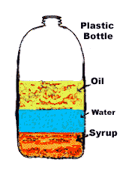
Which liquid is the least dense?
a)
oil
b)
water
c)
syrup 
d)
plastic bottle
18.
What is the formula for density?
a)
density = mass x volume
b)
density = mass / volume
c)
density = mass + volume
d)
density = mass - volume
19.
Frank has an eraser. It has a mass of 4 g, and a volume of 2 cm3. What is its density?
a)
8 g/cm3
b)
2 g/cm3
c)
1/2 g/cm3
d)
24 g/cm3
20.
Why do some substances float on water?
a)
they are warmer than water
b)
they are cooler than water
c)
they are more dense than water
d)
they are less dense than water
21.
This could be the dot diagram of 
a)
Ne
b)
Si
c)
Al
d)
Be
22.
Write in scientific notation:
860
a)
8.6 x 10³
b)
8.6 x 10²
c)
8.6 x 10⁴
d)
.86 x 103
23.

Na is the symbol for which element?

a)

Nitrogen

b)

Sodium

c)

Potassium

d)

Sulfur

24.

Ne is the symbol for which element?

a)

Nitrogen

b)

Neodymium

c)

Neon

d)

Sodium

25.

Which of these is a metalloid?

a)

Na (Sodium)

b)

I (Iodine)

c)

Si (Silicon)

d)

Fe (Iron)

26.

Which of these is a transition metal?

a)

K (Potassium)

b)

C (Carbon)

c)

Ca (Calcium)

d)

Cu (Copper)

27.
Carbonate
a)
Cr2O4-2
b)
CH3COO-
c)
CO3-2
d)
CN-
28.

What is the group number for O (Oxygen)?

a)

2A

b)

6A

c)

8A

d)

12

29.
The part of the atom that has no charge; found in the nucleus.
a)
neutron
b)
electron
c)
proton
30.
The negatively charged part of an atom; found orbiting the nucleus.
a)
proton
b)
neutron
c)
electron
31.
The number of protons which is equal to the number of electrons.
a)
matter
b)
atomic mass
c)
chemical name
d)
atomic number
32.
The number of protons plus neutrons (P + N).
a)
atomic number
b)
atomic mass
c)
chemical name
d)
element
33.
What is the atomic mass?
a)
4
b)
9.0122
34.

How many protons does Chlorine (Cl) have?

a)

17

b)

22

c)

96

d)

12

35.

Group 1A is also known as the _____ Metals

a)

Alkali

b)

Alkaline Earth

c)

Transition

d)

Shiny

36.
Each Column of the Periodic Table is called a...
a)
group
b)
period
c)
metal
d)
mass
37.
True or False: The nonmetals are in the dark blue section
a)
true
b)
false
38.
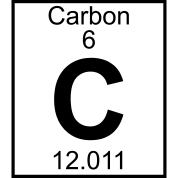
What does the 6 represent?
a)
atomic mass
b)
atomic number
c)
element name
d)
chemical symbol 
39.
The atomic number of an element tells the number of _____ in the nucleus of an atom of that element.
a)
protons
b)
neutrons
c)
electrons
d)
isotopes
40.

Identify this atom:

a)

Lithium (Z=3)

b)

Chlorine (Z=17)

c)

Phosphorus (Z=15)

d)

Fluorine (Z=9)

41.

Which of these is incorrect?

a)
b)
42.

Which of these is correct?

a)
b)
c)
43.

Convert the following number to scientific notation: 43,000,000

a)

43x10⁶

b)

4.3×10⁷

c)

430×10⁵

d)

4.3×10⁻⁷

44.
How many valence electrons are found in atoms of group 1?
a)
7
b)
6
c)
4
d)
1
45.
Which element has the smaller atomic radius: potassium (K) or bromine (Br)?
a)
potassium (K)
b)
bromine (Br)
46.
Which element has the greatest ionization energy: Aluminum (Al)    or    Chlorine (Cl)?
a)
Aluminum (Al)
b)
Chlorine (Cl)
47.
Which element has the greatest electronegativity: Nitrogen (N) or Arsenic (As)?
a)
Nitrogen (N)
b)
Arsenic (As)
48.
As you move down a group, atomic radius increases because - 
a)
you add more and more neutrons
b)
you add more and more protons
c)
you add more and more shells (energy levels)
d)
you add more atomic mass
49.
The atom with the largest atomic radius in Group 18 is - 
a)
Ar
b)
He
c)
Kr
d)
Rn
50.
As you move across the periodic table atoms tend to get smaller because, ______________.
a)
the atoms have more mass.
b)
the atoms have less mass
c)
the atoms have more protons.
d)
the atoms have less electrons.
51.
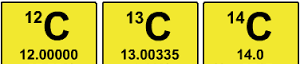
What do these isotopes of carbon all have in common?
a)
neutrons & mass number
b)
atomic number and neutrons
c)
atomic number and electrons
d)
protons, atomic number, and mass number
52.
How many neutrons in C-14?
a)
6
b)
7
c)
14
d)
8
53.
Express the following in scientific notation:
10,030,400,000
a)
1.00304 x 10⁹
b)
1.00304 x 10¹⁰
c)
1.00403 x 10¹⁰
d)
1.00304 x10⁻¹⁰
54.
An atom is electrically neutral when
a)
protons and neutrons are the same
b)
protons and electrons are the same
c)
neutrons and electrons are the same
d)
neutrons balance the protons and electrons
55.
If the number of electrons in an atom changes you make a(n) __________________.
a)
ion
b)
isotope
c)
new element
d)
isomer
56.
Ions are: 
a)
atoms with a positive or negative charge
b)
atoms with no charge
c)
atoms with ONLY a positive charge
d)
atoms with ONLY a negative charge
57.

What is a cation's charge?

a)

positive

b)

negative

c)

neutral

d)

depends on the element

58.

What is an anion's charge?

a)

positive

b)

negative

c)

neutral

d)

depends on the element's charge

59.

Is potassium a cation or an anion?

a)

cation

b)

anion

60.

Is Sulfur(S) smaller or larger than its parent atom?

a)

smaller

b)

larger

61.
Write 7.8 x 10⁻³  in standard form.
a)
0.0078
b)
7,800
c)
78
d)
0.078
62.

Which atom has a larger atomic radius

a)

Mg

b)

Ca

63.

What is larger Mg or Mg²⁺ ?

a)

Mg

b)

Mg²⁺

64.

Which atom is the largest?

a)

Li

b)

C

c)

F

65.

Which atom is the largest?

a)

Li

b)

Na

c)

K

66.

Which of the following options is the base unit?

a)

kilometer

b)

centimeter

c)

meter

d)

millimeter

67.
Molten compound conducts electricity.
a)
ionic compound
b)
covalent compound
68.

Which atom has the highest ionization energy?

a)

Mg

b)

Si

c)

S

69.

The correct number of valence electrons for selenium.

a)

7

b)

6

c)

5

d)

4

70.
A carbon isotope consists of 6 protons, 6 electrons and 8 neutrons.  What is the mass number for this isotope?
a)
12
b)
14
c)
6
d)
8
71.

If an atom has a charge of +3 and an atomic number of 5 it should have _______ electrons.

a)

1

b)

2

c)

3

d)

4

72.

12 protons and 13 neutrons

a)

Mg-12

b)

Mg-13

c)

Mg-25

d)

Mg-24.305

73.

9 protons and 9 neutrons

a)

Fluorine-18

b)

Fluorine-9

c)

Fluorine-16

d)

Fluorine-18.998

74.
Found in the nucleus of the atom
a)
electrons only
b)
protons only
c)
neutrons and protons
d)
neutrons and electrons
75.
What is the base unit for measuring mass?
a)
Meter
b)
Liter
c)
Gram
76.
An element is defined by its number of 
a)
protons
b)
electrons
c)
neutrons
d)
protons + electrons
77.
Which of the subatomic particles is the heaviest?
a)
electrons 
b)
protons 
c)
neutrons 
d)
protons and neutrons have equal mass
78.
Which of the subatomic particles is the lightest
a)
all have the same mass
b)
protons 
c)
neutrons 
d)
electrons
79.
How many protons are in this element?
a)
79
b)
196
c)
117
d)
Cannot be determined
80.

What is the difference between Barium-139 and Barium-145?

a)

6 protons

b)

6 neutrons

c)

7 protons

d)

7 neutrons

81.

What is the name of the following compound: NaCl

a)

sodium chloride

b)

sodium (I) chloride

c)

sodium chlorine

d)

sodium (I) chlorine

82.

What is the name of the following compound: CuBr2

a)

copper bromine

b)

copper bromide

c)

copper (I) bromide

d)

copper (II) bromide

83.

What is the name of the following compound: K2SO4

a)

potassium sulfur

b)

potassium sulfate

c)

potassium (I) sulfate

d)

potassium (II) sulfide

84.

What is the name of the following compound: Mn2O3

a)

manganese oxide

b)

manganese (II) oxide

c)

manganese (III) oxide

d)

magnesium oxide

85.

What is the what charge of manganese in the compound: Mn2O3

a)

+1

b)

+2

c)

+3

d)

-3

86.

What is the charge of copper in the compound: CuBr2

a)

+1

b)

+2

c)

-1

d)

-2

87.

What is the what charge of lead in the compound: lead (IV) iodide

a)

+1

b)

+4

c)

+6

d)

-1

88.
What two types of atoms make a covalent bond?
a)
2 Nonmetals
b)
1 Nonmetal and 1 Metal
c)
2 Metals
d)
2 Noble Gases
89.
How do covalent bonds form?
a)
Donating & receiving valence e- between atoms.
b)
Opposite slight charges attract each other between compounds.
c)
Scientists are still not sure how they form.
d)
Sharing valence e- between atoms.
90.
What is the correct name for C4H6?
a)
Carbon Hexahydride
b)
Pentacarbon Pentahydride
c)
Hexacarbon Tetrahydride
d)
Tetracarbon Hexahydride
91.
What is the correct name for NO?
a)
Mononitrogen Monoxide
b)
Nitrogen Monoxide
c)
Mononitrogen Dioxide
d)
Nitrogen Oxide
92.
What is the formula for Tricarbon Octahydride?
a)
Ca3O
b)
C2H8
c)
C3H8
d)
Ca3H8
93.
What is Sulfur Trichloride?
a)
SCl3
b)
SiCl3
c)
SCl4
d)
Si3Cl
94.
P2O5
a)
Phosphorus Oxide
b)
Pentaphosphorus Dioxide
c)
Diphosphorous pentoxide
d)
Phosphoric Oxygen
95.
As4O10
a)
arsenic oxide
b)
quadarsenic decoxide
c)
tetraarsenic decoxide
d)
arsenic decoxide
96.
Bromine monofluoride
a)
Br1F1
b)
BrF
c)
Br2F
d)
BrF2
97.
Molten compound does NOT conduct electricity.
a)
ionic compound
b)
covalent compound
98.
Have a high m.p. (1000°C-3000°C)
a)
ionic compounds
b)
covalent compounds
99.
Have a low m.p. (< 200°C)
a)
ionic compounds
b)
covalent compounds
100.
When dissolved in water, the solution is a good conductor of electricity.
a)
ionic compounds
b)
covalent compounds
101.

Compounds composed of a ______________ and _____________ like the compound CaCl2 , are ionic compounds.

a)

metal ... metal

b)

nonmetal ... nonmetal

c)

metal ... nonmetal

102.

What is the correct name for this polyatomic ion: OH

a)

hydrogen carbonate

b)

oxonium

c)

hydroxide

d)

acetate

103.

What is the correct formula for the polyatomic ion called sulphate?

a)

SO32–

b)

HSO4

c)

SO42–

d)

CH3COO

104.
What is iron's charge in the chemical formula FeCl3?
a)
1+
b)
2+
c)
3+
d)
1-
105.
How would barium and fluorine bond together?
a)
Ba2F
b)
BaF
c)
BaF2
d)
Ba2F2
106.
What is the molar mass of CO2?
a)
12
b)
16
c)
32
d)
44
107.
What is the mass of one mole of aluminum?
a)
27 g
b)
13 g
c)
54 g
d)
14 g
108.
What is the molar mass of table salt (NaCl)?
a)
116.886 g/mol
b)
35.453 g/mol
c)
22.990 g/mol
d)
58.443 g/mol
109.

What is the molar mass of fluorine gas, F2?

a)

18.998 g/mol

b)

38 g/mol

c)

9 g/mol

d)

18 g/mol

110.
Molar mass is in units of ________.
a)
grams
b)
grams/mole
c)
mole
d)
moles/gram
111.
How many particles are in a mole?
a)
602
b)
602 million
c)
602 moles
d)
6.02 x 10²³
112.
Which problem is balanced?
a)
PbO2 + 2H2
b)
SO2 + H20 --> H2SO4
c)
2Na + 2H2O --> 2NaOH + H2
113.
Is the equation balanced?: 2H2O + O2 --> 4MgO + 3Fe
a)
Yes
b)
No
114.
What is the little number after an element in a chemical equation called.
Example: H2
a)
Coefficient 
b)
Subscript
c)
Atom
d)
Equation
115.
Balance this equation
_Zn+_HCl-->_ZnCl+_H2
a)
1,1,2,1
b)
1,1,1,2
c)
1,2,1,1
d)
2,1,1,1
116.
Balance this equation.
_Mg + _Cl--> _MgCl2
a)
1, 2,1
b)
already balanced
c)
2,1,1
d)
1,1,2
117.
Is this balanced?...
Fe + S --> FeS
a)
YES!
b)
NO!
118.
KNO3 --> KNO2 + O2
What coefficients are needed to balance the reaction?
a)
2, 2, 1
b)
2, 3, 2
c)
1, 2, 2
d)
1, 3, 1
119.
Balance this equation-
__P+ __O--> __P2O3
a)
it is already balanced
b)
2, 1, 3
c)
1, 2, 3
d)
1, 3, 2
120.
Balance this equation.
_Mg + _Cl--> _MgCl2
a)
1, 2,1
b)
already balanced
c)
2,1,1
d)
1,1,2
121.
Balance this equation.
_CH4 + _O--> _CO+ _H2O
a)
1,2,1,1
b)
2,1,2,1
c)
1,2,1,2
d)
0,2,0,2