Wayground logo

Free Printable Worksheets

Font size

S
M
L
XL
Worksheets

Make Up Points

Total questions: 143

Worksheet time: 2hrs 35mins

Name
Class
Date
1.
What body system removes the waste from your body? 
a)
Circulatory
b)
Excretory
c)
Digestive
d)
Respiratory
2.
My spinal cord helps _________ travel between my brain and the nerves in my body. 
a)
Memories
b)
Blood
c)
Waste
d)
Messages
3.
My body needs ______ from the air to live. 
a)
Oxygen
b)
Cardon Dioxide
c)
Carbon Monoxide
d)
Hydrogen Peroxide
4.
The __________ system directs the body to inner and outer changes.
a)
digestive
b)
circulatory
c)
nervous
d)
skeletal
5.
The __________ is the main organ of the nervous system.
a)
heart
b)
lungs
c)
brain
d)
skin
6.
___________ are the building blocks of life.
a)
cells
b)
legos
c)
blocks
d)
blood
7.
In multicellular organisms, tissues are comprised of _______.
a)
organs
b)
systems
c)
cells
d)
blood
8.
When tissues come together, they form ___________.
a)
cells
b)
atoms
c)
organs
d)
systems
9.
A(n) _________ is made of small parts connected together to make a whole.
a)
system
b)
problem
c)
evidence
d)
illustration
10.
Which of the following body systems work together for support, protection, and movement?
a)
respiratory and cardiovascular
b)
skeletal and muscular
c)
skeletal and integumentary
d)
digestive and respiratory
11.
Which of the following shows the levels of organization of an organism from LEAST to MOST complex.
a)
cells-tissues-systems-organs
b)
organs-cells-systems-tissues
c)
systems-organs-tissues-cells
d)
cells-tissues-organs-systems
12.
This system includes the spinal cord, brain and nerves
a)
Nervous System
b)
Digestive System
c)
Circulatory System
13.
What body system makes your body move? 
a)
Circulatory
b)
Respiratory
c)
Skeletal
d)
Muscular
14.
The main purpose of the _______ system is to ensure the continuation of the species.
a)
respiratory
b)
reproductive
c)
circulatory
d)
endocrine
15.
The main purpose of the ________ system is to produce hormones for the body.
a)
excretory
b)
digestive
c)
reproductive
d)
endocrine
16.
Which body system is a collection of glands that secrete different types of hormones that regulate metabolism, growth and development, sleep, and reproduction?
a)
Excretory System
b)
Endocrine System
c)
Skeletal System
d)
Digestive System
17.
Which body system is responsible for protecting the structures underneath from infection and disease? (think the skin)
a)
Integumentary System
b)
Digestive System
c)
Respiratory System
d)
Excretory System
18.
What is responsible for delivering oxygen and removing carbon dioxide from the body?
a)
cell nucleus
b)
excretory system
c)
nervous tissue
d)
respiratory system
19.

The circulatory system uses _________ to deliver oxygen to the rest of the body.

a)

blood cells

b)

lungs and nose

c)

Stomach

d)

brain and spinal cord

20.
What is an independent variable?
a)
What is measure in an experiment
b)
What you change in an experiment 
c)
A prediction about an experiment
d)
What stays the same in an experiment
21.
What is a hypothesis?
a)
An observation
b)
Something that you know
c)
An educated prediction
d)
What you keep the same in an experiment
22.
It is important to separate witnesses at a crime scene in order to 
a)
prevent contamination of evidence
b)
prevent them from talking and forming a collusion
c)
prevent them from leaving the scene
23.
What are the four patterns to search for evidence
a)
spiral, round, linear, quadrant
b)
grid, round, linear, zone
c)
spiral, grid, quadrant, no pattern
d)
spiral, grid, linear, quadrant
24.
Hair is helpful in solving old crimes because…
a)
hair on a suspect never changes
b)
hair always contains DNA evidence
c)
hair takes little room to store in evidence closets
d)
hair does not easily decompose
25.
"With contact between two items, there will be an exchange." This is known as _____
a)
physical evdience
b)
Locard's exchange principle
c)
Forensic exchange principle
d)
the law of forensics 
26.
The central core of the hair is called the...?
a)
Medulla
b)
Cuticle
c)
Cortex
d)
Shaft
27.
The tough clear outside covering of a hair shaft is
a)
cuticle
b)
cortex
c)
medulla
d)
polymer
28.
The middle layer of a hair shaft that contains pigment
a)
the cortex
b)
the medulla
c)
the cuticle
d)
the polymer
29.

Which search pattern is most effective as it covers each area twice?

a)

spiral

b)

grid

c)

strip

30.

What is Loccard's Exchange Principle?

a)

Perpetrators always leave evidence behind.

b)

Every contact leaves a trace.

c)

All touches leave evidence.

d)

Long, violent confrontations leave evidence.

31.

What are the three layers of hair?

a)

Medulla, keratin, cortex

b)

Cuticle, medulla, keratin

c)

Keratin, cuticle, cortex

d)

Medulla, Cortex, and Cuticle

32.

What is forensic science?

a)

use knowledge of science to solve legal/criminal crimes

b)

the study of life

c)

The study of ones corpse in order to donate organs

d)

The study of foreign items

33.

Which of the following is NOT a step in processing a crime scene?

a)

Interview

b)

Examine

c)

Infer

d)

Photograph

34.

When conducting an interview during a crime scene investigation, the goal of the interview is to

a)

Establish the guilt or innocence of the suspect

b)

Establish the hypothesis of the case

c)

Jump to conclusions

d)

obtain an overview of the crime scene

35.

Which of the following lists the steps of the crime scene sketching process in order?

a)

Make notes; Measure area and evidence locations; Identify sketch with a legend and a scale; Observe and plan

b)

Measure area and evidence locations; Identify sketch with a legend and a scale; Observe and plan; Make notes

c)

Identify sketch with a legend and a scale; Observe and plan; make notes; Measure area and evidence locations

d)

Observe and plan; Measure area and evidence locations; Make notes; Identify sketch with a legend and a scale

36.

Which of the following is used so a reader can understand the symbols used in the sketch?

a)

Scale

b)

Compass

c)

Legend

d)

Notation

37.

Polygraph is popularly known as

a)

Blood Test

b)

Truth Detector

c)

Lie Detector

d)

Psychology Test

38.

Polygraph records several physiological indicators such as

a)

Blood Pressure

b)

Respiration

c)

Skin

d)

All of the above

39.

This is what kind of pattern?

a)

whorl

b)

loop

c)

arch

40.

This is what kind of pattern?

a)

whorl

b)

loop

c)

arch

41.

This is what kind of pattern?

a)

loop

b)

arch

c)

whorl

42.

A fingerprint is...

a)

a mark made by a person’s fingertips

b)

sweat from a person’s fingers

c)

a dent in your fingertips

43.

What physiological responses does a lie detector test measure? Check all that apply.

a)

Heart rate

b)

Eye movement

c)

Respiration rate

d)

Temperature

44.

How many breaths you take in one minute is called

a)

Heart rate

b)

Conductivity

c)

inhalation rate

d)

Respiration rate

45.

What was found on Anna's shirt that could be evidence?

a)

Flies

b)

White powder

c)

Strands of hair

d)

red fibers

46.

Which characteristic is important for the biomedical sciences professions?

a)

collaborative

b)

Critical thinker

c)

ethical

d)

all of these options are important

47.

Which crime scene search method is shown in the diagram?

a)

zone

b)

link

c)

wheel

d)

line

48.

Which crime scene search method is shown in the diagram?

a)

zone

b)

link

c)

line/strip

d)

wheel/ray

49.

Which of the following is an example of a vital sign?

a)

Pulse rate

b)

temperature

c)

blood pressure

d)

All of these options are examples

50.

What is the control group of an experiment used for?

a)

Gives us a means to compare the experimental group with

b)

Has the independent variable applied

c)

Has the dependent variable applied

d)

Show a response to the independent variable

51.

The outermost layer of hair is called the...

a)

cortex

b)

medulla

c)

cuticle

d)

keratin

52.

Other than ridge patterns, what else do scientists use to identify and match fingerprints?

a)

minutiae

b)

medulla

c)

whorls

d)

keratin

53.

Which of the following steps to processing a crime scene is NOT performed by a crime scene investigator?

a)

Photographing the scene

b)

Sketching the scene

c)

Interviewing witnesses

d)

Collecting the evidence

54.

Which of the following physiological responses are measured during a polygraph test? (check all that apply)

a)

Respiration rate

b)

Heart rate

c)

Digestion rate

d)

Blood pressure

55.

Are polygraphs admissible in a court case?

a)

Yes

b)

No

56.

This fingerprint is an example of a...

a)

arch

b)

whorl

c)

loop

d)

tented arch

57.

Which of the following is NOT a search method used to sift through a crime scene?

a)

Spiral Method

b)

Wheel/Ray Method

c)

Grid Method

d)

List Method

58.

What view do you want to use for your crime scene sketch?

a)

View from window

b)

View from door

c)

View from the decedent's perspective

d)

View from above

59.

What components should be included in the legend? Check all that apply.

a)

Date

b)

Time

c)

Location

d)

Temperature

e)

Altitude

60.

Where was Anna's body found?

a)

Outside

b)

Cafeteria

c)

Dormitories

d)

Gentry Life Science Building

61.

How many pieces of evidence are present at the crime scene (including Anna)?

a)

5

b)

7

c)

15

d)

20 or more

62.

Classify the following print:

a)

Tented arch

b)

Loop

c)

Double loop whorl

d)

Central pocket whorl

63.

Classify the following print:

a)

Tented arch

b)

Loop

c)

Double loop whorl

d)

Central pocket whorl

64.

Classify the following print:

a)

Plain arch

b)

Loop

c)

Double loop whorl

d)

Plain whorl

65.

Classify the following print:

a)

Loop

b)

Tented arch

c)

Accidental whorl

d)

Plain arch

66.

Classify the following print:

a)

Tented arch

b)

Double loop whorl

c)

Loop

d)

Plain arch

67.

Which of the following is used so a reader can understand the symbols used in the sketch?

a)

Scale

b)

Compass

c)

Legend

d)

Notation

68.
There are how many blood types in the ABO system?
a)
2
b)
3
c)
4
d)
5
69.

Blood type is determined by the antigens present on the surface of RBCs.

a)

True

b)

False

70.

What protein is found in red blood cells that binds to and transports oxygen?

a)

peptidoglycan

b)

iron

c)

hemoglobin

d)

plasma

71.

These are found in blood and help fight infections...

a)

white blood cells

b)

platelets

c)

plasma

d)

red blood cells

72.

These are found in blood and help the blood to clot...

a)

white blood cells

b)

platelets

c)

plasma

d)

red blood cells

73.

This is the colorless liquid in which the components of blood are suspended...

a)

red blood cells

b)

platelets

c)

plasma

d)

white blood cells

74.

Red blood cells will do this if they encounter the wrong antibodies...

a)

swell

b)

agglutinate

c)

dehydrate

d)

no reaction will occur

75.

Someone with Type A blood also has...

a)

Type A antibodies

b)

Type B antibodies

c)

both Type A & B antibodies

d)

neither Type A nor B antibodies

76.

Someone with both Type A & B antibodies is which blood type?

a)

A

b)

B

c)

AB

d)

O

77.

A substance on the surface of red blood cells that can trigger the production of antibodies

a)

agglutinates

b)

antigens

c)

anemia

d)

Rh Factor

78.

Proteins produced by the immune system that destroy foreign substances...

a)

antigens

b)

agglutinates

c)

platelets

d)

antibodies

79.

Which blood type is known as the universal donor? (can be used by all)

a)

AB +

b)

AB -

c)

O+

d)

O-

80.

Which blood type is known as the universal recipient? (can receive all types)

a)

AB+

b)

AB-

c)

O+

d)

O-

81.

Someone with Type AB blood has...

a)

Both A & B antibodies

b)

No antibodies

c)

only A antigens

d)

only B antigens

82.

Someone with Type A blood has...

a)

A antigens

b)

A antibodies

c)

B antigens

d)

A & B antigens

83.

What antibody does a type A person naturally make?

a)

Anti-A

b)

Anti-B

c)

Anti-O

d)

Anti-A,B

84.

Anti-B is found in which patients (select all that apply).

a)

Type O

b)

Type A

c)

Type B

d)

Type AB

85.

What is the blood type?

a)

B

b)

A

c)

O

d)

AB

86.

Which image represents Type B blood?

a)
b)
c)
d)
87.

What is the blood type?

a)

O

b)

AB

c)

A

d)

B

88.

Which image represents Type O blood?

a)
b)
c)
d)
89.

If anti-A serum is added to a blood sample and agglutination (clumping) occurs, what can you tell for sure?

a)

There are A antigens present in the blood sample

b)

The blood sample is type A

c)

There are B antigens present in the blood sample

d)

The blood sample is type B

90.

What are the components of blood?

a)

white blood cells

b)

red blood cells

c)

platelets

d)

plasma

91.

What are erythrocythes?

a)

red blood cells

b)

white blood cells

c)

plasma

d)

platelets

92.

What are thrombocythes?

a)

heart vessels

b)

platelets

c)

white blood cells

d)

pulmonary vein

93.

What are leukocytes?

a)

red blood vessels

b)

plasma

c)

white blood cells

d)

platelest

94.

What are the 4 major blood types?

a)

Blood type A

b)

Blood type B

c)

Blood type C

d)

Blood type AB

e)

Blood type O

95.

Name the proteins on the surface of red blood cells.

a)

Antibodies

b)

Antigens

c)

Plasma

d)

Collagen

96.

What type of antigens can be found on the surface of RBC's when someone has blood type O?

a)

A

b)

B

c)

AB

d)

none

97.

What type of antigens can be found on the surface of RBC's when someone has blood type AB?

a)

A

b)

B

c)

AB

d)

none

98.

What cells produce antibodies?

a)

red blood cells

b)

white blood cells

c)

Plasma cells

d)

Platelets

99.

Where are antibodies located?

a)

surface of red blood cells

b)

surface of white blood cells

c)

plasma

d)

surface of platelets

100.

Someone with blood type B has B antigens on their RBC's and B antibodies in their plasma.

a)

true

b)

false

101.

What antibodies can be found in the plasma when someone has blood type A?

a)

none

b)

A

c)

B

d)

A and B

102.

Why is AB blood type unique?

a)

can only have RH antigens

b)

doesn't have any A nor B antigens on the RBC's

c)

doesn't produce A nor B antigens

d)

doesn't produce A nor B antibodies

103.
Any change in the sequence of DNA is...
a)
transgenic shift
b)
Single Genotype
c)
Monohybrid Trait
d)
Mutation
104.
What charge is DNA?
a)
positive
b)
negative
c)
neutral
105.
What are the 4 nitrogen bases?
a)
adenine, thymine, cytoplasm, and guanine
b)
adenine, thymine cytosine, and guanine
c)
adenine, thymine, cytosine, and gylcerol
d)
adenine, thymine, cytosine, and glucose
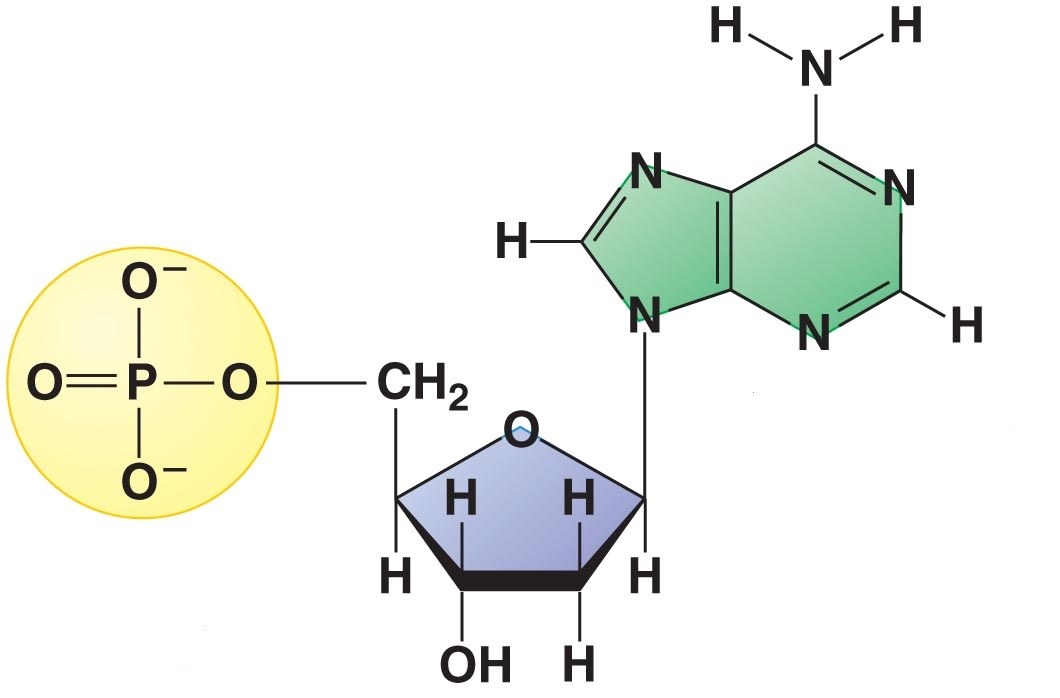
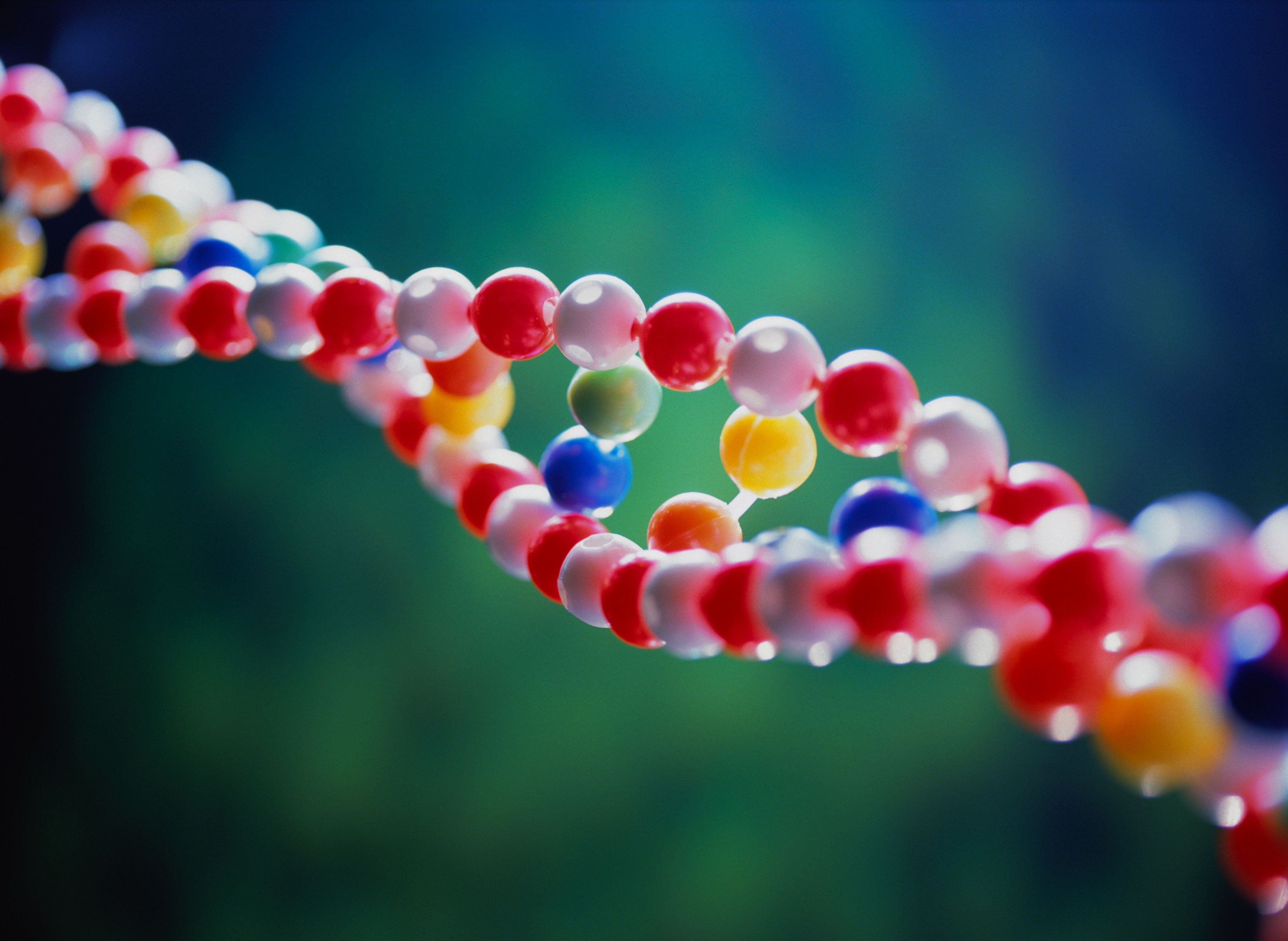
106.
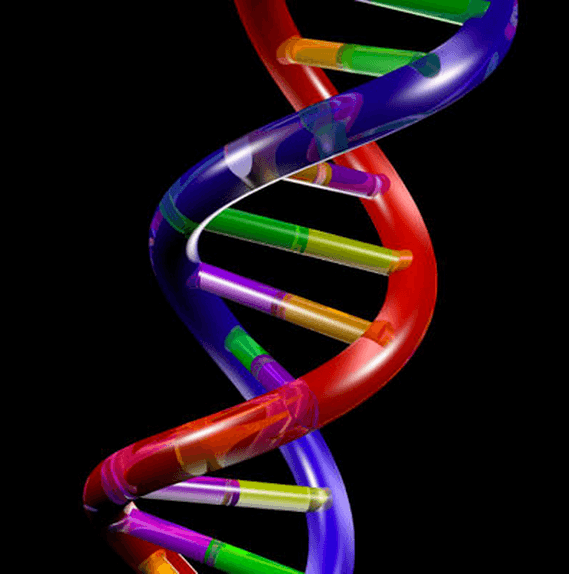
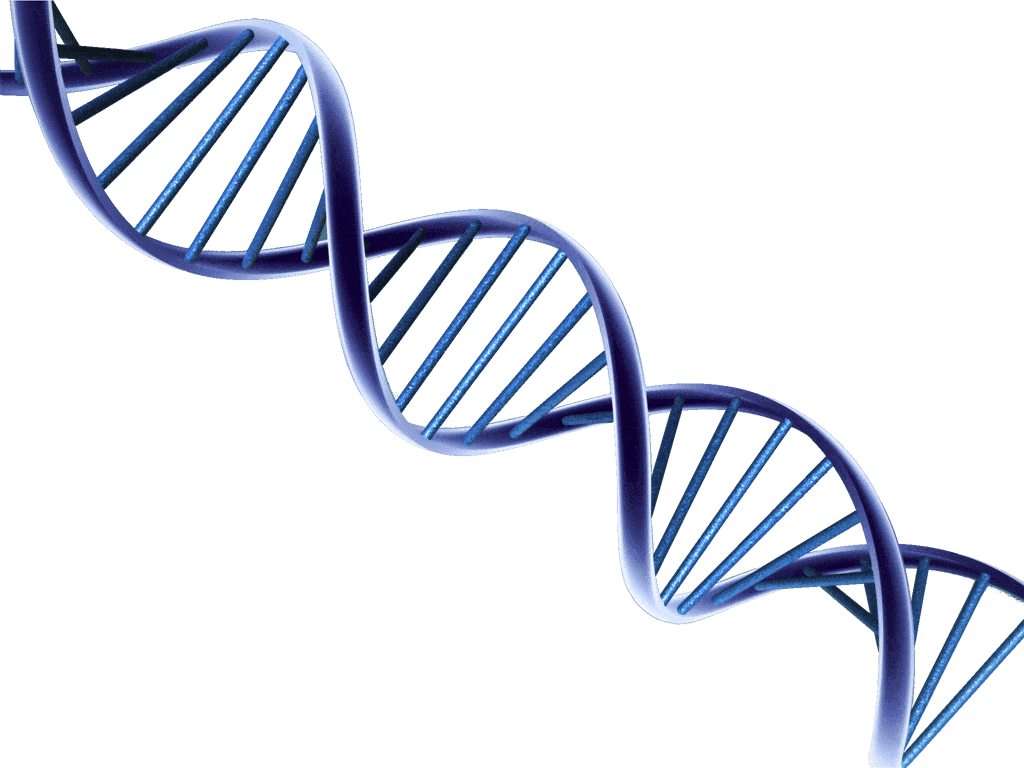
Name this structure
a)
double helix
b)
nucelotide
c)
twisted ladder
d)
hydrogen bond
107.
Which shows the correct complementary base pairing for DNA?
a)
C-A, T-G
b)
A-G, C-T
c)
C-G, U-A
d)
T-A, G-C
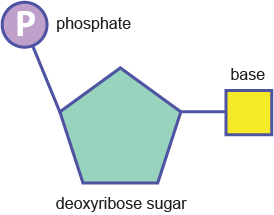
108.
Nucleotides are made up of a sugar, phosphate, and..?
a)
nitrogenous base
b)
nucleic acid
c)
cholesterol
d)
fatty acid
109.
Restriction enzymes are found in nature inside:
a)
viruses
b)
bacteria
c)
animals
d)
plants
110.
Why do the fragments of DNA in gel electrophoresis travel away from the negative electrode?
a)
DNA is negatively charged
b)
DNA is positively charged
c)
the agarose gel in negatively charged
d)
the agarose gel is positively charged
111.
Which sequence of DNA bases would pair with this partial strand
ATG TGA CAG
a)
ATG TGA CAG
b)
TAC ACT GTC
c)
GTA AGT GAC
d)
CAT TCA CTG
112.
Which of the following best describes a DNA molecule?
a)
double helix
b)
contains ribose
c)
made of amino acids
d)
contains Uracil
113.
Which of the following units are repeatedly joined together to form a strand of DNA?
a)
amino acids
b)
nucleotides
c)
fatty acids
d)
polysaccharides
114.
In a molecule of double-stranded DNA, the amount of Adenine present is always equal to the amount of
a)
cytosine
b)
guanine
c)
thymine
d)
uracil
115.
Adenine bonds with ______________.
a)
Guanine
b)
Thymine
c)
Cytosine
d)
Adenine
116.
Guanine bonds with ______________.
a)
Adenine
b)
Guanine
c)
Cytosine
d)
Thymine
117.
Why is DNA important?
a)
it is very small and very complicated
b)
it's in everything
c)
it serves as the blueprint for traits of all living things
d)
because we eat it every day for energy
118.
What determines the code, or information, of a DNA molecule?
a)
the shape (structure) of the nitrogen bases
b)
the order (sequence) of the nitrogen bases
c)
the color of the nitrogen bases
d)
the frequency (number) of nitrogen bases
119.
Which 2 molecules form the sides (backbone) of the DNA ladder?
a)
deoxyribose sugar and adenine
b)
deoxyribose sugar and a hydrogen bond
c)
deoxyribose sugar and the nucleus
d)
deoxyribose sugar and phosphate
120.
Nitrogenous bases are joined by which type of bond?
a)
polar bonds
b)
ionic bonds
c)
covalent bonds
d)
hydrogen bonds
121.
Replicate the following strand of DNA: 
AATCATGGA
a)
AATCATGGA
b)
TTAGTACCT
c)
UUAGUACCU
d)
GGATAUCUA
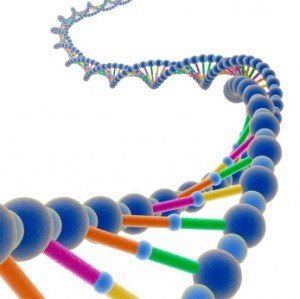
122.
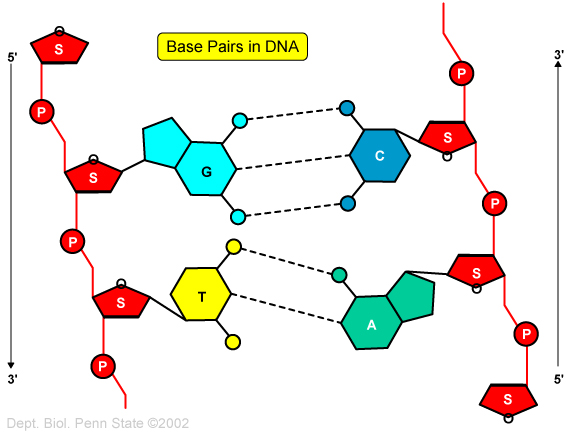
The drawing shows the structure of what molecule?
a)
A DNA molecule
b)
A lipid molecule
c)
A carbohydrate molecule
d)
A protein molecule
123.
Restriction Enzymes are . . . 
a)
proteins
b)
DNA
c)
fats
d)
carbohydrates
124.
Restriction Enzymes . . . 
a)
cut DNA at precise locations
b)
help bacteria to pick up DNA
c)
move DNA through a gel
d)
copy DNA
125.
Restriction Enzymes come from . . . 
a)
viruses
b)
bacteria
c)
goats
d)
spiders
126.
Why do bacteria have restriction enzymes?
a)
To prevent being infected by viruses
b)
To help DNA get into the cell
c)
To be able to grow in an incubator
d)
They don't - viruses have restriction enzymes
127.
DNA is a polymer made of:
a)
Nucleotides
b)
Ribosomes
c)
Purines
d)
Pyrimidines
128.
Gel electrophoresis enables scientists to
a)
separate DNA fragments.
b)
combine DNA fragments.
c)
count the genes in DNA.
d)
insert DNA in cells.
129.
During gel electrophoresis, DNA moves from the ___ end to the ___ end.
a)
positive, negative
b)
negative, positive
130.
In gel electrophoresis, the largest DNA fragment will appear
a)
closest to the starting wells
b)
farthest from the starting wells
c)
three quarters away from the starting wells
d)
it depends on how many fragments there are
131.
Based on these results whose blood was found in the blood stain at the crime scene?
a)
Bob
b)
Sue
c)
John
d)
Lisa
132.
Which two bear species are most closely related?
a)
Bear 1 and Bear 2
b)
Bear 1 and Bear 3
c)
Bear 2 and Bear 3
d)
There’s no way to tell
133.
Purine bases are 
a)
9-membered single ringed structure
b)
6-membered double ringed structure
c)
9-membered double ringed structure
d)
6-membered single ringed structure
134.
Pyrimidine bases are
a)
9-membered single ringed structure
b)
6-membered single ringed structure
c)
9-membered double ringed structure
d)
6-membered double ringed structure
135.
Backbone of DNA is formed by 
a)
Nitrogenous base-Phosphate - sugar component
b)
Phosphate - nitrogenous base component
c)
Phosphate - sugar component
d)
Nitrogenous base - sugar component
136.
What is the complementary strand of 
TACGTATCAAC?
a)
ATGCATGTTG
b)
TACGTATCAAC
c)
ATGCATAGTTC
d)
AUGCAUACUUG
137.

This laboratory procedure is known as

a)

CLONING

b)

gel electrophoresis

c)

chromatography

d)

use of a dichotomous key

138.

In preparation for an electrophoresis procedure, enzymes are added to DNA in order to

a)

convert the DNA into gel

b)

cut the DNA into fragments

c)

change the color of the DNA

d)

produce longer sections of DNA

139.

The parents of a new baby believe they brought the wrong child home from the hospital. Gel electrophoresis was performed using DNA samples from the parents and the child. A section of the gel

electrophoresis results is shown below. Which conclusion is valid based on the gel electrophoresis results?

a)

They have the correct child, because her genetic information is identical to that of the father.


b)

They have the wrong child, because her genetic information does not match that of either parent.

c)

They have the correct child, because her genetic information came from both parents.


d)

They have the wrong child, because her genetic information matches only that of the mother.

140.

A student performed a gel electrophoresis experiment. The results are represented in the diagram

below. Compared to the fragments at the top of the gel, the fragments at the lower end are

a)

larger, and move slower

b)

larger, and move faster

c)

smaller, and move faster

d)

smaller, and move slower

141.

Which chemicals are used to cut DNA into fragments for a gel electrophoresis procedure?

a)

enzymes

b)

molecular bases

c)

hormones

d)

ATP molecules

142.
What determines the code, or information, of a DNA molecule?
a)
the shape (structure) of the nitrogen bases
b)
the order (sequence) of the nitrogen bases
c)
the color of the nitrogen bases
d)
the frequency (number) of nitrogen bases
143.

How many hydrogen bonds are between A and T?

a)

1

b)

2

c)

3

d)

4