
 Worksheets
HLT101 Final Exam
Total questions: 125
Worksheet time: 4hrs 7mins
Which of the following is the normal range for pulse?
60-100
80-100
12-20
60-80
What is the normal range for systolic blood pressure?
100-140
90-110
100-120
60-80
Which of the following is the normal range for diastolic blood pressure?
100-140
100-120
60-80
60-100
Mrs. McFlurry tells you she is having difficulty breathing. Which of the following vital signs should the MA measure:
Respirations
SPO2
Pulse
All the Above
What is the normal range for SpO2?
95%-100%
90%-100%
95%-99%
90%-99%
What is the normal range for respirations?
10-18
14-20
12-24
12-20
You are taking Mr. Mills blood pressure. You get a measurement of 80/36 mmHg. What should you do, first?
Retake the blood pressure in the opposite arm.
Immediately notify the doctor.
Retake the blood pressure in the same arm.
Call 911
A pulse site at the neck
carotid
temporal
popliteal
femoral
A fast pulse is also called...
tachycardia
tachypnea
bradycardia
bradypnea
The most accurate mode of taking temperature is...
oral
axillary
rectal
tympanic
You check a babies pulse in the ______ artery.
radial
carotid
brachial
femoral

What should be noted about a pulse?
rate, volume, and sound
rate, volume, and character
rate, rhythm, and volume
rate, rhythm, and character
Why would an apical pulse be taken?
irregular heartbeat
tachycardia
infant/child
all of the above
What is the pulse deficit if an apical pulse is 112 and reradial pulse is 88?
312
24
-24
28
What is diastolic pressure?
Indicates the health and tone of arterial walls.
Pressure that occurs in the walls of the arteries when the left ventricle of the heart is contracting.
Measurement of the pressure that the blood exerts on the walls of the arteries during stages of heart activity.
Constant pressure in the walls of the arteries when the left ventricle is at rest
All of the following are advantages of using an automated blood pressure monitor except:
Can be used to measure blood pressure in a patient with a dysrhythmia.
The blood pressure measurement is easy to read.
The brachial artery does not need to be located.
The cuff does not have to be manually inflated.
Which of the following indicates that the proper cuff size has been selected?
The bladder of the cuff encircles 80% of the circumference of the arm.
The cuff is at least 1 inch above the bend in the elbow.
The bladder is centered over the antecubital space.
The cuff fits snugly.
If a patient’s pulse rate is 80 beats/min, the patient’s respirations would most likely be
14
16
18
20
What term is used to describe breathing that is easier in a sitting position?
Orthopnea
Dyspnea
Bradypnea
Eupnea
You are measuring the pulse and find it feels weak and rapid. How would you record this?
Bounding
Thready
Tachhycardia
Bradycardia
A patient with inoperable lung cancer says that he will stop smoking so that he can live until his daughter’s graduation. He is most likely in the depression stage of the grieving process as defined by Elizabeth Kübler-Ross.
False
False
The term terminal phase refers to stages of professional communication.
False
True
You take Mrs. Main’s temperature at 7:00 a.m.; it reads 97.8 °F. At 3:00 p.m., you take her temperature again; it reads 99 °F. How do you account for the difference?
During sleep, body metabolism slows down.
Mrs. Main normally runs a low body temperature.
During sleep, muscle activity increases.
Women normally run a higher body temperature than men.
________ is a term used to describe "without fever" or a normal body temperature
febrile
afebrile
pyrexia
The term for "below normal" body temperature is
hyperthermia
hypothermia
afebrile
All of the following cause a decrease in body temperature EXCEPT
sleep
infection
cold temperatures
What name is given to the heat-regulating center of the body?
Medulla
Hypothalamus
Pituitary gland
Olfactory lobe
Most of the heat produced in the body is through
Shivering
Perspirations
Voluntary muscle contractions
Digestion
One respiration consists of
One inhalation
One exhalation
One inhalation and one exhalation
The opening and closing of the valves of the heart
During exhalation
Oxygen is taken into the lungs
The diaphragm descends
The lungs expand
Carbon dioxide is removed from the lungs
Which of the following individuals has the slowest respiratory rate?
Newborn
Infant
Preschooler
Adult
What term is used to describe a bluish discoloration of the skin caused by a lack of oxygen?
Cyanosis
Hypoxia
Apnea
Ischemia
Which of the following conditions is often characterized by hypopnea?
Sleep disorders
Dehydration
Fever
Chills
Internal respiration is the
Exchange of oxygen and carbon dioxide between the lungs and blood
Removal of carbon dioxide from the lungs
Exchange of oxygen and carbon dioxide between the blood and body cells
Measurement of the oxygen saturation of the blood
Which of the following is NOT included in the purpose of measuring pulse?
To assess pulse rate after special procedures that affect heart functioning
To determine if the patient is developing hypertension
To assess pulse rate after the administration of medications that affect heart functioning
To establish the patient’s baseline pulse rate
Excessive pressure should not be applied when measuring radial pulse because
The pulse may increase
The pulse may decrease
It could close off the radial artery, and the pulse may not be felt
It could affect the rhythm of the pulse
Which of the following individuals has the fastest pulse rate?
Infant
School-age child
Adolescent
Adult
For an artery to be considered as a pulse site, it must be
Located in a closed cavity
Located away from major nerves
Located over a firm tissue such as bone
Located close to the heart
Where is the radial pulse located?
On the thumb side of the wrist
In the center of the antecubital space
On the little finger side of the wrist
On the anterior side of the neck
The apical pulse is located
In the fourth intercostal space, at the left margin of the sternum
In the fifth intercostal space, at the junction of the left midclavicular line
On the anterior side of the neck, slightly to one side of the midline
On the fourth rib, at the junction of the right margin of the sternum
Pulse oximeter measure:
only oxygen in the blood
only heart beat
both oxygen in the blood and heart beat

Your patient has this as a BP. What is this considered?
Normal
Prehypertension
Hypertension Stage 1
Hypertension Stage 2

Your patient has this as a BP. What is this considered?
Normal
Prehypertension
Hyperstension Stage 1
Hypertension Stage 2

Your patient has this as a BP. What is this considered?
Normal
Prehypertension
Hypertension Stage 1
Hypertension Stage 2

Your patient has this as a BP. What is this considered?
Normal
Prehypertension
Hypertension Stage 1
Hypertension Stage 2

Your patient has this as a BP. What is this considered?
Nomral
Prehypertension
Hypertension Stage 1
Hypertension Stage 2

Your patient has this as a BP. What is this considered?
Normal
Prehypertension
Hypertension Stage 1
Hypertension Stage 2

Your patient has this as a BP. What is this considered?
Normal
Prehypertension
Hypertension Stage 1
Hypertension Stage 2
If a patient’s blood pressure is 130/85 mm Hg, the patient’s pulse pressure would be
45
85
130
215
When measuring blood pressure, the patient’s arm should be positioned
Above heart level
At heart level
Across the chest
With the palm facing downward
Which of the following would be considered a normal blood pressure reading?
118/78
140/80
88/50
180/120
Which of the following represents the average normal body temperature?
37.8° C
96.8° F
98.6° F
99.6° F
A temperature of 100° F is classified as
Normal
Hyperpyrexia
Hypothermia
Low-grade fever
A temperature of 103° F is classified as
Hyperthermia
Pyrexia
Hypopyrexia
Low-grade fever
A temperature of 97.6° F is classified as
Normal
Hypothermia
Subnormal
Low-grade fever
What is the name given to the type of fever in which a wide range of temperature fluctuations occurs, all of which are above normal?
Crisis
Remittent
Intermittent
Continuous
A living will is a legal document that makes known a person's wishes about life-support measures.
True
False
A person who is judged by the court to be insane, senile, or mentally disabled cannot give informed consent.
True
False
Which of the following persons can legally give informed consent?
Mike, age 21, who needs repair of a gunshot wound
Susie, age 17, who need stitches
Sabrina, age 19, who was driving while intoxicated and had a car wreck
Adam, age 10, who needs an immunization against tetanus
Which of the following is not one of the 3Ds of negligence?
duty
dereliction
daring
damages
A medical assistant must be able to
obtain vital signs, collect specimens, administer medication, and run basic laboratory tests.
provide billing and collections expertise.
serve as a medical laboratory assistant.
work as an office manager, a medical record manager, and a hospital ward clerk.
When working in an environment or with patients who are culturally different, a medical assistant should
separate personal beliefs from the work being performed.
explain to patients why his or her beliefs are better.
avoid working with people from other cultures so that no one is offended.
tell the physician or office manager what they can do and cannot do in the office relative to your personal beliefs.
As a medical assistant, you must always keep _____ in mind.
your responsibilities outside of work
your head physician’s favorite foods
the patient's social security number
the patient’s well-being
Which response most closely defines that of a Medical Assistant?
Work alongside physicians, mainly in outpatient or ambulatory care facilities, such as medical offices and clinics.
Care for patients in their homes
Work in laborites, collecting specimens for testing purposes
None of the above
Skills and qualities that make a good medical assistant. Pick all that apply.
Detail oriented, empathic and caring, Good at multi-tasking and efficient, Kind and teamplayer
slow
poor time management
a procrastinator
If you were a medical assistant in an exam room and a patient became upset with you, how would you "keep your cool?"
be empathetic, listen and don't become defensive. Watch your tone and body language.
Just walk away
Tell them, "I don't need this!"
all of the above
One element of communication includes:
sender
smiling face
deaf person
Communication involves the following elements:
sender
message
receiver
feedback
all the above
Which of the following is an example of a rule for effective communication:
The message must be clear
Sender must deliver the message clearly and concisely
Receiver must be able to hear and receive the message
all the above
Which of the following is a barrier to communication?
Deafness
Blind
Aphasia
All the above
Claudia goes to the doctor's office with her 12 year old daughter. Claudia speaks only German. Her daughter speaks German and English. The doctor needs to explain, to Claudia, how to take her new medicine. Which of the following is the best intervention for the doctor to use in order to communicate this information with Claudia?
use written material
use a picture board
use a licensed medical interpreter
use her daughter to relay the information
In some cultures it't not acceptable to look another person in the eyes. They consider it rude.
True
False
Active listening involves:
asking questions
repeating back what the other person said
making eye contact
all the above
Our facial expressions, tone of voice, movement, appearance, eye contact, gestures, and posture are called _____________________.
verbal communication
nonverbal communication
What is one way to avoid a misunderstanding?
send the same verbal and nonverbal message
be specific
ask questions
all of the above

According to the CDC, how long should you wash your hands?
10 seconds
20 seconds
1 minute
Until the suds come off
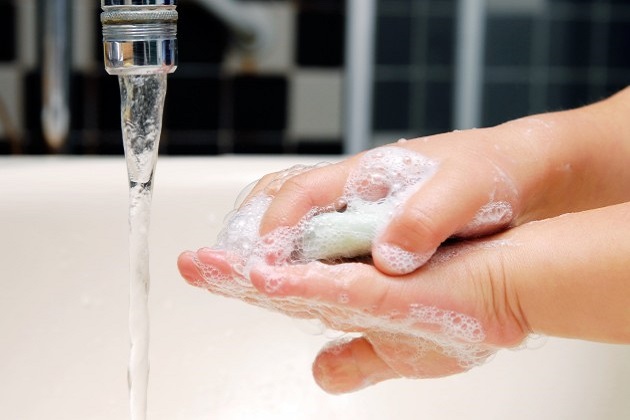
When should you wash your hands with soap and water?
When your hands are visibly dirty
Before eating
After using the restroom
All of the above

What is the easiest and most important way to prevent the spread of infection?
Hand washing
Wearing gloves
Covering your nose when you cough or sneeze
Wearing a gown and a mask

Choose the correct option
sharps container
biohazard waste container
syringe
gown
What is the name given to a tiny living plant or animal that cannot be seen with the naked eye?
Pathogen
Microorganism
Nonpathogen
Microbiology
Which of the following is NOT a growth requirement for microorganisms?
Darkness
Moisture
Nutrition
Acidic environment
Microorganisms can be transmitted through
Droplet infection
Insects
Contaminated food
Contaminated equipment
All of the above
What is the name given to a person who cannot fight off a pathogen that has entered his or her body?
Reservoir host
Resistant host
Contagious
Susceptible host
A vague sense of body discomfort, weakness, and fatigue is known as
The blahs
Malaise
Crisis
Adventitious
If an axillary temperature of 100 °F was taken orally, it would register as
98 °F
99 °F
100 °F
101 °F
How far should the probe be inserted when measuring the rectal temperature of an infant?
1/2 inch
1/4 inch
1 inch
1 1/2 inch
Chemical thermometers must be stored in
The freezer
A dry heat oven
A watertight container
A cool area
Where is the popliteal pulse located?
In front of the ear, just above eye level
In the middle of the groin
On the anterior side of the neck
In the back of the knee
Which of the following pulse sites can be used to assess circulation to the foot?
Posterior tibial
Ulnar
Femoral
Popliteal
Which of the following individuals may normally exhibit bradycardia?
A trained athlete
An infant
An elderly person
A diabetic patient
The control center for involuntary respiration is the
Medulla
Thalamus
Hypothalamus
Olfactory lobe
What term is used to describe temporary cessation of breathing?
Hypoxia
Hypopnea
Apnea
Anoxia
The function of hemoglobin is to
Transport oxygen in the body
Defend the body against infection
Assist in blood clotting
Transport nutrients to the cells
Which of the following will NOT cause a decrease in the SpO2 reading?
Pneumonia
Asthma
Emphysema
Gastritis
Which of the following is NOT used as a probe placement site?
Toe
Earlobe
Finger of an arm to which an automatic blood pressure cuff is applied
Index finger
Which of the following is NOT a risk factor for developing hypertension?
Obesity
Smoking
Sleep apnea
Alcohol consumption
When measuring blood pressure, the first clear tapping sound represents
The systolic pressure
Phase IV of the Korotkoff sounds
The diastolic pressure
The palpatory blood pressure reading
Which of the following represents an error in (manual) blood pressure technique?
Directing the ear pieces of the stethoscope slightly forward in the ear
Placing the cuff 2 inches above the bend in the elbow
Positioning the manometer at a viewing distance of 2 feet
Releasing the air in the cuff as slowly as possible
Blood pressure measures
The contraction and relaxation of the heart
The number of times the heart beats per minute
The force exerted on the walls of the arteries by the blood
The expansion and recoiling of the aorta
Initiative is the ability to begin or carry through on a plan of action independently.
True
False
Attending an accredited medical assisting program guarantees employment.
True
False
Neatness and grooming are important not only for professionalism, but also for reasons of health and safety.
True
False
Wearing multiple rings while working with patients is usually fine as long as proper handwashing procedures are followed.
False
True
Once a national certification is obtained, no further education is ever required.
False
True
It is often the medical assistant’s responsibility to educate patients about office procedures and policies.
True
False
What is the name for treatment that reduces symptoms of a disease, but does not cure the disease?
Definitive
Palliative
Holistic
Empirical
Which of the following facilities now functions primarily to provide acute care and diagnostic services?
Clinic
Hospital
Physician’s office
Skilled nursing facility/nursing home
Which aspect of our communication is most likely to convey our true feelings and beliefs?
Nonverbal communication
Verbal communication
Increased use of slang
Spoken words only
Which of the following is an example of a closed question?
“What is the reason for your visit today?”
“Are you an only child?”
“Can you describe your pain for me?”
“What are your plans for the future?”
How is the patient likely to react if the medical assistant asks, “Why aren’t you following your diet?”
Become defensive
Answer honestly
Smile but not answer
Say, “I’m glad you asked me that question.”
The type of listening when the medical assistant remains “in the moment” and focuses fully on the patient’s message is called
Open listening
Closed listening
Active listening
Verbal listening
How can the medical assistant facilitate communication nonverbally?
Avoid eye contact
Be aware of his or her own and the patient's bady language
Ask the patient to repeat anything that is unclear
Stand close to the patient
Which of the following is NOT true with regard to anxiety and anxiety attacks?
They should be dealt with it as a medical issue first.
Severe episodes are often called panic attacks.
The patient should be instructed to breathe into a brown paper bag.
Anxious patients often do not remember what they are told.
When is it appropriate for the medical assistant to use silence in an interview with a patient?
Whenever the medical assistant feels threatened
When the medical assistant wants to encourage the patient to respond
When the medical assistant does not believe what the patient has just said
Silence is not appropriate when interviewing a patient
Self boundaries define how close others can get, both physically and mentally.
True
False
Changes in facial expression and body position when communicating are examples of nonverbal cues.
True
False
A patient with inoperable lung cancer says that he will stop smoking so that he can live until his daughter’s graduation. He is most likely in the depression stage of the grieving process as defined by Elizabeth Kübler-Ross.
True
False

