
 Worksheets
Fundamentals of Electrical Engineering
Total questions: 125
Worksheet time: 2hrs 47mins
Which of the following is a one-time protection device?
RCCB
MCB
Fuse
ELCB
An RCCB trips when there is:
Overcurrent
Overvoltage
Leakage current
Reverse polarity
What is the advantage of using MCB over fuse?
Lower cost
Resettable after fault
Handles higher currents only
Can detect voltage spikes
Where would you most likely use a 30mA RCCB?
Street lighting
Residential wiring
Industrial motor panel
Solar panel
Which fuse rating is most suitable for a 60W, 230V light bulb?
0.1 A
5 A
1 A
3 A
Current drawn by a 1000W heater at 230V is:
1.2 A
4.35 A
10 A
0.23 A
For what applications is a 100mA RCCB typically used?
Residential circuits
Medical ICU circuits
Industrial equipment
Laptop charging
What is the approximate resistance of a bulb rated 250V, 100W?
2.5 Ω
100 Ω
250 Ω
625 Ω
Power = Voltage × ______?
Resistance
Capacitance
Current
Conductance
Which device cuts the circuit when the current exceeds a preset value?
RCCB
MCB
Isolator
ELCB
MCB trips using which two types of mechanisms?
Thermal and magnetic
Resistive and inductive
Electrical and optical
Thermal and chemical
RCCB compares currents in:
Phase and ground wire
Phase and neutral wires
Phase wire and reference
Neutral and ground wires
A fuse is placed in:
Neutral wire
Phase wire
Earth wire
Across phase and neutral
Which of the following devices will NOT trip in case of an electric shock through a wet body?
RCCB
ELCB
MCB
Fuse
If the load draws 5A but the fuse is rated at 3A, what will happen?
The fuse will allow 5A current to pass normally
The fuse will blow, interrupting the circuit
The fuse will regulate the current to 3A
Fuse increases voltage to deliver more current
WHAT IS RESPONSIBLE FOR THE CURRENT TO FLOW?
PROTONS
ELECTRONS
NUCLEUS
BOTH A & B
INPUT POWER = OUTPUT POWER IS CALLED AS_____TRANSFORMER
PRIMARY
SECONDARY
IDEAL
NONE
what is the unit of current
ampere
volt
ohm
ohm's law states that
V=I/R
I=V/R
R=VI
An instrument which detects electric current is known as
AMMETER
Rheostat
Voltmeter
The filament of an electric bulb is made of
A. Carbon
B. Aluminium
C. Tungsten
The capacity of a battery is expressed in terms of
A. Current rating
B. Voltage rating
C. Ampere hour rating
UNIT OF QUANTITY OF CHARGE
COULOMB
OHM
AMPERE
THE POTENTIAL DIFFERENCE IS MEASURED
AMMETER
OHMMETER
VOLTMETER
THE RECIPROCAL OF TIMEPERIOD
RESISTANCE
FREQUENCY
VOLTAGE
WATT IS THE UNIT OF
POWER
VOLTAGE
CURRENT
The resistivity of the conductor depends on
area of the conductor.
length of the conductor.
type of material.
none of these.
Which of the following is not an expression power?
P=VI
P=I2R
P=V2/R
P=I/R
Conductance is expressed in terms of
ohm / m
m / ohm
mho / m
mho
The S.I. unit of power is
Henry
Coulomb
Watt
Watt-hour
The property of the conductor due to which it passes current is called
Resistance
Reluctance
Conductance
Inductance
The insulation on a current carrying conductor is provided
To prevent leakage of current
To prevent a shock
Both of the above
None of the above
Active power and apparent power are respectively represented by?
kW and kVAR
kVAR and kVA
kVA and kVAR
kW and kVA


When two batteries are connected in parallel, it should be ensured that
They have same emf
They have same make
They have same ampere hour capacity
They have identical internal resistance
The power factor of a purely resistive circuit is
zero
unity
lagging
leading
Kirchhoff’s laws (KCL and KVL) are applicable to:
DC circuits
AC circuits
Passive networks alone
DC as well AC circuits
A heater is rated at 230V, 10kW, AC. The 230V refers to
average value
r.m.s. voltage
peak voltage
none of the above
For a frequency of 200Hz, the time period will be
o.o5s
0.005s
0.0005s
0.5s
UNIT OF RESISTANCE IS
OHM
MHO
FARAD
HENRY
Which quantity consists of a unit 1KWh ?
Energy
Time
Power
charge
Electrical appliances are connected in
parallel because it
is a simple circuit
draws less current
results in reduced power loss
makes the operation of appliances
independent of each other

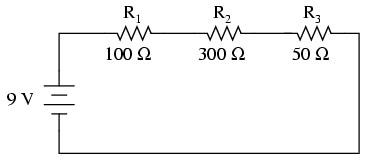
Voltage drop across 14.5 Ω resistor in figure
29 V
30.5 V
14 V
18 V

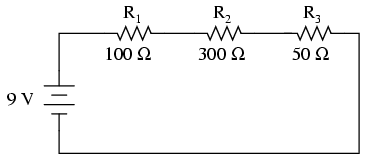
Referring to the figure ,the total circuit resistance will be
1000Ω
400Ω
1400Ω
135Ω

In figure
the lamp A will be brighter than lamp B.
the lamp B will be brighter than lamp A.
the two lamps will be equally bright
none of the above

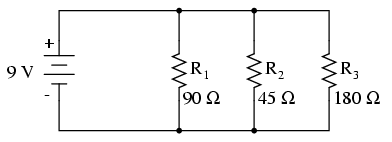
The voltage across the parallel circuit shown in figure is
15 V
10 V
30 V
12.5 V

The current in 10Ω resistor in figure is
3 A
2.5 A
1.5 A
3.5 A
The r.m.s. value of sinusoidal 100 V peak to peak is _________ volt.
100√2
50/√2
50
100
The peak value of a sine wave is 200V.Its average value is
127.4V
141.4V
282.8V
200V
Electric pressure is also called as
resistance
power
voltage
energy
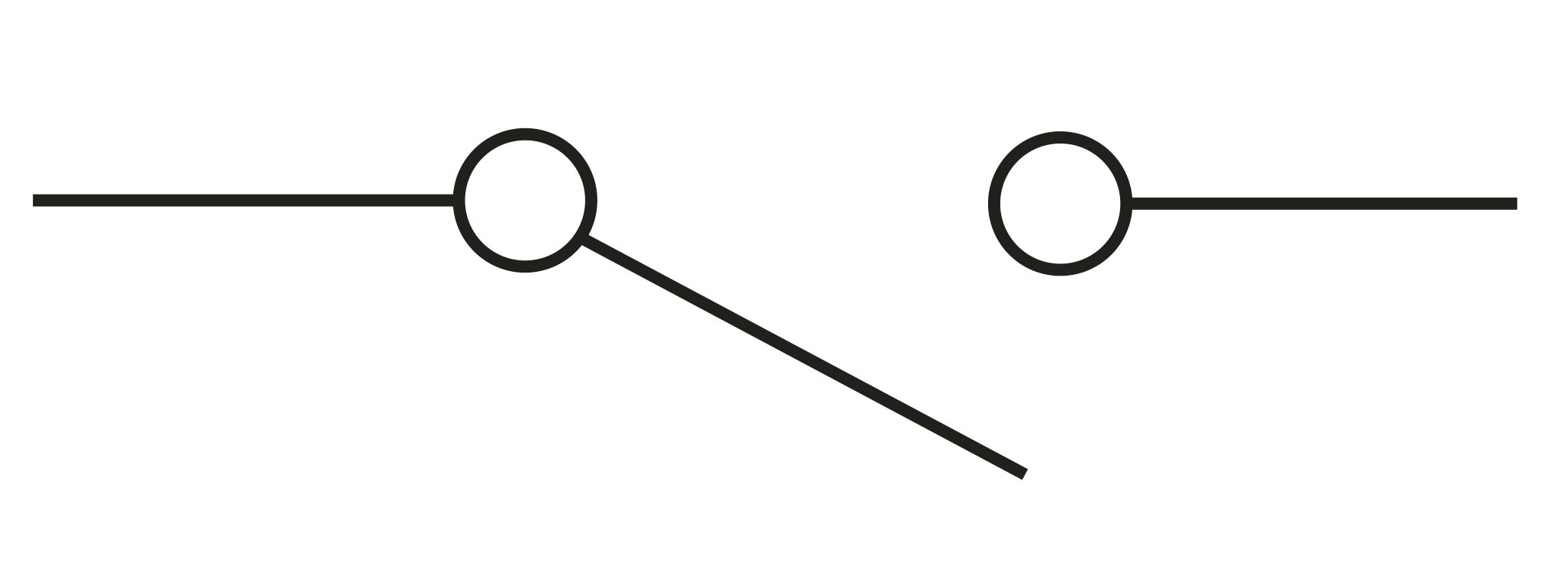
A closed switch has a resistance of
zero
about 50 ohms
about 500 ohms
infinity
An electric filament bulb can be worked from
D.C. supply only
A.C. supply only
Battery supply only
All the above
An EMF source of 8.0 V is connected to a purely resistive electrical appliance. An electric current of 2.0 A flows through it. What is the resistance offered by the electrical appliances?
4 ohm
6 ohm
2 ohm
3 ohm
What are the steps in the electrical power system?
Generation, transmission and distribution.
generation, transmission and transformer
generation, impedance and distribution.
Motor, transmission and distribution.
If an electrical appliance uses current of 11 A, which is the suitable value of fuse to be used.
15 A
5 A
10 A
13 A
How many wires are used in three phase system?
3
4
5
all the above
how can we select the thickness of fuse wire?
based on load current
based on voltage
both
none
which material is generally used in conductor?
plastic
aluminium
iron
all the above
Circuit protection devices are used for which of the following purposes?
To protect people
To protect circuits
To guard against hazardous conditions
All of the above
Which of the following two are circuit protection devices?
Electrical plugs and CO2 cartridges
CO2 cartridges and circuit breakers
Fuses and circuit breakers
Fuses and electrical plugs

The figure shows ……………...
timer
contractor
BUSH BUTTON
MCCB

The figure shows ……………...
timer
Circuit breaker ( MCB )
selector switch
Float switch


The neutral wire carries the current...
towards the appliance
out of the appliance
In a plug, the fuse is connected to the (a) wire.
When the current through a fuse gets too high, the wire inside the fuse will...
create a spark
melt
sound an alarm
do nothing
Select the correct advantages of circuit breakers over fuses.
Circuit breakers can be reset.
Circuit breakers are cheaper.
Circuit breakers stop the current faster.
A connection that allows current to take the path of least resistance is a
short circuit
long circuit
parallel circuit
series circuit
What is the term for a reusable safety switch that breaks the circuit when the current gets too high?
third prong
fuse
circuit breaker
short circuit
grounded
Without a fuse or circuit breaker, what might happen in a house with an overloaded electric circuit?
the thin piece of metal would melt, breaking the circuit
the metal band would heat up, disrupting the circuit
a fire would start
the electricity for the house would turn off
What is the difference between a fuse and a circuit breaker?
a fuse can only be used once and a circuit breaker is reusable
a fuse is reusable and a circuit breaker can only be used once
both fuses and circuit breakers can only be used once
both fuses and circuit breakers are reusable

A bird perched on one electrical wire will not get shocked because there is no difference in electrical potential between its feet.
true
false

Found in electrical devices and helps to stop too much current from damaging the device
circuit
current
fuse
What is the American Wire Gauge (AWG) system used for?
Determining wire size
Measuring electrical current
Testing insulation strength
Rating voltage capacity
What does the wire gauge number indicate?
The maximum current rating
The type of insulation used
The diameter of the wire
The voltage capacity of the wire
Why is it important to use the right size wire for the amount of current expected in a circuit?
To improve energy efficiency
To prevent voltage fluctuations
To avoid excess heat and potential fires
To reduce electrical resistance
What is the potential danger of plugging a heater rated for 20 amps into a 15-amp circuit wired with 14-gauge wire?
Voltage fluctuations
Electrical resistance
Energy inefficiency
Excess heat and potential fires
What should be considered when selecting the wire gauge for an extension cord?
The voltage capacity of the cord
The color of the cord
The length of the cord
The type of insulation used
What is the purpose of the grounding path for extension cords?
To keep users safe
To prevent voltage fluctuations
To avoid excess heat and potential fires
To reduce electrical resistance
A circuit breaker is
power factor correcting device
a device to neutralize the effect of transients
a waveform correcting device
a current interrupting device.
A thermal protection switch provides protection against what?
Overload
Temperature.
Short circuit.
Overvoltage
ELCB is an abbreviation of
electrolytic circuit breaker
earth locking circuit breaker
earth leakage circuit breaker
electric leakage circuit breake
Short circuit occurs when the current takes up
more voltage
less voltage
short path
long path
The function of the circuit breaker is
To safeguard the circuit
On and off the circuit
To save human life
None of these


Resistors X and Y are connected in series with a 6.0 V battery of negligible internal resistance.
X has resistance R and Y has resistance R/2.
A voltmeter of resistance R is connected across Y.
What is the reading on the voltmeter?
0.0 V
1.5 V
3.0 V
4.5 V
As you continue to add lightbulbs in series, what happens?
The bulbs get brighter
The bulbs get dimmer
The bulbs remain the same brightness
The bulbs explode and shards of glass get everywhere

The voltage of the entire circuit is 18V. Lamp A, B and C are identical. What is the voltage of Lamp B?
18V
3V
9V
6V
Which of the following is a good insulator?
copper
aluminum
glass
silver
When a switch is _________, the electric current can flow through the circuit.
open
closed
Which of the following is a good conductor?
gold
wood
ceramic
plastic
If a switch is ______, a light bulb will not light.
open
closed

Which of the following is a characteristic of variable tariff structures?
Flat fees regardless of usage patterns.
Fixed rates that do not change over time.
Rates that are only based on geographical location.
Rates that can change based on factors like time of use or demand.
Time-of-Use tariffs are designed to encourage usage during which time?
Peak hours
Off-peak hours
Midday hours
Nighttime hours
What is a demand charge in electricity billing?
A demand charge is a flat fee for all electricity used.
A demand charge is a fee based on the highest level of electricity demand during a billing period.
A demand charge is a tax imposed by the government on electricity consumption.
A demand charge is a discount applied to high electricity usage.
How do peak rates differ from off-peak rates?
Peak rates are lower than off-peak rates.
Off-peak rates are the same as peak rates.
Peak rates apply only during weekends.
Peak rates are higher than off-peak rates.
Which tariff structure typically has a constant rate regardless of usage?
Tiered-rate tariff structure
Variable-rate tariff structure
Pay-as-you-go tariff structure
Flat-rate tariff structure
Demand charges are usually based on what measurement?
The total energy consumption over a year measured in megawatt-hours (MWh).
The highest level of electricity demand measured in kilowatts (kW).
The minimum level of electricity demand recorded in kilowatts (kW).
The average monthly electricity usage in kilowatt-hours (kWh).
What is tariff?
The rate at Which electrical energy is produced in the plant.
The rate at Which electrical energy is supplied to the consumers.
Both the answers are correct
Calculate the number of units of electricity used if a bulb of 100 W is kept on for 5 hours.
0.5 unit
1 unit
5 units
105units
Kabir bought 5 new light bulbs of 50 W each in addition to the 7 bulbs he already had in his house which were also 50 W each. Calculate his electricity bill, if he keeps the new bulbs on for 5 hours and the older bulbs on only for 3 hours, and the cost of one unit of electricity is Rs. 60.
Rs. 138
Rs. 130
Rs. 139
Rs. 140
Find the energy in kWh consumed in 5 hours by five devices of power 200W each?
5
50
10
1

