wayground logo

Free Printable Worksheets

NEW

Font size

S
M
L
XL
Worksheets

Review - Quarterly MP2

Total questions: 75

Worksheet time: 2hrs 19mins

Name
Class
Date
1.
An animal cell placed in a hypertonic (salty) solution will
a)
Shrink
b)
Swell
c)
Stay the same
2.
Which way will the water molecules move during osmosis?
a)
Out of the cell, so the cell shrinks.
b)
Out of the cell, so the cell swells.
c)
Into the cell, so the cell shrinks.
d)
Into the cell, so the cell swells.
3.
What is the definition of  Selective Permeability?
a)
The movement of materials across the cell membrane that requires NO ENERGY from the cell.
b)
The movement of materials through (or across) the cell membrane
c)
The ability of the cell membrane to allow some things to pass through while preventing other things from passing through.
d)
The movement of molecules from an area of high concentration to a area of low concentration 
4.
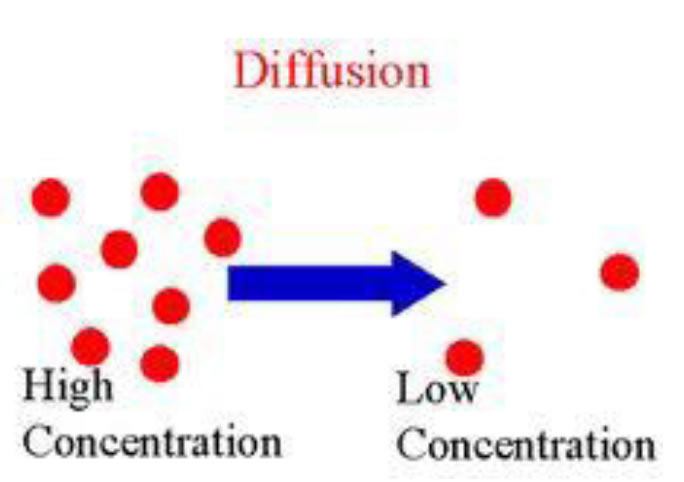
Movement of particles from high to low concentration. 
a)
Passive Transport
b)
Active Transport
5.
Osmosis is a form of ______________. 
a)
Passive Transport
b)
Active Transport
6.
Cell membranes are said to be selectively permeable. Which statement best explains what selectively permeable means?
a)
The cell membrane prevents any harmful substance from entering the cell.
b)
The cell membrane lets certain substances enter the cell and keeps certain substances out of the cell.
c)
The cell membrane allows only large molecules to diffuse into the cell.
d)
The cell membrane has pores that let only water and glucose into the cell and carbon dioxide out.
7.
The picture is an example of...
a)
active tranport
b)
passive transport
c)
diffusion
d)
osmosis
8.
A blood cell in a hypotonic solution would
a)
It would be fine, it is balanced
b)
It would shrink and soon look like a raisin because the solution around the cell has more water inside than outside
c)
It would swell and stretch until it pops because there is less water inside the cell than outside of it
d)
No one knows until you do the experiment, they are all different
9.
You put a cell into a solution, the cell grows. Is the solution hypotonic or hypertonic to the cell? 
a)
hypertonic
b)
hypotonic
c)
isotonic
d)
not enough information
10.
What type of solution is this cell in?
a)
Isotonic
b)
Hypertonic
c)
Hypotonic
d)
diffused
11.
What type of solution is this cell in?
a)
Isotonic
b)
Hypertonic
c)
Hypotonic
d)
diffused
12.
The process of taking material into the cell by forming a pocket around large molecules or clumps of material. REQUIRES ENERGY (ATP)!
a)
Osmosis
b)
Diffusion
c)
Endocytosis
d)
Exocytosis
13.
Sodium (Na+) and Potassium (K+) ions are moved in and out of the cell using ATP. 
a)
Active Transport
b)
Diffusion
c)
Facilitated Diffusion
d)
Osmosis
14.
Removes substances form the cell by using a portion of the cell membrane.  REQUIRES ENERGY (ATP)! 
a)
Endocytosis
b)
Exocytosis
c)
Diffusion
d)
Osmosis
15.
Movement of particles against the concentration gradient. Particles move from an area of low concentration to high concentration. REQUIRES ENERGY (ATP)!
a)
Passive Transport
b)
Osmosis
c)
Diffusion
d)
Active Transport
16.
Water moves across the cell membrane to equalize the concentration of the solution on both sides of the cell membrane. 
a)
Facilitated Diffusion
b)
Active Transport
c)
Osmosis
d)
Diffusion
17.
A type of passive transport. Particles move from an area of high concentration to low concentration with the help of protein channels or carrier proteins.
a)
Diffusion
b)
Facilitated Diffusion
c)
Endocytosis
d)
Exocytosis
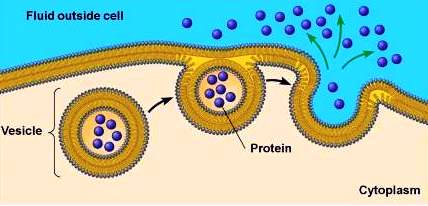
18.
In this image, the cell is using which type of molecular transport?
a)
Osmosis
b)
Diffusion 
c)
Endocytosis
d)
Exocytosis 
19.

What is the movement of particles with the concentration gradient using protein "helpers"?

a)

diffusion

b)

facilitated diffusion

c)

active transport

d)

enzymatic reactions

20.

An example of facilitated diffusion is

a)

CO2 and O2 exchange in the lungs

b)

Glucose transport

c)

Na+ / K+ Pumps

d)

Endocytosis

21.
Which form of active transport is being shown?
a)
Pinocytosis
b)
Endocytosis
c)
Exocytosis
d)
Osmosis
22.
Protein "pumps" move molecules from an area of _______ concentration to and area of _______ concentration.
a)
zero, 100%
b)
high, low
c)
some, little 
d)
low, high 
23.
Which organelle performs PHOTOSYNTHESIS?
a)
Chloroplast
b)
Mitochondria
24.
What is the ultimate ORIGINAL source of energy for living things
a)
Sugar
b)
Sun
c)
Moon
d)
Carbon Dioxide
25.
What are the products of photosynthesis?
a)
water and carbon dioxide
b)
oxygen and glucose
c)
oxygen and carbon dioxide
d)
oxygen and water
26.
Leaves look green because.....
a)
they eat their vegetables
b)
to blend into their environment
c)
they contain a molecule named chlorophyll
d)
they are sick
27.
What is the function of NADPH and ATP?
a)
They absorb light
b)
They power the light-dependent reactions
c)
They are light-reflecting pigments
d)
They are short term energy carriers
28.
After photosynthesis, plants store their energy as _________ .
a)
chlorophyll
b)
pigment
c)
glucose (sugar)
d)
Oxygen
29.
After photosynthesis, plants store their energy as _________ .
a)
chlorophyll
b)
pigment
c)
glucose (sugar)
d)
Oxygen
30.
What gas goes into the plant before photosynthesis?
a)
Carbon Dioxide
b)
Carbon Monoxide
c)
Oxygen
d)
Nitrogen
31.

Where do the dark reactions (Calvin cycle) take place?

a)

thylakoid membrane

b)

lumen

c)

stroma

32.
What are the two products of the light reactions that are needed for the calvin cycle?
a)
NAD and NADPH
b)
NADP + and Glucose
c)
NADPH and ATP
d)
Oxygen and NADPH
33.
What is the main chemical compound that stores and releases energy?
a)
ATP
b)
Cytoplasm
c)
PTP
d)
Oxygen
34.
What do plants need for the photosynthesis process?
a)
a camera and tripod
b)
light, carbon dioxide, and water
c)
roots, flowers, and bees
d)
soil, air, and oxygen
35.
What is the main purpose of the light reactions?
a)
To provide the energy and electrons for the calvin cycle
b)
To capture energy and make sugar
c)
To reflect green light
d)
To make sugars
36.
What are the reactants of photosynthesis?
a)
carbon dioxide and oxygen
b)
water and oxygen
c)
carbon dioxide and water
d)
water and glucose
37.
The stacks of disks in the chloroplast are called:
a)
Lamellae
b)
Grana
c)
Stroma
d)
Thylakoid
38.
The interior space of the chloroplast is called:
a)
Lamellae
b)
Grana
c)
Stroma
d)
Thylakoids
39.
What is the main purpose of the light dependent reactions?
a)
To provide the energy for the calvin cycle
b)
To capture energy and make sugar
c)
To reflect green light
d)
To make sugars
40.
Which of the following is the correct equation for PHOTOSYNTHESIS?
a)
CO+ light + H2O --> O+ Sugar
b)
CO+ sugar + H2O --> O+ light
c)
O2 + light + H2O --> CO+ Sugar
d)
CO+ O2 + H2O --> Light+ Sugar
41.
What process occurs when light energy is captured in autotrophs and converted into sugar?
a)
Photosynthesis
b)
Cellular Respiration
42.
What is the pigment in chloroplasts that performs photosynthesis?
a)
Chlorosynthesis
b)
Chlorophyll
c)
ADP
d)
Electron Transport
43.
Which gas is removed from the atmosphere during photosynthesis?
a)
hydrogen
b)
oxygen
c)
nitrogen
d)
carbon dioxide
44.
What are the products of photosynthesis?
a)
water and carbon dioxide
b)
oxygen and glucose
c)
oxygen and carbon dioxide
d)
oxygen and water
45.
What are the products of photosynthesis?
a)
water and carbon dioxide
b)
oxygen and glucose
c)
oxygen and carbon dioxide
d)
oxygen and water
46.
What is photosynthesis?
a)
The process in which humans eat their food
b)
When a photographer takes a photo.
c)
To get your pictures from the photo lab.
d)
The process in which plants make their food.
47.

Which of the following is an example of positive feedback?

a)

Thermoregulation

b)

Blood Pressure

c)

Childbirth

d)

Blood Sugar Levels

48.
Homeostasis
a)
allows for a wildly fluctuating internal environment
b)
is impossible in vertebrates
c)
is the maintenance of a relatively stable internal environment and often incorporates a form of feedback regulation
d)
is the maintenance of a relatively stable external environment and often incorporates a form of feedback regulation
49.
When you get cut, your skin cells release hormones that signal platelets to come and stop the bleeding. Platelets then release more hormones that signal even more platelets to help stop bleeding. The hormone signals continue until the cut is closed.
a)
Positive Feedback Response
b)
Negative Feedback Loop 
50.

Which body system controls the body to maintain homeostasis?

a)

excretory

b)

nervous

c)

circulatory

d)

skeletal

51.
The maintenance of an organism’s internal environment is called:
a)
compensating
b)
homeostasis
c)
balancing
d)
routine
52.

The group of organisms that use the process of homeostasis includes

a)

mammals, only

b)

animals, only

c)

plants and animals

d)

all living things

53.
The tendency of an organism to maintain a balanced state in order to stay healthy.
a)
Stimuli
b)
Response
c)
Tropism
d)
Homestasis
54.
a body system that controls and coordinates all body activities through electric impulses/messages between brain, spinal cord and nerves.
a)
endocrine system 
b)
nervous system
c)
nerve
d)
neuron
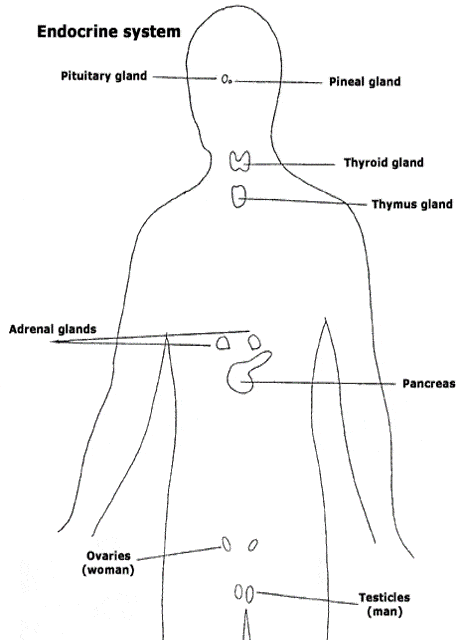
55.
a body system that controls growth and homeostasis by secreting hormones from glands.
a)
skeletal system
b)
nervous system
c)
endocrine sytem
d)
integumentary system
56.
organ of the endocrine system that secretes hormones.
a)
heart
b)
gland
c)
brain
d)
skin
57.

An infectious disorder that produces lesions on the brain in lab animals is caused by parasites. When gonads (testes or ovaries) are removed from the lab animals, the resistance to the infection increases and fewer lesions are produced. The two systems working together are

a)

digestive and circulatory

b)

immune and endocrine

c)

reproductive and muscular

d)

skeletal and endocrine

58.

Pathogens are disease causing agents such as bacteria, virus, or fungi. What systems work together to protect the body from these would be invaders?

a)

endocrine and reproductive

b)

circulatory and immune

c)

digestive and skeletal

d)

lymphatic and respiratory

59.

The integument system acts as the first line of defense against infection while the immune system produces a variety of cells to defend against invaders that enter the body. What conclusion can be made by these actions

a)

These two systems are working for different purposes

b)

The interaction of these two systems work for a specific and common purpose in the body

c)

These are actually the same systems under different names and do the same jobs.

d)

These two systems typically work independently of each other and do not share roles.

60.

The system bringing blood to the kidneys for filtering is the

a)

digestive

b)

excretory

c)

circulatory

d)

nervous

61.

Gas exchange is accomplished by which two systems?

a)

digestive and muscular

b)

skeletal and excretory

c)

reproductive and endocrine

d)

circulatory and respiratory

62.

Which two systems work together to prepare the female body for pregnancy and maintain hormone levels?

a)

digestive and excretory

b)

reproductive and endocrine

c)

immune and skeletal

d)

integument and respiratory

63.

The systems that regulate the process of birth in mammals would include

a)

endocrine (hormones), muscular (contractions), and reproductive (gestation)

b)

endocrine (hormones) and muscular (contractions)

c)

endocrine (hormones) and reproductive (gestation)

d)

endocrine (hormones), reproductive (gestation) circulatory (blood to organs)

64.

Which system listed below is in the order of cellular hierarchy? simple to complex

a)

integumentary system -> skin cell -> hair

b)

nerve cell -> brain -> ganglion - > neurons

c)

skin cell -> epidermis -> integumentary system

d)

heart -> lungs - > bronchii -> muscle cell

65.

When you saved Fred on Brainpop, which systems worked together to help him evade the wolf?

a)

The immune system releases antibodies to heal possible infections, endocrine delivers adrenaline to increase Fred's speed.

b)

Respiratory system increases Fred's breathing rate while the circulatory system increases blood pressure to provide more oxygen to tissues and cells.

c)

The digestive system increases rate of digestion while excretory system causes Fred to pee his pants

d)

circulatory system delivers more blood to the muscles system so Fred will be able to bleed profusely while being attacked by the wolf.

66.

When hormones provide feedback that affects neural processing, which two systems are involved.

a)

Nervous and Cardiac

b)

Endocrine and Digestive

c)

Nervous and Endocrine

d)

Digestive and Circulatory

67.

When nutrients are provided to muscle cells, which systems are working together?

a)

Integument, nervous, muscle

b)

muscle, skeletal

c)

digestive, circulatory, muscle

d)

reproductive, circulatory, muscle

68.

Healing of an organism starts in which level of organization?

a)

tissue

b)

cells and tissue

c)

cells and organs

d)

organ system and organism

69.

The two most abundant white blood cells fight bacterial infection are called

a)

basophils and monocytes

b)

eosinophils and basophils

c)

lymphocytes and neutrophils

d)

nuetrophils and basophils

70.

The respiratory and circulatory systems work together to

a)

bring newly digested food to the cells

b)

provide oxygen to cells while removing carbon dioxide

c)

transport hormones to the excretory system

d)

these two systems work dependently of each other and do not help with homeostasis

71.

If Fred was injured by the Wolf in the Brainpop game, Which two systems would have helped him?

a)

The circulatory system would have carried white blood cells of the immune system to the site of Fred's injury.

b)

The digestive system would have stopped digestion while the muscle system caused Fred to vomit.

c)

Fred would have fainted due to lack of oxygen from the respiratory system and would have pooped his pants (digestive system)

d)

The skeletal system would have released red blood cells to the integumentary system while Fred bled from his wound.

72.

Which two are both on the same organizational level?

a)

bones and muscle tissue

b)

heart and kidney

c)

epithelial cells and brain

d)

bladder and squamous cells

73.

Occasionally chemically contaminated food enters the body and impairs the ability to fight off infectious disease. Which systems are involved?

a)

digestive, circulatory, endocrine

b)

digestive and immune

c)

immune, endocrine, reproductive

d)

muscular, circulatory, endocrine

74.

____________ feedback occurs when there is a set point and the body tends to try to maintain that set point.

a)

Positive

b)

Negative

c)

Moderating

d)

Sliding scale

75.

Insulin Regulation is an example of _______________ feedback loops while contractions during labor is an example of ___________ feedback loops

a)

sliding scale; negative

b)

positive; negative

c)

moderating; sliding scale

d)

negative; positive