wayground logo

Free Printable Worksheets

Font size

S
M
L
XL
Worksheets

Quarter 2 Review

Total questions: 57

Worksheet time: 34mins

Name
Class
Date
1.

You are using an AED. Before pressing the shock button as indicated by the AED you would do the following?

a)

Shout clear and look to make sure no one is in contact with the victim

b)

Continue with 8 cycles of CPR

c)

Shout clear and then press the shock button

d)

Make sure chest compression are not interrupted

2.

A victim is in cardiac arrest and you go to place the AED pads on the victim's chest. You notice that the victim is wearing a Nitroglycerin medication patch where you would place an AED pad. What of the statements is NOT true?

a)

The area must be cleaned and the patch removed before attaching the AED pad.

b)

The patch may cause a burn to the skin.

c)

It is okay to place an AED pad on top of a medication patch.

d)

The patch may block transfer of energy delivered. The patch may block transfer of energy delivered.

3.

You find a victim whose chest is covered with water. The AED arrives to the scene. Before using the AED you would?

a)

All the options are incorrect

b)

Do not use the AED because the victim is covered with water

c)

Continue with AED usage while not delaying CPR

d)

Quickly wipe the chest before placing the AED pads

4.

How do you know the victim is receiving adequate breaths during CPR?

a)

the victim's stomach rises

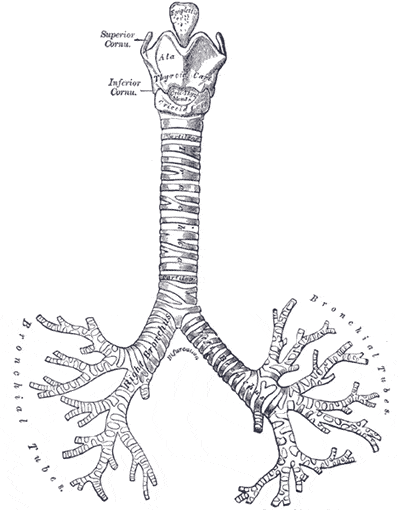
b)

the victim's chin begins to move forward

c)

there is no definite way to tell with out medical intervention

d)

the victim's chest rises

5.

After performing 30 high quality chest compressions on an adult victim, the next step is to?

a)

Continue with compressions at 30/min for 5 cycles

b)

Give 2 rescue breaths

c)

Activate the emergency response system

d)

check for a pulse

6.

You are first to the scene and you find an unresponsive person who is not breathing and has thrown up. You feel CPR is not something you are comfortable giving them. What would be the next best thing for you to do?

a)

wipe off the face or cover with a shirt

b)

compression only CPR

c)

go and get help

d)

do not start CPR

7.

You have delivered an AED shock to a patient. What should you do next?

a)

Check to see if the victim has a pulse.

b)

start CPR again, beginning with chest compressions

c)

put the AED away and wait for EMS to arrive

d)

deliver 2 rescue breaths to the victim

8.

If you are alone and come upon a person who may need CPR, the first thing you should do is:

a)

activate the emergency response system

b)

begin CPR

c)

go for an AED

d)

make sure the scene is safe

9.

Turf burns and scrapes are an example of:

a)

Closed wound

b)

Abrasion

c)

Puncture wound

d)

Bite wound

10.

This is an example of what type of wound

a)

abrasion

b)

puncture wound

c)

closed wound

d)

avulsion

11.

This is an example of what type of wound

a)

amputation

b)

abrasion

c)

puncture wound

d)

closed wound

12.

This is an example of which type of wound

a)

closed wound

b)

laceration

c)

abrasion

d)

punture wound

13.

What type of vaccination is needed for open wounds to prevent severe infection and death?

a)

COVID-19

b)

Tetanus

c)

Small pox

d)

Polio

14.
Which body system sends electrical signals to all other body systems?
a)
circulatory system
b)
nervous system
c)
digestive system
d)
skeletal system
15.
Which system of the human body provides protection to most of the major organs?
a)
Nervous System
b)
Muscular System
c)
Skeletal System
d)
Circulatory System
16.
Bone cells need nutrients. Which two systems get nutrients to bone cells?
a)
the digestive system and the circulatory system
b)
the circulatory system and the respiratory system
c)
the respiratory system and the skeletal system
d)
the skeletal system and the digestive system
17.
Which two human body systems are most responsible for getting oxygen to cells?
a)
digestive and skeletal
b)
skeletal and circulatory
c)
circulatory and respiratory
d)
respiratory and digestive
18.
Which best explains how the muscular system relies on the respiratory system?
a)
The respiratory system cools the muscular system.
b)
The respiratory system acts as the support system for the muscular system.
c)
The respiratory system brings oxygen into the body for the muscular system to use.
d)
The respiratory system provides nutrients for the body to use as fuel.
19.

Which is responsible for providing oxygen to cells?

a)

skeletal

b)

nervous

c)

digestive

d)

circulatory/cardiovascular

20.
Which best compares the respiratory system to the circulatory system?
a)
The respiratory system transports oxygen to cells, while the circulatory system provides oxygen for cells.
b)
The respiratory system provides oxygen for cells, while the circulatory system transports oxygen to cells.
c)
The respiratory system breaks down food for cell energy, while the circulatory system rids the body of waste.
d)
The respiratory system rids the body of waste, while the circulatory system breaks down food for cell energy.
21.
Which body systems work together to allow the body to move?
a)
nervous and skeletal
b)
muscular and skeletal
c)
nervous and circulatory
d)
muscular and circulatory
22.
How does the muscular system depend on the nervous system?
a)
The nervous system transports blood to the muscles.
b)
The nervous system provides support for the muscles.
c)
The nervous system supplies food and oxygen to the muscles.
d)
The nervous system sends signals to the muscles to cause movement.
23.
Which example best shows structures that make up the digestive system in the human body?
a)
heart, blood, vessels
b)
nose, trachea, lungs
c)
brain, spinal cord, nerves
d)
esophagus, stomach, intestines
24.

What is the first step you should take when helping someone that is choking?

a)

Immediately begin abdominal thrusts

b)

Do not help because you are not a trained professional

c)

Call for help and get consent from the person that is choking

d)

Ask them what it is they are choking on

25.

When an adult or child is choking, provide support by placing your hand on their (a)   and tilting them towards the floor.

26.

After obtaining consent, alternate between giving the person _ (how many?) back blows and abdominal thrusts.

(a)  

27.

Arteries carry blood away from the heart.

a)

True

b)

False

28.

Veins carry blood back to the heart.

a)

False

b)

True

29.
______________ are the smallest blood vessels.
a)
Arteries
b)
Veins
c)
Capillaries
30.
The circulatory system works with the ___________ system to provide our body with oxygen.
a)
respiratory
b)
digestive
c)
muscular
d)
skeletal
31.
The heart has ___ chambers.
a)
1
b)
2
c)
3
d)
4
32.
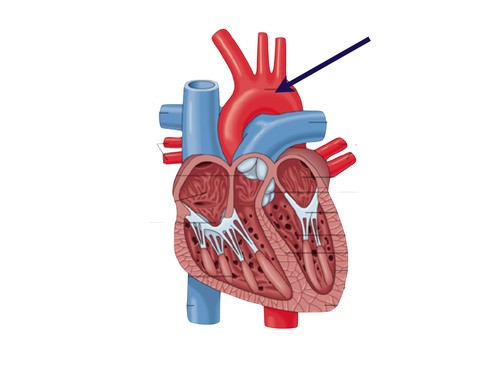
Identify
a)
Pulmonary veins
b)
Pulmonary artery
c)
Aorta
d)
Vena cava
33.
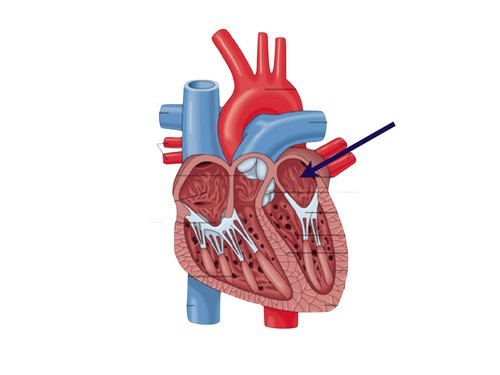
Identify
a)
Left atrium
b)
Right atrium
c)
Left ventricle
d)
Right ventricle
34.
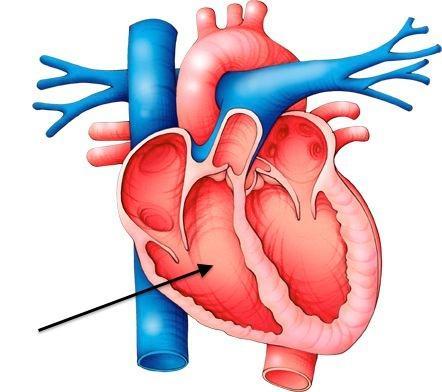
Identify
a)
Left atrium
b)
Right atrium
c)
Left ventricle
d)
Right ventricle
35.
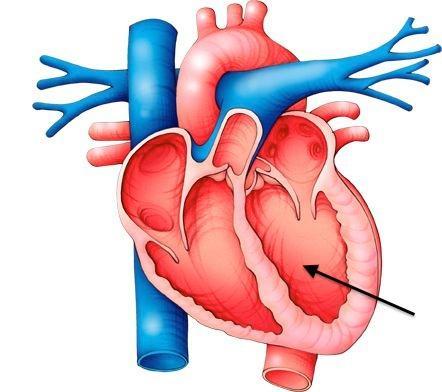
Identify
a)
Left atrium
b)
Right atrium
c)
Left ventricle
d)
Right ventricle
36.
This chamber of the heart RECEIVES blood returning from the body
a)
Right Atrium
b)
Right Ventricle
c)
Left Atrium
d)
Left Ventricle
37.

This chamber of the heart RECEIVES oxygen rich blood back from the lungs

a)

Right Atrium

b)

Left Atrium

c)

Right Ventricle

d)

Left Ventricle

38.

This chamber of the heart pumps the blood from the heart to the lungs through the pulmonary artery

a)

Right Atrium

b)

Left Atrium

c)

Right Ventricle

d)

Left Ventricle

39.

This chamber of the heart pumps the blood back out to the body cells through the Aorta

a)

Right Atrium

b)

Left Atrium

c)

Right Ventricle

d)

Left Ventricle

40.

Which of the following bones is NOT part of the axial skeleton?

a)

phalanges

b)

cranium

c)

vertebrae

d)

sternum

41.
Which system pumps blood through your body?
a)
circulatory
b)
digestive
c)
respiratory
d)
muscular
42.

Which system moves body parts?

a)

muscular

b)

integumentary

c)

digestive

d)

respiratory

43.
Which system provides oxygen and removes carbon dioxide?
a)
digestive
b)
muscular
c)
respiratory
d)
nervous
44.
This system transports essentials and removes wastes to and from the cells of the body.
a)
circulatory
b)
respiratory
c)
skeletal
d)
integumentary
45.
This system supplies the body with oxygen and rids it of carbon dioxide.
a)
circulatory
b)
respiratory
c)
muscular
d)
nervous
46.
This system includes the skin, hair, and nails.
a)
integumentary
b)
nervous
c)
skeletal
d)
muscular
47.
Which body system sends electrical signals to all other body systems?
a)
circulatory system
b)
nervous system
c)
digestive system
d)
skeletal system
48.
Given the following structures:
1. larynx
2. nasal cavity
3. pharynx
4. trachea
Which of the following is the correct order that air would flow during inhalation. 
a)
1,2,3,4
b)
2,3,1,4
c)
2,1,3,4
d)
4,2,3,1 
49.
The two main branches from the trachea (one to each lung)
a)
bronchi
b)
alveoli
c)
capillaries
d)
bronchioles
50.
The air sacs that are covered with capillaries where gas exchange takes place
a)
bronchi
b)
lungs
c)
oxygen
d)
alveoli
51.
Name the organ label # 6. 
a)
alveoli 
b)
bronchi 
c)
trachea 
d)
lungs 
52.
Name the structure labeled 8 
a)
lungs 
b)
trachea 
c)
diaphragm 
d)
alveoli 
53.
What does the Larynx hold ?
a)
The larynx holds the whole sub system 
b)
The larynx is part of the plant cells. 
c)
The larynx holds the vocal chords. 
d)
The larynx is part of animal tissues. 
54.
a flap of tissue that closes when we eat so food doesn't not go down the trachea
a)
larynx
b)
pharynx
c)
trachea
d)
epiglottis
55.

When air is pushed OUT of the lungs, what is the correct order for the tubes it passes through?

a)

bronchiole -> bronchi -> trachea -> nose

b)

bronchi -> bronchiole -> trachea -> nose

c)

trachea-> bronchi -> bronchiole-> nose

56.

A capillary is a form of...

a)

Gas exchange

b)

Respiration

c)

Blood vessel

d)

Alveoli

57.

Receives blood from the body that is low in oxygen and high in carbon dioxide

a)

Right Atrium

b)

Right Ventricle

c)

Left Atrium

d)

Left Ventricle