
Font size
 Worksheets
First Semester 8th Grade Science
Total questions: 40
Worksheet time: 25mins

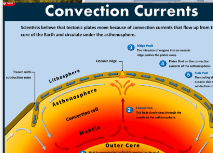
Most geologists think that the movement of Earth’s plates is caused by _______
convection.
continental drift.
subduction.
conduction.

The crust or bedrock is
Layer of molten metal.
Outermost layer of the Earth.
Made up of the lithosphere and asthenosphere.
Innermost layer of solid metal.

Breaks in the crust called __________ form where plates meet.
mountains
rift valleys
faults
trenches

A __________ forms where plates diverge on land.
rift valley
mid-ocean ridge
mountain
trench

Which theory describes the motion of the force driving Earth's Plates?
continental drift
plate tectonics
first law of motion
third law of motion

The process by which the ocean floor sinks beneath a deep-ocean trench and back into the mantle is known as _______
convection.
continental drift.
subduction.
conduction.

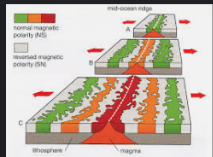
Below is a picture of sea-floor spreading. How are the ocean crusts moving?
Converging
Diverging
Sliding
No movement


Any rock that forms from another rock as a result of changes in heat or pressure (or both) is a:
chemical rock
igneous rock
sedimentary rock
metamorphic rock

What type of rock might contain evidence of past life?
Sedimentary Rock
Igneous Rock
Metamorphic Rock

Which type of rock was MOST LIKELY formed by the Tennessee River over the last 100 million years?
Igneous
Sedimentary
Mountainous
Metamorphic
The draining away of water from the surface of an area of land.
weathering
transpiration
run-off
precipitation

This map shows tornado activity in the United States between 1950 and 1998. Based on the data provided by this map, which of the following cities would be most likely to experience a tornado with a rating of F3 or greater in the next year?
Phoenix, Arizona
Topeka, Kansas
Orlando, Florida
Columbia, South Carolina
Of the following natural hazards we've studied, which is the hardest to predict?

Which Natural Disaster caused this?
Flood
Earthquake
Volcanic Eruption
Which picture better relates to "Hurricane"?


Tsunamis CAN BE caused by (choose 3) ____
Underwater Volcanoes
Earthquakes
Landslides
High Winds


flood from a river
a flash flood
What is the driving force behind the movement of the plates?
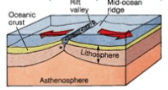
divergent
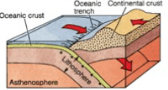
convergent
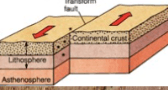
transform
What types of landforms are formed at convergent boundaries?
PICK TWO
volcanoes
new crust
Trenches
rift valley
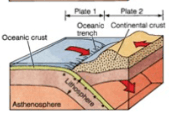
What is the WHOLE AREA called where the oceanic crust goes beneath the continental crust?
subtraction zone
section zone
secondary zone
subduction zone

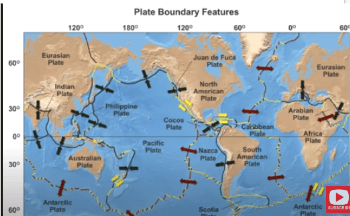
Find the Nazca and the South American Plate. This is an example of two plates converging. The denser oceanic plate (Nazca) moves under the continental plate (South American Plate)and creates subduction. What features are likely found here?
Rift Valleys
Volcanoes
Folded Mountains
Ocean Basins

The Indian Plate (far right of plate picture) converges with the Eurasian Plate. When two continental plates converge, what crustal feature is expected to form?
Rift Valley
Volcanoe
Folded Mountain
Ocean Basin

A picture of sea-floor spreading is shown. How are the oceanic crust moving?
Converging
Diverging
Sliding
No movement

The San Andreas Fault in California is known as an active earthquate area. What type of bounary is it?
Convergent
Divergent
Transform
Sea Floor Spreading

When two oceanic plate boundaries converge, what crustal feature forms? (See photo
Plate Tectonics
Sea Floor Spreading
Folded Mountains
Vocanic Island Arc
Match each diagram with the correct boundary type.

Convergent Bountary

Divergent Boundary

Transform Boundary

Subduction
Most geologists think that the movement of Earth’s plates is caused by (a)
Which of the following are potential effects of a natural disasters (check all that apply)?
spread of disease due to reduced standards of sanitation
disruption of communication networks
disruption of government and its services
loss of jobs and businesses
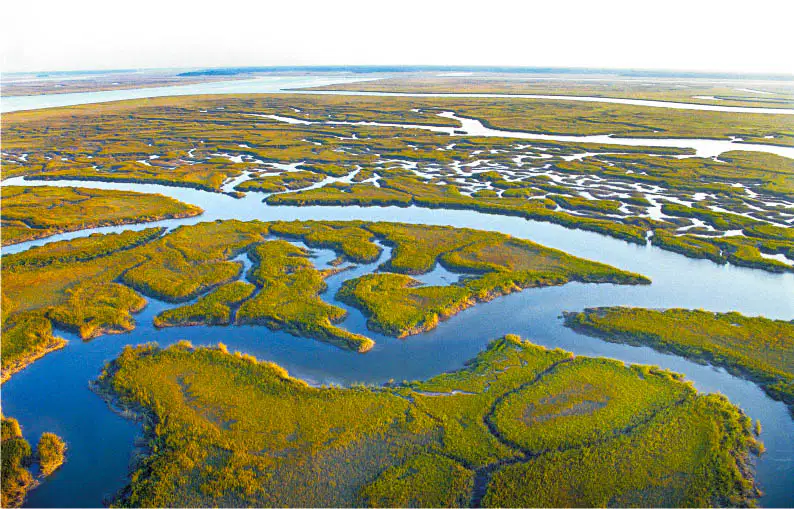
Coastal Vegetation, such as swamp or marshlands, can help slow tsunami waves and storm surge from hurricanes.
True
False


Volcanic belts form along _____.
the boundaries of Earth’s plates
North American mountain ranges
islands in the Pacific Ocean
the middle of Earth’s plates

