
Font size
 Worksheets
pure substances and mixtures
Total questions: 95
Worksheet time: 43mins

Identify the following substance.
Element
Compound
Mixture
Diatomic Molecule

Identify the following substance
Element
Compound
Mixture
Diatomic Molecule

What is the atomic mass of the element in the square?
6
Carbon
12
7

How many protons does an Aluminum atom have?
13
14
26
27

How many neutrons does an Aluminum atom have?
13
14
26
27
What is an element?
a molecule made with more than one atom
matter consisting of one kind of atom
two or more substances physically combined
a mixture in which the different parts are visible

What is the chemical formula for this molecule?
NN
2N
N2
NO2

What is the chemical formula for this molecule?
OH
HO
HHO
H2O
Which is a diatomic element?
O2
O3
Cl
H2O
Select all the pure substances below (pick 3).
element
compound
molecule
mixture
Classify the substance: pizza.
element
compound
mixture
Select all the elements. (Pick 3.) H2O
H2O
Nitrogen
Oxygen
Cl2
NaCl
___________ are the smallest unit of an element that maintains the properties of that element.
Atoms
Elements
Compounds
Mixtures
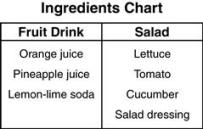
Using the information in the chart, which statement is the BEST description of the drink and salad?
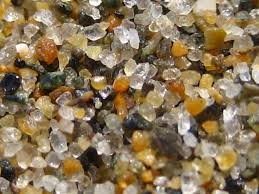
Which of these is an element?
Salt (NaCl)
Water (H20)
Oxygen (O)
Carbon Dioxide (CO2)
Which of these is a mixture?
Laundry Detergent
Salt (NaCl)
Oxygen (O)
Fluorine (Fl)
Air is:
An element
A compound
A mixture
None of these
___________ are the smallest unit of an element that maintains the properties of that element.
Atoms
Elements
Compounds
Mixtures
An _______________ is made up of one or more of the same kind of atom chemically combined.
atom
element
molecule
compound
A ______________ is made up of different kinds of atoms chemically combined.
element
compound
mixture
molecule
True or False: elements AND compounds are pure substances.
True
False
Elements are broadly classified as metals, nonmetals, and _________________.
compounds
organic
metalloids
Metallica
A ______________ mixture is one that does not have a uniform composition.
heterogeneous
homogenous
pure substance
A _________________ mixture is one where the substances are evenly spread throughout.
heterogeneous
homogeneous
pure substance
In a ______________, one substance is dissolved in another substance.
solution
suspension
colloid
Fruit Loops, pizza, and Skittles are examples of ____________________ mixtures.
heterogeneous
homogeneous
pure
Coffee, mouthwash, and vinegar are examples of __________________ mixtures.
heterogeneous
homogeneous
pure
Soil
Homogeneous
Heterogeneous
Pure Substance
Element

Steel
Heterogeneous
Homogeneous
Compound
Element

Sugar
Homogeneous
Heterogeneous
Compound
Element
Table Salt (NaCl)
Heterogeneous
Homogeneous
Compound
Element

Coffee
Homogeneous
Heterogeneous
Compound
Pure Substance
Orange juice with pulp
Homogeneous
Heterogeneous
Compound
Pure Substance

Copper
Homogeneous
Heterogeneous
Compound
Element

Bronze
Homogeneous
Heterogeneous
Element
Compound

Milk
Heterogeneous
Homogeneous
Element
Compound

Ice water
Homogeneous
Heterogeneous
Element
Compound
Pure Substances: matter that is always made up of the same combination of atoms.
Elements and compounds can both be considered pure substances.
True
False
Mixtures: matter that is always made up of the same combination of atoms.
Elements and compounds can both be considered pure substances.
True
False
Heterogeneous: A mixture in which the substances that make up the mixture are not evenly mixed.
True
False
Compounds are two or more substances chemically bonded together.
True
False
Depends on the compound
Compounds are not chemically bonded together
Sweet tea
Heterogeneous
Homogeneous
Element
Compound
Which of the following is an example of a compound?
Iron
Water
Bronze
Steel
Salt is not an example of a compound.
True
False
Air
Homogeneous
Mixture
Heterogeneous
Mixture
Pure Substance
Element
Which of the following best describes compounds?
They can only be separated chemically
They are always liquid at room temperature
They contain the atoms of just one element
They are the same properties as their elements
Sugar ( C12 H22 O11 ) + Water ( H2 O )
Homogeneous
Element
Compound
Heterogeneous
Which classification of matter is composed of two or more substances which are physically combined?
atoms
pure substances
mixtures
elements
Which of the following is INCORRECT about pure substances?
formed by combining two or more components
have definite composition
all elements are pure substances
composed of only one kind of material
sugar
pure substance
mixture
Pancake batter
pure substance
mixture
Which of the following is NOT a mixture?
milk
lemonade
vegetable salad
aluminum
Which describes homogeneous mixtures?
composed of components which are not dissolved
has only 1 phase visible
has 2 or more phases visible
the components remain recognizable
Which type of mixture has particles which are uniformly distributed?
Homogeneous
Heterogeneous

What type of mixture does this diagram represent?
Homogeneous
Heterogeneous
Which of the following examples are heterogeneous mixtures?
soda and carbonated drinks
air and sweat
blood and concrete mix
coffee drink and lemonade
Rainwater
Homogeneous
Heterogeneous
Using the information in the chart, which statement is the BEST description of the drink and salad?
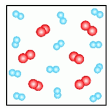
Which of these is an element?
Salt (NaCl)
Water (H20)
Oxygen (O)
Carbon Dioxide (CO2)
Which of these is a compound?
Aluminium (Al)
Carbon Dioxide (CO2)
Nitrogen (N)
Sand
Which of these is a mixture?
Laundry Detergent
Salt (NaCl)
Oxygen (O)
Fluorine (Fl)
Air is:
An element
A compound
A mixture
None of these
Which of the following is classified as a pure substance?
Lemonade
Fruit punch
ketchup
Helium
A combination of substances that can be physically separated from one another
mixtures
compound
element
molecule
A material with a particular chemical makeup
mixture
pure substance
hetogeneous
homogeneous
A characteristic that can be observed (intensive), such as texture, color, odor, melting point, boiling point, density, or measured (extensive) such as mass, length, volume, that is used to describe matter and can be observed or measured without changing its composition
physical property
element
pure substance
chemical property
A characteristic of a substance that is measurable or observable during a chemical reaction; includes pH, heat of combustion, reactivity, etc.
physica property
chemical property
compound
mixture
The nature of something's ingredients or constituents; the way in which a whole or mixture is made up.
composition
element
mixture
compound
A substance that can be dissolved by a solvent to create a solution.
solvent
solute
solution
mixture
A substance that can dissolve a solute when forming a solution.
solute
solution
solvent
mixture
The ability of a substance to be dissolved in a liquid
dissolvent
solubility
combustion
disappearing
a substance in which the parts are clearly different shapes and colors; different throughout
mixture
homogeneous
heterogeneous
element
a substance in which all of the parts are the same throughout
homogeneous
element
heterogeneous
pure substance
Substances that are made up of ONLY one type of atom (element) or compound.
Colloid
Heterogeneous mixture
Pure substance
Suspension
Homogeneous mixture
A _________ is made up of two or more substances that are together in the same place but ARE NOT chemically combined.
Pure substance
Mixture
Solution
Suspension
Identify which images are PURE SUBSTANCES! (Check all that apply) : )


The substances in this mixture DO NOT blend smoothly throughout, and the individual substances that compose the mixture can be detected or seen.
Homogeneous mixture
Heterogeneous mixture
Pure substance
Suspension
The substances in this mixture have been mixed together so well that the different parts will not separate on their own.
Homogeneous mixture
Heterogeneous mixture
Pure substance
Suspension
Solution
Identify which images are HETEROGENEOUS MIXTURES! (Check all that apply)


Solutions are ___________ mixtures.
Solid
Homogenous
Heterogeneous
Gas
Suspensions are ___________ mixtures.
Homogenous
Solid
Common
Heterogeneous
___________ are mixtures with large particles. The particles suspend in the substance and settle/float or can be filtered out of the mixture.
Pure substances
Suspensions
Solutions
Colloids
Solubility is __________________________________.
the amount of solute that can be dissolved by the solution
the amount of solvent that can be dissolved by the solute.
the amount of solute that can be dissolved by the solvent.
In a SOLUTION, the ___________ is the one doing the dissolving.
Solubility
Solvent
Solute
Solution
What are 3 effects on SOLUBILITY? (Check all that apply)
Temperature
Color
Noise
Pressure
Molecular structure
Oil is ________ in water.
soluble
insoluble
dissolved
the solvent
How you would separate a saltwater solution which the water is collected?
Filtration – using filter paper
Distillation – vapor is collected
Evaporation – solution is boiled and remains are collected
Sieve – sifting (through a strainer)
Magnetism – separating using a magnet
In a SOLUTION, the ___________ is the substance to be dissolved.
Solubility
Solvent
Solute
Solution
Suspension

